Your B2B digitization project never goes live because commercial decisions were never mapped
Endless UAT cycles aren't a platform problem — they're the cost of a scope that skipped who has authority to approve pricing, terms, and exceptions

TL;DR
- B2B digitization projects drag on not because of technical failure, but because the scope was designed around data flows rather than decision flows.
- Every business rule missed in the initial mapping becomes a new ticket, a new cycle, and another quarter without a real go-live.
- The problem is not the platform: nobody mapped who has the authority to approve pricing, terms, and exceptions before integrations began.
- The way out is to treat commercial governance as an architectural prerequisite—not as post-implementation configuration.
Why is your B2B digitization project still in UAT?
There is a recognizable pattern across most B2B organizations trying to digitize their sales channel: the original timeline called for four months. One year later, the UAT environment is still open. The technical team delivered what was requested. Integrations work in test scenarios. But the system does not go into production because every week, someone in sales identifies an exception the workflow does not cover.
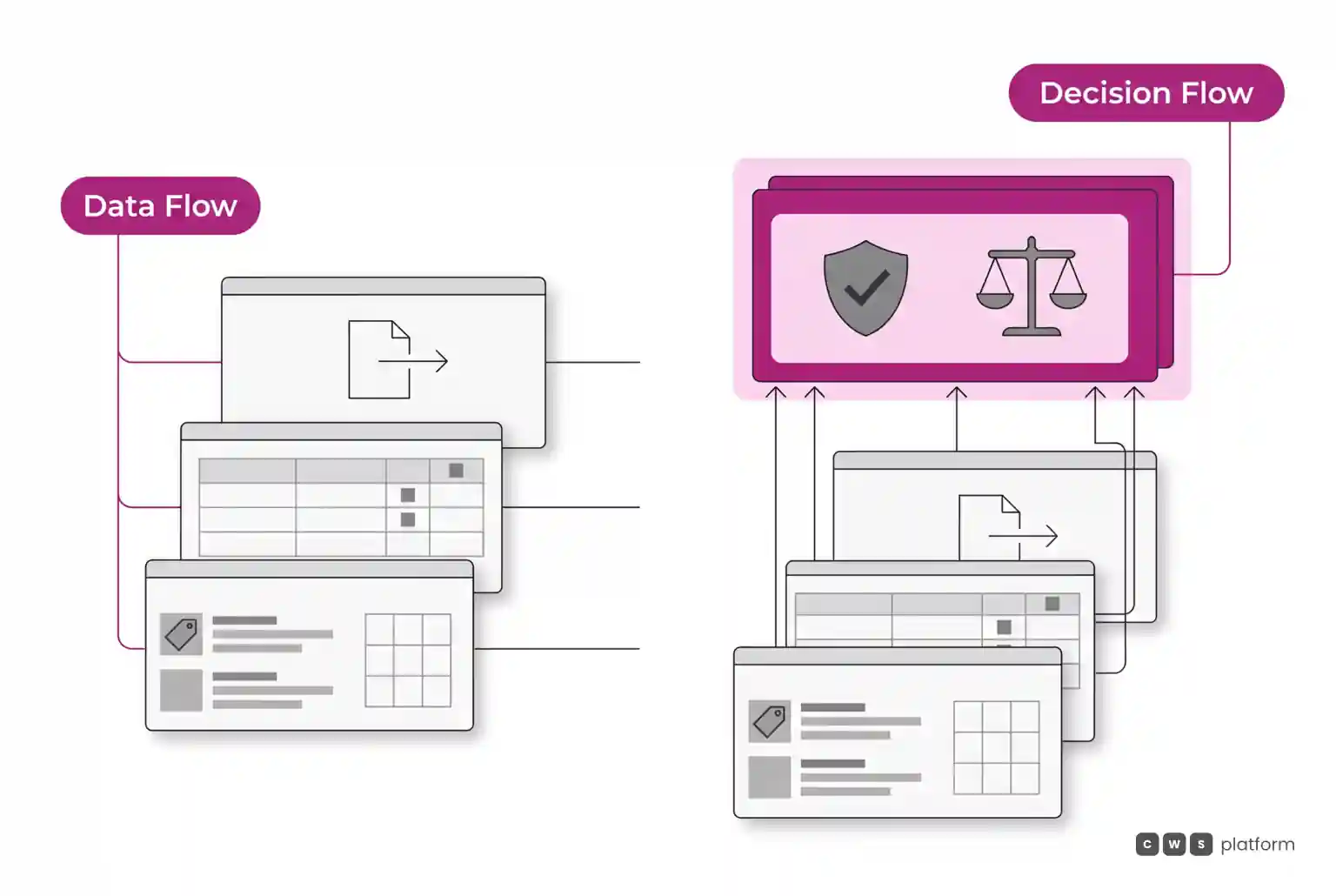
This pattern is not an accident. It is the direct result of a scoping decision made at the beginning of the project.
Most B2B digitization projects are designed around data flows: catalog, inventory, order, invoice. The problem is that B2B sales are not a data flow. They are a decision-making process. And decisions involve authority: who can approve a discount above a certain threshold, who approves extended payment terms for a strategic account, who validates a price-list exception for a specific channel. When this authority map does not exist before the architecture is designed, it appears later as unanticipated scenarios. And every unanticipated scenario means a ticket, an additional mapping cycle, another round of alignment between IT and sales, and more project time.
The cost is not only the cost of the project itself. It is the opportunity cost of an operation that never went live.
The scope nobody puts in the requirements document
The requirements document for a typical B2B digitization project details ERP integrations, catalog rules, order workflows, and static pricing logic. What rarely appears in that document: who has the authority to approve a commercial term outside the standard price list, at what point in the customer journey that approval must occur, and what the system should do while it waits.
This omission is not negligence. It is a natural consequence of how projects get started: the request originates in IT or digital, the brief is built around observable features, and the commercial decision-making dynamics—which live in the minds of senior sales managers and account representatives—are never explicitly documented because no one sees them as part of the technical scope.
The result is a technically functional platform that cannot operate autonomously because every time a transaction falls outside the standard case, it depends on human intervention that the digital workflow does not know how to request—much less document and track.
The market, meanwhile, does not wait. The digital B2B platform segment has been growing at double-digit rates globally. Distributors, manufacturers, and wholesalers that took longer to go live gave up competitive advantage to those that got there first, even with a simpler initial product.
The illusion of a technical problem
When a B2B project drags on, the most common diagnosis inside companies is technical: ERP integration is complex, catalog data quality is poor, or the chosen platform has limitations. These issues exist and consume time. But they are rarely the main bottleneck.
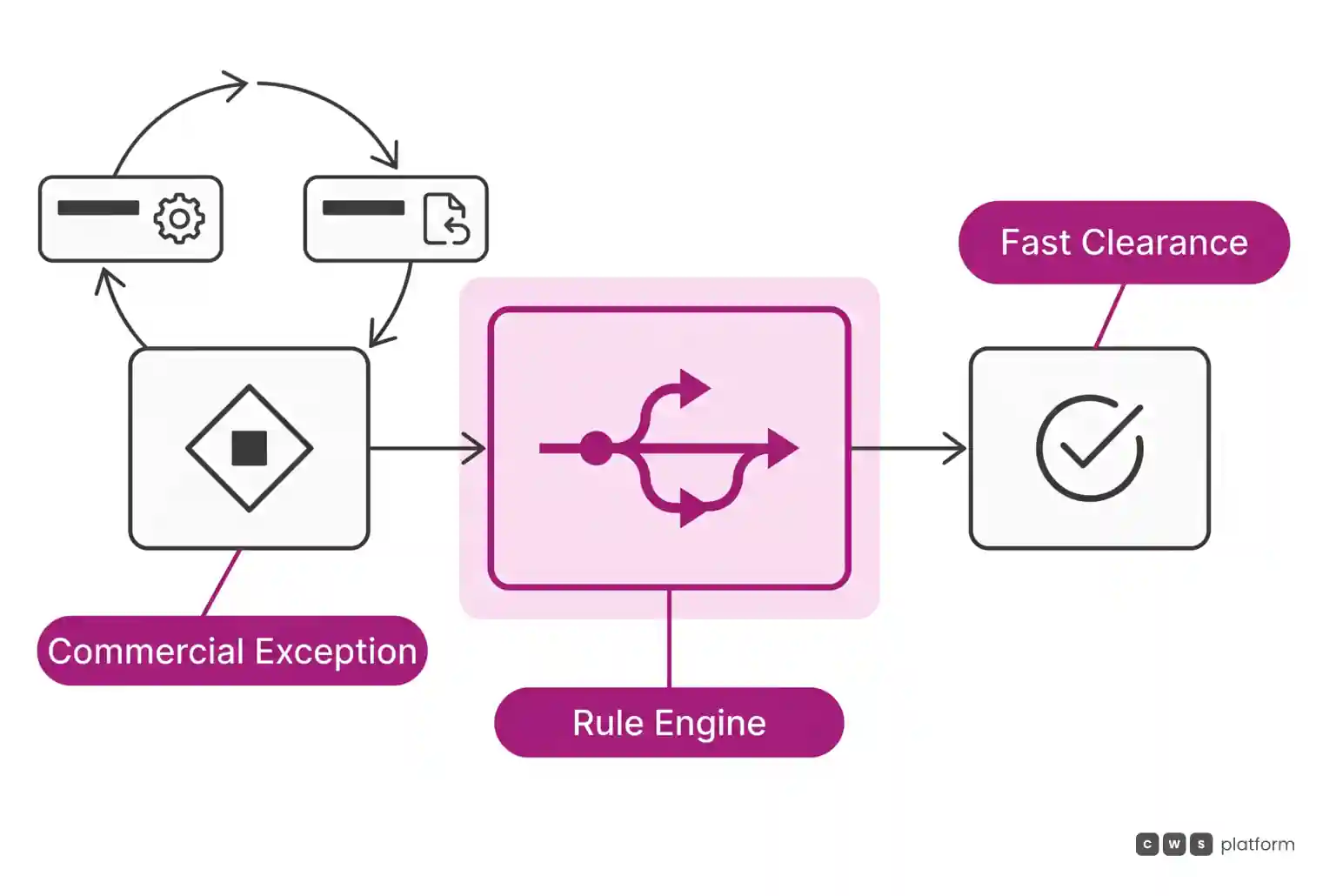
The main bottleneck, in most cases, is that the commercial operation was not modeled as an object of governance before it was digitized. Pricing, credit, and exceptions still live in the minds of specific people, and the platform—no matter how robust it is—cannot operate a process that was never explicitly defined.
This creates a cycle: IT delivers, sales identifies an exception, IT maps it, the mapping creates a new requirement, followed by new development, new testing, and another UAT cycle. And the project never technically ends because the real scope was never closed—it was being discovered during implementation.
The way out of this cycle is not technological in the strict sense. It is methodological: treat the formalization of commercial rules, including exception rules and approval workflows, as a mandatory deliverable before any architectural decision is made.
The cost of inaction
Every quarter the project remains in UAT carries a measurable cost and a diffuse cost.
The measurable cost: internal team hours, active platform licenses without real operations, implementation consulting costs, and orders that continue to be processed manually, with all the operating cost that implies.
The diffuse cost, but often the larger one: the digital channel that did not go live generated no data. No customer purchasing-behavior data, no history of digital negotiations, no visibility into order mix by channel. The operation that failed to digitize did not just lose efficiency—it lost the ability to learn about its own customers.
And there is a third cost that is rarely accounted for: internal friction. Projects that drag on erode IT’s political credibility with the business, make future transformation initiatives more difficult, and, in many cases, lead to a decision to replace the platform—restarting the cycle with a new tool and the same unresolved governance problem.
Principles for breaking the cycle
- Before defining the architecture, map the complete decision flow: who approves what, at what point, within what timeframe, and what happens when there is no response.
- Treat exceptions as rules: in B2B, exceptions are not rare cases—they are frequent ones. The system needs a native approval workflow, not a manual workaround.
- Separate what is data from what is a decision: catalog, inventory, and invoice integrations can be solved through technical architecture; pricing, credit, and commercial terms can only be solved through explicit governance.
- Define the minimum viable scope in terms of processes covered, not features delivered: going live with fewer covered scenarios and expanding is more productive than extending the project to cover every scenario before launch.
- Include the sales leader as part of the project team, not as a final approver: they hold the knowledge that needs to be formalized.
Frequently asked questions
Is the problem always governance, or does the platform sometimes actually have limitations?
Technical limitations exist and matter when selecting a tool. But most projects that never finish carry both problems at the same time: a platform that could work and commercial governance that was never defined. Solving only the technical issue without solving the governance issue extends the cycle.
How do you convince the sales team to formalize rules that have always been informal?
The most effective argument is not operational efficiency—it is risk. Informal rules depend on specific people. When those people leave, the operation loses capability. Formalization is not bureaucracy: it is operational resilience.
Does it make sense to replace the platform when the project is stuck?
Rarely. In most cases, the issue that stalled the project will reappear on the new platform because it was not in the tool. Before replacing it, diagnose whether the bottleneck is technical or governance-related.
Who has already experienced this
"We had been trying to implement a B2B solution for nearly two years. With CWS, we implemented it in 60 days."
EDIVALDO C., verified reviewer, automotive industry, company with 201 to 500 employees, via Software Advice.
The account comes from a mid-sized company in the automotive sector. Two years of implementation attempts were not reversed by a technically superior platform alone: they were reversed by an approach that included the decision-making flow in scope from the start.
A case that illustrates the issue
In B2B operations, the productivity bottleneck is rarely human capacity—it is the absence of formalized rules in the system. When pricing policy, credit, and exceptions move from the salesperson’s head into the digital workflow, response time no longer depends on human availability. That is the shift that turns a channel platform into a commercial governance platform, and it is what separates projects that go live from projects that remain in UAT.
About this publication
The Cost of Selling is CWS Platform’s publication on B2B commercial operations: negotiation, pricing governance, channel digitization, and transaction cost. CWS Platform is a B2B Commerce for Governed Negotiation platform designed to digitize complex commercial transactions with decision traceability.
Sources
- CWS Platform’s original thesis: analytical starting point on the pattern of B2B projects that drag on because commercial governance is missing from the scope, based on observation of real operations.
- Software Advice, EDIVALDO C. review: verified review from an automotive-industry user published on the Software Advice software review platform. https://www.softwareadvice.com/product/546664-CWS-Platform/
"responsive, technically engaged, and willing to work through complex commercial rules (negotiated pricing, credit, customer-specific conditions) rather than pushing generic answers"
Want to see this in your operation?
Real B2B operations already run on it.