← The Cost of Selling Transformation Blockers
When Integration Breaks Everything

B2B Systems Integration: What to Connect First and How
B2B systems integration breaks when treated as simple data piping instead of source-of-truth governance. Here is how to prioritize your rollout.
Read →
What an ERP Is, What It Does, and What It Doesn't Solve in B2B Sales
While ERPs excel at back-office accounting, inventory, and order fulfillment, forcing them into front-end B2B trade execution breaks the customer experience.
Read →
Essential B2B E-Commerce Integrations: ERP, Tax, Payments, Shipping, and CRM
Integration checklists are misleading without clear sync frequency, direction, and effort. Discover the essential connections needed to run complex B2B commerce.
Read →
ERP Sales Module vs. Dedicated B2B Commerce Platform
Forcing core ERP interfaces onto B2B buyers and sales reps creates costly friction. Learn when your ERP suffices and when to separate commerce.
Read →
What Needs to Flow Between ERP and B2B Commerce, and at What Cadence
B2B buyer portals fail when integration treats all data equally. Here is how to establish data ownership and real-time synchronization cadences.
Read →
How to Modernize B2B Sales Without Migrating Your ERP
Discover how wholesale distributors can modernize B2B sales operations without the multi-million-dollar risk of replacing legacy ERPs.
Read →
Real-Time B2B Inventory: Webhooks, APIs, or Batch
Out-of-stock orders erode buyer trust and drive customers back to phone calls. Learn how to combine webhooks, APIs, and batch sync to maintain accurate multi-warehouse inventory without choking your ERP.
Read →
Where ERP Marketplace Integration Breaks Down
Discover why ERP marketplace integration bottlenecks digital expansion and how to decouple core accounting from high-frequency transactions.
Read →
Is Your Partner Integration Moving Fast Before It’s Ready to Scale?
Going live does not mean a partner integration is ready to be replicated. Early governance and technical support make speed more sustainable.
Read →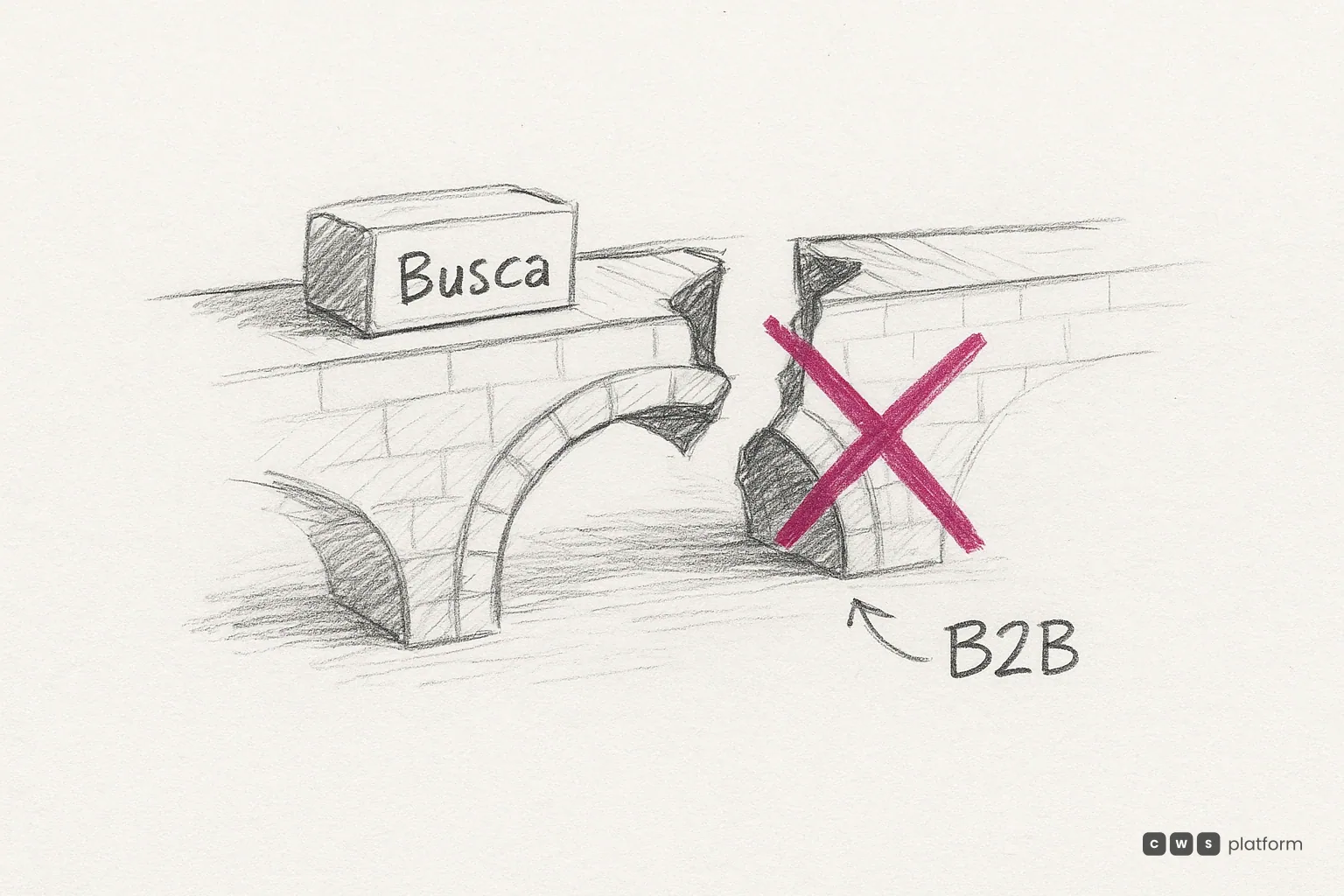
When B2B Search Works Technically but Fails the Business Case
A search engine integration does not guarantee an economically viable B2B operation. Product catalogs, pricing, credit, account permissions, and exceptions must also shape the decision.
Read →
When Every Business Unit Decides Differently, ERP Becomes a System of Record, Not Control
Local ERP systems can keep executing orders while a central orchestration layer determines which commercial terms apply to each customer and context.
Read →
Your ERP Is Full of Data and Empty of Decision
ERP records what already happened; governance determines what can happen next. Without that layer, decisions don't disappear — they migrate to the sales rep's head, the untracked Slack message, and the exception that becomes standard practice.
Read →
Your sales team runs AI, but the data it needs is still inside the rep's head
Auto parts distributors are deploying AI to accelerate quoting and customer service, but hitting a problem that predates the technology: fragmented pipeline data, unwritten pricing policies, and exception rules that live only in a senior rep's memory.
Read →
Your ERP Isn't the Problem. What Governs Everything on Top of It Is.
Replacing SAP or Oracle takes years and doesn't fix the core issue: the absence of a layer that governs pricing, credit, and approvals before an order ever reaches the system of record.
Read →
When You Run on Several ERPs, Which One Is Right?
In an operation with several ERPs and brands, integration isn't wiring one system to another — it's deciding which is right when they disagree on price, stock, and credit. Why integration breaks before the technology enters the picture.
Read →