← The Cost of Selling Sales Costs
When Each Order Costs More Than the Last

What Is a B2B Sales Order and What Must It Include?
Discover the anatomy of a B2B sales order and learn how upfront validation eliminates billing bottlenecks and costly rework.
Read →
B2B Order Entry Automation: Eliminating Manual Re-Keying in Distribution
Manual order entry inflates cost to serve and generates avoidable errors. Learn how self-service ordering and bulk uploads automate clean ERP capture.
Read →
Operating Costs in Distribution: Hidden Leaks and How to Cut Them
Uncover hidden operating costs in wholesale distribution and learn how automated commercial rules prevent manual order processing bottlenecks.
Read →
What B2B Sales Is and How It Actually Works
Explore the end-to-end B2B sales cycle, common margin leaks, and how shifting routine reorders to self-service transforms sales efficiency.
Read →
What Is B2B: How Selling Changes When the Buyer Is a Business
Discover what defines B2B commerce and why wholesale transactions require tailored trade credit, tiered pricing, and structured replenishment.
Read →
What B2B Self-Service Ordering Truly Costs (and the Cost of Inaction)
Budgeting a self-service portal purely on software fees overlooks manual order costs and poor adoption. Here is how to build an honest business case.
Read →
B2B Customer Portal Best Practices: Built for the Real Buyer
When enterprise portals mimic retail storefronts instead of honoring contract pricing and quick reordering, corporate buyers immediately revert to manual orders.
Read →
Beyond the Shopping Cart: How a B2B Ordering System Handles Complex Orders
Standard commerce portals handle simple restocks, but large wholesale orders still arrive via email attachments. Here is how to fix complex order workflows.
Read →
B2B Customer Portals: Why Buyers Still Call and How to Fix It
B2B buyers still pick up the phone when digital portals lack real commercial rules. Here are the core capabilities needed to enable genuine self-service.
Read →
B2B Wholesale Online: Why Sales Tax, Credit Terms, and Warehouses Break Retail Platforms
In complex wholesale distribution, the digital catalog is simple. The sale only clears when nexus-based sales taxes, net terms, and multi-warehouse routing work at checkout.
Read →
How to Choose Software for Wholesale Distribution: Five Tests With a Real Order
Selecting wholesale software based on generic feature checklists creates operational bottlenecks. Here are five live tests using real distributor orders.
Read →
How to Automate Wholesale Orders with Real-Time Credit and Inventory Rules
Discover how leading B2B distributors automate net-term credit checks and multi-warehouse inventory to eliminate post-order holds.
Read →
B2B Marketplace Payments: The Multi-Vendor Cart Settlement Trap
Settling enterprise orders across multiple vendors requires origin-based commissions, split freight, and custom terms that retail gateways cannot handle.
Read →
How to start a B2B marketplace that scales: 4 operational rules
Learn how to start a B2B marketplace that stays profitable by automating pricing, credit, and negotiation guardrails end-to-end.
Read →
Agricultural Input Storefront Capabilities: What Sets the Platform Apart
A shopping cart digitizes order intake but does not handle the decisions specific to agricultural input sales. The storefront must embed domain context, commercial policy, and governance into the workflow.
Read →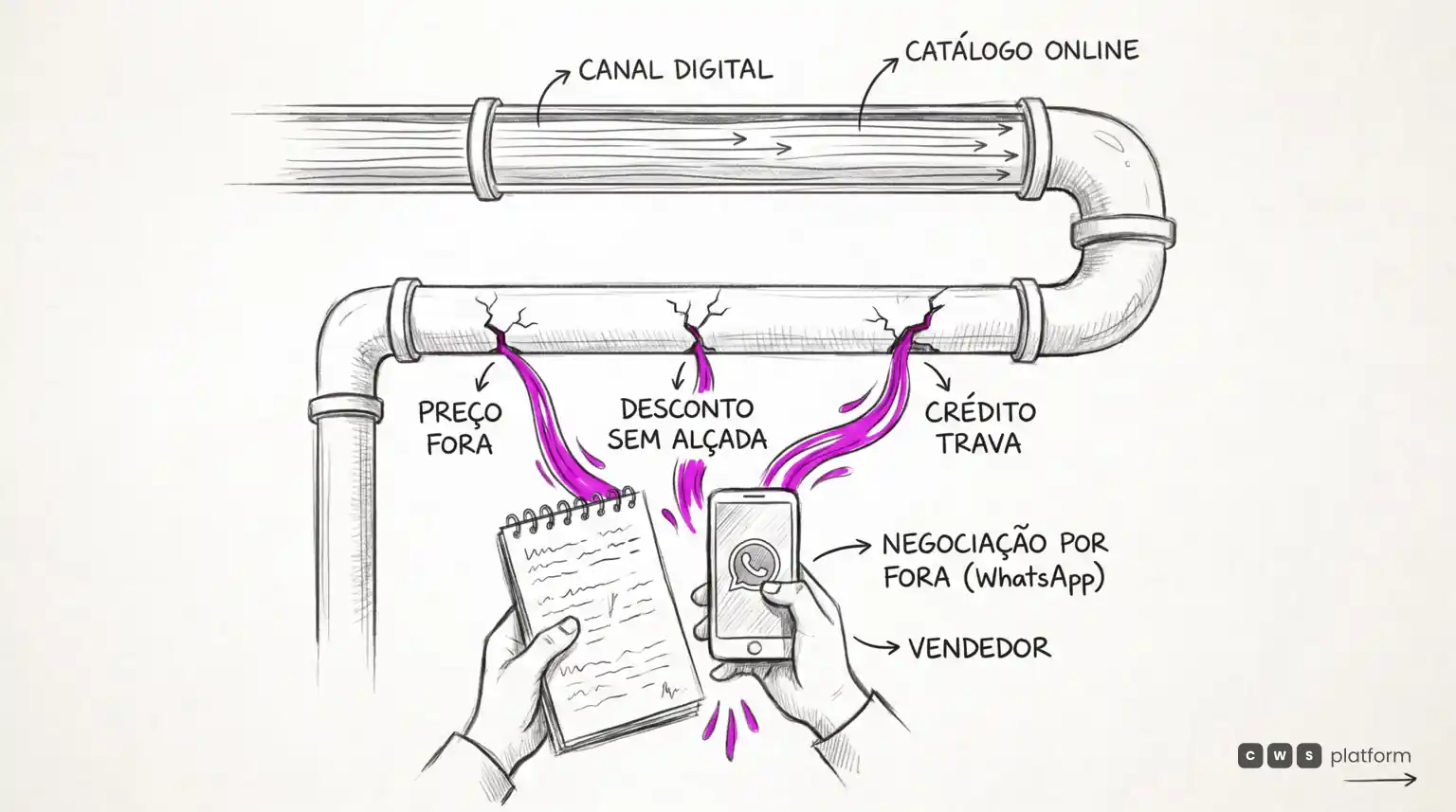
Your digital channel is live, but the deal keeps slipping through the cracks
You digitized the channel, but pricing, discounts, and credit still slip out of control. The bottleneck shifted: from lack of a channel to lack of governance in the deal.
Read →
Digital Sales Platform vs. E-commerce: When the Storefront Can’t Close the Deal
An online store captures orders. A B2B digital sales platform also applies commercial rules and supports valid negotiations for each account.
Read →
See-Try-Buy-Fly: How Customer Value Grows With Every Cycle
When every reorder requires rebuilding the deal, the customer comes back—and so does the cost to serve. See-Try-Buy-Fly shows how to turn repeat business into compounding value.
Read →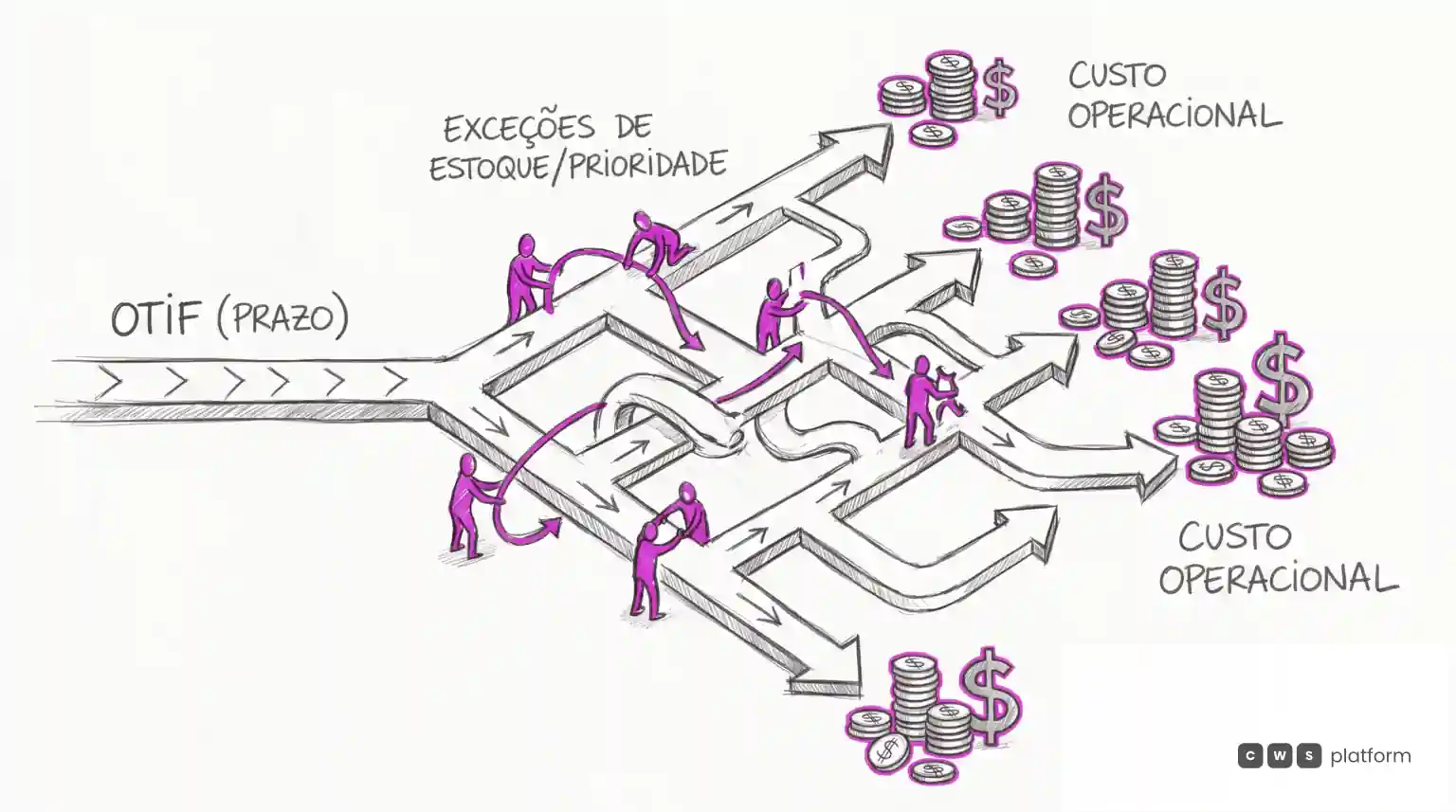
When Every New Order Ships on Time but Raises Operating Costs
A plant can maintain OTIF while its unit cost per order keeps rising. Without governance, AI agents may simply execute customer-specific exceptions faster.
Read →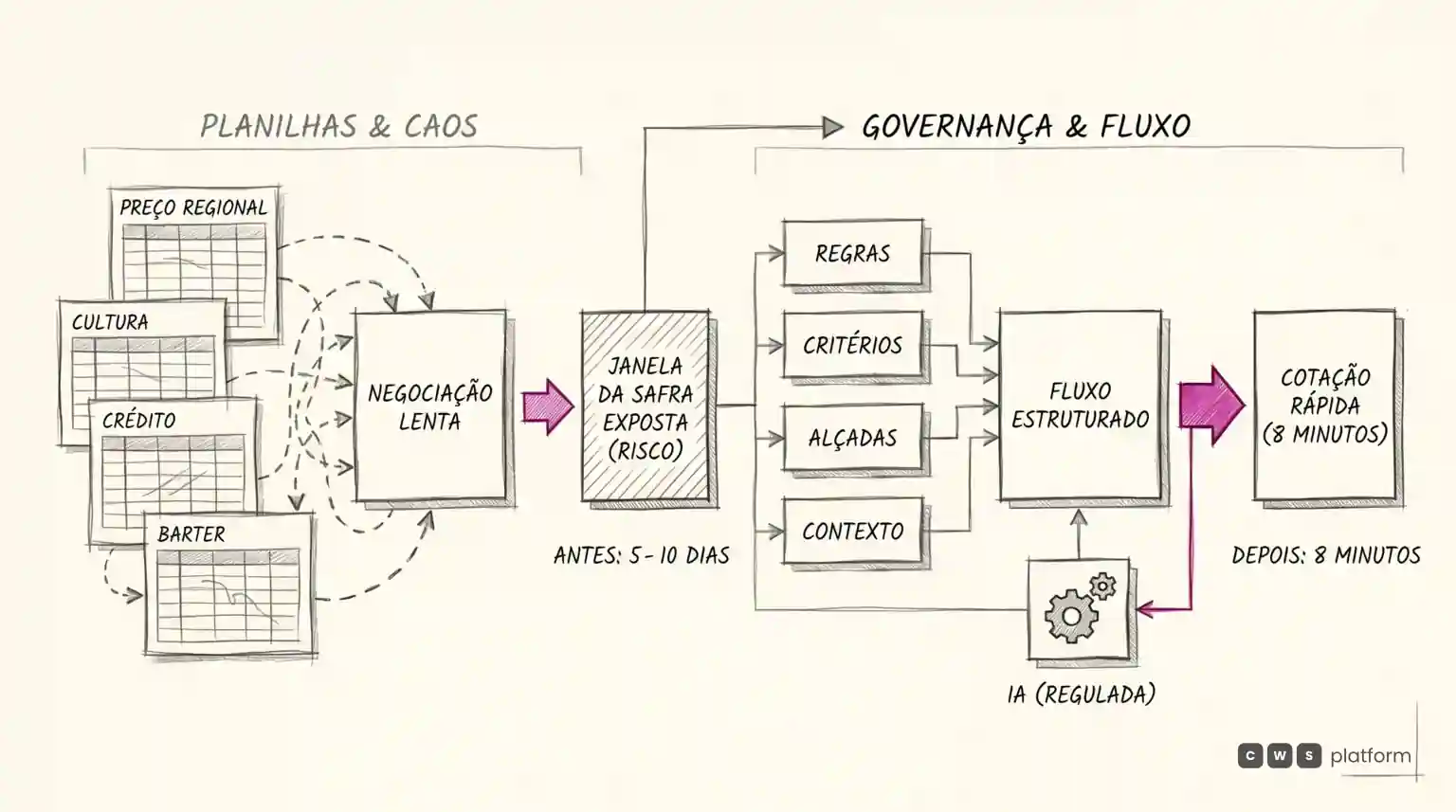
When Negotiations Live in Spreadsheets, the Crop-Season Window Is at Risk
Low digital adoption in B2B agriculture is driven less by a lack of channels than by weak governance over commercial decisions. Before automating, companies must structure rules, criteria, approval authority, and context.
Read →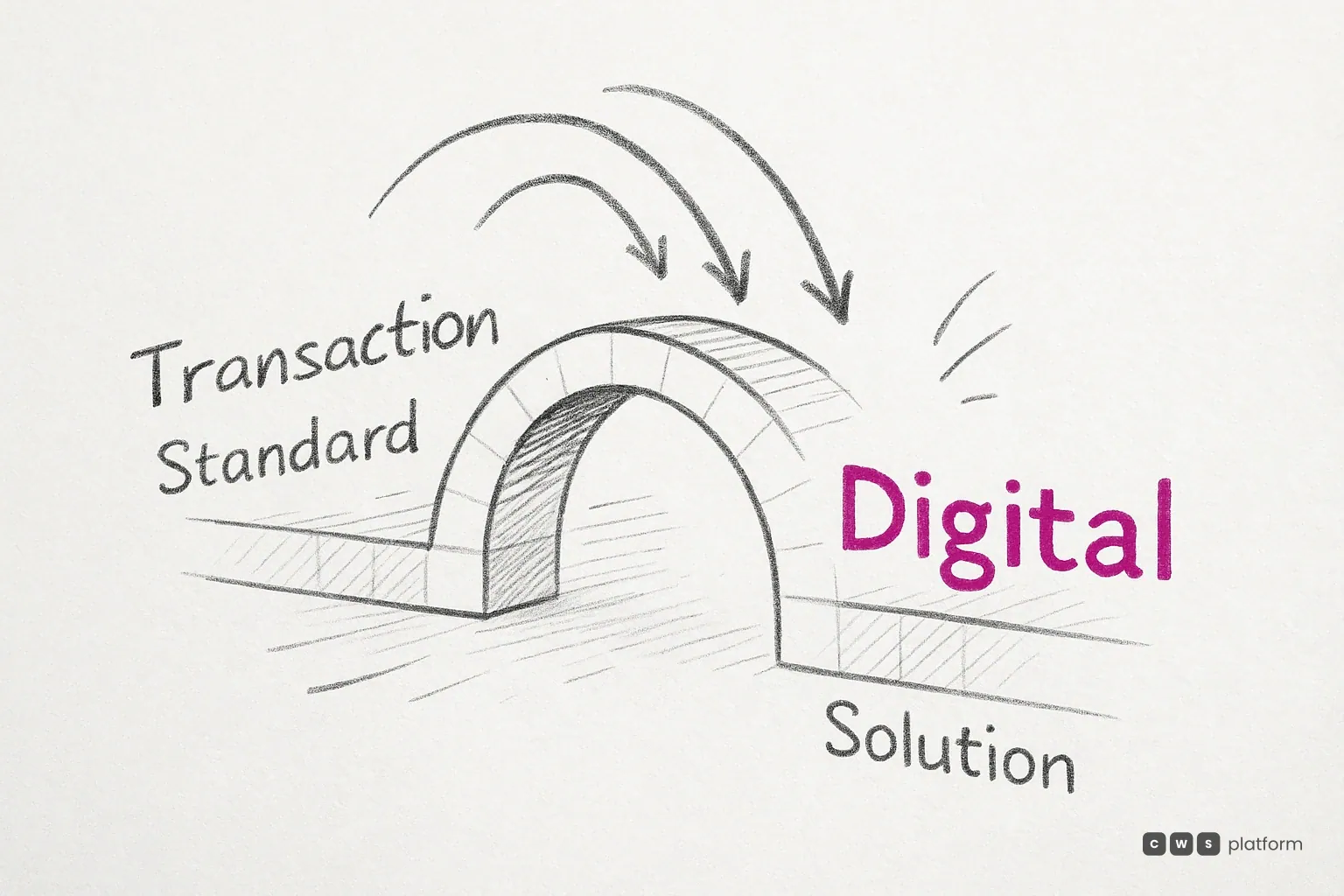
The Transaction × Product Matrix: Where Digital Actually Pays Off
Most B2B teams try to digitize everything at once and end up digitizing nothing well. The repeat/standard quadrant is the right entry point for digital commerce.
Read →
Your B2B portal accepts orders that will never close
B2B portals that hide credit limits and payment terms don't digitize the sale — they just push the problem downstream, after the order is placed, with more cost and friction on both sides.
Read →
Your Sales Rep Is Still Building 100-Line Orders by Hand
B2B distributors that scale their customer base without separating operational from consultative selling end up scaling headcount costs at the same rate — eroding margin invisibly. The Imdepa case shows what shifts when the system absorbs the repetitive work.
Read →
Do You Know What Each Manually Processed Order Is Actually Costing You?
Volume growth without operational friction reduction silently consumes margin. Learn how hidden transaction costs accumulate in B2B order management — and what must happen before any automation effort.
Read →
When the Customer Already Knows What They Want, the Salesperson in the Middle Is Cost, Not Service
Not every order needs a salesperson. The recurring one — the customer who rebuys the same thing, on the same cycle, with no doubt — doesn't need to be served, it needs to be unblocked. Treating that rebuy as a new sale costs money and slows down someone who just wanted to buy again.
Read →
The Salesperson Closes the Sale, Then Calls the Branch to Ask If They Can Still Sell
When the information the salesperson holds was already born stale, every sale carries a phone call. It's not the team's lack of effort — it's an information friction that turns the moment of the sale into a moment of waiting.
Read →
Why a Small Order Costs More Than It Earns
Processing a R$ 400 order costs almost the same as a R$ 4,000 one: the effort is fixed per transaction. That's why the small customer costs more than it earns. With five years of Tracbel data, a read on when that math flips.
Read →