Digital Sales Platform vs. E-commerce: When the Storefront Can’t Close the Deal
In B2B, a catalog and cart are not enough when pricing, terms, discounts, credit, and inventory remain outside the channel.

TL;DR
- In B2B, offering a catalog and shopping cart does not mean the sales process has been digitized.
- When pricing, lead times, discounts, credit, and inventory remain outside the system, buyers must return to the sales team to complete the transaction.
- A digital platform becomes valuable when it can serve customers, apply commercial rules, and guide decisions within company-defined boundaries.
- Governance comes before automation: AI can increase productivity, but it must operate on fixed, traceable, and auditable rules.
Why does your digital operation still depend on salespeople to close orders?
B2B sales leaders recognize the situation: the company launched a portal, made products available, and created a digital path for orders, yet order volume remains marginal. Sales reps still receive messages asking them to confirm pricing, lead times, discounts, inventory, or credit limits.
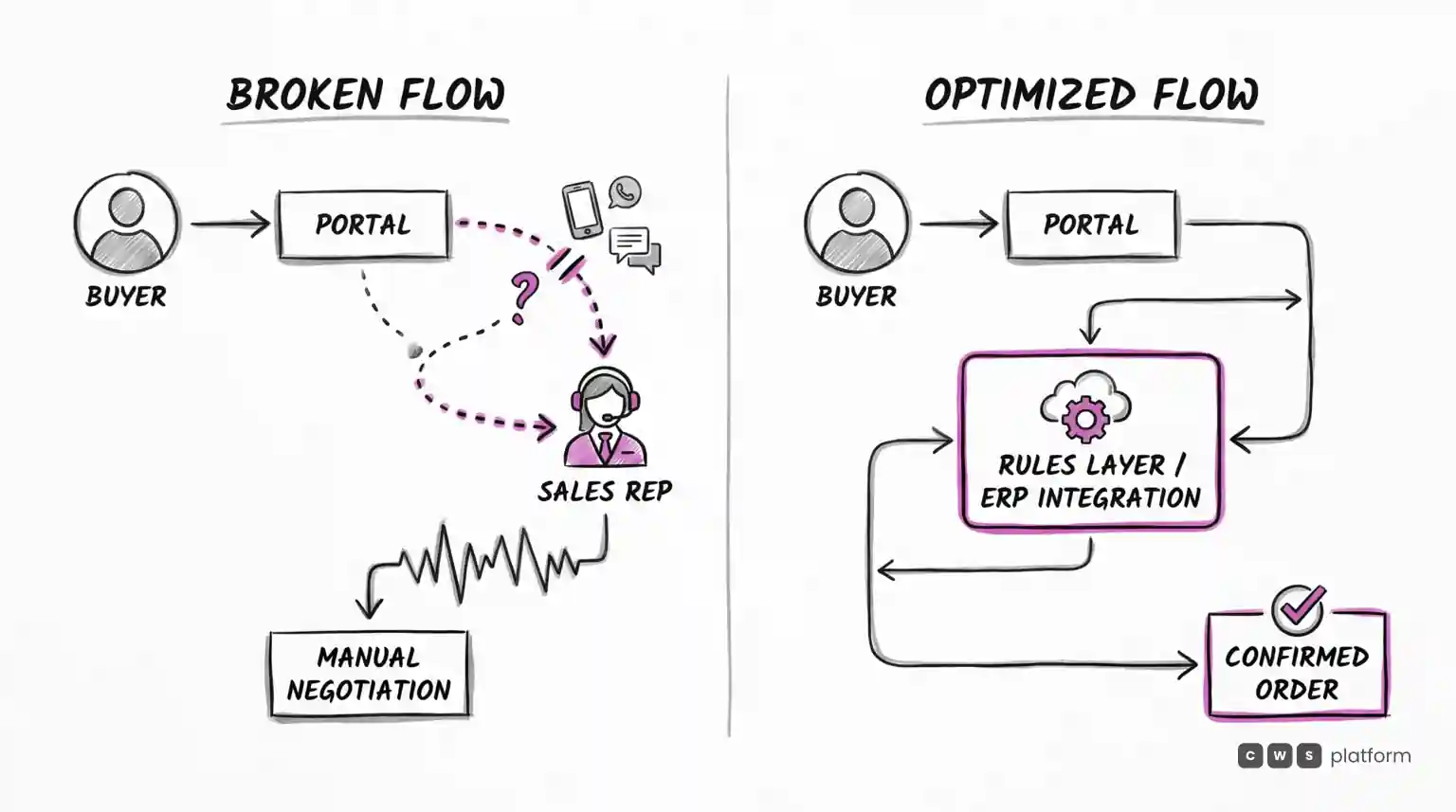
The platform exists, but the negotiation remains outside it.
This tension is often interpreted as an adoption problem. The company tries to attract more buyers, redesign the browsing experience, or spend more on campaigns. But if customers must interrupt their journey to obtain a valid commercial offer, the issue does not begin with the channel.
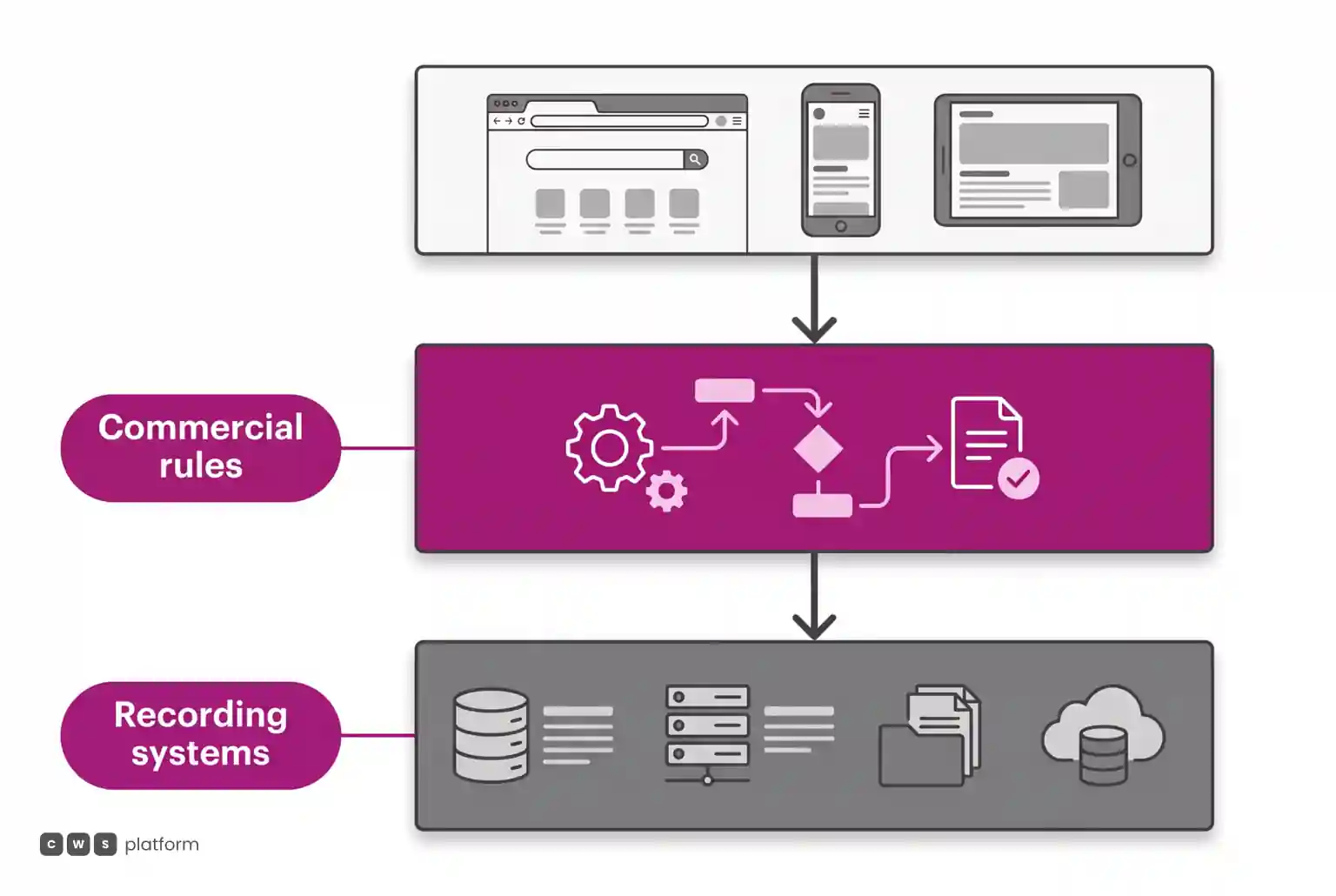
It begins with what the channel is authorized to decide.
An online store organizes product display, search, and order capture. A digital service and negotiation platform needs to do something more demanding: recognize who is buying, access that account’s commercial context, and present only the conditions the operation can fulfill.
That distinction changes perceived value. For the buyer, value is not just finding the product. It is receiving a valid commercial answer without having to rebuild the negotiation by phone, message, or spreadsheet.
For the company, value is not just the digital order. It is turning its way of negotiating into a governed process.
The clearest sign: the digital channel has become a storefront
CWS Platform’s thesis on conversion losses caused by data—not creative—identifies recurring situations:
- The buyer abandons the cart at the lead-time or discount stage because the answer requires manual approval.
- The price displayed in the portal does not match that customer’s negotiated terms.
- Customer- or channel-specific promotions require a ticket to the technology team.
- Catalogs without structured attributes make product discovery difficult for search engines and AI agents.
- The company measures clicks and sessions but cannot identify the point where the commercial decision was blocked.
In these cases, the channel is available, but the commercial decision has not been digitized.
The buyer sees an interface. Behind it, pricing, lead times, discounts, identity, inventory, and segmentation remain fragmented. When it is time to make a commercial commitment, the workflow returns to the salesperson.
The result is not necessarily a lack of demand. It is the inability to digitally complete a negotiation that depends on context.
The issue is not replacing the salesperson
A negotiation platform does not eliminate the sales function. It separates work that requires judgment from work that can be performed using previously defined rules.
The history of inactive customers illustrates this difference. According to CWS Platform’s publication on reactivation, identifying customers who stopped buying is only the beginning. The challenge is turning that history into a valid offer today, considering pricing, inventory, commercial terms, and the branch responsible for the account.
Without structured data, reactivating the customer base creates another queue for the sales team. With recorded rules, the operation can prepare the next decision without compromising service for active accounts.
The same logic applies to recurring orders, quotes, and renegotiations. Salespeople should not have to manually rebuild a rule the company already knows. Their time should be reserved for situations where relationships, context, and judgment truly change the decision.
The ERP executes, but it does not necessarily govern the negotiation
The complexity increases in companies with branches, business units, or different local systems.
Public case LI-042 describes an operation with 40 business units, different ERPs, and commercial terms specific to each branch. The reported problem was not that the systems were broken. What was missing was a layer above them to centralize what was allowed in pricing, credit, and catalog management.
Each ERP remained the local system of record. Commercial governance became responsible for determining what could be offered to a specific customer, in a specific region, at a specific time.
This design preserved local autonomy without allowing each unit to interpret company rules independently.
For sales leaders, the implication is direct: changing the interface or replacing the ERP does not, by itself, resolve negotiation inconsistency. Before automating, the company must define where rules live and which system is authorized to apply them.
AI increases the importance of this distinction
AI expands the ability to search, compare, recommend, and prepare decisions. It also expands the impact of incomplete rules.
In the partnership announced by Lianlian DigiTech and UnionPay International for AI-agent payments in international commerce, the first disclosed use case is global procurement. Agents can find suppliers, refine choices, and generate payment orders, but the movement of funds remains subject to human approval.
The architecture reveals a sequence: first, deterministic, fixed, and auditable limits are defined. Then, the agent operates within them.
In B2B commercial operations, the principle is equivalent. AI can accelerate service and negotiation as long as identity, official pricing, availability, credit, and terms are structured. Without that foundation, automation does not eliminate exceptions. It simply makes it possible to produce them faster.
The Cost of Inaction
When a company maintains an online store without digitizing negotiation, the cost appears across multiple areas, even if it is not consolidated into a single financial line item:
- Salespeople consult systems, spreadsheets, and managers before responding to buyers.
- Customers repeat through human channels information they already provided through the digital channel.
- Campaigns drive demand to a journey that cannot present the correct terms.
- Branches apply different interpretations of pricing, credit, and catalog rules.
- Leadership cannot pinpoint exactly where negotiations stopped.
- AI projects depend on data and rules that have not yet been formalized.
This is the cost of keeping every transaction dependent on manual reconstruction. The company may have a modern channel while preserving the same operational effort as before.
CWS Platform’s publication on marketplaces summarizes the sequencing problem: when a project starts with the storefront, without integration into the actual order flow and without the habit of digital recordkeeping, salespeople remain on WhatsApp or other messaging channels and volume stays marginal.
Principles for turning a storefront into an operation
- Start with decisions, not the interface: map pricing, lead times, discounts, credit, inventory, and segmentation.
- Define the source of truth: every condition needs an origin, an owner, and an application limit.
- Preserve customer context: the platform must recognize identity, region, history, and authorization.
- Integrate without assuming replacement: local systems can continue executing what they do well.
- Record the negotiation: orders, quotes, and exceptions must generate structured data.
- Govern before automating: AI agents should act only after auditable limits have been defined.
- Measure the point of blockage: B2B conversion does not end with the click; it ends with a valid commercial decision.
FAQ
What is the practical difference between an online store and a B2B digital platform?
An online store prioritizes product display and order capture. A B2B digital platform must also manage service and negotiation, applying rules compatible with each customer and context.
Is a portal with few orders necessarily an adoption problem?
No. If buyers need to confirm pricing, lead times, credit, or discounts with a salesperson, low usage may reflect a lack of commercial governance in the channel.
Should the platform replace the ERP?
Not necessarily. In case LI-042, the ERPs remained local systems of record, while an upper layer centralized commercial and financial rules.
Where does AI fit in?
After governance. AI can prepare and execute decisions within defined limits, but it should not be used to compensate for dispersed or contradictory commercial rules.
Who is already experiencing this
Paulo Renan S., in a review published on Software Advice:
"Delivering consistent, scalable progress with agile course corrections."
A case that illustrates it
Public case LI-966729 shows the difference between digitizing a channel and structuring a negotiation.
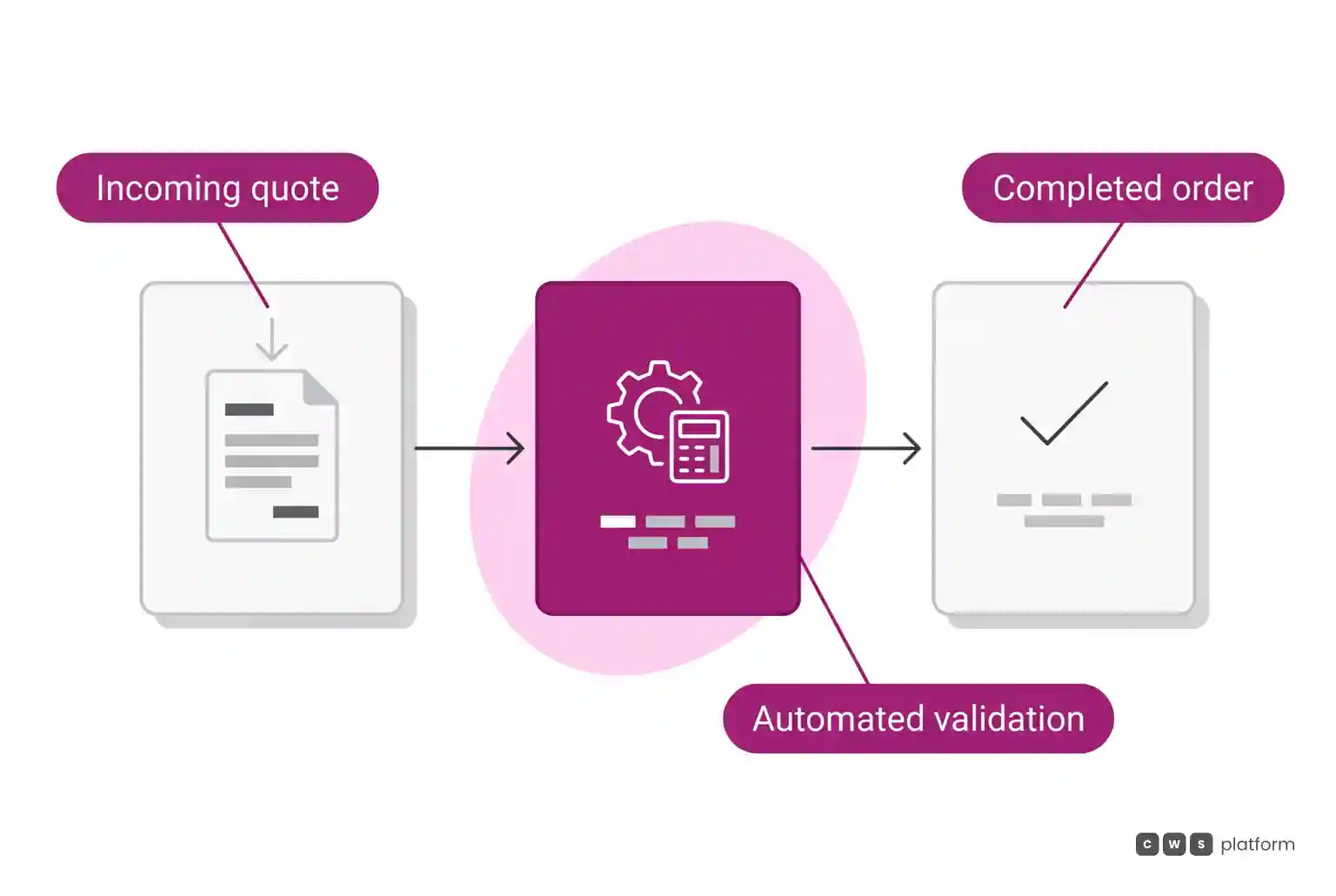
According to the published account, a large agricultural quote took 5 to 10 days, involving pricing by region and crop, credit tied to barter arrangements, and spreadsheet-based controls. In the structured workflow, a quote that had taken 5 days was completed in 8 minutes. The case also records a BRL 1 million CPR—Brazil’s rural product certificate—processed through barter at checkout.
The gain did not come simply from putting products online. It came from integrating quotes, contextual pricing, credit, and barter into a governed process, reducing transaction costs and allowing the field sales representative to return to a technical advisory role.
About this publication
The Cost of Selling is a CWS Platform publication on the operational, commercial, and financial factors that determine B2B productivity.
CWS works with the concept of a B2B Commerce Platform for Governed Negotiation: an architecture for turning a company’s negotiation DNA into digital, traceable rules enabled for automation and AI. The goal is not to reduce a B2B commercial operation to e-commerce, but to reduce transaction costs without eliminating context, responsible autonomy, or commercial relationships.
Sources
- Digital platform vs. e-commerce, CWS Platform’s own thesis: conceptual foundation for distinguishing an online store from a service and negotiation platform.
- Trading Desk, incremental revenue through inactive customer reactivation, CWS Platform: the relationship between structured data, governance, and commercial reactivation.
- LI-042, public case from the CWS Platform collection: an operation with 40 business units, multiple ERPs, and centralized governance of pricing, credit, and catalog rules.
- Lianlian DigiTech and UnionPay International Partner to Develop AI Agent Payments, PR Newswire Asia: an example of AI agents subject to auditable limits and human approval.
- Marketplace is an output, not the objective, CWS Platform: analysis of digitizing the operation before treating the channel as the destination.
- LI-966729, public case from the CWS Platform collection: an agricultural quote reduced from 5 days to 8 minutes and processing of a BRL 1 million CPR through barter at checkout.
- Software Advice, Paulo Renan S.’s public review of CWS Platform.
"responsive, technically engaged, and willing to work through complex commercial rules (negotiated pricing, credit, customer-specific conditions) rather than pushing generic answers"
Want to see this in your operation?
Real B2B operations already run on it.