Your Distribution Business Gains Marketplace Volume but Loses Margin Along the Way
Volume only becomes profitable growth when pricing, credit, and negotiation rules are governed by channel before automation.

TL;DR
- A marketplace is not necessarily a competitor to your direct channel: it concentrates demand that a distributor would struggle to replicate from scratch.
- The problem begins when the marketplace and direct channel operate without differentiated commercial terms, minimum-margin rules, and approval criteria.
- Automating pricing, discounts, and orders before governing those decisions only accelerates margin erosion.
- The right architecture uses the marketplace as a source of demand and the direct channel as the environment for relationships, repeat business, and margin building.
When does a marketplace stop expanding demand and start eroding margin?
For a distribution company’s commercial leader, the tension is familiar: an increasing share of buyers are on third-party marketplaces, comparing price, delivery times, and availability before they ever contact a sales rep.
Ignoring this environment means giving up demand that already exists. Trying to replicate its ability to attract buyers solely by investing more in the direct channel can also be expensive and insufficient. Marketplaces aggregate buyers, assortment, and convenience at a scale that an individual distributor is unlikely to recreate.
The mistake is treating this reality as a binary choice: either the distributor joins the marketplace or protects its direct channel.
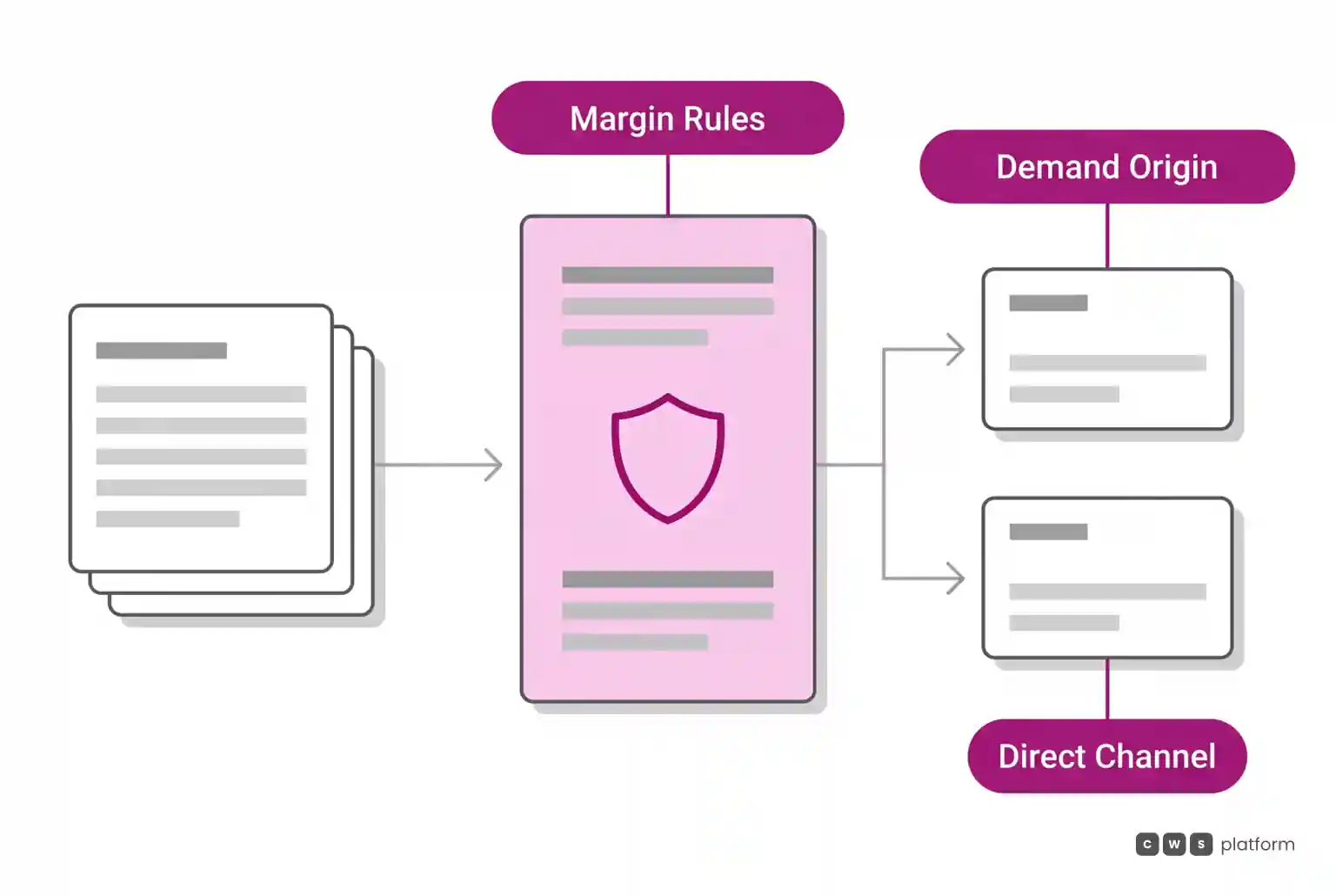
The relevant question is different: what economic role should each channel serve?
The thesis presented in the article Third-Party Marketplaces as a Channel is straightforward: “A marketplace is not the enemy. It is where part of your demand already lives.”
In this architecture, the marketplace serves as a source of demand. The direct channel becomes the place to build relationships, repeat business, and margin, when commercially applicable. The challenge is not technological. It is about decision-making.
Two channels cannot operate under a single commercial logic
A marketplace and a direct channel have different structures, costs, and roles. Applying the same commercial terms indiscriminately to both environments tends to produce one of two outcomes:
- the marketplace is not competitive enough and fails to capture available demand;
- the direct channel replicates discounts and terms it should not carry, compromising margin and predictability.
The operation needs to define in advance which prices, lead times, volumes, and discount levels are defensible in each context. It also needs to determine when a condition can be approved automatically and when it requires human review.
Without these rules, order growth can mask economic deterioration. Revenue appears immediately. Margin loss is often noticed later, after exceptions have become routine.
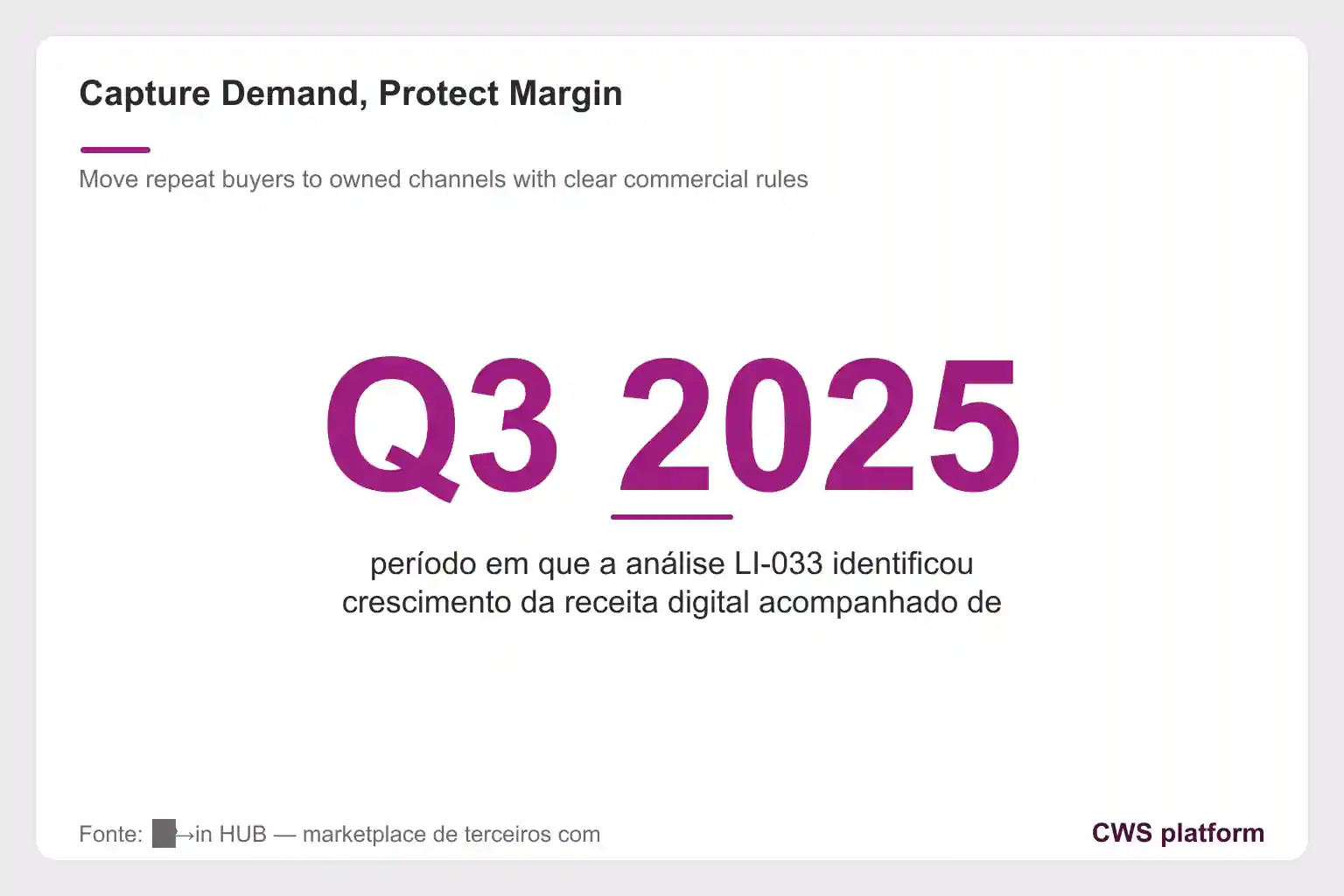
LI-033 highlights this tension beginning in Q3 2025: according to its analysis, Allied and Profarma were among the publicly traded distributors whose reported results showed digital revenue growth alongside pressure on gross margin. The point is not to attribute that pressure to a single channel, but to recognize the management pattern: digital volume does not represent an advantage when pricing and credit are not governed within the same workflow.
Contextual pricing is not simply the lowest available price
In B2B, a commercial condition does not depend only on the product. It can vary by channel, region, segment, volume, payment terms, and time window.
That is why contextual pricing does not mean releasing discounts indiscriminately. It means presenting the buyer with the appropriate terms for their context, within business-approved parameters.
The public case LI-043 describes a distribution operation that needed to execute promotions segmented by channel and region. The sales team avoided more aggressive terms because it could not see the margin impact before execution.
According to the case, the answer was not automatic discounting. The operation structured terms by segment and time window. Buyers began seeing the price and payment terms applicable to their context, while managers tracked what was being negotiated and approved.
Conversion increased without additional media spend, according to the case report. Promotions stopped being decisions made first and explained financially afterward. They began operating within known limits.
This distinction matters for marketplaces. If a company automates offer publishing without establishing minimum margin, approval criteria, and channel-specific differences, it only increases the speed of an incomplete commercial decision.
Automation does not fix a missing rule
The sequence of decisions matters.
First, the distributor needs to establish its commercial policy by channel. Then it can automate execution. Reversing that sequence turns manual exceptions into digital exceptions—with greater reach and frequency.
Before integrating marketplaces, a B2B portal, sales reps, and internal systems, leadership should answer:
- What is the economic role of each channel?
- What minimum margin must be protected in each context?
- Which price differences are justified by region, volume, or payment terms?
- Who can approve a deviation?
- Which decisions must be recorded for later analysis?
- In which situations should the negotiation return to a person?
These questions do not delay digital transformation. They prevent the company from automating channel conflicts, unjustified discounts, and credit terms disconnected from profitability.
The Cost of Inaction
Choosing not to act is also an economic decision.
When a distributor ignores marketplaces on principle, it leaves a share of demand under the control of other participants. Competitors begin occupying the space where buyers already search and compare alternatives.
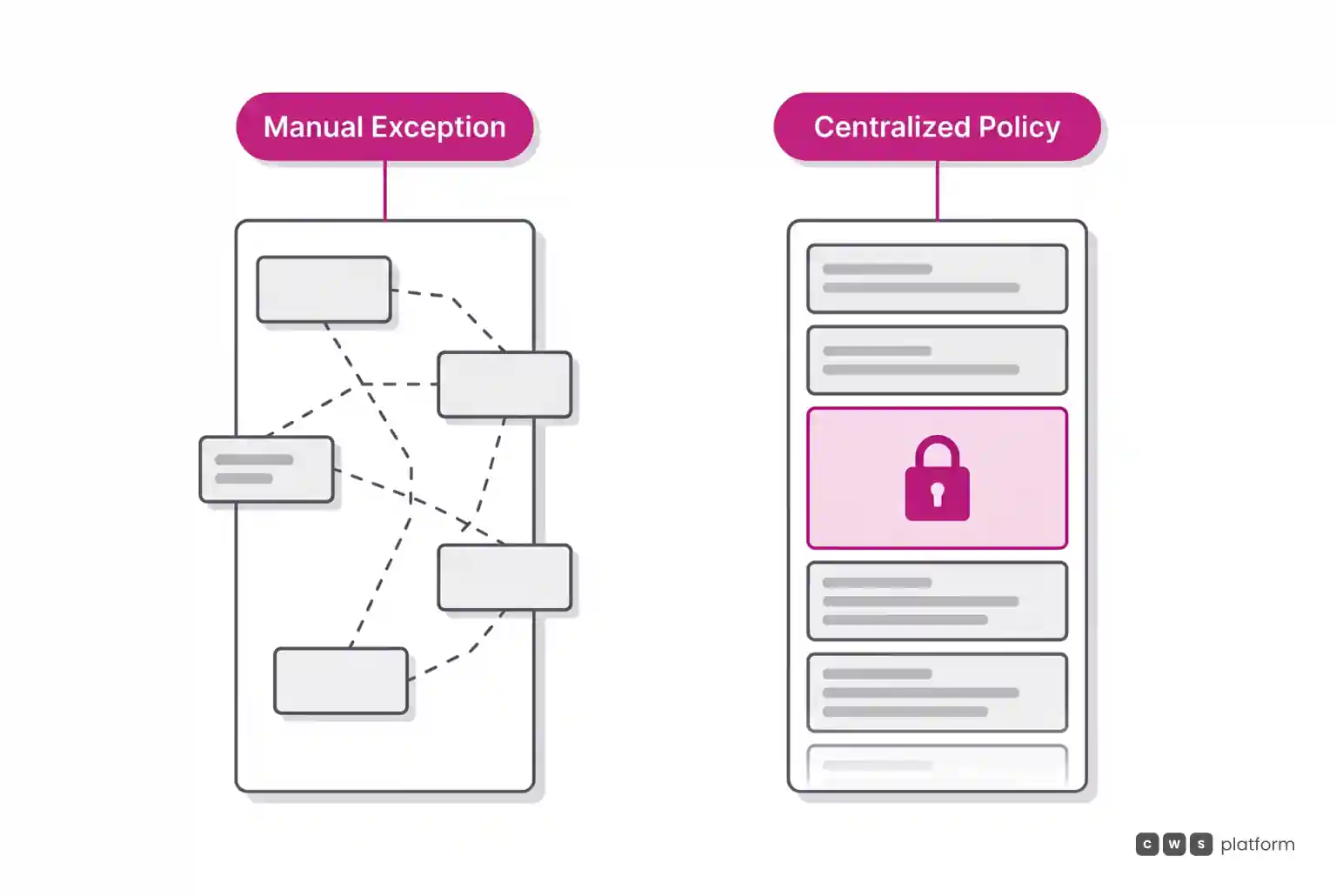
When it enters without governance, the risk takes a different form. The company may gain orders but lose its ability to defend margin. The marketplace puts pressure on pricing, while the direct channel absorbs exceptions to avoid conflict or retain customers.
There is also an internal effect. When rules are not structured, sales reps and managers must interpret every situation individually. Pricing, payment terms, credit, and freight return to being dependent on consultations, spreadsheets, and scattered approvals.
The case of Imdepa, an auto parts distributor founded in 1960, helps illustrate the opposite path. According to public material LI-012, after adopting a B2B portal, the company grew its customer base for three years without expanding its team at the same rate. Salespeople moved away from repetitive tasks—such as assembling orders with hundreds of line items and calculating taxes and freight—to take on a more consultative role.
The lesson is not simply to move orders into a digital environment. It is to remove repetitive work without removing commercial intelligence from the operation.
Principles for Operating a Marketplace Without Losing Economic Control
- Define the role of each channel before defining its integration.
- Treat the marketplace as a potential source of demand, not as an automatic replacement for the direct channel.
- Establish minimum margin, pricing criteria, and negotiation limits by context.
- Consider region, segment, volume, payment terms, and time window in the terms presented.
- Record deviations and approvals so exceptions can be audited.
- Preserve human intervention in negotiations that exceed approved parameters.
- Measure success by the economic quality of orders, not volume alone.
- Automate only after decision rules are clear.
FAQ
Should a distributor avoid marketplaces to protect its direct channel?
Not necessarily. According to the core thesis, marketplaces concentrate demand that is difficult to reproduce from scratch. The question is how to capture it without indiscriminately applying the same terms across every channel.
Is it enough to establish different prices by channel?
No. Price is only one part of the decision. Volume, region, payment terms, credit, minimum margin, and approval authority must also be considered.
Should every negotiation be automated?
No. Decisions within previously approved parameters can move faster. Material exceptions should remain visible and subject to appropriate review.
How do you know whether the channel is working?
Volume alone is insufficient. The analysis should consider margin, repeat business, the incidence of exceptions, and the operational effort required to process and approve each order.
How can a distributor sell on a B2B marketplace without losing margin?
By establishing its commercial policy by channel before automating execution: the economic role of each channel, the minimum margin to protect in each context, the price differences justified by region, volume, or payment terms, and who can approve a deviation. With those rules, the marketplace serves as a source of demand and the direct channel as the environment for relationships, repeat business, and margin building. Without them, automating offer publishing only accelerates margin erosion.
Who Is Already Living This
On the public Software Advice portal, Paulo Renan S., a professional at a wholesale company with 201 to 500 employees, wrote:
“Delivering consistent, scalable progress and agile course corrections. Always with excellent support from the CWS teams.”
View the review on Software Advice
A Case That Illustrates It
Public case LI-043 shows a distribution operation that increased conversion without increasing media spend. The mechanism described was the combination of contextual pricing—segmented by channel, region, and time window—with prior margin governance and monitoring of negotiations.
The case supports the central thesis: a promotion does not have to mean an uncontrolled discount. When terms are approved before execution, it can become a calculated commercial decision. The source material does not include a public link to access the case.
About This Publication
The Cost of Selling is a CWS Platform publication about decisions that affect the efficiency and profitability of B2B commercial operations.
In this context, reducing transaction costs means reducing the effort required to price, negotiate, approve, and process each order without giving up governance. CWS’s architectural contribution is enabling pricing, credit, and negotiation rules to follow the buyer across channels—preserving the company’s negotiation DNA as an asset.
Technology, including AI, can increase speed and analytical capacity. But its value depends on the right sequence: govern the decision first, then automate it.
Sources
- Third-Party Marketplaces as a Channel, the core thesis on using marketplaces as a source of demand and the direct channel as an environment for margin building.
- LI-043, a public distribution case on contextual pricing, segmented promotions, and prior margin governance. No link was provided in the source material.
- LI-033, an analysis of digital revenue growth and margin pressure in Q3 2025, mentioning Allied and Profarma. No link was provided in the source material.
- LI-012, a public Imdepa case on customer-base growth and the changing role of salespeople. No link was provided in the source material.
- Software Advice, the public portal featuring Paulo Renan S.’s review of CWS Platform.
Brands mentioned in this article

Trademarks and logos belong to their respective owners. Mention does not imply partnership or endorsement.
"responsive, technically engaged, and willing to work through complex commercial rules (negotiated pricing, credit, customer-specific conditions) rather than pushing generic answers"
Want to see this in your operation?
Real B2B operations already run on it.