See-Try-Buy-Fly: How Customer Value Grows With Every Cycle
Lower acquisition costs are not enough: recurring revenue creates value when pricing, credit, discounts, and context carry across purchases.

TL;DR
- Acquiring customers at a lower cost is not enough when every repeat purchase requires rebuilding pricing, credit, discounts, and context.
- The See-Try-Buy-Fly cycle helps frame acquisition, evaluation, purchase, and repeat business as parts of the same operation.
- Customer value grows when the company preserves negotiation context and reduces the effort required for the next cycle.
- Before automating or adding channels, companies need to turn their negotiation DNA into governed, auditable, and executable rules.
Why does the customer come back, while the operation keeps selling as if it were the first time?
For a B2B sales leader, few situations are as frustrating as having an active customer base without being able to turn those relationships into economic productivity.
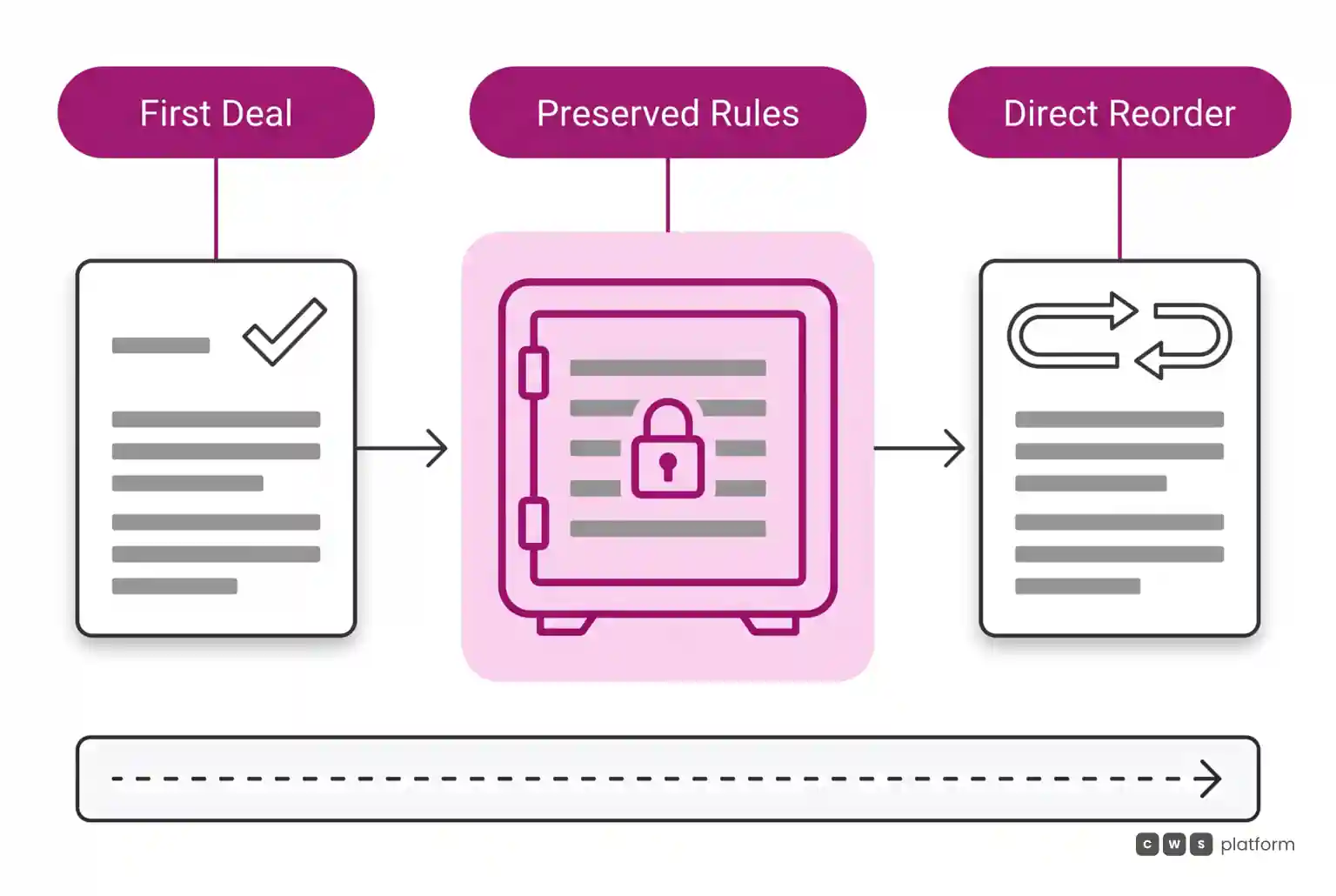
The customer already knows the company. The sales rep already knows the customer. There is a history of products, pricing, payment terms, discounts, and financial conditions. Yet every reorder begins with a new sequence of messages, spreadsheets, checks, and approvals.
The company won the relationship, but it did not accumulate operational capability.
This is the central tension of the See-Try-Buy-Fly lifecycle: acquiring customers at a lower cost matters, but the real return comes when customers remain through successive cycles—and each cycle uses the knowledge created by the previous one.
The relationship between customer acquisition and retention cost (CARC) and lifetime customer value (LCV) should be viewed through this lens. On one side is the effort required to acquire and retain. On the other is the value generated throughout the customer lifecycle. If operational effort is fully repeated for every order, commercial recurrence does not necessarily become efficient recurrence.
The customer returns, but so does the cost of serving them.
The problem does not end with acquisition
It is common to analyze acquisition as an isolated stage. The company invests to reach the buyer, open an opportunity, and win the first order. It then assumes that future sales will naturally be more efficient.
That efficiency, however, depends on the ability to preserve and apply commercial context.
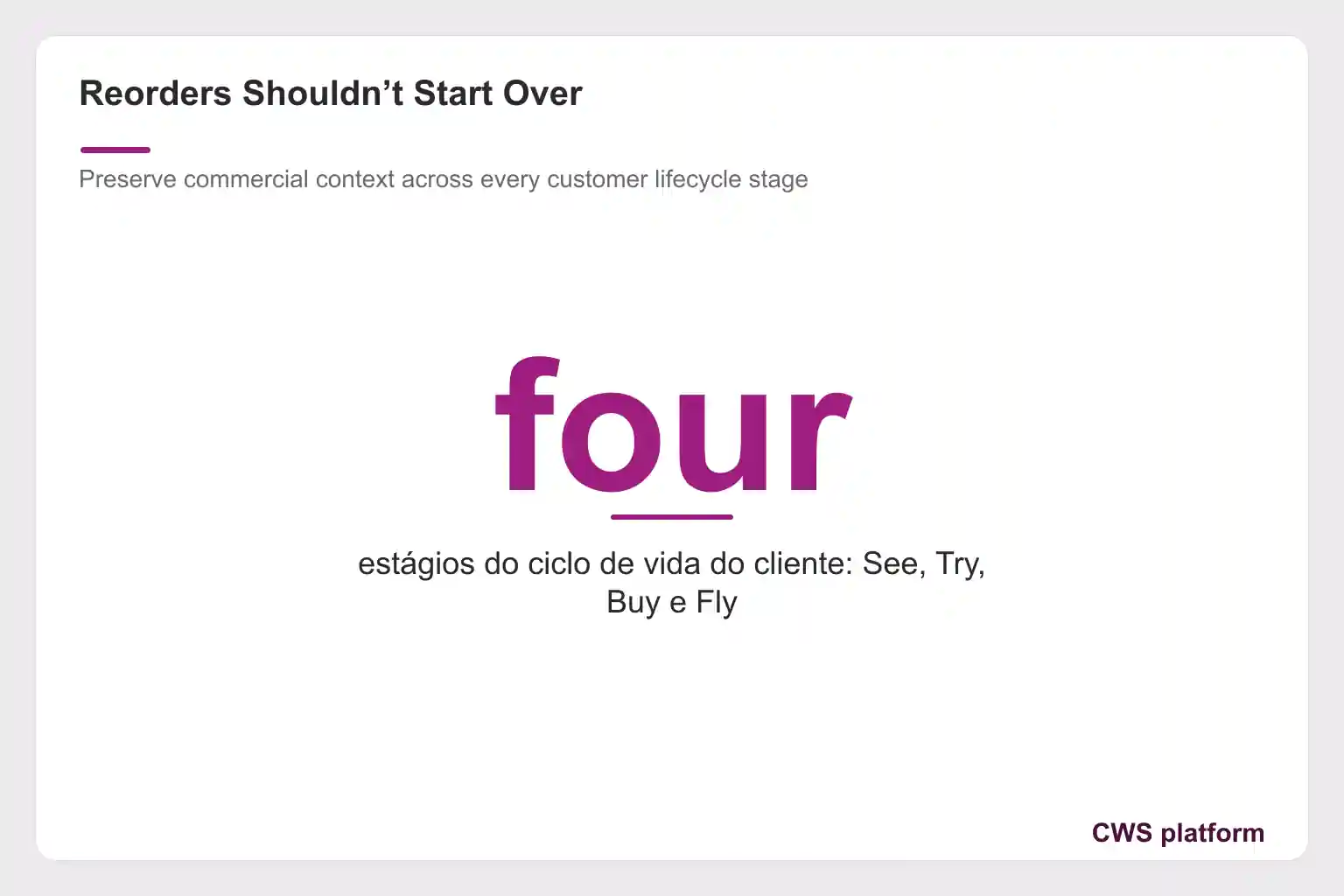
Consider four points in the cycle:
- See: the buyer becomes aware of the company, product, or business opportunity.
- Try: the buyer tests the relationship, reviews terms, or enters into an initial negotiation.
- Buy: the buyer completes the purchase under approved conditions.
- Fly: the buyer returns, expands, or repeats the relationship without rebuilding the entire negotiation.
Moving from Buy to Fly does not happen simply because the customer was satisfied. It depends on a structure that knows who the customer is, what they can buy, which price applies, which terms have been authorized, and where the exceptions are.
When those answers live in the sales rep’s memory, text-message threads, or spreadsheets, the cycle does not accumulate intelligence. It simply repeats itself.
The supporting material on commercial governance describes tangible signs of this problem: sales reps memorize pricing exceptions, discount approvals remain in a manager’s messaging app, customers receive different terms depending on who serves them, and historical margin depends on a spreadsheet.
In that situation, the company does not have an executable commercial policy. It has a set of customs sustained by people who know the exceptions.
Recurrence without operational memory is an incomplete promise
Lifecycle value does not depend only on how many times the customer buys. It also depends on how much effort the company consumes to enable each purchase.
A recurring customer base can conceal a costly operation:
- The sales rep must confirm terms that were already negotiated.
- The manager reapproves exceptions that should have been documented.
- Credit is checked outside the commercial workflow.
- The buyer interrupts the journey to request information.
- The order depends on the same spreadsheet used in the previous cycle.
- The company measures conversion but cannot identify where the commercial decision stalled.
The idea of acquiring efficiently and retaining customers through cycles does not mean pursuing volume at any cost. It means ensuring that the knowledge generated during initial acquisition reduces the effort required in subsequent interactions.
Without that, increasing retention can expand revenue and complexity at the same time. The company sells more to the same customers but must add people, controls, and approvals to sustain growth.
An additional storefront does not fix a fragmented cycle
The CWS Platform article, “Marketplace Is an Output, Not the Goal,” describes a recurring situation: a company launches a marketplace, volume remains limited, and the sales rep continues working through WhatsApp.
The diagnosis presented in the article is about sequence. When an initiative begins with the storefront—without digital order capture, integration with real operations, and a reason for people to change behavior—the new channel does not reorganize the sales process.
This point is relevant to the See-Try-Buy-Fly cycle. A channel can help the customer see or try, but it cannot sustain recurrence if price, payment terms, credit, and identity remain outside the workflow.
The company first needs to digitize the network and negotiation process that already support its revenue. The channel then becomes the outcome of an operation capable of carrying context across cycles, rather than a substitute for that capability.
The Cost of Inaction
When every sale starts from scratch, the effect does not appear only in sales rep productivity.
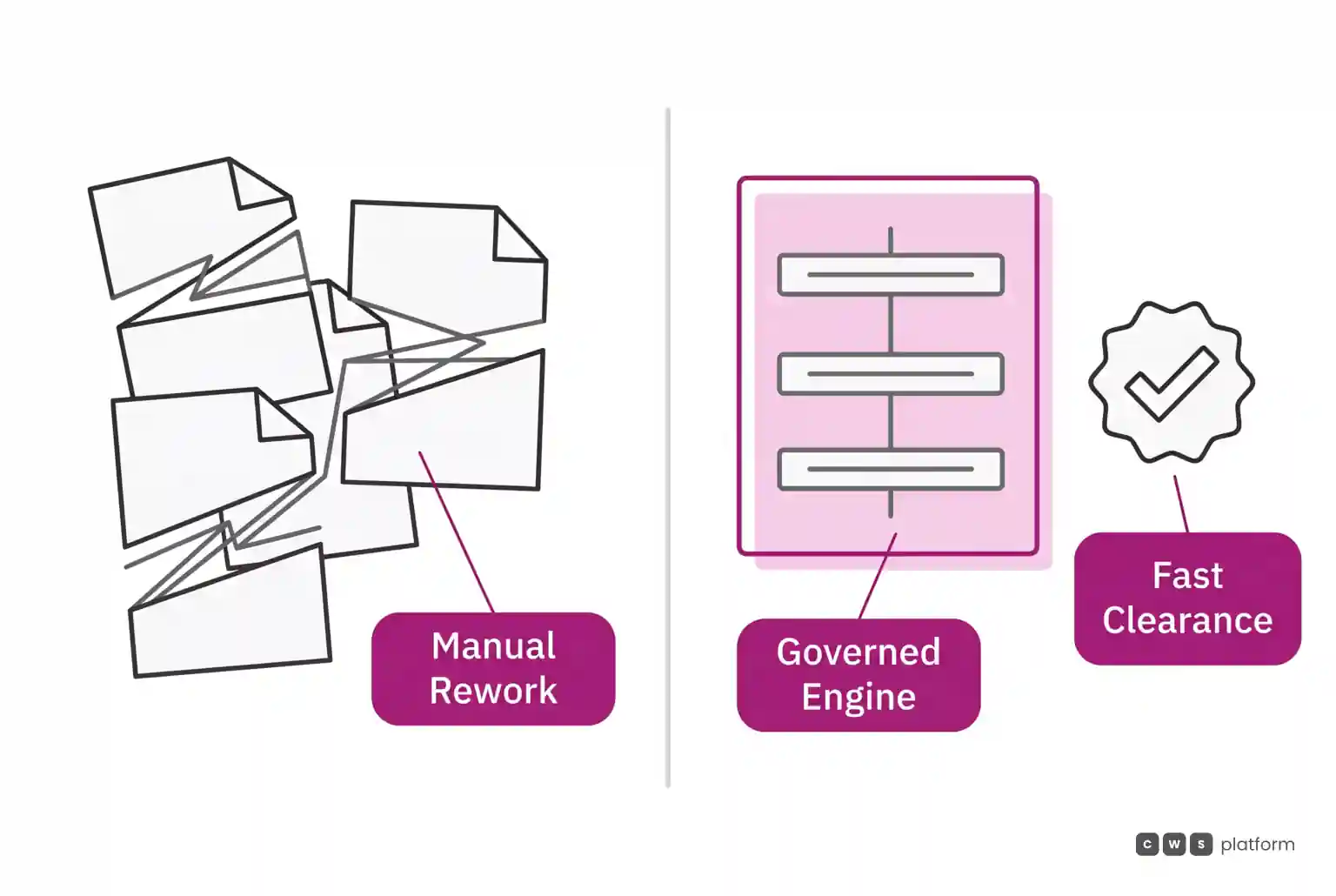
Leadership loses visibility into the economics of the customer base. It becomes difficult to distinguish customers who generate accumulated value from those who buy repeatedly but require the manual reconstruction of every condition.
Inaction produces four consequences:
- Growth dependent on individuals: to sell more, the company must replicate individual knowledge.
- Fragile retention: the relationship belongs to the sales rep or manager, not to the commercial structure.
- Limited margin visibility: dispersed terms and exceptions make it difficult to assess the true outcome of the relationship.
- Limited automation: agents and systems cannot execute decisions that were never formalized.
A public case in the archive, identified as LI-966729, makes the issue concrete in agribusiness. According to the published account, a large quote took 5 to 10 days because regional and crop-specific pricing, credit tied to barter arrangements, and other terms were managed in spreadsheets.
After the workflow was structured, a quote that had taken five days was completed in eight minutes. In the same case, a R$1 million CPR—a Brazilian rural product note—was processed through barter at checkout.
The contrast does not demonstrate speed alone. It shows the difference between repeating work and reapplying a governed decision. The field sales representative no longer acts as a data-entry operator and can return to the producer as a technical advisor.
Principles for turning recurrence into accumulated value
- Measure the complete cycle: acquisition, retention, and relationship value must be evaluated together.
- Preserve context: identity, price, payment terms, credit, discounts, and history must follow the customer across purchases.
- Govern before automating: an unorganized decision only becomes faster when automated.
- Record exceptions: negotiation DNA should remain a company asset, not individual memory.
- Reduce rebuilding: reorders should reuse valid decisions, submitting only new exceptions for approval.
- Use AI within clear boundaries: agents can support discovery, comparison, and execution, as long as rules and approval thresholds are deterministic and auditable.
- Treat the channel as an outcome: the digital experience gains traction when it represents the real commercial operation.
The partnership announced between Lianlian DigiTech and UnionPay International reinforces the principle of governance before automation. In the global procurement scenario presented, AI agents may identify suppliers, refine choices, and generate orders, but human approval will occur before payment.
The AI opportunity, therefore, does not require removing governance. It requires making boundaries and responsibilities clear enough for autonomy to operate safely.
This is where transaction cost becomes a relevant architectural measure. The more a company must rebuild context, seek approvals, and reconcile terms, the greater the effort required to close each negotiation. A B2B Commerce Platform for Governed Negotiation helps record rules, orchestrate decisions, and reuse context across cycles without replacing the commercial DNA of the operation.
The goal is not to eliminate B2B negotiation. It is to ensure that every well-resolved negotiation leaves behind a useful structure for the next one.
FAQ
Does acquiring efficiently mean indiscriminately reducing sales investment?
No. It means evaluating acquisition effort relative to the value generated throughout the relationship. Seemingly low-cost acquisition can be expensive if it produces customers who require manual rebuilding for every purchase.
Does retention alone increase value per customer?
Not necessarily. Retention needs to occur through cycles that preserve context and reduce operational effort. Otherwise, recurring revenue can carry recurring work in the same proportion.
Can AI take over the entire negotiation?
The material reviewed points to a different path: AI can support and execute steps after boundaries, rules, and approval thresholds have been defined. Decisions that commit resources require governance and, depending on the context, human approval.
Is it necessary to replace existing systems?
That is not the conclusion of the analysis. The central point is to create an architecture that governs commercial decisions and enables systems to execute consistent terms.
Who Is Already Experiencing This
On the Software Advice website, Paulo Renan S. described his experience with CWS Platform:
“Delivering consistent, scalable progress with agile course corrections.”
View the review on Software Advice
A Case That Illustrates It
The public case LI-966729 shows how governance over quoting, contextual pricing, credit, and barter can transform a dispersed process into a recurring workflow. The reported reduction—from five days to eight minutes for a quote—makes the thesis tangible: value lies not only in closing a sale, but in preventing the operation from rebuilding the same decision in the next cycle.
The materials provided do not include a public link to the case.
About This Publication
The Cost of Selling is a CWS Platform publication about negotiation governance, sales productivity, and transaction costs in B2B operations. CWS operates as a B2B Commerce Platform for Governed Negotiation, helping companies turn commercial rules and knowledge into digital, auditable, AI-enabled processes.
Sources
- Marketplace Is an Output, Not the Goal, CWS Platform analysis on the need to digitize the existing operation before expanding channels.
- Lianlian DigiTech and UnionPay International Partner, announcement regarding AI-agent payments in global procurement, with human approval before funds are moved.
- Software Advice, CWS Platform review, public website featuring Paulo Renan S.’s testimonial.
- Public case LI-966729, account provided in the archive on quote governance, credit, and barter in agribusiness, with no public link included in the source material.
"responsive, technically engaged, and willing to work through complex commercial rules (negotiated pricing, credit, customer-specific conditions) rather than pushing generic answers"
Want to see this in your operation?
Real B2B operations already run on it.