Trading Desk: Incremental Revenue from Inactive Customers
How to build data-driven offers and route execution to the right branch without pulling sales teams away from active accounts.
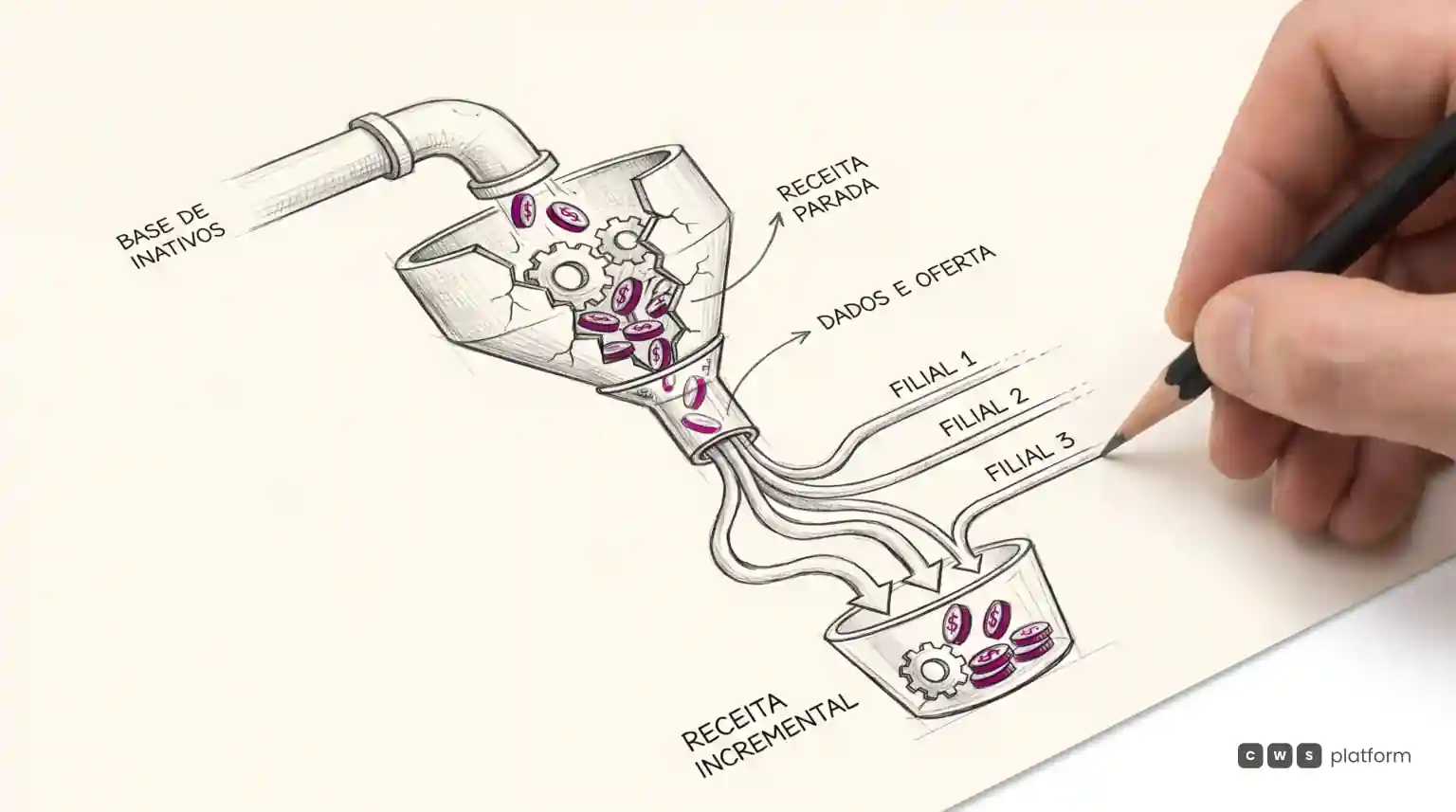
Your operation has already won customers, recorded orders, and built commercial relationships. Part of that customer base, however, has stopped buying. While the team focuses on current targets, these customers remain inactive—even when data is still available to support a new approach.
The tension for sales leaders is clear: reactivating the base can generate incremental revenue, but moving sales reps into broad campaigns can also compromise service for active accounts. If the initiative does not account for pricing, inventory, customer-specific terms, and the fulfillment capacity of each branch, the effort creates more work than orders.
The premise of this article is that a Trading Desk can open this revenue stream without pulling the team away from its core work. The structure identifies inactive customers, develops offers from available data, and routes each opportunity to the branch responsible for execution. The goal is not to replace the local commercial relationship, but to better prepare the next decision.
TL;DR
- The inactive customer base is an existing asset, but reactivation should not depend on generic campaigns or sales reps’ memory.
- A Trading Desk separates opportunity identification and preparation from execution by the responsible branch.
- Before automating offers, the company must govern identity, pricing, inventory, commercial terms, and service ownership.
- Results should be measured as incremental revenue with operational consistency—not merely by contact volume.
How can you reactivate customers without pulling the team away from current revenue?
The first step is recognizing that inactivity alone is not enough information to approach a customer.
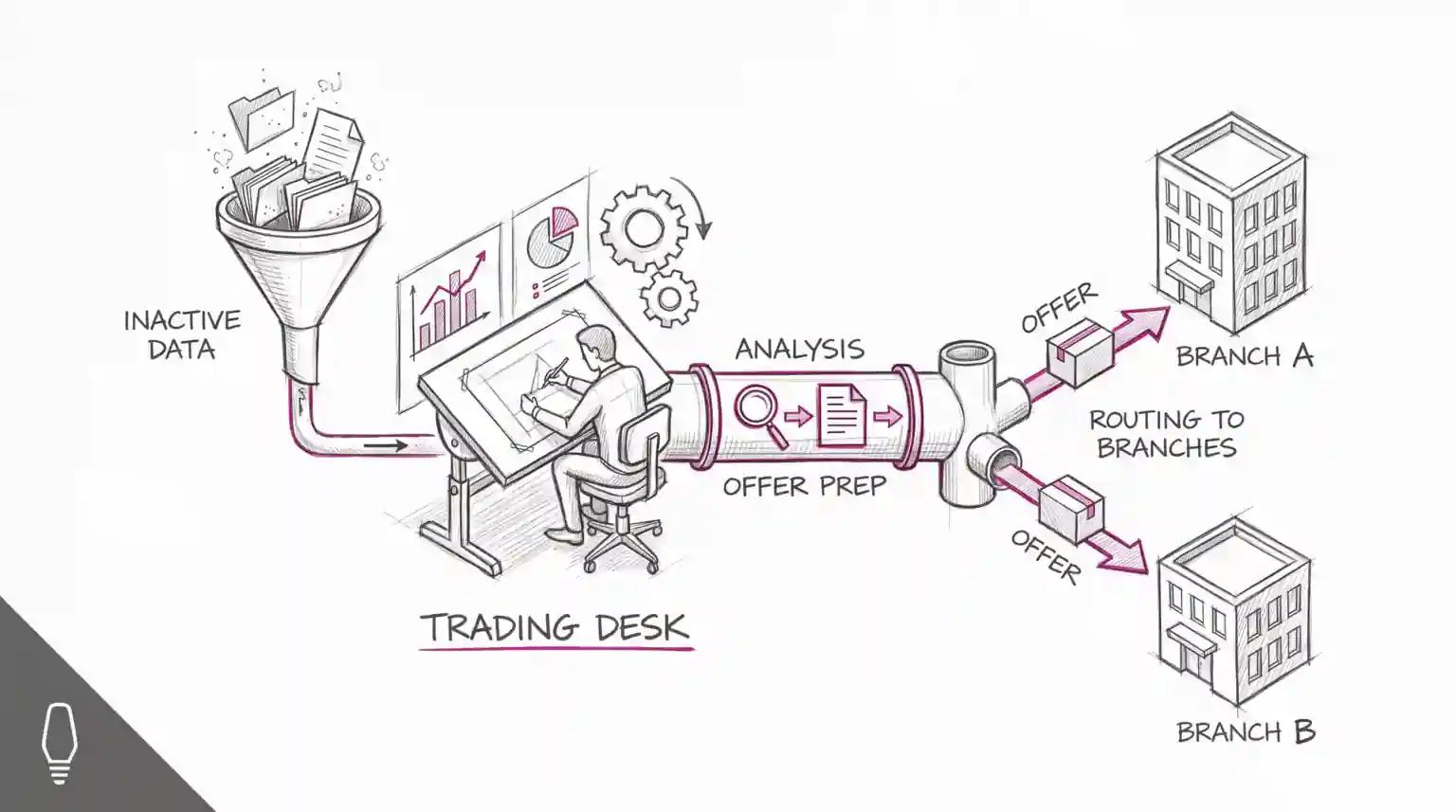
A list of companies with no recent orders only indicates where to look. It does not explain what to offer, under which terms, with what availability, or through which branch. Without that context, reactivation tends to become a generic campaign. The company increases its number of contacts, but shifts the work of rebuilding each negotiation to the sales rep.
That model does not create a new revenue stream. It simply adds another queue to the existing sales process.
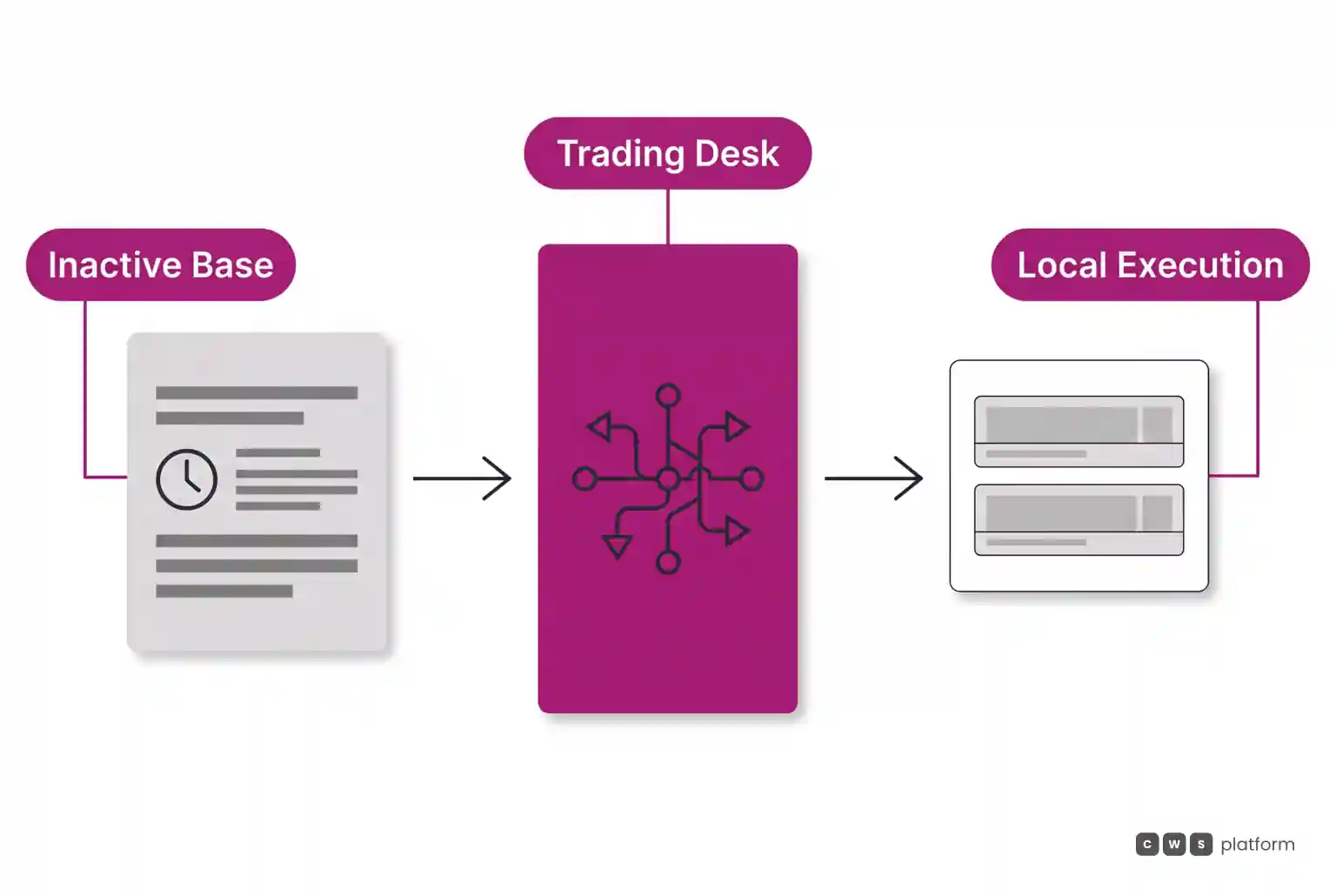
The Trading Desk starts from a different division of work. Customer-base analysis and offer preparation are centralized, while opportunity execution remains tied to the branch. This way, the local team does not have to manually search for customers who stopped buying or start every conversation from scratch. It receives better-prepared commercial context to make decisions and execute.
The problem is not finding names in the database
In many B2B operations, the names are already available. The challenge is turning historical records into a commercially valid offer today.
To do that, the operation needs objective answers to key questions:
- Is the customer correctly identified?
- Which branch should serve that customer?
- Is the item available for that operation?
- Which approved price applies?
- Is there a customer-, region-, or channel-specific term?
- Who can approve an exception?
- How does the order return to the branch’s normal workflow?
Supporting material LI-045 helps show why this stage is decisive. According to the published premise, when pricing, lead times, discounts, and segmentation live outside the system, campaigns and AI agents cannot operate consistently. The journey depends on authenticated identity, approved pricing, actual inventory, and traceability.
This changes the diagnosis. If a reactivation offer requires every sales rep to check spreadsheets, confirm inventory, seek approvals through messaging apps, and rebuild the price, the problem is not campaign quality. It is the absence of structured commercial decisions.
Centralizing intelligence does not mean centralizing the sale
A branch network may resist centralized initiatives when they appear to compete for customers, revenue, or local autonomy. That is why opportunity routing is not an operational detail. It is part of the governance design.
The Trading Desk identifies the opportunity and organizes the offer, but routes it to the branch that should serve it. The local unit remains responsible for the relationship and execution within its scope. The central team does not take over the account portfolio. It reduces the work required for the branch to activate it again.
The public LI-042 case provides a relevant architectural reference. The operation described had 40 business units, different ERPs, and different commercial terms by branch. The issue was addressed with an orchestration layer above the local systems, without replacing them. Pricing, credit, and catalog management became centrally governed, while each ERP remained the system of record for its unit.
For inactive-customer reactivation, the principle is similar: intelligence can be shared, but each point in the operation should receive only what its context authorizes. This preserves local autonomy where it matters and reduces inconsistency across branches.
The offer must be executable from the start
A data-driven offer is not merely a product recommendation. It must reach the operation in a condition that can be executed.
If the customer receives a proposal that does not match the approved price, available inventory, or terms recognized by the branch, reactivation begins by creating distrust. The sales rep has to correct the offer, explain the discrepancy, and restart the negotiation.
Governance, therefore, comes before automation. AI can help analyze the customer base, find patterns, and prepare alternatives, but it must operate on documented commercial rules. Automating before defining those rules only accelerates the creation of exceptions.
It is also important to distinguish activity from results. The Trading Desk should not be evaluated solely by the number of customers selected or offers sent. Management needs to track the complete path:
- eligible customer base considered;
- offers prepared under current rules;
- opportunities accepted or declined;
- orders actually completed;
- branch responsible for execution;
- margin and commercial terms applied;
- exceptions and reasons for blocking.
This chain makes it possible to determine whether revenue is truly incremental and where the opportunity is stalling.
The Cost of Inaction
Leaving the inactive customer base untreated may appear to create no immediate expense. In practice, the company keeps a commercial asset without a clear process for using it.
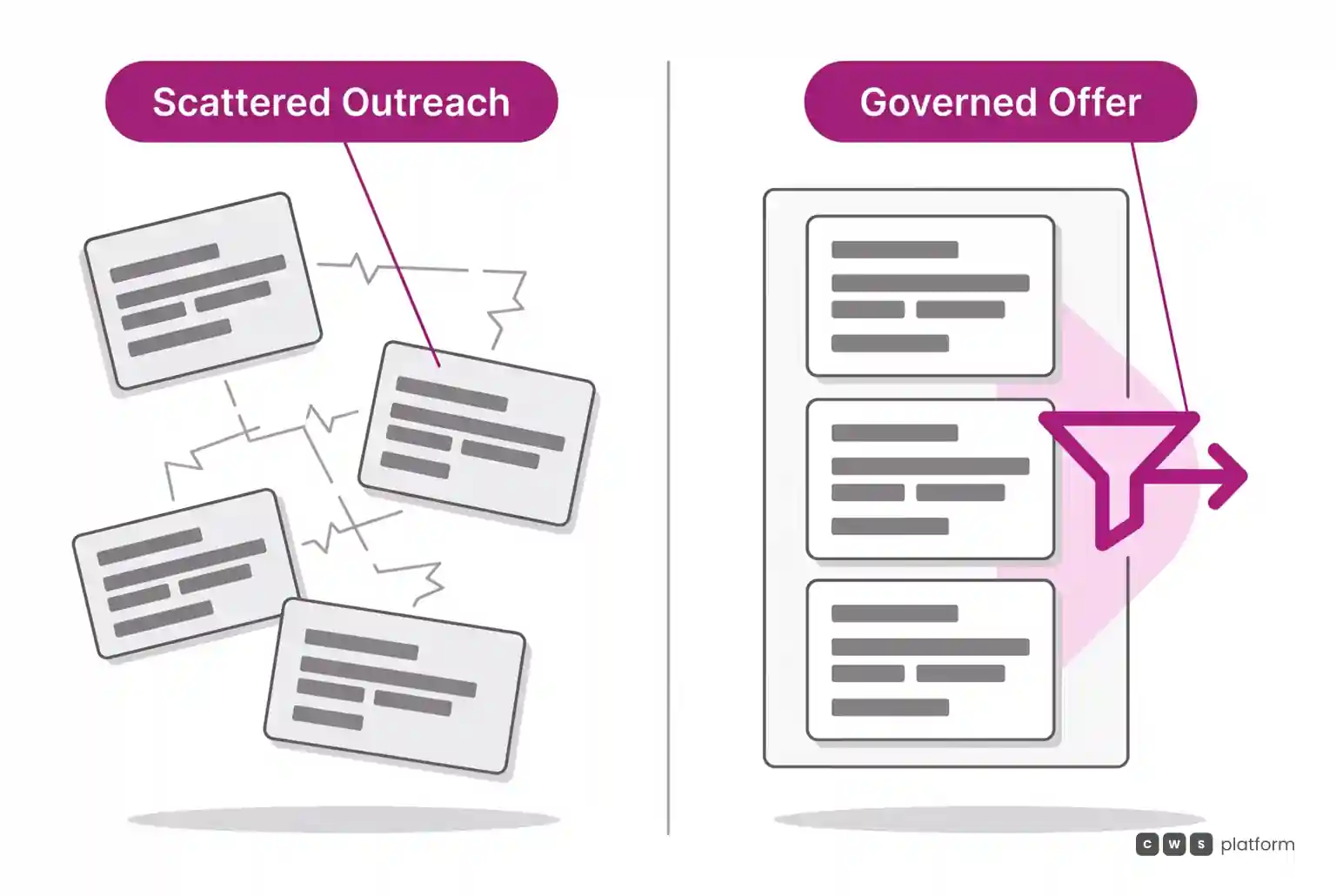
The cost appears in less visible ways:
- sales reps spend time rebuilding context that data could already organize;
- each branch approaches the customer base using its own criteria;
- campaigns generate contacts that do not reach the local team in executable form;
- opportunities depend on the memory of whoever knows the account;
- leadership cannot distinguish lack of demand from a failure in pricing, inventory, terms, or routing;
- automation remains limited because commercial decisions are not structured.
The consequence is not only uncaptured revenue. It is the inability to learn systematically from the company’s own customer base. Without records of the reasons for acceptance, rejection, or blocking, every new attempt starts again from almost the same point.
Principles for structuring a reactivation Trading Desk
- Define what qualifies a customer as inactive before creating any offer.
- Separate customer-base selection, opportunity preparation, and execution by the branch.
- Preserve commercial account ownership for the unit responsible for the customer.
- Use only pricing, inventory, and terms recognized by the operation.
- Document approval levels and exceptions before automating decisions.
- Deliver context to the sales rep, not just a list of names.
- Measure completed orders and their consistency, not only contacts.
- Use each response from the customer base to improve the next decision.
- Treat AI as a tool for analysis and governed execution, not as a substitute for commercial policy.
FAQ
Does the Trading Desk replace the branch sales rep?
No. The premise is to centralize analysis and opportunity preparation while routing execution to the branch. The sales rep retains the commercial relationship and works with more structured context.
Is it enough to identify customers who have not purchased for some time?
No. Inactivity identifies a potential population, but the offer must account for identity, pricing, inventory, commercial terms, and service ownership.
Is it necessary to replace branch ERPs?
The LI-042 case points to another path: an orchestration layer can centralize rules above existing ERPs while keeping each local system as the unit’s system of record.
Where can AI help?
In customer-base analysis, opportunity identification, and offer preparation. Its role should come after deterministic rules, approval levels, and traceability have been defined.
Who is already experiencing this
In a review published on Software Advice, Paulo Renan S. described the experience with CWS Platform as:
"Delivering consistent, scalable progress with agile course corrections."
Read the review on Software Advice
A case that illustrates the model
The public LI-966729 case shows the same logic applied to a more complex agricultural negotiation. According to the published material, a large quote could take 5 to 10 days because pricing by region and crop, credit, and barter arrangements were handled in spreadsheets.
With a structured workflow, a quote that took five days was reduced to eight minutes. The case also recorded a R$1 million CPR processed through barter at checkout. The gain did not come only from opening a channel, but from organizing the decisions required for the quote to move forward.
The connection to inactive-customer reactivation is direct: technology creates capacity when it turns dispersed commercial knowledge into a governed workflow. The sales rep or representative no longer needs to reconstruct the operation manually and can focus time on the customer’s decision.
About this publication
The Cost of Selling examines how commercial decisions, architecture, and technology affect the productivity of B2B operations.
In reactivation initiatives, a B2B Commerce Platform for Governed Negotiation can connect data, commercial rules, branches, and execution without replacing local systems or erasing the company’s negotiation DNA. Its architectural contribution is to reduce transaction costs: fewer manual checks, less context reconstruction, and more decisions that are recorded, auditable, and enabled by AI.
This is also the CWS Platform perspective: govern the decision first, then automate its execution. The Trading Desk therefore stops being a parallel campaign and becomes a controlled stream of incremental revenue.
Sources
- Trading Desk, incremental revenue from inactive-customer reactivation: original premise and primary factual source for this topic, originating from the site’s research radar; no public link was provided.
- LI-045, commercial governance: supporting material on identity, pricing, inventory, discounts, and traceability as the foundation for campaigns and AI; no public link was provided.
- LI-042, ERP and orchestration: public case about 40 business units, different ERPs, and the centralization of commercial rules without replacing local systems; no link was provided.
- LI-966729, agricultural negotiation governance: public case about reducing a quote from five days to eight minutes and processing a R$1 million CPR through barter; no link was provided.
- Software Advice, Paulo Renan S. review: public testimonial regarding CWS Platform’s consistent and scalable progress. Access the source
"responsive, technically engaged, and willing to work through complex commercial rules (negotiated pricing, credit, customer-specific conditions) rather than pushing generic answers"
Want to see this in your operation?
Real B2B operations already run on it.