You Digitized the Channel. Your Sales Decision Is Still Analog.
Why customer portals fail to protect B2B margins when pricing, credit, and deal governance remain trapped in manual approvals.
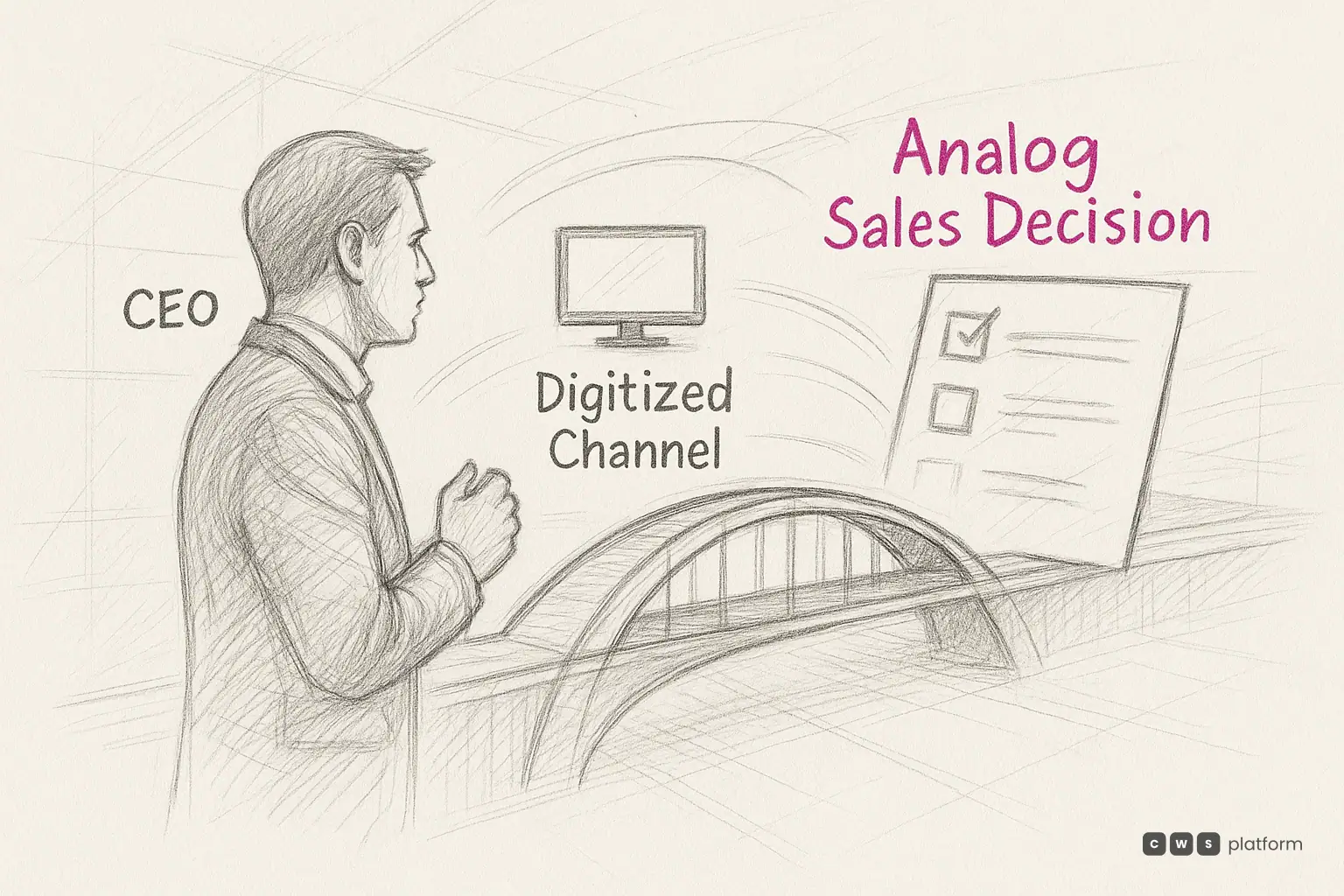
TL;DR
- Swapping an email for a form or paper for a PDF is an interface change, not a process change; negotiations still happen the same way, with the exact same gaps.
- AI and digitalization only generate real value when integrated into the exact moment someone decides to buy, sell, negotiate, or approve, backed by data, process, and governance in the same context.
- Without that integration, the result is always the same: sales reps giving away discounts as a substitute for clarity, conservative catalogs designed to avoid exceptions, and approvals handled outside the workflow.
- The real margin lever in B2B is not technology itself, it is commercial governance operating right inside the negotiation moment.
What Happens When Digitalization Stops at the Interface?
Fintech executives in India, in an analysis published by KNN India, were direct: AI and digitalization will drive the next phase of growth for B2B SMBs. The premise is sound. Yet it carries a trap that few name clearly.
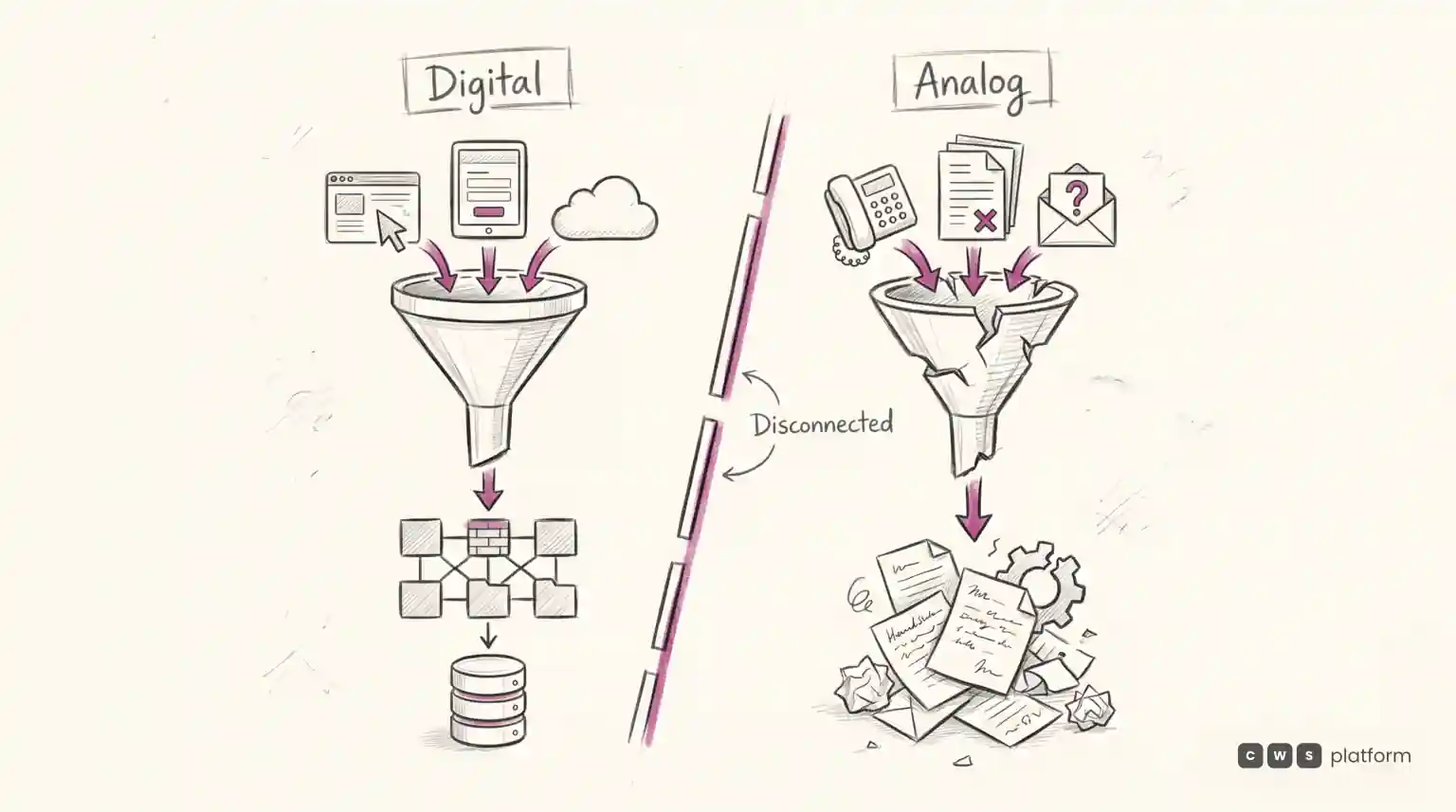
Many companies interpret "digitalizing" as simply changing the channel. An email turns into a web form. Paper becomes a PDF. Phone orders migrate to a customer portal. Operations celebrate the rollout. Gross margins do not budge.
The channel changed. The decision did not.
That is because the sales decision in B2B does not happen inside the channel. It happens the moment buyer and seller reach an agreement on price, payment terms, product mix, and credit limits. If that moment still depends on manual lookups, email approvals, spreadsheets outside the core system, or credit checks confirmed over the phone, the process remains analog, no matter how modern the customer-facing portal looks.
What KNN India describes as the "next phase" requires this precise distinction: digitalizing the decision, not just the channel.
Why the Confusion Persists, and What It Costs
The confusion stems from a very understandable place. Digitalizing a channel is visible, measurable, and fast. A portal can launch in weeks. A form can replace an inbox in days. Leadership gets something tangible to show the board.
Digitalizing the decision is slower and demands much more. It means structuring price, credit, and inventory data within the exact environment where the deal is negotiated, governed by clear business rules, integrated into the ERP, and accessible at the moment of truth. It requires governance before automation.
The cost of skipping this step is specific and recurring:
- Sales reps lack visibility into real pocket margin and hand out discounts to make up for missing information.
- Product catalogs stay artificially narrow because manual exceptions grind operations to a halt.
- Approvals happen out of band, creating delays, lost context, and severe consistency risks.
- Customers only see what the sales rep manages to present, rather than the full breadth of the portfolio.
Every single one of these points represents transaction friction. Not production cost, not customer acquisition cost, but the cost of closing a deal reliably, repeatedly, and with protected margins.
The Mechanics That Reverse the Outcome
When the sales decision operates inside the system, backed by real-time data and explicit rules, behavior shifts across the entire chain.
Buyers see deeper into the catalog. They discover product mixes they did not know existed. They buy with broader scope. Sales reps no longer need to sacrifice margin just to offset a lack of clarity; clarity is already built into the workflow. Approvals run along defined guardrails without manual bottlenecks.
The counterintuitive result is that margins expand. Not through top-down no-discount mandates, but through organic portfolio discovery.
This is what KNN India refers to as the "real value of AI": not automating isolated tasks, but embedding intelligence directly into the context where decisions take place. AI operating before or after that moment delivers marginal returns. Operating inside it, it changes the entire P&L equation.
The Cost of Inaction
Keeping the status quo carries a cost that never shows up on a standard operational dashboard, but sits across the entire income statement:
- Average discounts conceded without any basis in real available margin.
- Compressed sales mixes because the full catalog is inaccessible within the decision flow.
- Extended approval cycles that delay recognized revenue and strain client relationships.
- Discrepancies between what the rep promised in the field and what the core system ultimately booked.
Companies that put off this integration do not stay flat: they compound transaction friction while competitors who digitalized the decision execute with less drag and healthier margins.
Principles for moving forward:
- Govern before automating: pricing tiers, credit logic, and inventory allocations must be structured before entering software.
- The negotiation moment is the integration point: data and decisions must coexist in the same place, at the same second.
- Catalog visibility drives margin: customers only buy what they can see; hiding parts of the portfolio to dodge operational exceptions trades away margin for short-term convenience.
- The shift is operational, not purely technological: no software platform can replace the operating team driving adoption day in and day out.
- AI follows governance: layering automation over an unstructured workflow only accelerates mistakes, it does not fix them.
Questions Every B2B Commercial Leader Should Ask
"Our customer portal is digital. Why haven't our margins improved?" Because the portal is merely an interface. Decisions around price, payment terms, and inventory availability are still made outside the system. Your negotiation process remains analog.
"Where should AI actually enter our commercial operation?" At the exact moment someone decides to buy, sell, negotiate, or approve. Not before, not after. Without structured data and embedded governance in that specific context, AI has nothing actionable to run on.
"Does digitalizing the decision require ripping and replacing our ERP?" Not necessarily. It requires connecting the live negotiation flow directly to the data already sitting in your ERP, in real time, backed by clear rules defining who can decide what, and under which parameters.
Real-World Evidence
On Software Advice, Leonardo C., a verified reviewer from the automotive sector at an enterprise with over 1,000 employees, summarized the B2B operational experience with CWS Platform: "We work with B2B solutions on CWS." (Software Advice, https://www.softwareadvice.com/product/546664-CWS-Platform/)
A Case in Point
Tracbel, a premier Volvo Gold dealer, represents a concrete benchmark of what happens when the sales decision moves inside the transaction platform. Pricing, customer credit, inventory, and cross-sell mixes were brought under programmatic rules, integrated directly into SAP in real time, right within the deal flow.
The result surprised leaders who assume digital channels inevitably drive price erosion: channel margin expanded. Not because discounting was strictly banned, but because buyers gained transparent access to the broader catalog, ordering high-value lines they previously did not realize were available.
The engagement also highlighted that technology was a necessary foundation, not a standalone fix. Tracbel's internal team, steering change management daily, refining catalog parameters, and trusting the governed workflow, drove the commercial outcome. Software does not accomplish that on its own.
Read More
- When the AI Agent Makes a Mistake, the Error Doesn't Stay Isolated: It Replicates Across Every Order
- You Are Trying to Build a Marketplace When What You Actually Need Is a Sales Ecosystem
- Commercial Governance and Executable Policy
About This Publication
The Cost of the Sale is CWS Platform's publication dedicated to B2B commercial operations: gross margins, governance, negotiation workflows, and the true cost of closing a deal. CWS Platform is a B2B commerce platform built for governed negotiation, utilized by enterprises that need to connect real-time sales decisions, complex pricing, trade credit, and inventory availability directly into the transaction flow. Learn more at cws-platform.com.
Sources
- KNN India, "AI and Digitalisation To Power Next Phase Of MSME Sector Growth, Say Top Fintech Executives" (https://knnindia.co.in/news/newsdetails/msme/ai-and-digitalisation-to-power-next-phase-of-msme-sector-growth-say-top-fintech-executives): reporting featuring Indian fintech leaders on the role of AI and digitalization in B2B SMB expansion; the analytical foundation for distinguishing channel digitalization from decision digitalization.
- Software Advice, verified user review by Leonardo C. (https://www.softwareadvice.com/product/546664-CWS-Platform/): public review from an automotive enterprise professional detailing B2B commerce operations on CWS Platform.
Brands mentioned in this article


Trademarks and logos belong to their respective owners. Mention does not imply partnership or endorsement.
"responsive, technically engaged, and willing to work through complex commercial rules (negotiated pricing, credit, customer-specific conditions) rather than pushing generic answers"
Want to see this in your operation?
Real B2B operations already run on it.