Your Operation Scaled. Your Pricing Governance Probably Didn't.
Charging every customer the same price isn't a policy — it's the absence of one. And the cost shows up in your P&L before it shows up in any diagnosis.

TL;DR
- Charging the same price to different customer profiles is not fairness: it ignores context and quietly gives away margin.
- Informal negotiation carries an invisible cost: decisions without data, history, or auditable criteria turn discounts into a habit and margin into an unmanaged variable.
- Publicly traded distribution companies already reveal the symptom in their results: digital revenue growth without digital margin growth.
- Price governance is not a more sophisticated spreadsheet; it is differentiated logic by segment, channel, and timing, embedded in the negotiation workflow with traceability.
Is one price for everyone a policy—or the absence of governance?
There is a common operating belief in growing B2B businesses: standardizing prices simplifies management. In practice, the opposite is true.
A customer who buys every month, with predictable volume and a low cost to serve, does not carry the same risk profile as a spot buyer with a long sales cycle and high credit costs. Charging both the same price is not fairness: it is ignoring context. The same reasoning applies to region, market conditions, and inventory availability. A price that protects margin in the Northeast may undermine competitiveness in the rural Midwest. The right price in January may be the wrong one in September.
At a conceptual level, many leaders agree with this. The problem is that execution does not keep pace with understanding.
Four signs that the gap has already become structural are common in operations that grew without updating their pricing architecture:
- A salesperson asks for a discount through text or WhatsApp, and a manager approves it without seeing the margin impact.
- Two customers in the same segment receive different terms without documented criteria.
- Finance learns about the commercial terms only when the invoice is issued.
- Revising the pricing policy requires a meeting, a spreadsheet, and email—not a system parameter.
Each sign on its own may seem like operational noise. All four together point to an architecture problem.
The trail that disappears before it reaches the ERP
There is a pattern even quieter than informal discounting: the lack of traceability in the negotiation itself.
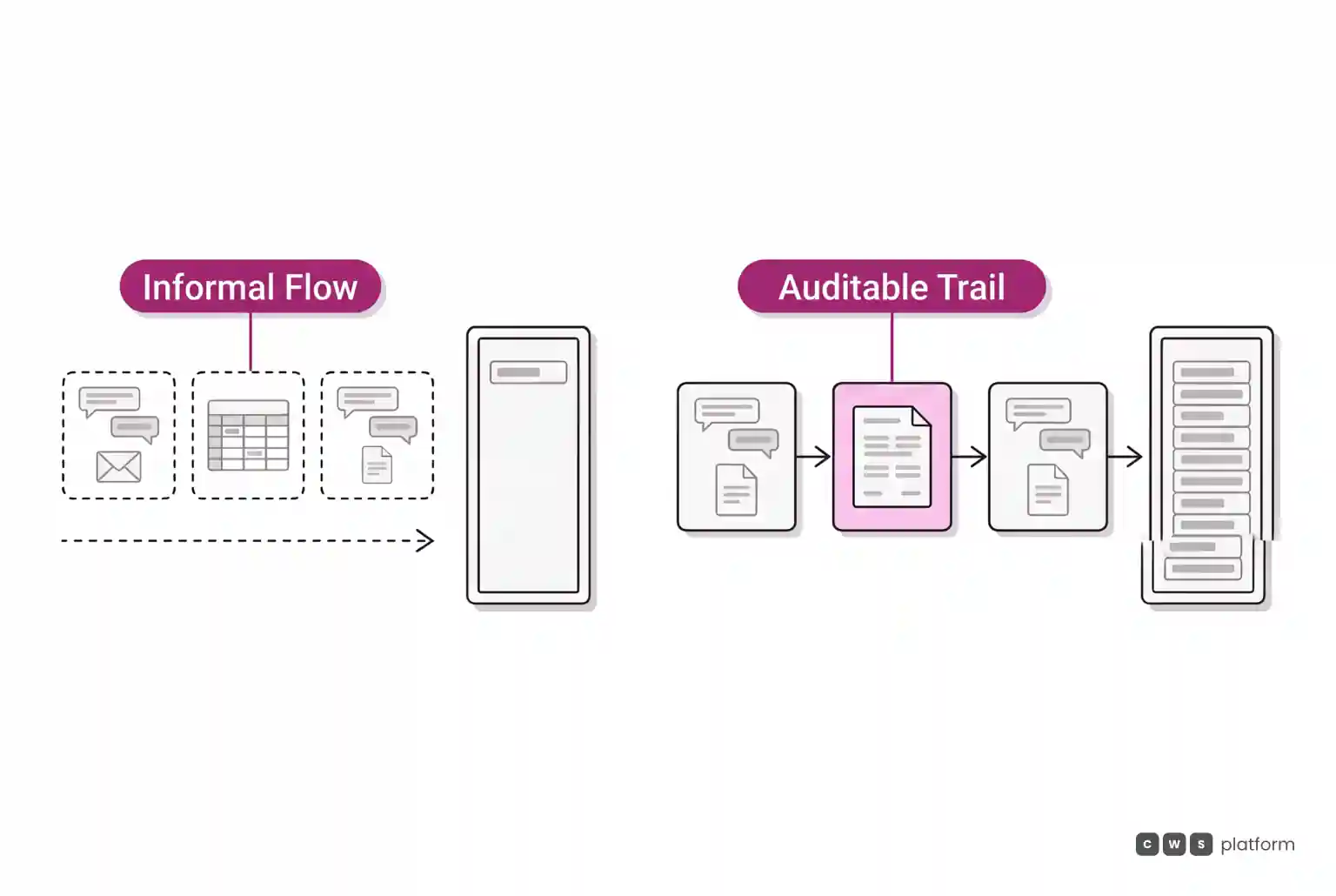
The final price of a meaningful B2B order rarely originates in a system. It starts in an email exchange, a WhatsApp message, a hastily revised spreadsheet, or a phone call nobody recorded. By the time the number enters the ERP, the negotiation is already over—and the path that led to it has disappeared.
Without a trail, there can be no audit. Without an audit, there can be no learning about margin. Without learning, every negotiation starts from scratch, dependent on the memory of the people who were in the conversation.
Finance leaders talk extensively about visibility into inventory, cash, and delinquency. But visibility into the negotiation itself—the process that determines the agreed price and payment terms—systematically stays outside the dashboard. The direct question for CFOs and sales leaders is this: can your company reconstruct, step by step, how it arrived at the price and payment terms of its last significant order? Not the final number. The path.
Digitizing the interface does not solve the decision
A public case illustrates the issue clearly. A sales executive proudly presented the B2B portal the company had just launched: a clean, fast, well-designed interface. When asked how pricing made its way into the portal, the answer was that the pricing team updated a spreadsheet and IT imported it once a week. When a customer called on Thursday asking for special terms, “the salesperson handles it outside the system, and then we sort it out afterward.”
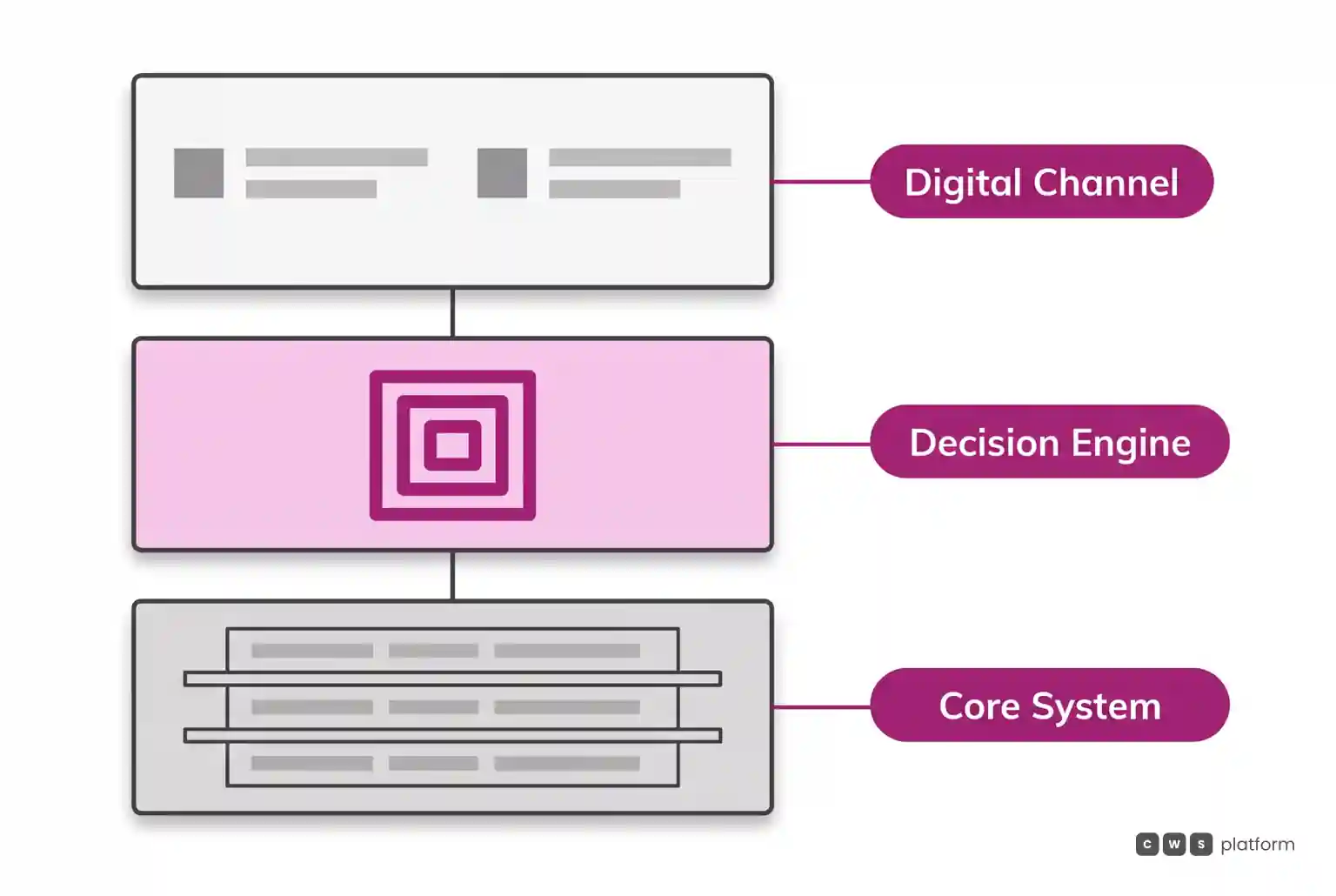
The portal was good. The problem was elsewhere: commercial negotiation was still happening outside any structure—on the phone, on WhatsApp, in the salesperson’s memory. Digitalization had arrived before the governance needed to support it.
This is not unusual. It is the norm. Most B2B operations have digitized the interface. Few have digitized the decision. And the decision is where the risk, the margin, and the data that matter reside.
The same pattern appears in B2B rental operations. Eloca, highlighted by Valor Econômico in the context of the growth of rental commerce, represents the digitization of the channel: integrated catalog, contracts, and asset management. That is the first stage. The second, and more difficult one, is digitizing the decision behind the channel. In B2B, every transaction carries negotiated terms: payment terms, volume, price, and SLA. When the process is manual, those terms live in the salesperson’s head or in an email. Companies that structure negotiation governance gain an additional source of scale that interface digitization alone cannot deliver.
The signal already showing up in public results
Publicly traded distribution companies have revealed this problem objectively in their results: digital revenue growth without digital margin growth. The channel scales, but pricing does not keep up. The difference disappears into quarterly results.
That is the cost of lacking contextual price governance. It does not appear in any direct expense line on the income statement. It appears as margin that should have been there but is not.
The Cost of Inaction
The absence of price governance creates three costs that accumulate quietly:
- Untracked margin erosion: the discount that “the salesperson handled outside the system” does not show up as a cost; it appears as lower margin with no identifiable source.
- Decisions that do not learn: without a structured negotiation history, each salesperson starts from zero. Knowledge about what works for each segment does not become a criterion; it becomes individual memory and therefore does not scale.
- Audit and compliance risk: differentiated commercial terms without documented criteria create legal and tax exposure that becomes visible only once it is expensive to resolve.
When pricing logic is structured by segment, channel, and timing, the salesperson negotiates within limits that make sense for the business. The customer receives an offer that reflects the real value of the relationship. And the CFO can see where margin is being built—or eroded.
Price governance is not operational complexity. It is the recognition that different contexts require different logic, and that the logic must live in the system, not in someone’s head.
Principles for structuring price governance in B2B operations
- Differentiating prices by segment, channel, and timing is not an exception to policy: it is the policy.
- Discount criteria must be auditable before approval, not discovered when the invoice is issued.
- Negotiation traceability is not bureaucracy: it is the asset that enables learning about margin over time.
- Digitizing the sales interface without digitizing the commercial decision creates an illusion of control.
- Contextual governance does not take away the salesperson’s ability to be flexible: it defines where flexibility creates value and where it destroys it.
Frequently asked questions
Doesn’t price governance make salespeople less flexible?
No—when it is well structured. It defines the boundaries within which salespeople have real autonomy. What limits them is the absence of criteria: a salesperson who must request informal approval for every negotiation has less autonomy, not more.
Is this relevant only for large operations?
The four signs of a structural gap appear frequently in mid-market operations that have grown quickly. The issue is not size; it is growth speed without an accompanying architecture update.
Isn’t a more sophisticated pricing spreadsheet enough?
No. The spreadsheet is not the problem. The problem is that negotiations happen outside any system, and the outcome reaches the ERP without the context that produced it. Governance must be embedded in the negotiation workflow, not applied after the fact.
What happens when AI enters this workflow without governance?
Anthropic’s integration of Claude into Excel and PowerPoint illustrates a relevant dynamic: AI models are becoming general-purpose infrastructure. The durable differentiator is not the model; it is the foundation on which it operates. If it works on disorganized data, rule-free workflows, and decisions without history, it automates noise. If it operates on a governed foundation with structured data and traceability, it amplifies high-quality decisions. Negotiation governance becomes a competitive asset precisely when AI arrives.
How do you track discounts given by sales reps in B2B?
By bringing the negotiation into the system instead of leaving it in WhatsApp, email, and a hastily revised spreadsheet. When the final price originates outside the system, the number enters the ERP and the path that led to it disappears; without a trail there can be no audit, and without an audit there can be no learning about margin. Discount criteria must be auditable before approval, not discovered when the invoice is issued.
What is discount governance?
It is the part of price governance that defines, before the negotiation, the criteria under which a discount can be granted by segment, channel, and timing. It does not take away the salesperson's ability to be flexible: it defines where flexibility creates value and where it destroys it. Without it, decisions without data, history, or auditable criteria turn discounts into a habit and margin into an unmanaged variable.
Who is already experiencing this
“We had been trying for nearly two years to implement a B2B solution. With CWS, we went live in 60 days.”
EDIVALDO C., verified reviewer, automotive industry, company with 201 to 500 employees. Source: Software Advice
A case that illustrates the issue
The case of the B2B portal with weekly price updates through a spreadsheet and negotiations handled “outside the system” by the salesperson is not an isolated case: it is the pattern found in most operations that digitized the interface before structuring the decision. Digitalization arrived before the governance required to support it, and margin pays the cost of that reversed sequence. The full case is referenced in CWS archive material LI-036.
How CWS Platform addresses this challenge
CWS Platform was built to operate precisely in the layer that remains invisible between the negotiation and the ERP: the commercial decision. It does not replace the ERP or CRM. It governs the negotiation process that determines price and payment terms, making that process auditable, contextual, and scalable.
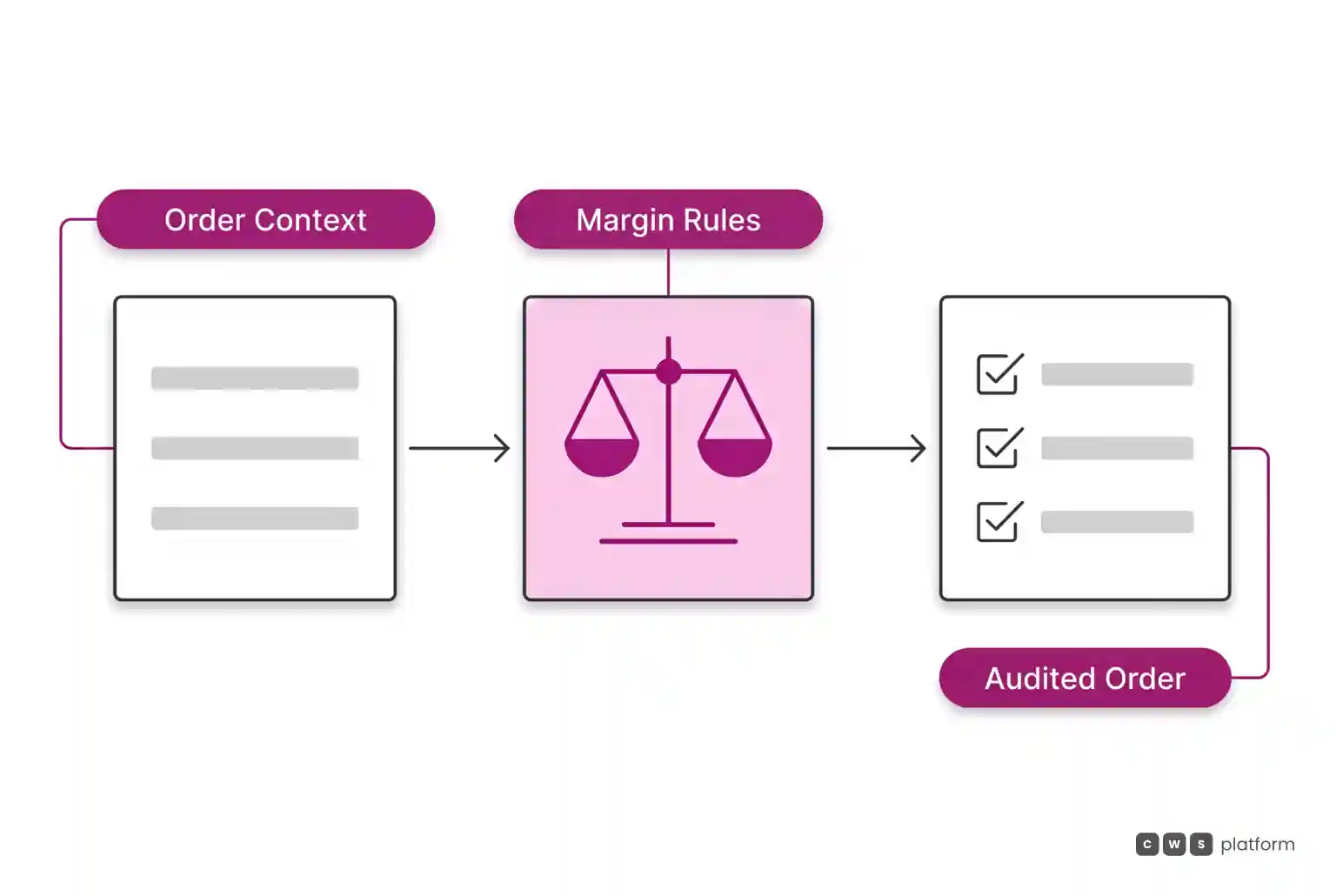
When pricing logic by segment, channel, and timing is embedded in the B2B commercial workflow, discounts stop being a silent leak and become a managed variable. The CFO sees the path, not just the final number.
About this publication
The Cost of Selling is CWS Platform’s publication on B2B commercial operations, transaction costs, and negotiation governance. It is written for leaders managing real complexity: CEOs, CFOs, sales leaders, and owners of B2B distribution and service operations.
Sources
- LI-029 (CWS Platform, proprietary thesis): primary foundation for this article; the thesis that one price for everyone is an inefficiency disguised as policy, and that contextual pricing governance by segment, channel, and timing is necessary.
- LI-035 (CWS Platform, proprietary thesis): the four signs of a structural price-governance gap in growing B2B operations; source of the framing around discounts requested through WhatsApp and finance discovering commercial terms only on the invoice.
- LI-034 (CWS Platform, proprietary thesis): the lack of traceability in B2B negotiation as a governance issue; the distinction between the final number in the ERP and the path that produced it.
- LI-036 (CWS Platform, public case): the case of the B2B portal with pricing updated once a week and negotiations handled outside the system; digitizing the interface without digitizing the decision.
- Valor Econômico, June 29, 2026, “Rental Commerce advances in B2B and redefines access to products in the digital world”: https://valor.globo.com/patrocinado/pressworks/noticia/2026/06/29/rental-commerce-avanca-no-b2b-e-redefine-acesso-a-produtos-no-mundo-digital-1.ghtml, context on the growth of B2B rental commerce and the distinction between digitizing the channel and digitizing the commercial decision.
- Jamaica Observer / Anthropic, July 10, 2026, “From Excel to slides in minutes, Claude now works inside your spreadsheet”: https://www.jamaicaobserver.com/2026/07/10/excel-slides-minutes-claude-now-works-inside-spreadsheet-deck/, Claude’s integration with Excel and PowerPoint as an illustration that AI models are becoming a commodity and that data and workflow governance are the durable differentiator.
- Software Advice, verified review from EDIVALDO C.: https://www.softwareadvice.com/product/546664-CWS-Platform/, social proof of a 60-day CWS Platform implementation in an automotive operation.
"responsive, technically engaged, and willing to work through complex commercial rules (negotiated pricing, credit, customer-specific conditions) rather than pushing generic answers"
Want to see this in your operation?
Real B2B operations already run on it.