How to Roll Out a B2B Ordering Portal for Distributors Without Creating Channel Conflict
Why distributor portals fail when treating wholesale like storefronts and how to anchor digital channels in commercial governance.

"The portal has been live for six months, and customers are still texting their orders to sales reps." Anyone who has deployed distributor ecommerce and heard this sentence knows the issue was not technical. The website launched, the catalog loaded, and logins worked fine. What failed was channel adoption: the buyer logged in, failed to see their negotiated terms, and reverted to their old routine.
Deploying an ordering portal for wholesale distribution is rarely a website project. It is a fundamental operational shift in how your commercial policy reaches the customer. The sequence of your implementation steps determines whether the portal becomes the primary engine for recurring orders or just an abandoned side channel that sales reps actively work around.
Why Distributor Portals Turn Into Ignored Side Channels
Why do buyers pick up the phone? Because the price displayed online is not their negotiated contract rate, their payment terms are missing, or an item marked in stock turns out to be backordered.
Why does the portal display incorrect terms? Because it was launched like a retail storefront: standard catalog and list prices first, with custom customer rules pushed to "phase two."
Why were customer rules deferred? Because they live across scattered spreadsheets, ERP workarounds, and sales reps' heads. Moving them online looked like an endless integration nightmare.
Why do sales reps avoid steering accounts online? Because the portal fails to match their custom pricing and directly threatens their commissions.
The root cause: the portal went live without core pricing rules baked in. Without custom commercial logic, a digital channel can only serve buyers who accept generic list pricing, a customer segment that barely exists in wholesale distribution. This represents the classic failure mode of a live B2B portal lacking necessary governance, viewed directly from the implementation side.
The True Cost of the Wrong Implementation Sequence
The actual damage does not appear on your initial software invoice. It surfaces later across three operational areas: inside the sales team, which remains trapped manually entering routine reorders; inside profit margins, where reps hand out off-system discounts to compensate for system friction; and across channel trust, because an account that gets an incorrect price once will hesitate to return. According to Gartner's 2025 B2B buyer survey, 69% of buyers report discrepancies between digital channels and what sales reps quote. Every single pricing mismatch gives a buyer another reason to trust a phone call over a screen.
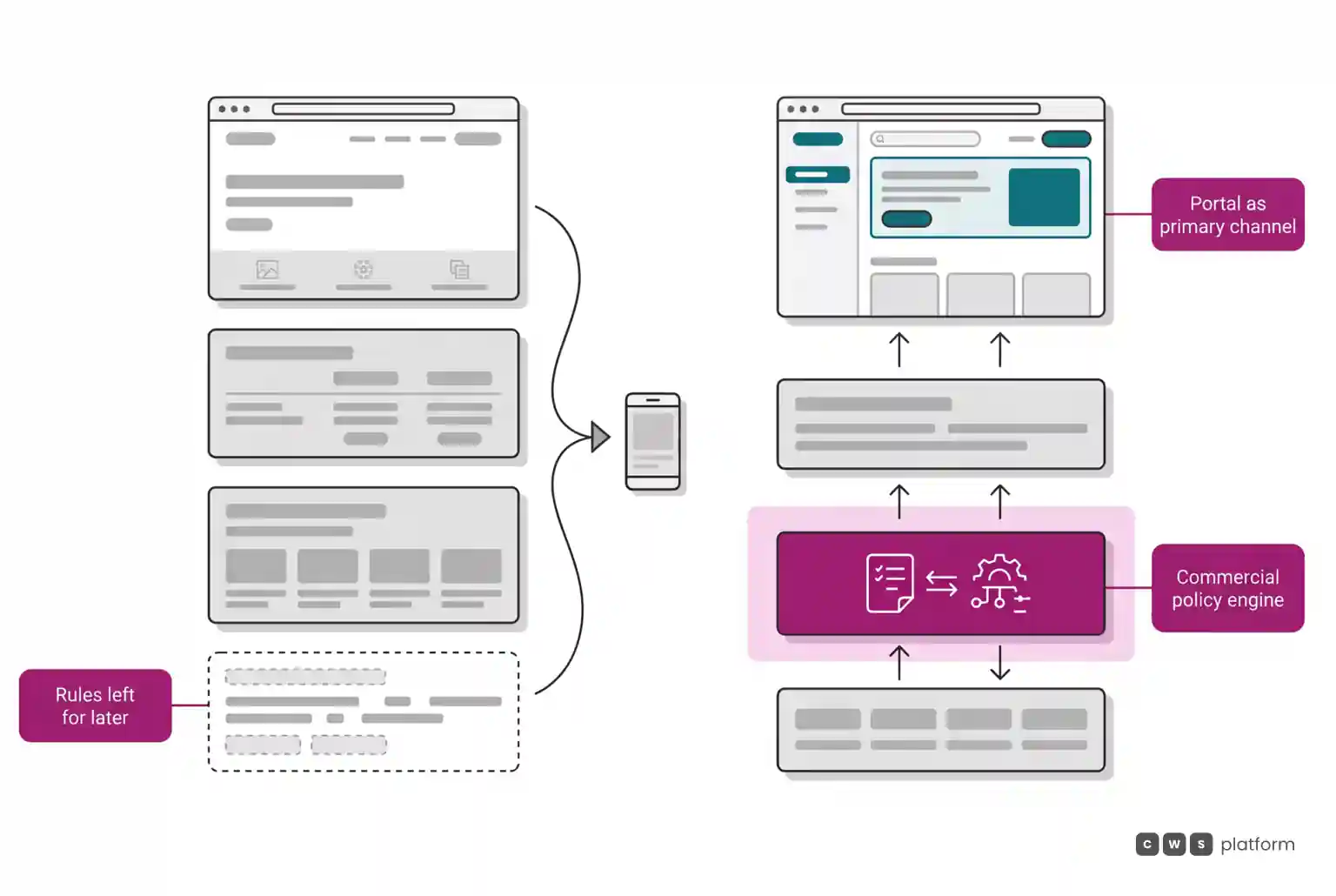
How to Successfully Implement Distributor Ecommerce
1. Start with pricing rules, not the product catalog. Before designing a single page, document every variable that drives an account's price and terms: price sheets, geographic territory, fulfillment warehouse, order volume, credit terms, and discount thresholds. If your distributor ecommerce platform cannot handle these rules on day one, initial transactions will land straight back in a rep's inbox. Recognizing that B2B price is a dynamic calculation, not a static number is the non-negotiable starting point.
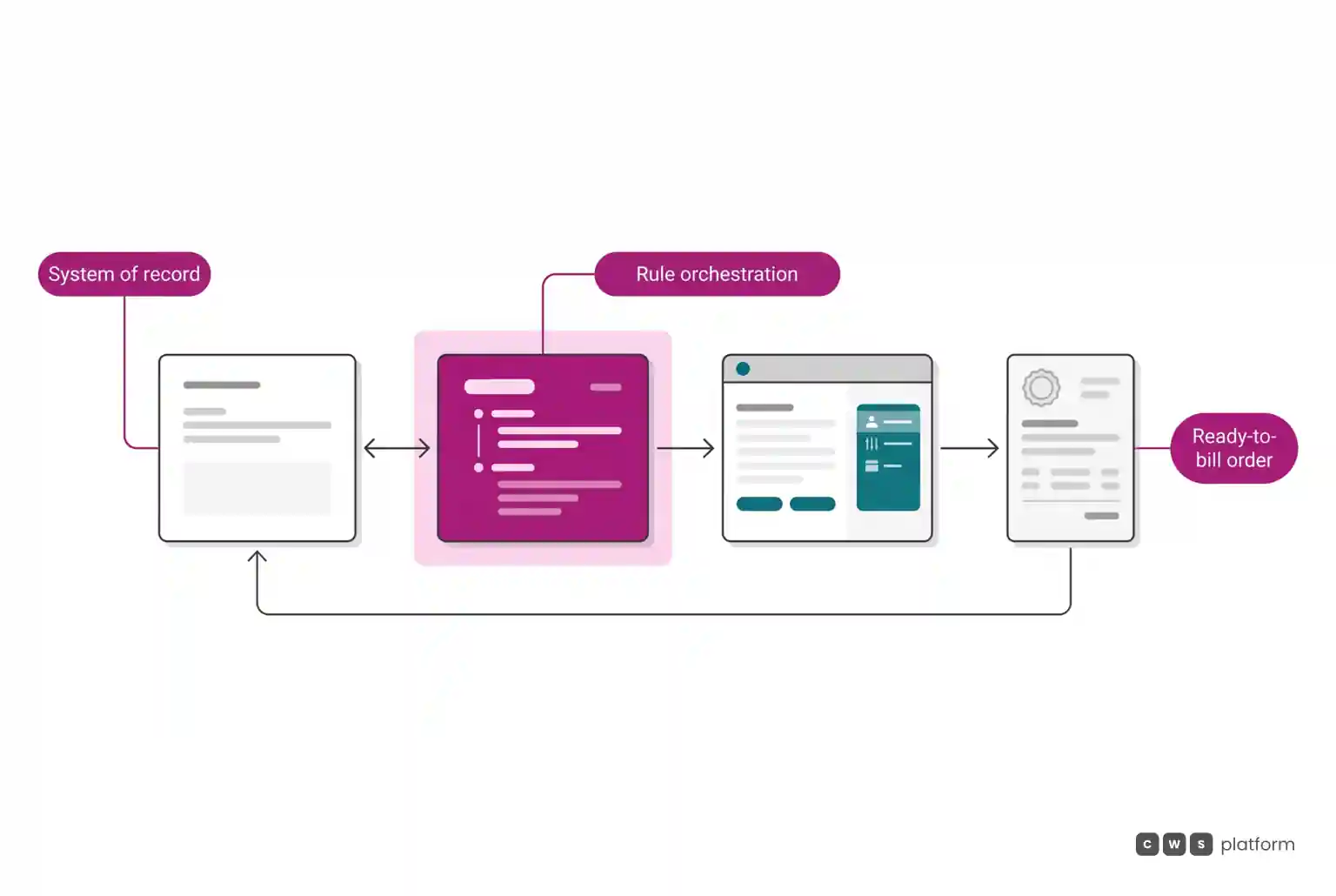
2. Build bidirectional ERP integration without replacing legacy systems. The platform reads account data, tiered pricing, inventory levels, and available credit lines from the ERP, then injects clean orders directly for fulfillment. Digital initiatives that demand complete ERP overhauls rarely cross the finish line. Leveraging APIs and webhooks lets your ERP remain the authoritative system of record, while moving commercial execution to an agile layer on top.
3. Select initial rollout cohorts by purchasing behavior, not account size. Ideal candidates purchase frequently, reorder predictable SKUs, and currently rely on emails or phone calls for basic reorders. Moving these accounts online delivers immediate operational payback.
4. Make sales reps the driving force behind adoption. Have reps walk buyers through their first digital purchase, assemble carts collaboratively, and handle edge-case pricing exceptions within the exact same workflows. At Imdepa, an industrial parts distributor operating across multiple regional hubs, inside reps reduced order entry time from roughly 70% to consultative selling, onboarding 153 active business accounts within three years, according to the Imdepa case study. We break down this approach in our guide on two-phase digital transformation.
5. Track actual order migration, not vanity login metrics. Pageviews and created accounts mean nothing. The essential metric is the share of routine reorders shifting away from phone calls and into distributor ecommerce, measured account by account, alongside the hours returned to your sales team for high-value prospecting.
Foundational Principles for Any Deployment
- Every account's first online order must process flawlessly. Product pricing, freight charges, sales tax calculations, and credit approvals must validate cleanly before order submission.
- New business rules should never require custom development. Commercial policies shift constantly. If every pricing adjustment needs an engineering ticket, the portal will become obsolete within months.
- Self-service ordering and rep-assisted sales must follow identical guidelines. Maximum discount allowances, margin thresholds, and sign-off hierarchies must match across both channels, removing any financial incentive for reps to divert orders offline.
CWS Platform was designed around these exact principles: an enterprise application with business logic managed through configuration instead of code, working in lockstep with your existing ERP environment. Discover our purpose-built architecture on our B2B ecommerce for distributors page.
Next Steps
Before evaluating vendors, document the exact pricing criteria for three active accounts: one enterprise client, one mid-market buyer, and one small account, detailing price matrices, payment terms, credit limits, and exceptions. If these terms cannot be clearly outlined on a single page, they are not ready for digital self-service. Getting your rules straight comes first.
Frequently Asked Questions
What are the core steps to deploy an ordering platform for distributors?
Map commercial policies for each buyer tier, build bidirectional ERP integrations, select rollout cohorts based on ordering patterns, incentivize sales reps to lead onboarding, and measure channel adoption rates. Design and front-end layouts belong after pricing logic.
Does a distributor need to replace its ERP to launch self-service ordering?
No. The ERP stays in place as the core system of record. The ordering platform syncs using APIs and webhooks to pull account data, custom pricing, real-time inventory, and credit terms, routing finalized orders back for fulfillment.
Does a customer portal create channel conflict with outside sales reps?
Only when the online platform uses rules that conflict with rep-assisted sales. When commercial terms match across channels, self-service captures routine replenishment, freeing reps to focus on strategic accounts and complex proposals.
How do you measure the success of an ordering portal deployment?
By tracking the exact percentage of replenishment orders migrating away from phone calls, emails, and texts into the digital channel, account by account, combined with rep time redirected toward pipeline growth. Simple login volume is not an indicator of adoption.
About This Publication
Operational performance figures cited are from Imdepa, a CWS Platform client, and are shared with permission.
Brands mentioned in this article

- Gartner
Trademarks and logos belong to their respective owners. Mention does not imply partnership or endorsement.
"responsive, technically engaged, and willing to work through complex commercial rules (negotiated pricing, credit, customer-specific conditions) rather than pushing generic answers"
Want to see this in your operation?
Real B2B operations already run on it.