How to Turn Commercial Policy into Automated Business Rules
Why static guidelines erode B2B margins and how to enforce system-driven guardrails across every sales channel.

"The commercial policy exists, it is in a PDF approved by executive leadership." And that is precisely why it does not work. A document states what discount each tier can offer, which payment terms apply to each profile, and when an order requires approval. The person applying that document is the sales rep, right in the middle of a negotiation, while the customer waits for an answer. Nobody checks a PDF at that moment.
A commercial policy only governs sales when it stops being static text and becomes a systematic rule enforced on every single order. Pursuing true commercial excellence requires turning guidelines into active guardrails.
Why Paper Policies Fail to Protect Margins
Why do sales reps deviate from policy? Because during live negotiations, the policy document is far away and the customer is right there.
Why does nobody catch it in real time? Because reviews happen retroactively during month-end closing, long after the order has shipped and invoiced.
Why does retroactive auditing fail to fix the issue? Because without logged reasons, leadership cannot separate the tactical discount that rescued a deal from the unnecessary concession that gave away free margin.
Why does this issue escalate as operations scale? Because every new channel (B2B portals, independent reps, inside sales, AI agents) becomes one more point where someone has to remember the policy.
The root cause: the commercial process was drafted as a document, leaving execution dependent on human memory. This is the common pattern discussed in your operation scaled, your pricing governance probably did not.
What It Means to Turn Policy Into Systematic Rules
It means translating every policy clause into logic that the software enforces autonomously:
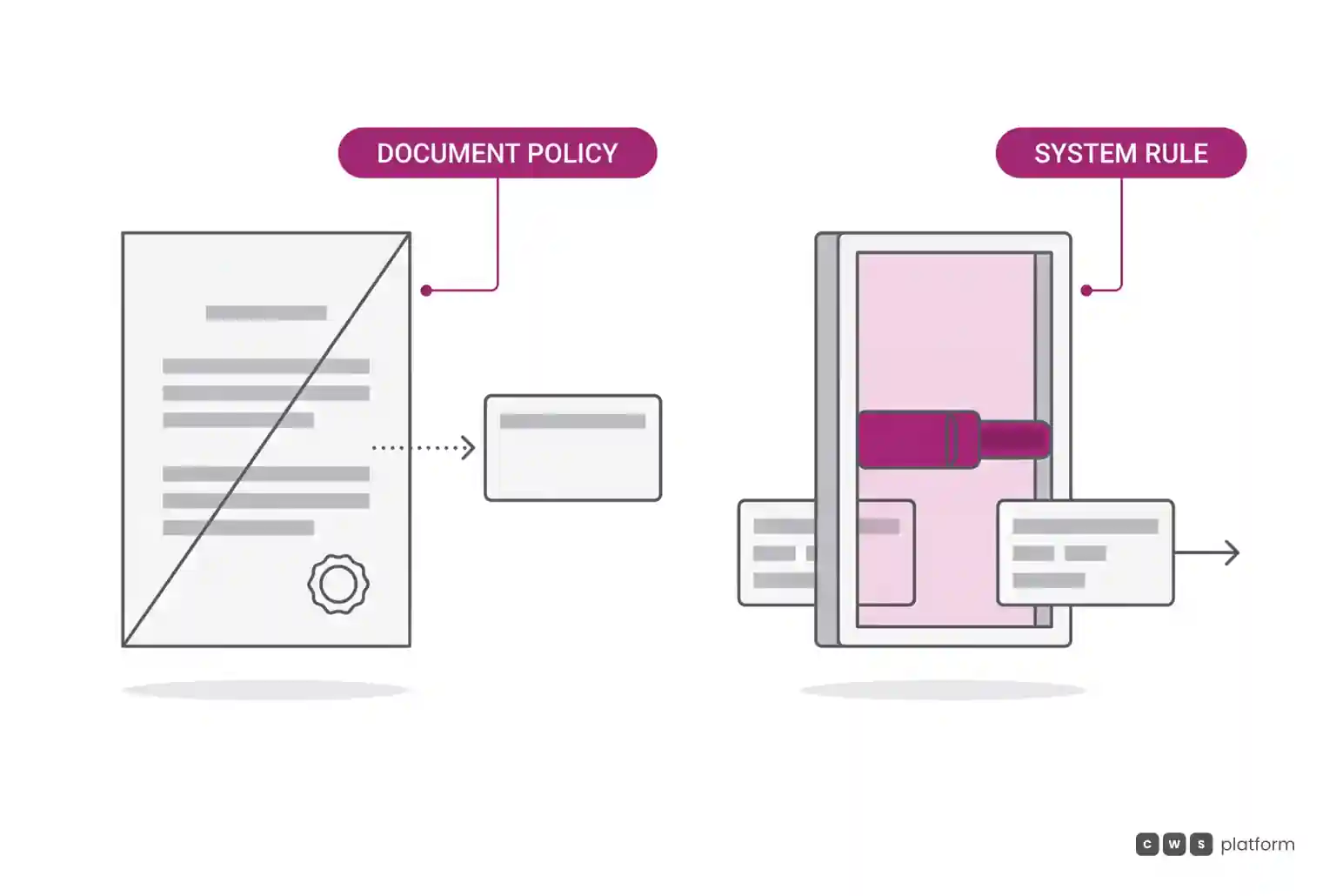
| In the Document | As a System Rule |
|---|---|
| "Sales reps may grant up to a 5% discount" | Line-item discounts over 5% require manager approval |
| "New accounts must pay upfront on their first order" | First orders automatically restrict payment options to advance payment |
| "Net 60 terms are reserved exclusively for Tier A accounts" | Net 60 terms are selectively enabled only for Tier A customer profiles |
| "Discounts cannot be stacked" | Manual price adjustments override automated promotional codes instead of stacking |
| "All exceptions require justification" | Out-of-bounds concessions cannot progress without a mandatory logged reason |
The distinction comes down to execution. In a document, compliance relies on someone remembering the rules. With systematic rules, an out-of-policy order simply cannot move forward until the authorized decision-maker signs off.
How to Make the Transition
1. Start with the costliest rules. Discounts, payment terms, and credit limits drive the vast majority of margin leakage and operational risk. Free freight, promotional samples, and rebates can follow later.
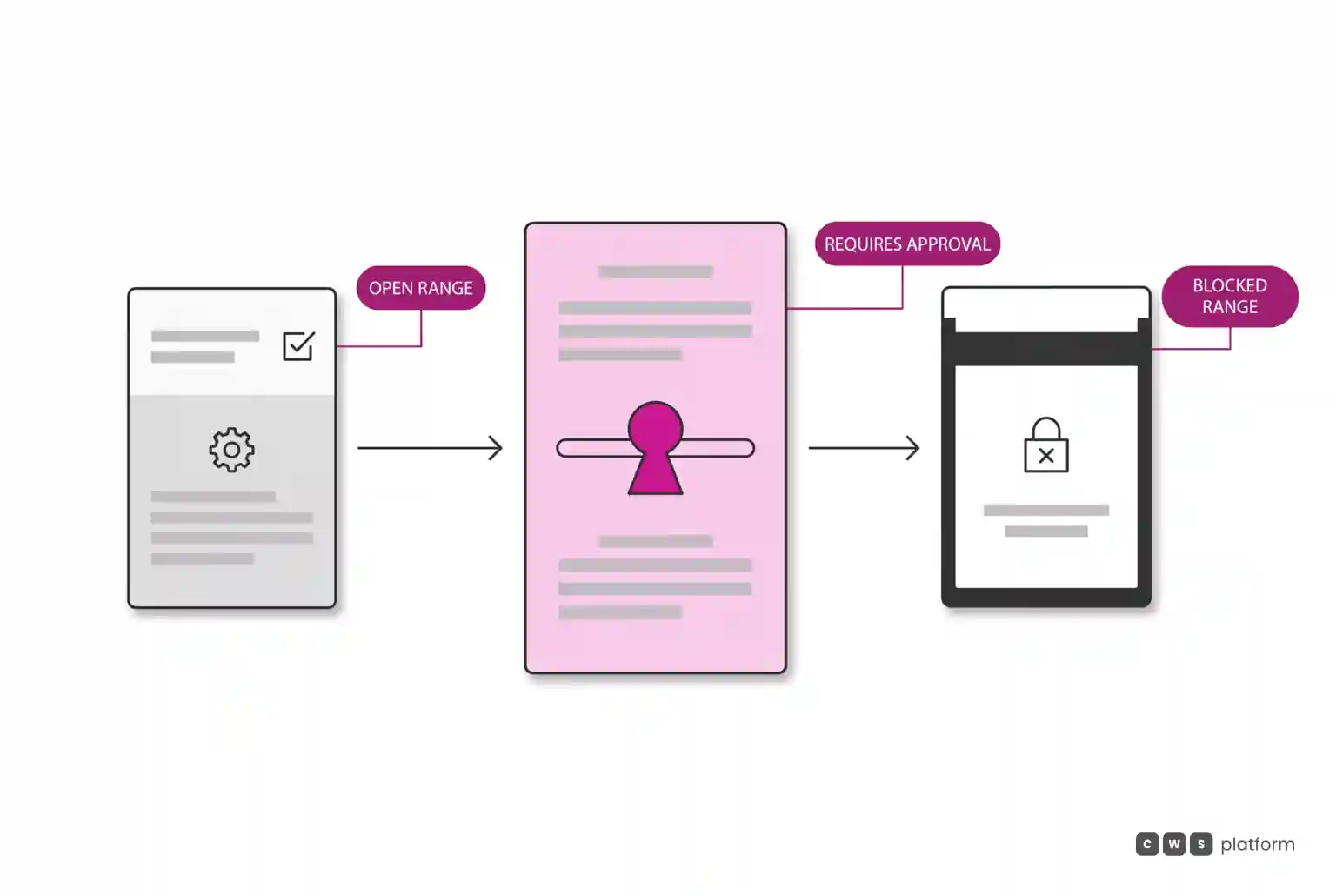
2. Define rules with thresholds, not blanket bans. Policies built solely on rigid prohibitions push sales reps to work outside the system. Setting clear autonomous zones, approval-required bands, and hard stops provides room to negotiate while maintaining commercial excellence.
3. Clarify approval hierarchies. Every approval tier needs designated roles, clear ownership, and strict response SLAs. Slow internal sign-offs incentivize reps to bypass formal channels.
4. Require exception logging. Documenting the reasoning turns exceptions into business intelligence: within a few months, this data reveals which pricing rules need strategic adjustments.
5. Enforce unified rules across every channel. The exact same thresholds must apply to field reps on mobile devices, buyers in self-service portals, and AI agents quoting on the company's behalf. We explore these automation vulnerabilities in your AI agent will end up offering the same unauthorized discounts.
What Changes in Daily Operations
Sales managers stop conducting post-mortem audits at the end of the month and begin managing active exceptions as they arise. Reps negotiate with clear guardrails because operational boundaries appear directly on screen. Executive leadership can adjust commercial strategy by simply updating rule parameters, rather than distributing another memo.
Within CWS Platform, sales policies are configured as business logic rather than custom code: reps access clear approval matrices scaled by authority level, lines exceeding policy limits remain locked until justification is entered, and identical controls govern human reps, digital portals, and autonomous agents. Explore the architecture in our commercial rules engine.
Next Steps
Review your current commercial policy document and tag every clause using three criteria: automatically enforced by software, reviewed manually after the fact, or never audited at all. The share of clauses falling into the latter two categories represents the true extent of your paper-only policy.
Frequently Asked Questions
What is a commercial policy?
A commercial policy is the operating framework that defines how a company sells: pricing tiers, volume discounts, customer payment terms, credit limits, and escalation paths for exceptions. In enterprise B2B sales, it only sustains commercial excellence when programmatic software rules apply it to every quote and order.
How do you convert a commercial policy into automated business rules?
By translating each textual policy clause into concrete system logic: autonomous discount limits, manager-approval thresholds, hard limits, term eligibility by account segment, and mandatory rationale capture for all non-standard terms. These logic gates must apply consistently across direct, indirect, and digital channels.
What is discount governance in B2B sales?
Discount governance refers to systematic controls determining who can approve price concessions, under what conditions, and with what operational documentation. It relies on approval matrices, stacked discount restrictions, and mandatory exception tracking so leadership knows where and why margin is being conceded.
How can leadership tell if a commercial policy is actually being followed?
By auditing, on an order-by-order basis, how many transactions fall outside base pricing rules, who approved them, and why they were granted. If this visibility only surfaces during end-of-month reconciliations, the organization is merely auditing historical slippage rather than actively governing sales.
Read Also
- Commercial governance and executable policy
- When an AI Agent Makes a Mistake, It Does Not Stay Isolated: It Duplicates Across Every Order
- You Are Trying to Build a Marketplace When What You Actually Need Is a Sales Ecosystem
About This Publication
A publication by CWS Platform.
"responsive, technically engaged, and willing to work through complex commercial rules (negotiated pricing, credit, customer-specific conditions) rather than pushing generic answers"
Want to see this in your operation?
Real B2B operations already run on it.