Why Manufacturers Can No Longer Afford Legacy B2B Platforms
Rigid digital catalogs erode margins and stall negotiations for manufacturers needing governed channel architecture.

"We have had a B2B store for years, but our distributors do not use it, and sales reps pretend it does not exist." Many manufacturers know this scene all too well. The B2B ecommerce platform was purchased as a digital channel and turned into a fixed cost that no one can seem to turn off: every new business rule requires a full-blown development project, the distributor network is left out, and reps keep taking orders outside the system.
The problem is not that the manufacturer invested in digital early on. The problem is investing in an architecture that treats manufacturing sales like retail sales.
Why Legacy Platforms Fail Manufacturers
Why does the network avoid the portal? Because distributors see the manufacturer selling directly to their end customers, without rules protecting their margins or their accounts.
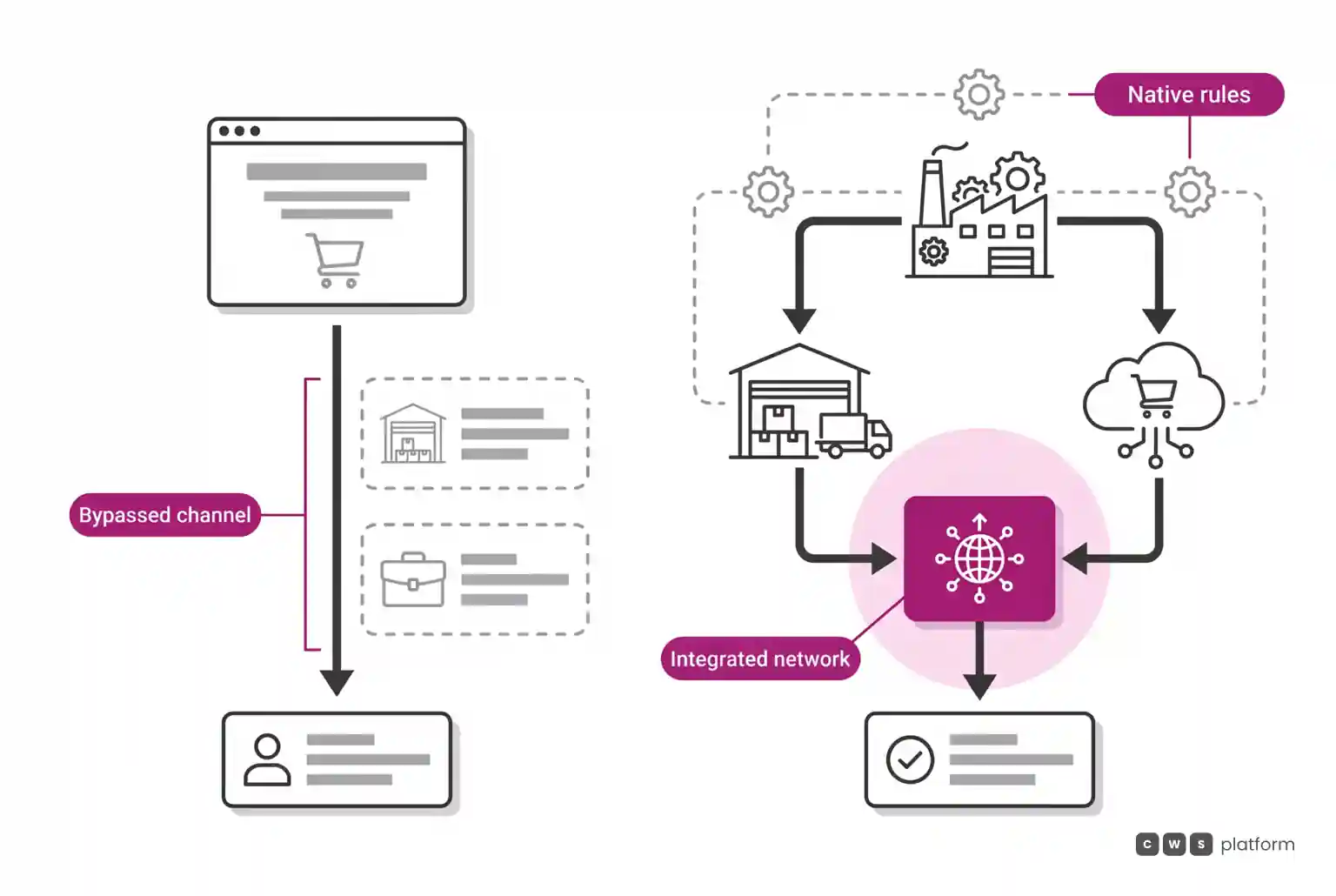
Why are those rules missing? Because the platform was built for one company selling to an end consumer, not to orchestrate a complex supply chain with manufacturers, distributors, dealers, and independent reps.
Why does every change turn into an IT project? Because channel-specific pricing, distributor-level terms, and rep discount thresholds were handled through custom code rather than native configuration.
Why are reps left out? Because they do not work inside the platform. They negotiate over the phone, and the order is entered later directly into the ERP, leaving no audit trail of concessions.
The root cause: legacy B2B ecommerce digitized the manufacturer storefront, but not its commercial policy. The channel was left outside the network, and every attempt to bring it in requires a new development cycle. This is the exact friction we explore in quando a fábrica e o canal disputam o mesmo cliente.
The Cost of Maintaining a Legacy Platform
The cost shows up in three places that rarely appear on the same executive report:
- Rule maintenance in custom code: every new commercial term turns into a support ticket and an IT backlog item.
- Low channel adoption: distributors and dealers keep placing orders via phone or email, so the cost to serve never drops.
- Invisible sell-through: the manufacturer sells to the channel, but lacks visibility into what the channel sells to end buyers, leaving production schedules and marketing campaigns in the dark.
Meanwhile, the buyer has evolved. The McKinsey B2B Pulse 2024 shows that B2B buyers now use an average of ten interaction channels during their journey, double the number from 2016. A manufacturer missing from those channels with the right terms loses the deal to competitors who are there.
What Manufacturers Need from a B2B Platform
The network inside the portal, not orbiting around it. Each manufacturer and distributor configures their own pricing, payment terms, delivery schedules, and approval limits. The manufacturer orchestrates the network without cannibalizing channel sales.
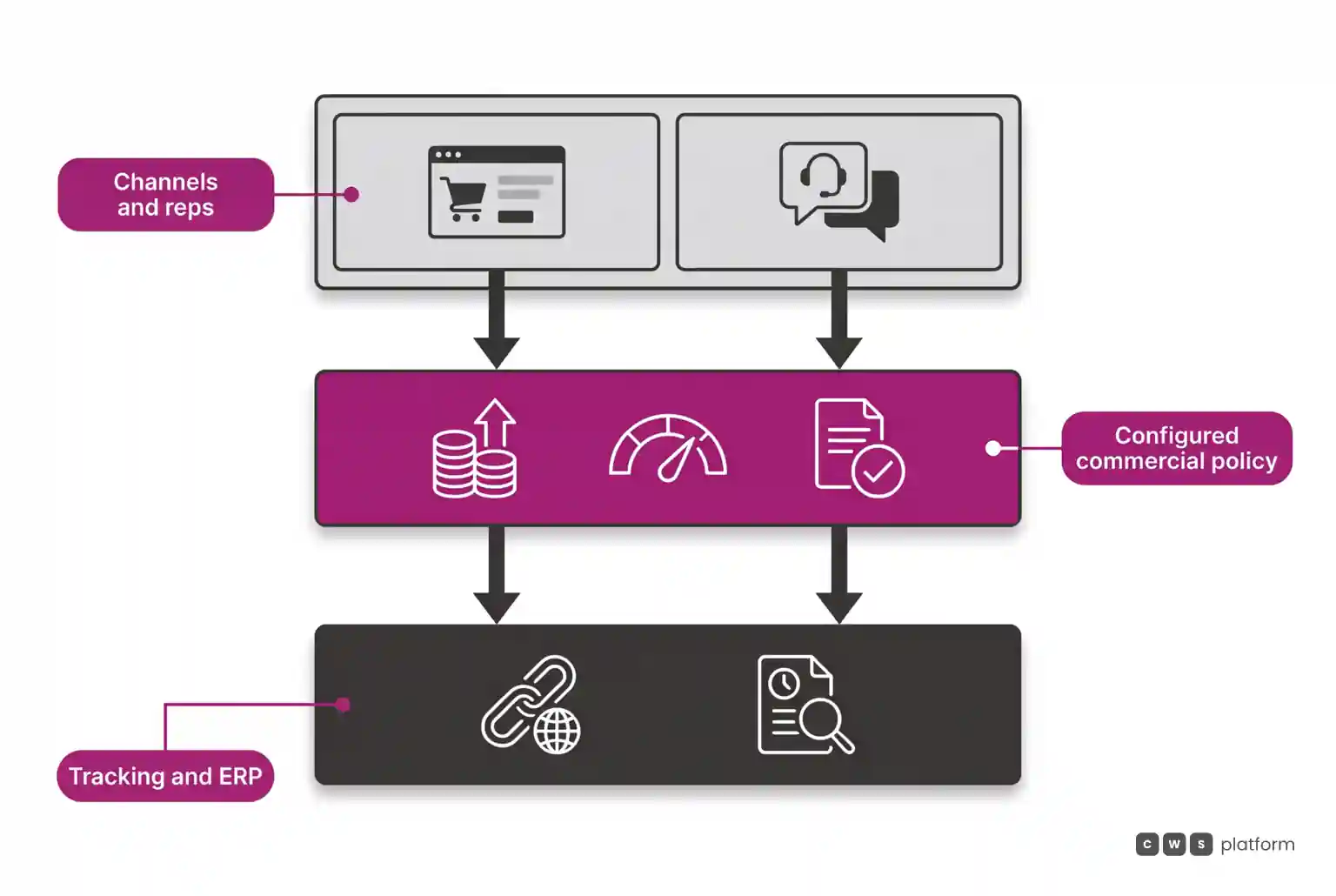
Channel pricing without duplicating price books. Tailored terms for every product line, territory, or distributor, segmented by attributes without creating endless pricing tables.
The sales rep in the same shared cart. Reps negotiate directly inside the portal, inside the buyer cart, with every discount staying within their authorized threshold and tagged with an approval reason, while routine reorders move smoothly to self-service.
Traceable transaction origin. Every order records who sold it, through which channel, and under what conditions. This is what restores sell-through visibility to the manufacturer.
Commercial policy as native configuration. Approval limits, credit lines, and discounts are business rules applied consistently across human sales reps and AI agents alike, and updating a rule never requires a software development project.
At Pirelli, the Pirelli Conecta portal coordinates parts procurement across a network of over 450 auto centers inside a governed B2B marketplace that has been live for over a year: approved suppliers compete for network demand, each with their own terms, under rules established by the network. Learn how this works in the caso Pirelli Conecta.
CWS Platform was engineered specifically for manufacturing sales: bringing the distribution network inside the portal, placing sales reps in the same cart, and keeping commercial policies configurable, all running on top of your existing ERP. See the architecture on our ecommerce B2B para indústria page.
Next Steps
List the last five commercial policy changes your current platform required and calculate how long each took to go live. If the timeline is measured in weeks or months, rule maintenance is already costing far more than it should, and that overhead belongs in your business case for replacing the platform.
Frequently Asked Questions
Why can manufacturers no longer maintain legacy B2B ecommerce platforms?
Because legacy platforms treat manufacturing sales like retail: they exclude the distributor network, rely on custom code for channel pricing, and keep sales reps outside the workflow. Every policy update becomes a costly IT project, leading to poor channel adoption.
How should a manufacturer choose a B2B self-service platform?
Verify that it accommodates distributors and dealers inside the portal with independent terms, segments channel pricing without multiplying price books, enables reps to negotiate directly in the buyer cart, and tracks the exact origin of every transaction.
Can manufacturers sell online without channel conflict with distributors?
Yes, provided distributors operate within the same platform under their own terms and customer accounts, with full traceability for every order. The manufacturer gains deep channel visibility without competing for distributor sales.
Recommended Reading
- Seu portal B2B aceita pedidos que nunca vão fechar
- Qual arquitetura mantém estoque e preço da filial no autoatendimento B2B?
- Portal e pedidos B2B (autoatendimento)
About This Publication
Published by CWS Platform.
Brands mentioned in this article

- McKinsey & Company
Trademarks and logos belong to their respective owners. Mention does not imply partnership or endorsement.
"responsive, technically engaged, and willing to work through complex commercial rules (negotiated pricing, credit, customer-specific conditions) rather than pushing generic answers"
Want to see this in your operation?
Real B2B operations already run on it.