Portals · use case · light and heavy vehicle dealers
Dealer portal: the vehicle owner buys from the right dealer, and the whole network serves behind it.
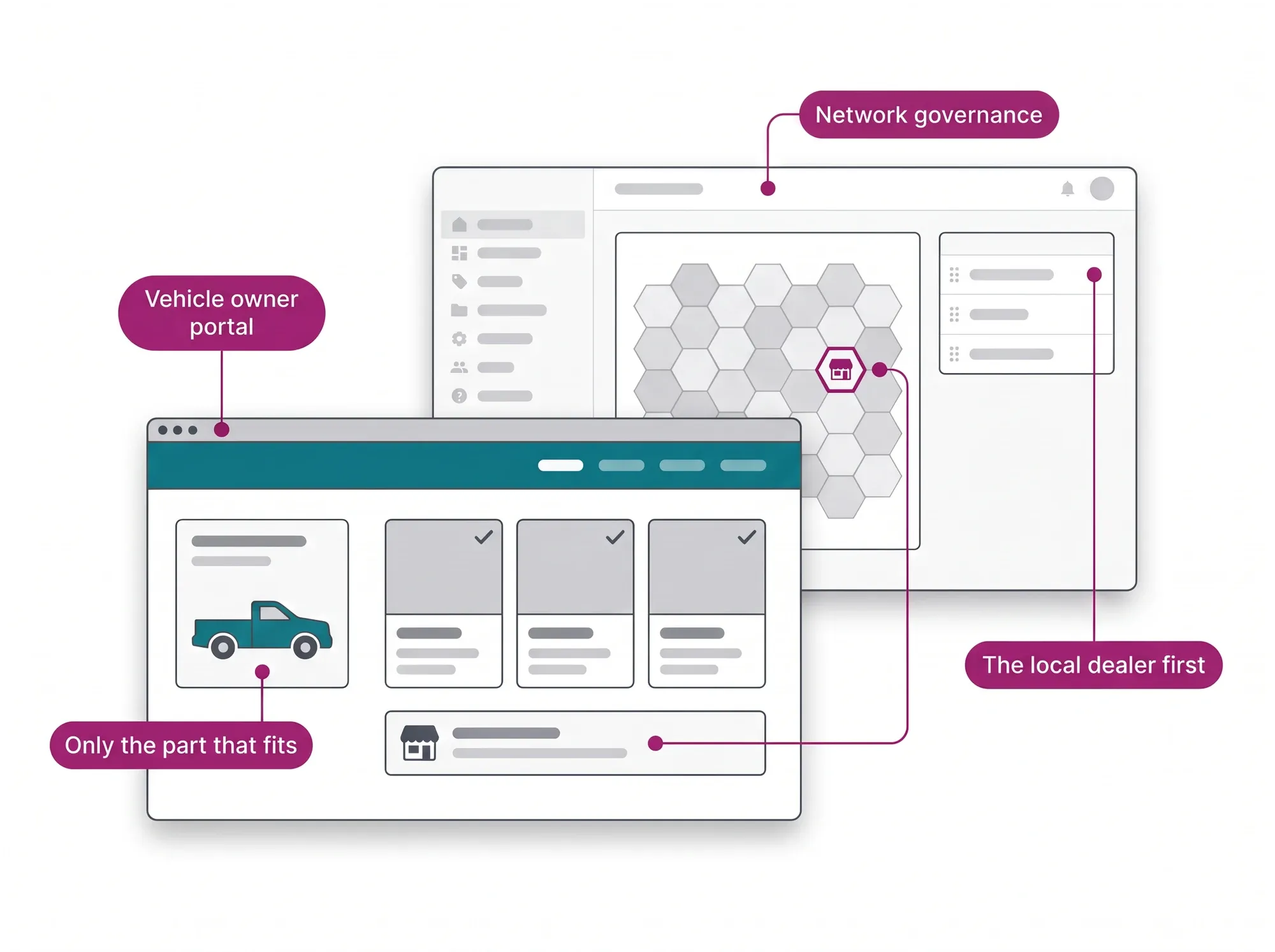
Today the consumer searches for the part on a generalist marketplace, buys from whoever shows first, and only comes back to the dealer when something goes wrong. The dealer portal on CWS Platform flips that: an official network portal, in the browser and in the app, where the customer sees only the parts that fit their vehicle, is served by the dealer covering their region, with integrated stock, and gets what's missing from another dealer or the factory, in the order the network manages. The salesperson and the technician serve in the platform chat, and the AI agent builds the cart when nobody is on the line.
In short
A dealer portal is the official online channel of a dealer network, where customers buy parts from the brand's own dealers. On CWS Platform, the portal filters parts by the customer's vehicle, shows the regional dealer first, brings other dealers and the factory in as backup in the order the network sets, and splits a single order by origin.
- On an order from several sellers, each part is tracked with its own seller, lead time and carrier. Source: B2B order management (OMS).
- Fitment tables link each SKU to the vehicle or equipment it fits, with cross-reference between brands. Source: Product Catalog & MDM (Catalog Engine).
- The dealer portal is a use case of the Governed Marketplace profile. Source: B2B marketplace platform.
- Tracbel, an award-winning Volvo dealer, recorded around US$24.4 million in digital revenue in 2025. Source: Tracbel case.
Figures converted from Brazilian reais at R$5.00 = US$1.00.
A real technical catalog, with fitment and cross-brand equivalents, is one of the criteria in the guide to choosing a B2B ecommerce platform.
Who it's for
Dealer networks and groups, brand associations and OEMs that want an official parts channel for the end consumer, in light, heavy or both lines.
Core pain
Brand demand leaking to the generalist, stock idle at one dealer and missing at another, phone and WhatsApp service with no trace, and conflict between dealers of the same network.
What it delivers
Network portal and app, parts by vehicle, dealer by territory, network and factory stock in preference order, chat with salesperson and technician, AI agent and a single order for the consumer.
The network's official portal in 1 minute
AI-generated voice and imagery.
The consumer journey, from vehicle to order
Six steps, and in none of them does the consumer need to know a part number, which dealer has stock, or how the network is organized behind the scenes. That's the platform's problem, solved by rule.
-
1
The consumer enters the vehicle
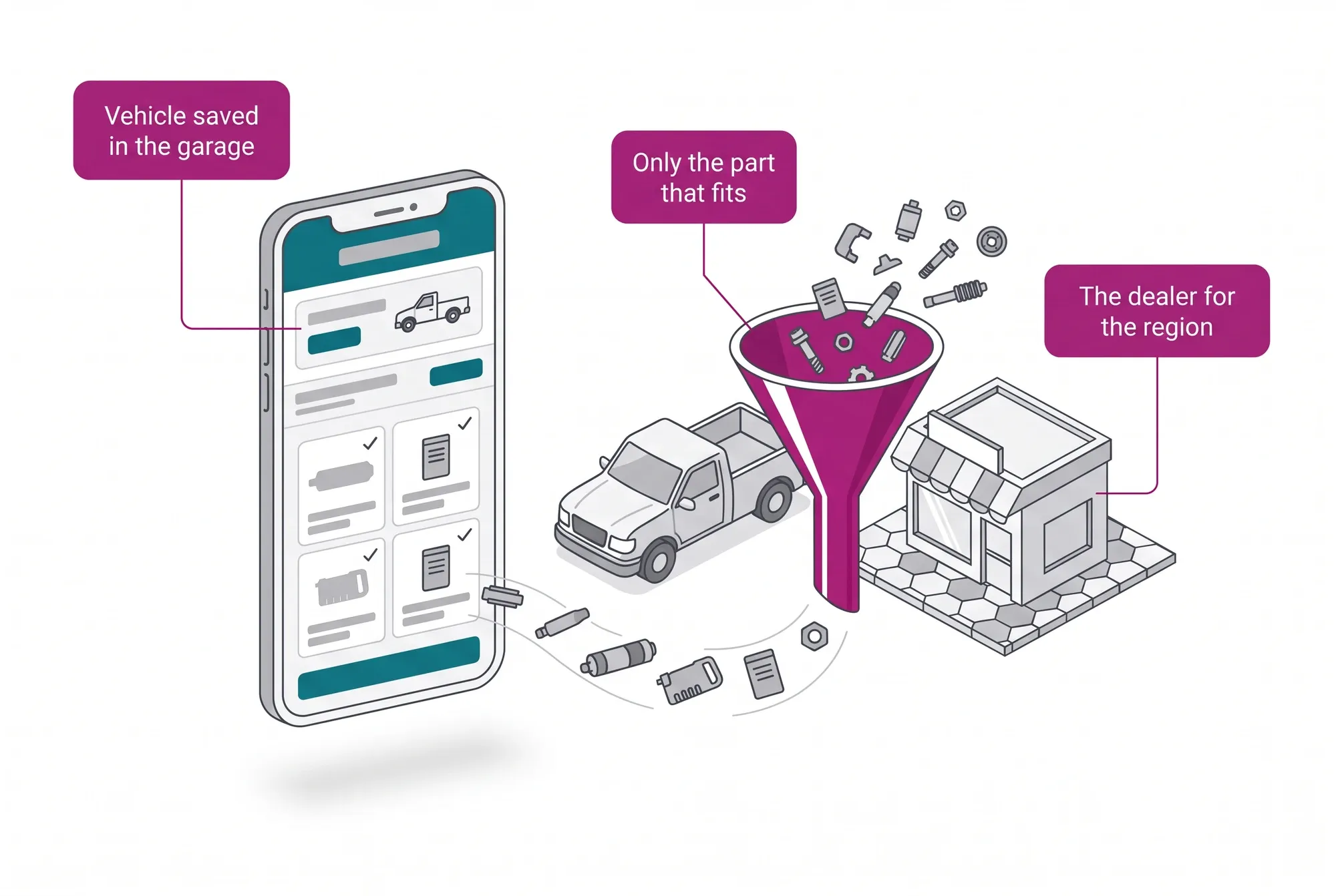
Make, model and year, on the portal or in the app. The vehicle is saved to their garage, and the next purchase already starts filtered.
-
2
Sees only what fits their vehicle
The storefront shows only parts with fitment for that vehicle, light or heavy line. No part numbers, no compatibility tables, no wrong purchases.
-
3
The regional dealer shows first
Based on the customer's address, the dealer serving that territory is the first offer, with integrated stock and in-store pickup or delivery.
-
4
What's missing comes from the network or the factory
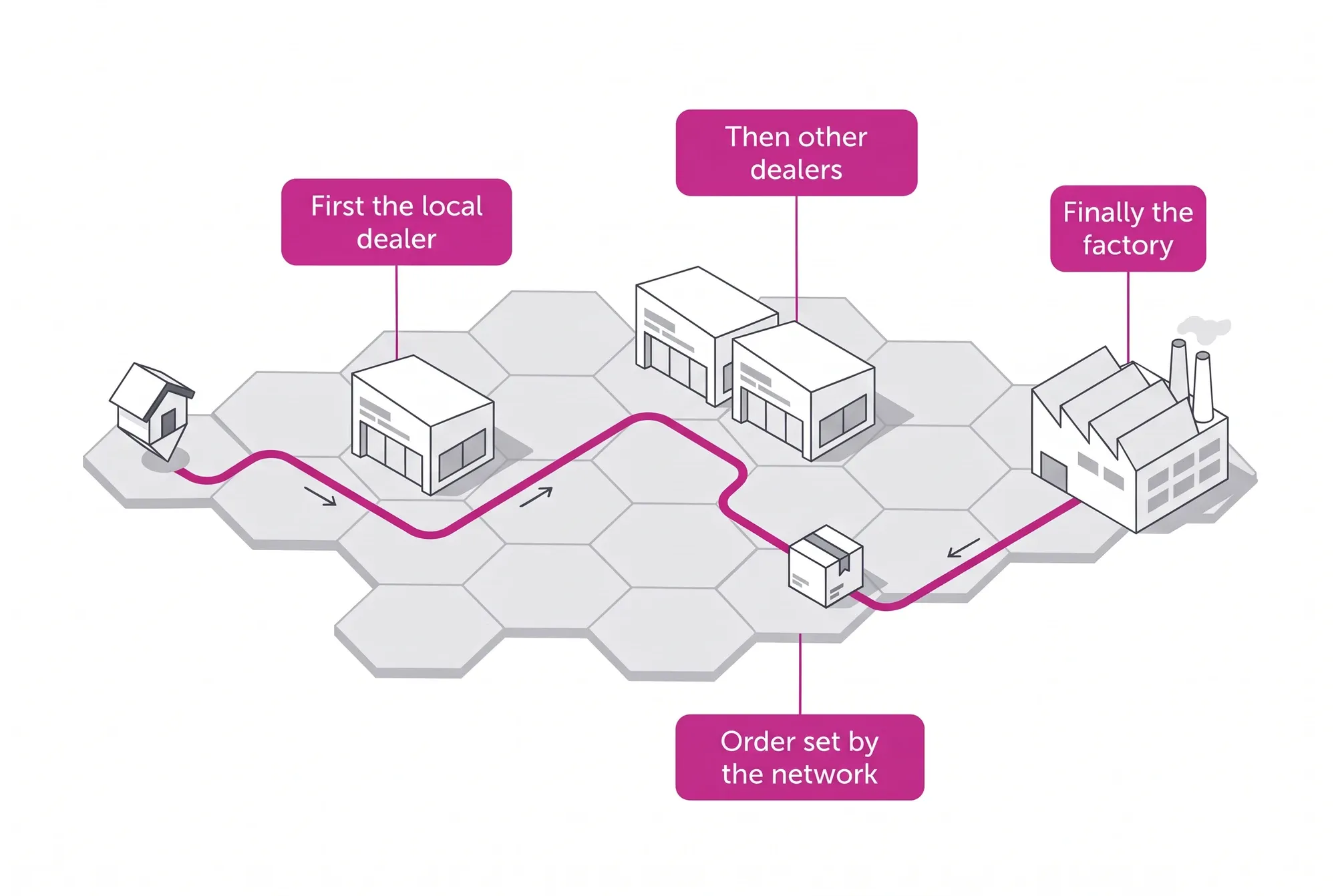
If the regional dealer doesn't have the part, the portal follows the preference order the network defined: other dealers, then the factory. All managed by rule, not by phone.
-
5
Salesperson, technician or AI agent in the chat
Fitment questions, quotes, negotiation. The dealer's salesperson and technician serve in the platform chat, and the AI agent covers the rest of the time, building the cart.
-
6
Order, payment and delivery in one place
The consumer closes a single order, even when it comes from more than one dealer. The platform splits the order, payment and delivery by origin, and the network sees all of it.
Why the network's official portal beats the generalist
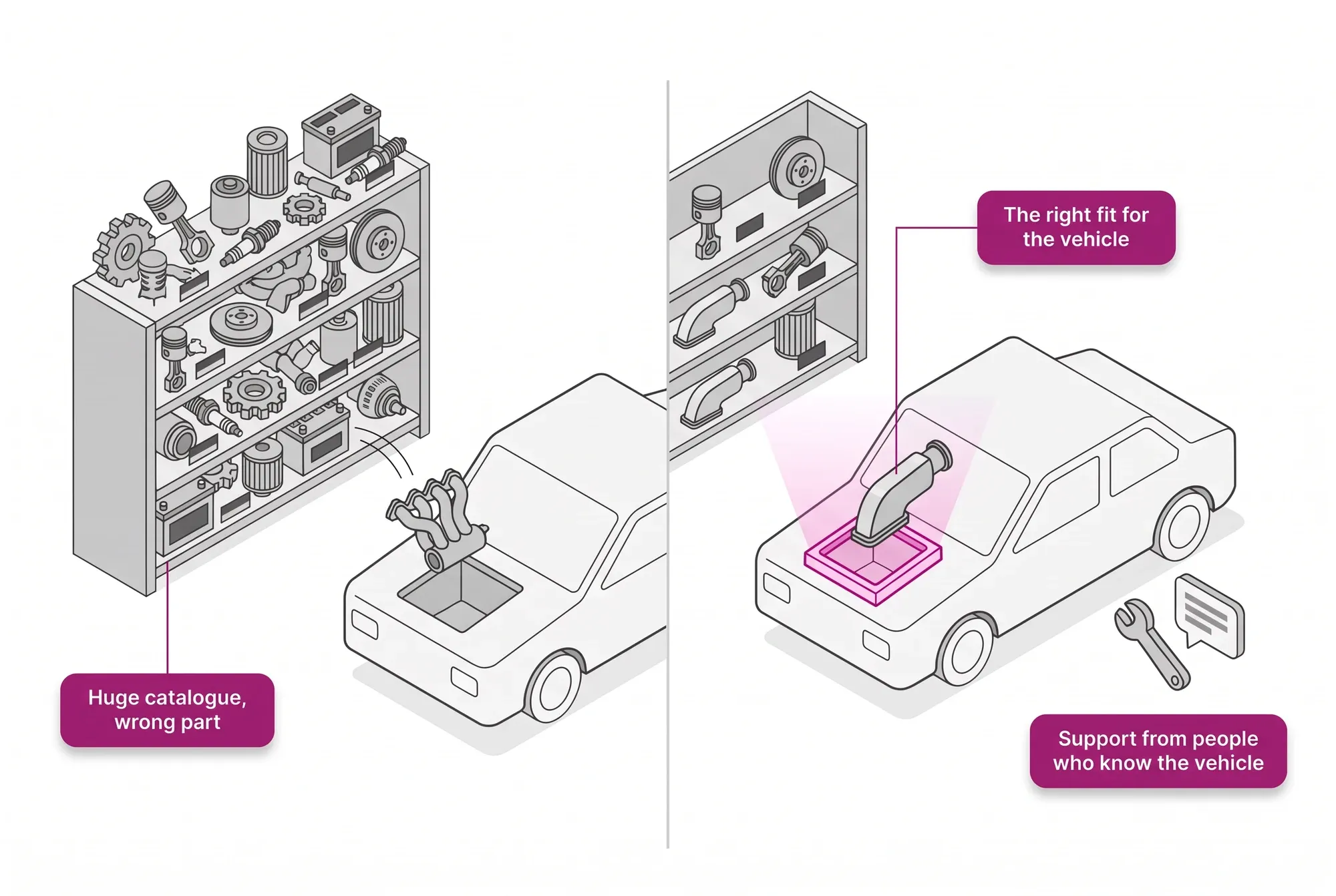
Nobody beats the generalist marketplace on catalog size, and competing on price alone online is not sustainable. The network's official portal wins on three things the generalist doesn't have: correct part fitment for the vehicle, integrated availability across dealers and the factory, and service from people who know the vehicle. In the heavy line, what decides is reducing vehicle downtime: availability and remote service weigh as much as price, and that is exactly where the network has a structural advantage.
CWS Platform doesn't sell a marketplace. It digitizes the operation the network already has, with the dealers, the sellers, the technicians and the factory as assets, and the marketplace emerges as the result. That is what defuses the objection of those who already have a website and don't want to become a generalist.
What the platform does, in practice
Parts filtered by vehicle
Filter by make, model and year, with a customer garage to save more than one vehicle. Works for light and heavy lines, including serial-number ranges on heavy equipment.
Regional dealer first
Territory restriction and priority by service region, in-store pickup by zip code and freight calculated by origin. The right dealer shows first, and no dealer serves where it can't deliver.
Integrated stock in preference order
Stock from other dealers and the factory as backup, exposed only when the priority dealer runs out, in the order the network manages. No lost sale for lack of local stock.
Chat with salesperson and technician
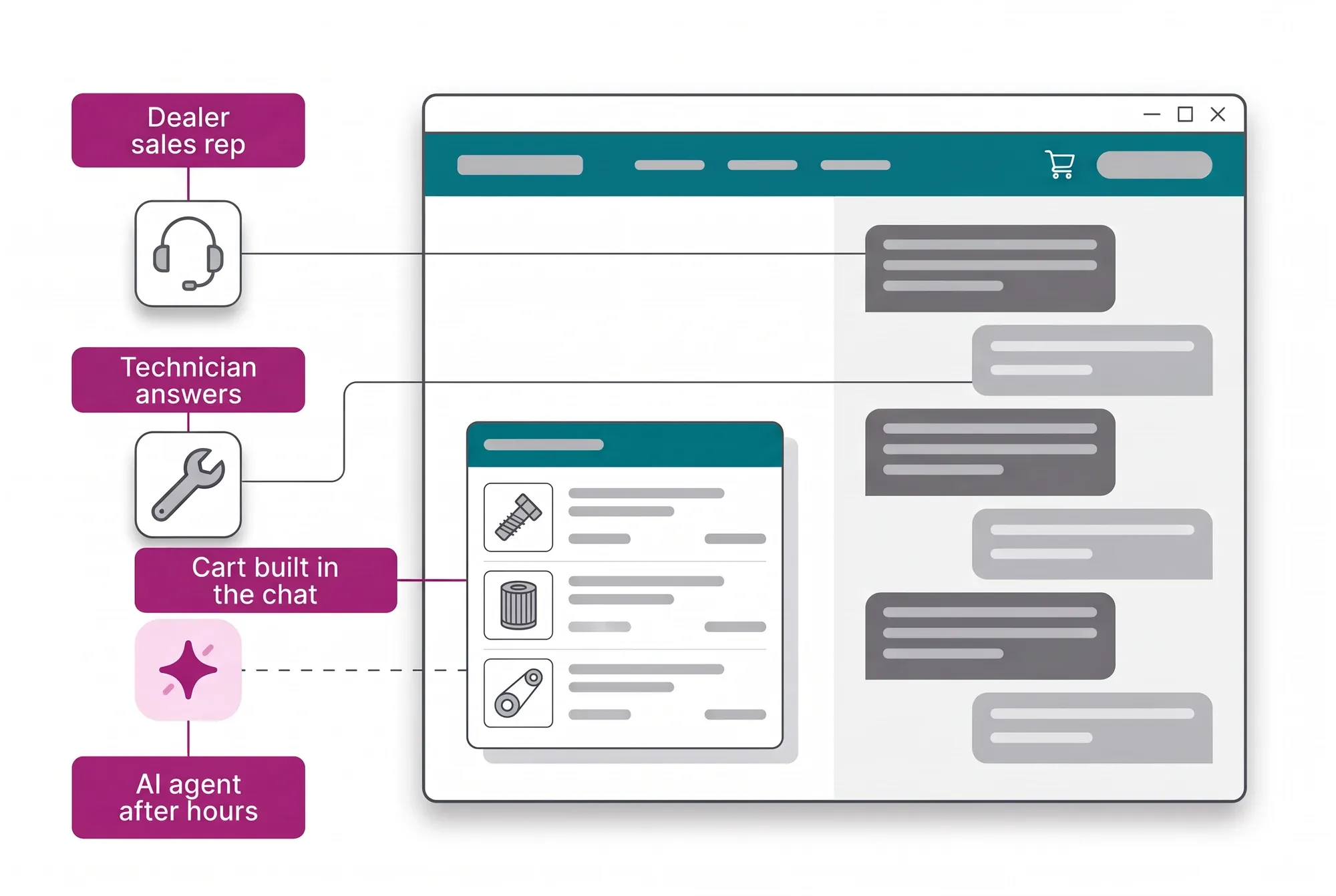
Service inside the platform, by a general agent or by a salesperson with a restricted book of customers. Photo upload, cart built by the agent and quote shared by link.
AI agent that serves and builds the cart
Natural-language search, comparison across dealers, cart and reorder, 24 hours a day, under the same price, territory and approval rules that apply to a human seller.
One order, several origins
Order, payment and delivery split by dealer or factory, with price and freight per origin. The consumer closes one cart; the network receives each part at the right dealer.
Network governance, without conflict between dealers
A dealer marketplace lives or dies on four conditions, and none of them is technology: dealer adoption, where dealers need to see value without feeling the platform as a competitor; data quality on product, fitment, stock, price and lead time; liquidity, with enough supply and service for the consumer to come back; and governance, with clear rules for exposure, order distribution, pricing, commission, service, logistics and returns. CWS Platform is the layer where those rules are configured and hold across every channel: portal, app, chat, seller and AI agent.
Each dealer owns what is theirs
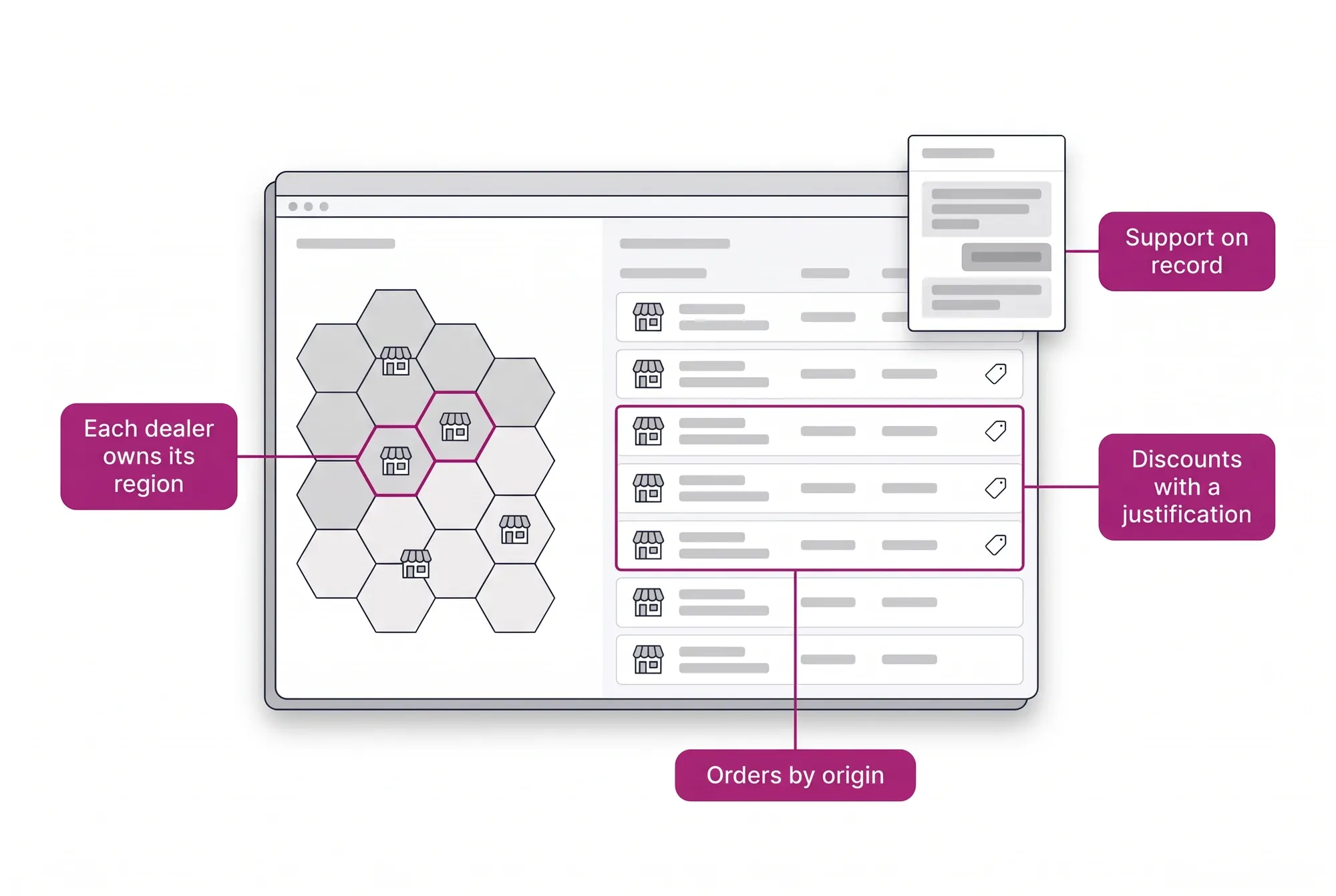
Stock, prices, territory, customers and sellers per dealer. The network defines the preference order; the dealer defines what it exposes. One dealer doesn't lose a customer to another by design, not by handshake.
The network sees the whole
Orders by origin, chat service on record, discounts with an author and a reason, traceable commission and split. What is lost today between phone and WhatsApp becomes network data.
By decision-maker
Network / group director
The pain: The vehicle owner searches for parts on the generalist, buys from whoever shows first, and the network becomes a warranty counter. Brand demand leaks out of the official channel.
What changes: An official network portal, in the browser and in the app, that answers with the right part and the right dealer. Demand comes back inside, with the dealer preserved.
Dealer parts manager
The pain: Crowded counter, ringing phone, WhatsApp quotes with no trace. Anything not in stock becomes 'I'll call you back' and the sale dies.
What changes: Routine orders leave the counter. What's missing comes from another dealer or the factory on the spot, inside the same order, and every interaction is recorded.
CFO
The pain: Stock sitting idle at one dealer and missing at another. High transaction cost per order, margin disappearing between counter discounts and improvised freight.
What changes: Network stock exposed as one, with a preference order that favors turnover. Discounts with an author and a reason, freight and payment calculated on the order.
IT / operations
The pain: Each dealer has its own DMS and its own way of integrating. Yet another digital initiative risks becoming a stalled project.
What changes: An orchestration layer over the systems already in place, via API, integrated dealer by dealer, with the portal built by configuration rather than a software project.
The rails, in the dealer's vocabulary
In operation
Tracbel · Volvo dealer · heavy line
+10 margin points
on portal orders, with 100% of the portfolio available (about 131,000 SKUs). Named best Volvo dealer in the world (Volvo Gold, 2025).
Read the Tracbel case →Imdepa · auto parts distribution
3x more customers
153 customers activated in 3 years on the portal, without growing the team at the same rate, with the seller freed from routine orders for consultative work.
Read the Imdepa case →On the manufacturer side, Pirelli, through Pirelli Conecta, orchestrates on CWS Platform the purchases of authorized resellers from selected distributors, and MTE-Thomson built its own digital sales channel. It is the same machine that sustains a dealer network's official portal.
Frequently asked questions
Isn't this competing with the generalist marketplace, where consumers already buy parts?
You don't beat the generalist on catalog size. The official portal wins where the generalist can't reach: the right part for the right vehicle, availability integrated across the network's dealers and the factory, and service from people who know the vehicle. It's the case for an official portal that doesn't compete on price alone.
Each dealer has its own stock, prices and territory. How does that become a single portal?
Each dealer stays the owner of its stock, its prices and its territory. The portal orchestrates: the dealer serving the customer's region shows first, the other dealers and the factory come in as backup in the order the network defines, and the order is split by origin without the consumer ever having to understand it.
The dealers in the network compete with each other. Won't the portal create conflict?
The design starts from that. Territory restrictions, the seller's book of customers and the preference order for exposure are all configurable, so one dealer doesn't lose a customer to another and the consumer never goes unanswered. It's network governance, not a single storefront.
Will the dealer's salesperson and mechanic serve customers through the platform chat?
Yes, without leaving their own system. The chat belongs to the platform: the consumer calls, the salesperson or the technician answers, builds the cart, sends the quote and closes, all recorded on the same order. When nobody is available, the AI agent takes over under the same rules.
Do we need the fitment catalog ready before we start?
No. Vehicle fitment is what makes the part show up for the right vehicle, and CWS Platform turns raw catalog data (PDF, spreadsheet, image) into structured content, as a service and with an AI agent. The portal launches with the base the network has and grows with it.
What is a dealer portal?
A dealer portal is the official online channel of a dealer network, where customers buy parts and services from the brand's own dealers instead of a generalist marketplace. On CWS Platform it filters parts by the customer's vehicle, routes the order to the dealer covering the customer's region, and backs it with the rest of the network and the factory.
Who is a dealer portal on CWS Platform for?
Dealer networks and groups, brand associations and OEMs that want an official parts channel for the end consumer, in the light line, the heavy line or both. It fits when stock sits idle at one dealer and is missing at another, and when service still runs on phone and WhatsApp with no record.
Talk to CWS Platform
Want to see your network's portal with your catalog and your dealers?
Tell us how many dealers, which brands, and whether the line is light, heavy or both. We come back with a demo in your network's scenario: the customer's vehicle, the regional dealer, network and factory backup, chat and AI agent.