Industry solution · Construction
Every job is its own project, and the quote gets lost along the way.
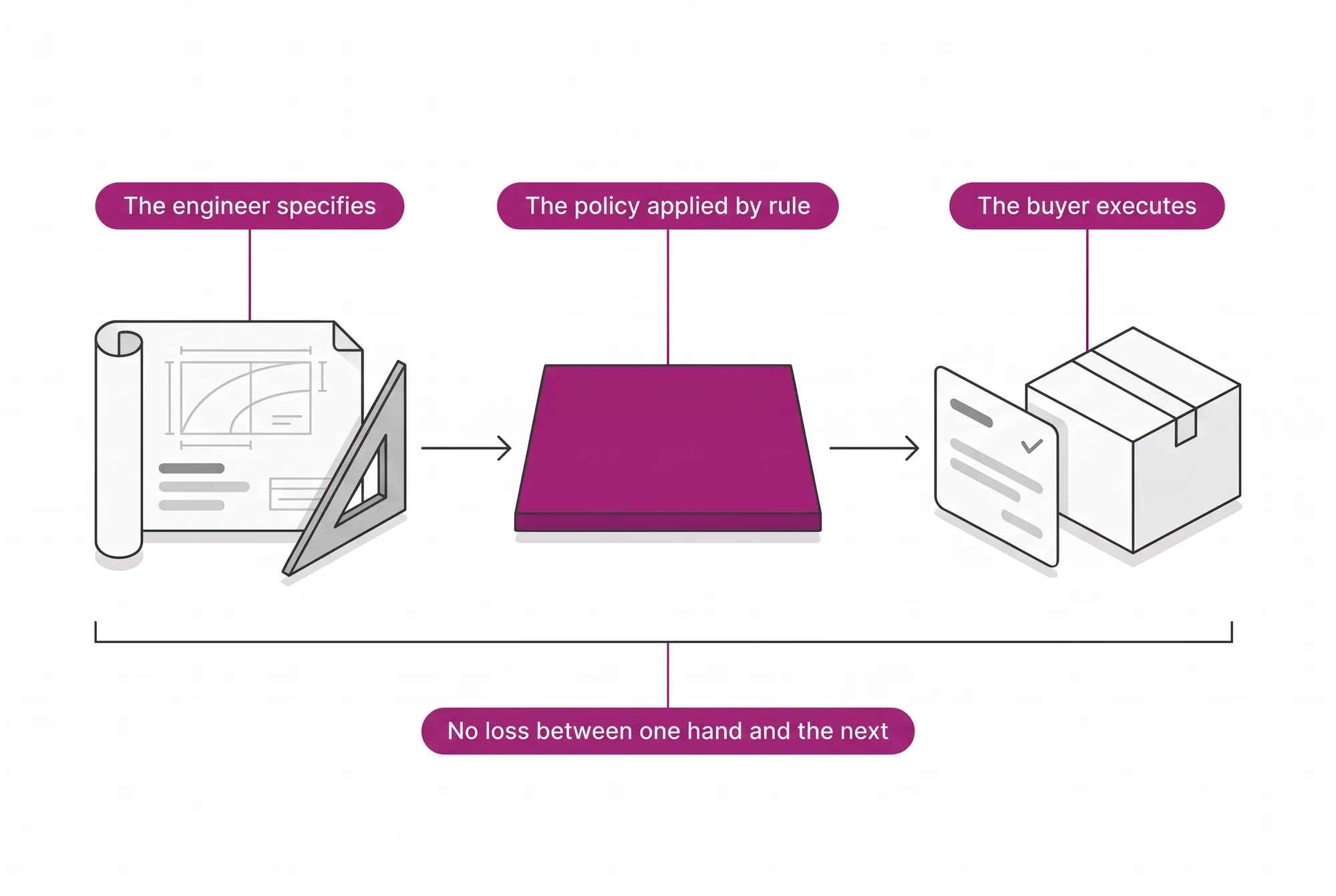
In construction the sale is technical and drawn-out: the engineer specifies, the buyer executes, and between them sits a quote that drags on, cubed freight, a tax that changes by state, and a different commercial policy for every builder. CWS Platform doesn't flatten this into a generic catalog: it models the commercial policy as an executable rule, from spec to order, under governance the company controls.
Target profile
US$30M to US$400M in revenue, regional chains plus cement, steel, plumbing and electrical manufacturers.
Core pain
Long quote, technical mix, cubed freight, state tax, and a different commercial policy for every builder.
Figures converted from Brazilian reais at R$5.00 = US$1.00.
What changes
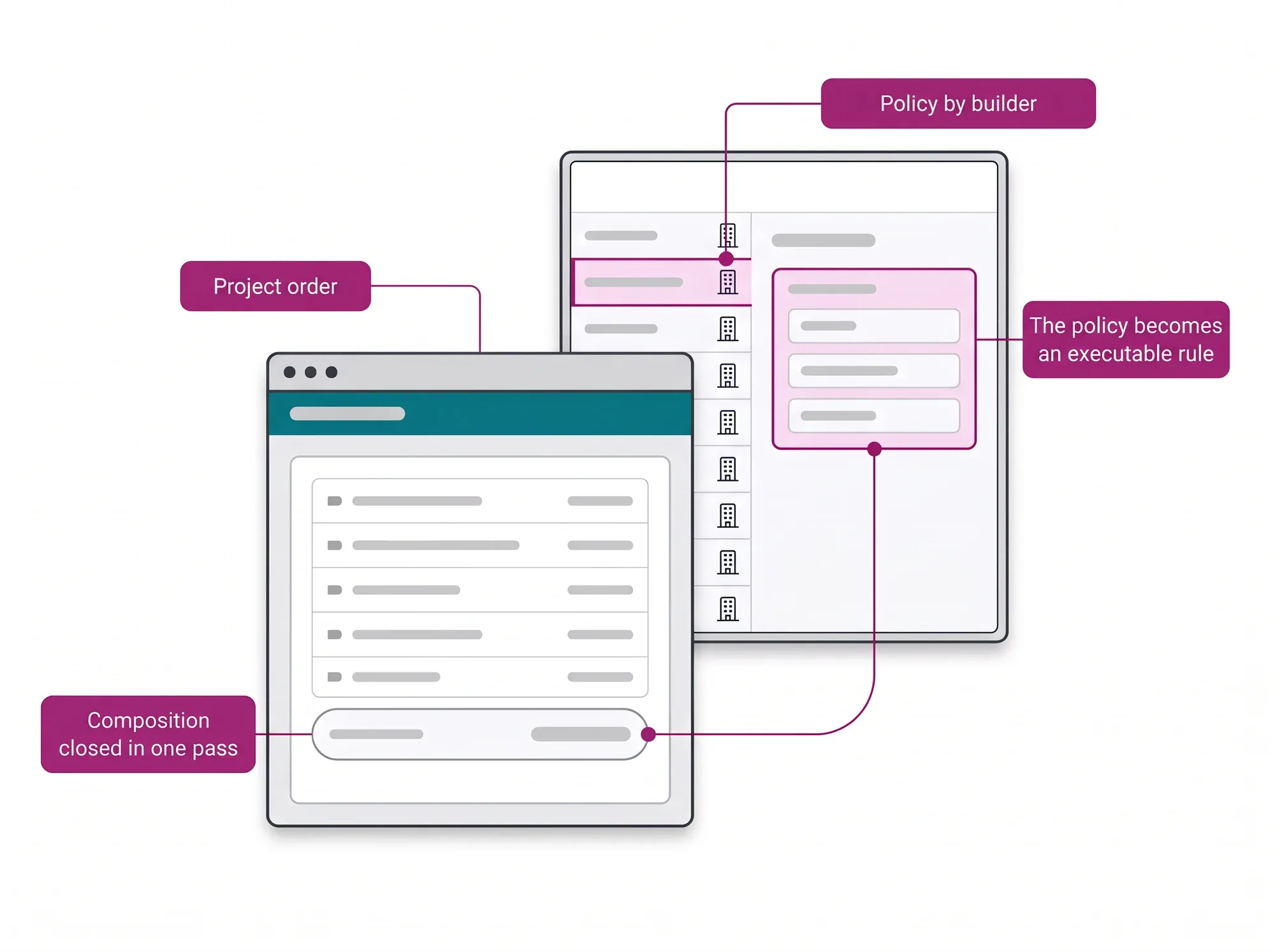
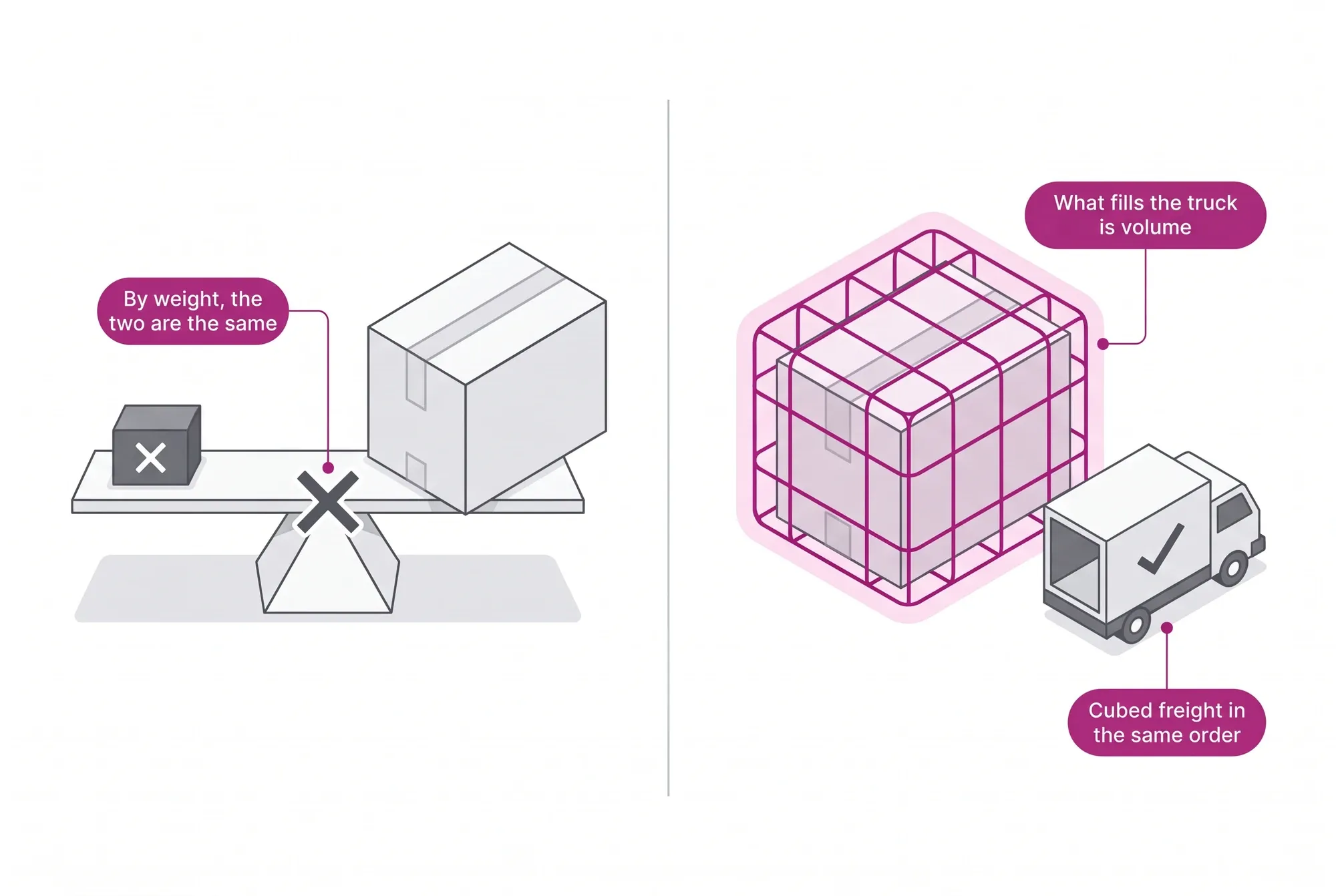
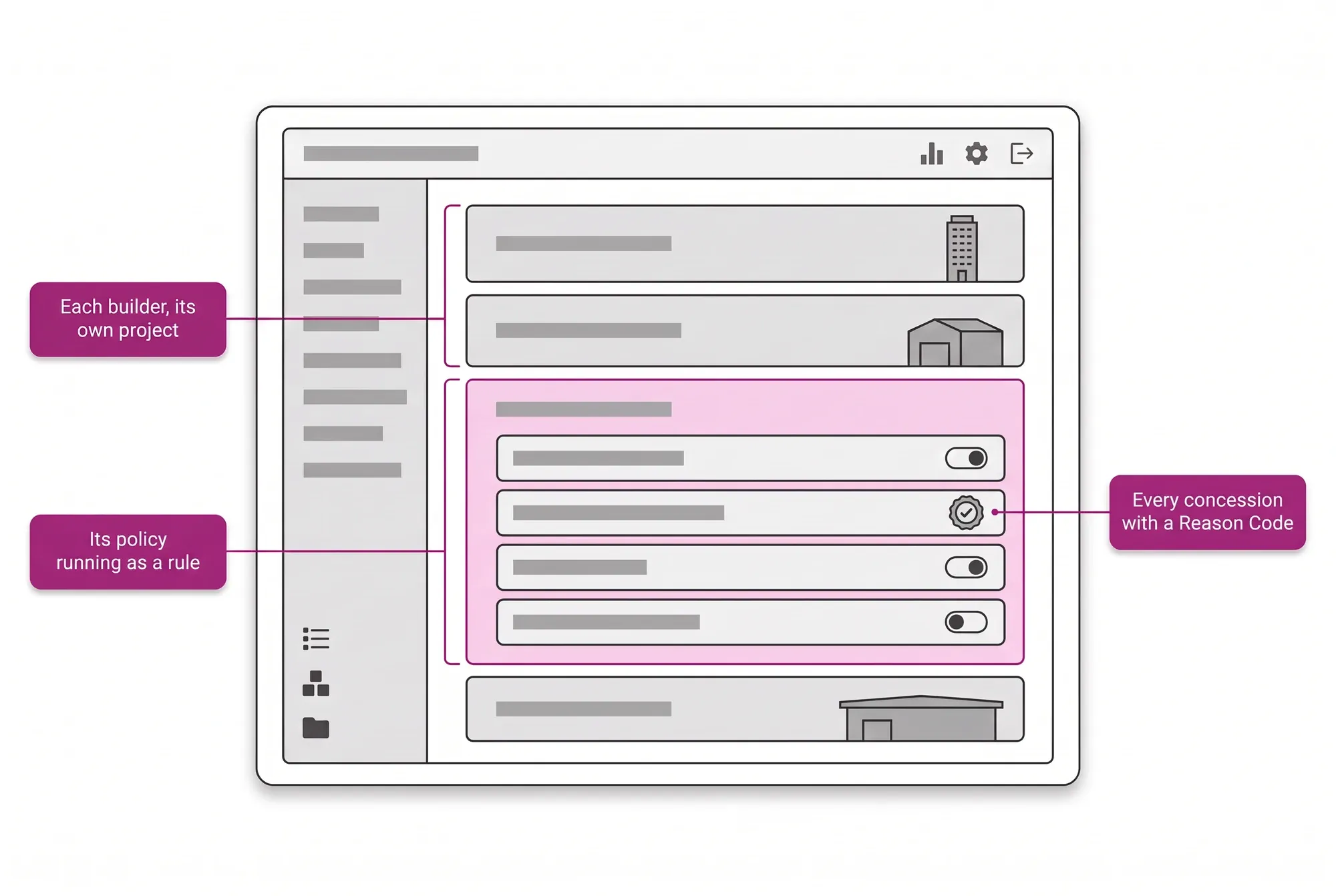
CWS Platform turns each builder's commercial policy into an executable rule (Commerce Rules Engine, the CDL Workspace): price, freight, terms and composition negotiated at the same time, in the same order. Markup, cubed freight (CIF or FOB) and state tax stop being a calculation done on the side and get computed together (Contextual Pricing and Shipping & Fulfillment). The engineer keeps specifying and the buyer keeps executing: the platform bridges the gap between the specification and the order, so the quote doesn't get lost in between. Every job stays a project of its own, under rules the company defines, not under a single mold.
By decision-maker angle
CEO
The pain: The technical sale that made the company the center of the decision is turning into a price fight in the middle of the chain.
What changes: Technical reintermediation, with the company back at the center of the specification and the buying decision.
Commercial Director
The pain: The long quote loses information at every hand it passes through, and many proposals die between the specification and the order.
What changes: From quote to order with no loss in between, with each builder's policy applied by rule.
CFO
The pain: Markup, cubed freight and state tax go in as estimates, and the real margin on the job only shows up at closing.
What changes: Markup, freight and state tax under margin control, calculated in the same order, with the concession recorded (Reason Codes).
CIO
The pain: The technical specification (memorial descritivo) lives in a loose document, far from the ERP and the job's purchasing flow.
What changes: From spec to order in a flow integrated with the job, orchestrated over the ERP without replacing it.
The capability no one replicates
Per-builder policy as an executable rule
Each builder with its own policy (price, terms, composition, approval authority) running as a rule (Approval Workflows), instead of relying on the rep's memory for every job.
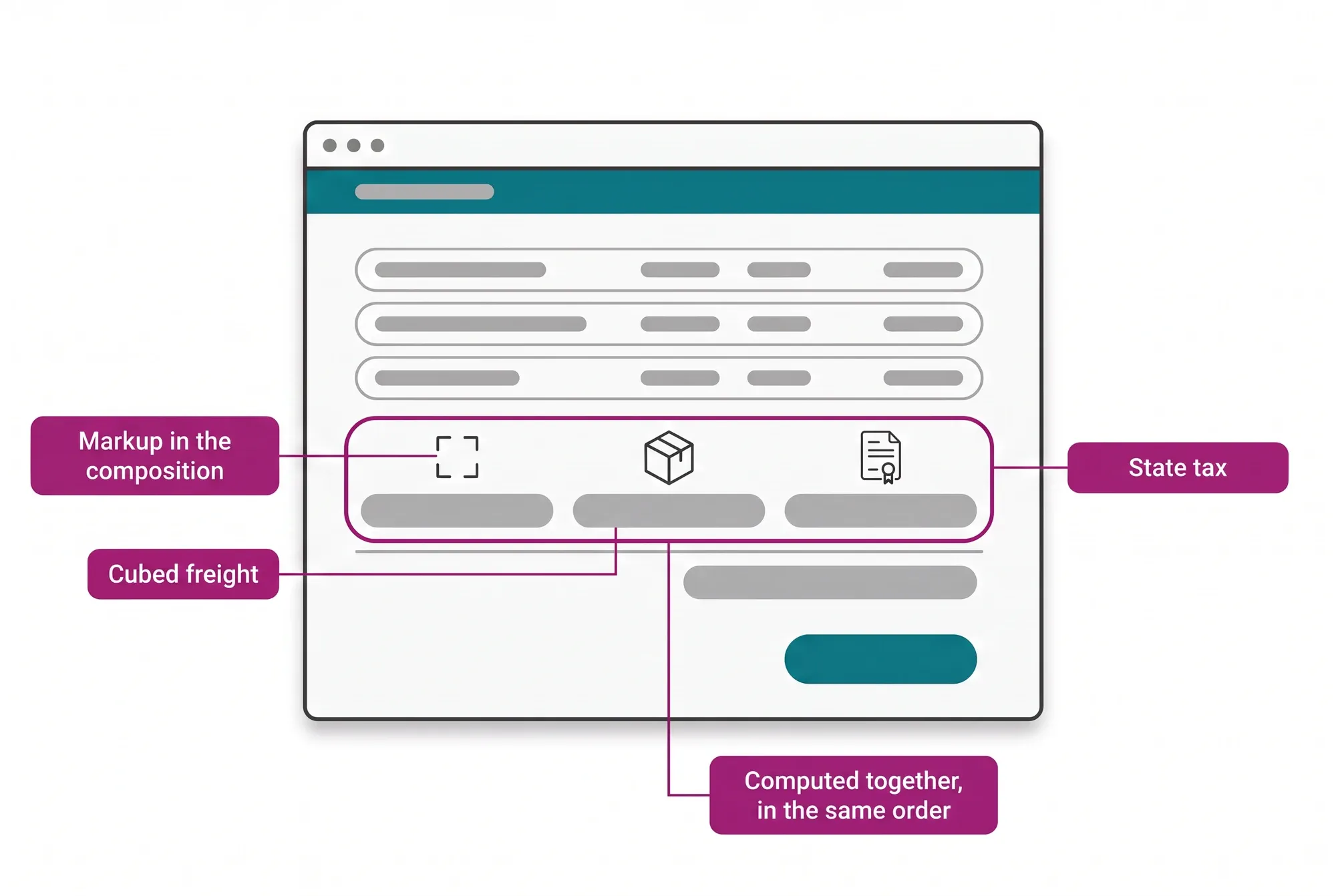
Markup, cubed freight and state tax in the same order
Markup in the composition, cubed freight (CIF or FOB) and state tax calculated together, in a single pass, so the job's price comes out right at the source.
The negotiation rails, in the vocabulary of the job site
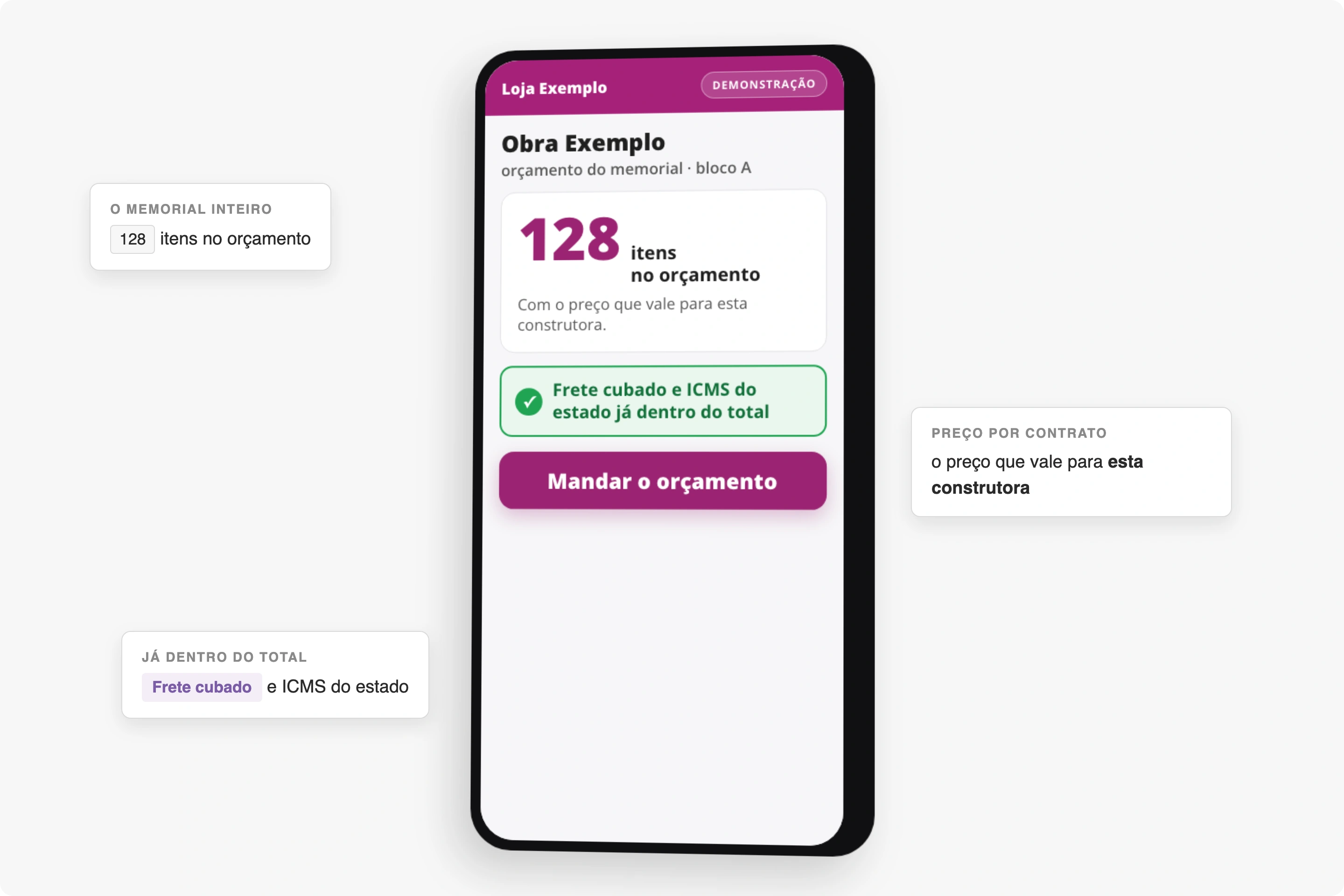
128 line items, at that contractor's price
A jobsite quote closed on a phone: the full bill of materials totaled at contract price, with cubed freight and state tax already inside the total.
- The whole bill of materials at onceA hundred and twenty-eight items in one quote: volume is the rule on a jobsite, not the exception.
- Contract price, not list priceThe value shown is the one that holds for that contractor, not a public table with a discount arranged on the side.
- Cubed freight and tax in the totalWhat usually turns into a surprise at approval is already added before the quote goes out.
In building materials an order does not have three items, it has a hundred and twenty-eight — and every contractor has their own price. The screen shows both problems solved in the same place, which is what separates the platform from a catalog.
In operation
CWS Platform brings to the sector the mechanism of modeling each customer's commercial policy as an executable rule and calculating markup, cubed freight and state tax in the same order, preserving the technical role of the engineer and the buyer. Named proof, with a number, will go here as soon as there's a construction case cleared by the customer, without importing a number from another industry as if it belonged to this one.
Frequently asked questions
Every job is a project. You can't standardize it.
And CWS Platform doesn't standardize the decision: it models your commercial policy as a rule. Every job keeps its own project. What gets governed is the rule the company already uses, not the outcome.
Does the portal calculate markup, cubed freight and state tax, or does that stay in a spreadsheet?
It calculates them in the same order. Markup in the composition (BDI, the overhead-and-margin factor built into a Brazilian construction bid), cubed freight (CIF or FOB) and state tax come out together, so the job's price doesn't depend on a calculation done on the side.
The engineer specifies and the buyer executes. How does the portal cover both?
The technical specification feeds the governed order: the memorial becomes a composition, and the buyer executes on the policy already applied, without redoing the math or losing information along the way.