B2B Marketplace Buy Box: Why Lowest Price Shouldn't Decide Alone
How ungoverned multi-seller catalog displays trigger margin erosion, fulfillment bottlenecks, and commercial conflict.

TL;DR
- The Buy Box decides which vendor wins the primary product listing when multiple sellers offer the same item, and in a B2B marketplace it cannot be decided by lowest price alone.
- Between companies, what makes an offer viable includes warehouse location, service territory, and the pre-existing commercial terms between buyer and seller.
- Every inventory source must be mapped to a specific vendor so the platform logic has structured data to evaluate.
- The fundamental operational question is who controls the algorithm.
How Is the Product Page Decided When the Buyer Is a Business?
When an enterprise coordinates multiple vendors, distributors, or fulfillment centers across a single digital commerce portal, the default instinct is to mirror consumer retail conventions. In consumer ecommerce, display algorithms typically reward the lowest listing price with acceptable delivery windows: the cheapest item claims the top spot, and checkout proceeds automatically.
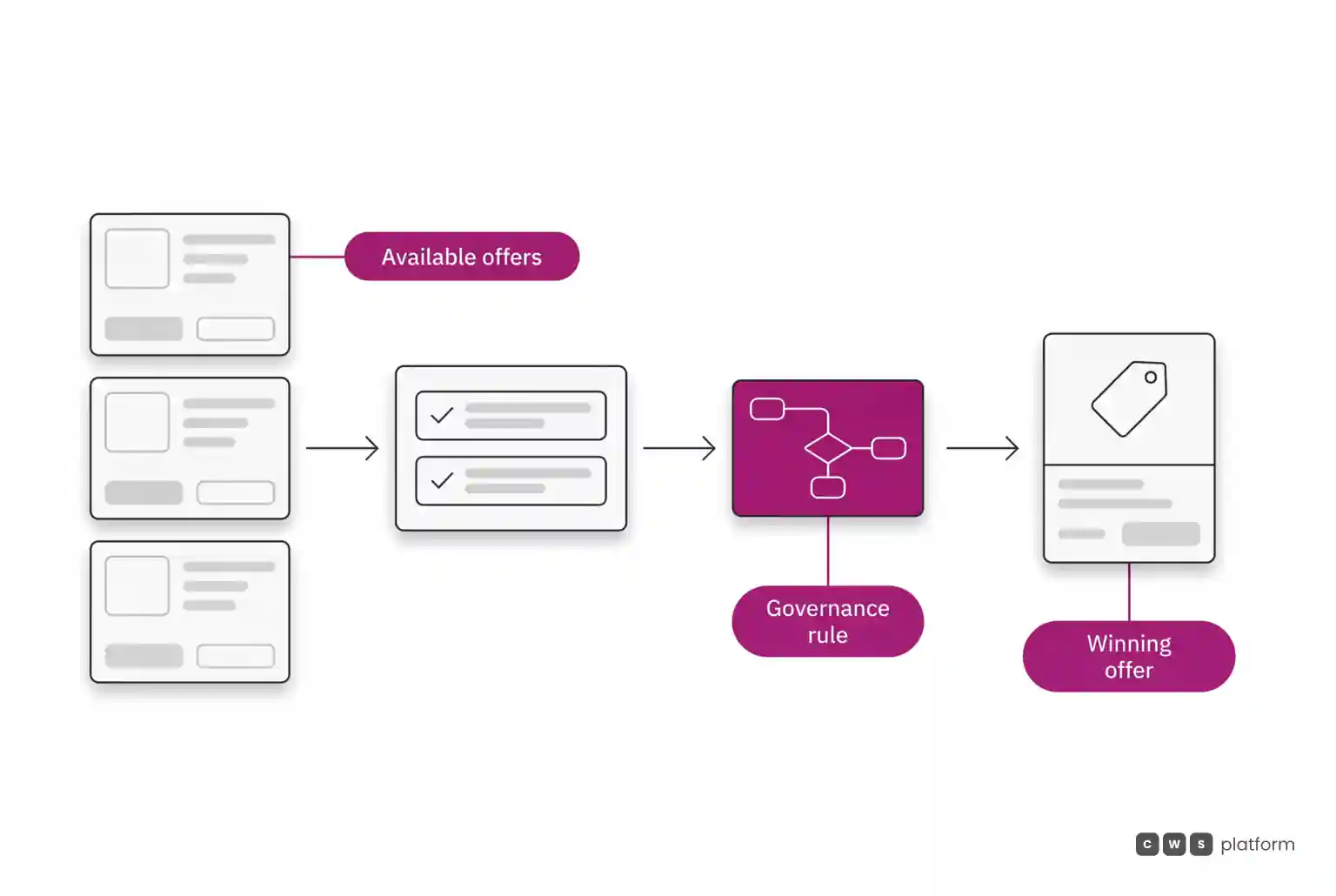
In wholesale and corporate commerce, this framework creates systemic supply chain friction. An industrial buyer or distributor does not simply purchase a part number: they contract a supply relationship with net payment terms, negotiated tier pricing, and freight delivery constraints. If the software automatically prioritizes the seller with the lowest nominal price, yet their inventory sits three time zones away outside the buyer's shipping zone, the order becomes commercially unviable for the buyer or unprofitable for the seller.
Executive teams often discover too late that your distributor gains volume on the marketplace and loses margin along the way precisely because they overlooked these variables at the point of offer selection. Understanding how does buy box work in a multi-seller ecosystem requires aligning display logic with actual commercial governance, rather than facilitating an uncontrolled race to the bottom.
Nominal Pricing and Vendor-Level Inventory Logic
The complexity of a multi-vendor B2B model lies in orchestrating distinct inventory sources against identical corporate demand. A product appearing in the master catalog does not guarantee that every authorized seller can fulfill it with equal efficiency.
Every network participant operates under unique operational parameters:
- Assigned sales territories, managed via internal fleets or regional LTL freight carriers;
- Payment terms and credit limits established in individual master services agreements;
- Contractual discount ceilings and partner pricing policies;
- Real-time stock levels across regional warehouses.
When routing rules fail to evaluate these constraints before selecting which vendor displays, procurement teams complete purchases based on phantom availability, only for orders to stall during ERP validation. Instead of accelerating sales velocity, the digital interface generates back-office overhead for account reps who must manually reassign lines to alternate fulfillment nodes. This breakdown typically reveals that you are trying to build a marketplace when what you need is a sales ecosystem.
An architectural prerequisite must be met first: each warehouse or stocking location must link directly to an identified seller entity. This entity carries its own localized catalog, pricing tier, geographic territory, and discount ceiling. Without this mapping, algorithmic evaluation cannot function.
Who Should Decide: The Algorithm or the Enterprise Operator?
In consumer marketplaces, the platform operator dictates rigid ranking rules, forcing independent sellers to conform. In enterprise B2B environments, the marketplace owner is typically an OEM manufacturer, national distributor, or franchisor operating under established territory agreements, legacy dealer contracts, and formal distribution policies. Delegating offer display solely to an automated lowest-price calculation violates these channel agreements.
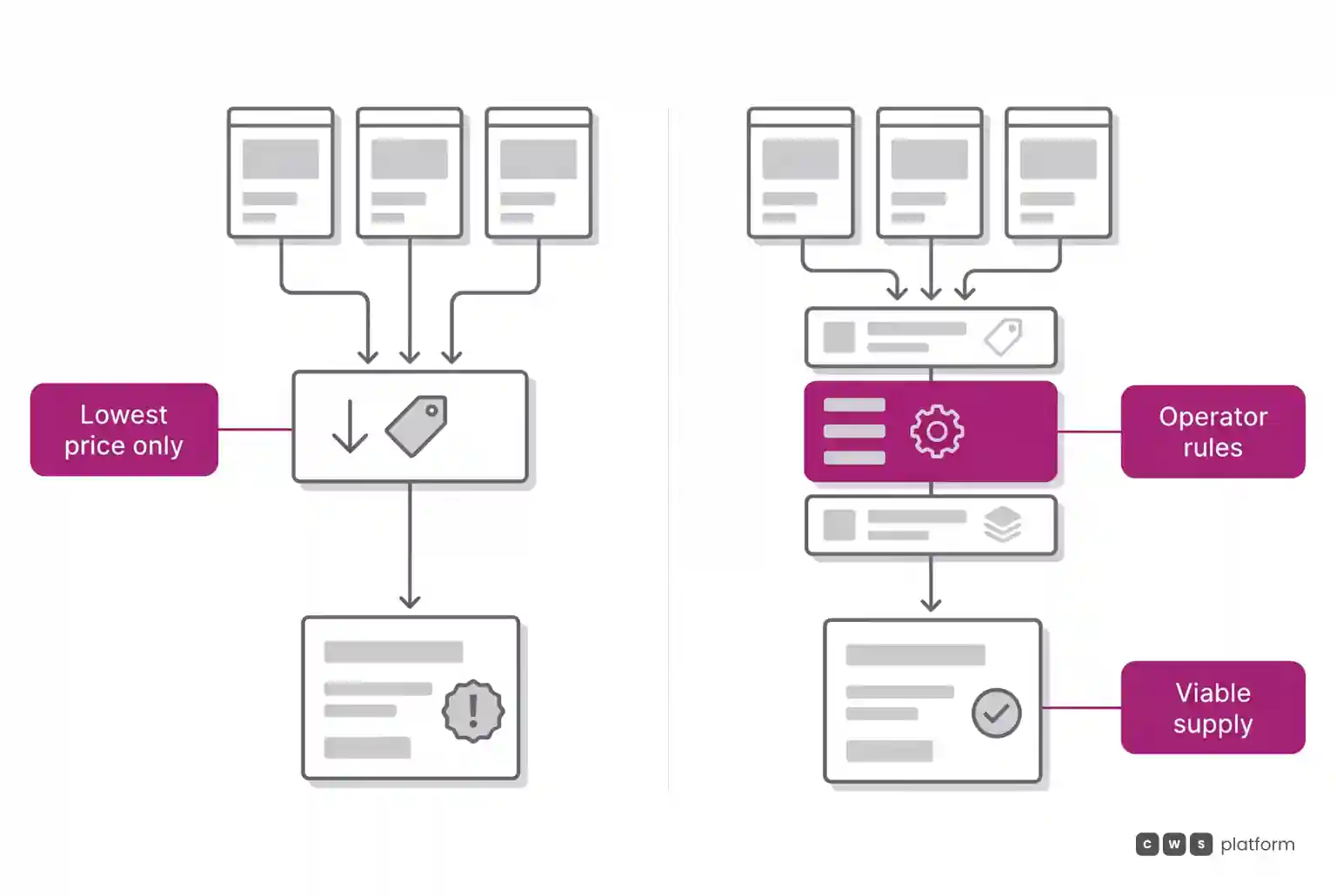
The sustainable approach treats offer presentation as configurable business logic controlled directly by the platform operator. Management specifies the weighting criteria that determine how does buy box work across each product line, retaining the agility to adjust these rules as corporate strategy shifts. The operational data feeding this logic flows directly from core systems via native ERP integrations. Preserving these existing operational flows is a core pillar of how to build a viable B2B marketplace: the 4 conditions that define the operation.
How CWS Platform Solves This
Within CWS Platform, the portal operator controls how does buy box work by configuring deterministic display rules for every catalog item. Each discrete inventory source can be linked directly to an authorized seller, while central portal administrators retain override permissions to allocate and fulfill orders from any available stock location. This is the foundation that our B2B Marketplace platform provides to organizations requiring active channel governance rather than unmanaged algorithmic routing.
The Cost of Inaction
Failing to establish structured governance over vendor prioritization produces cascading operational risks:
- Channel margin erosion: blindly routing orders to the lowest price compresses distributor profitability below sustainable levels;
- Back-office operational drag: misrouted orders require manual customer service intervention to cancel, re-quote, or reassign;
- Channel conflict: local branches and authorized dealers clash over overlapping customer accounts, undermining long-standing territory treaties;
- Enterprise customer churn: fulfillment cancellations, split shipments, and delivery delays push high-volume enterprise buyers back to offline procurement channels.
Core Principles for Governing Offer Selection
- Operator-driven governance: channel management defines the parameters that prioritize winning vendors;
- Commercial viability before price: an offer should only win the primary listing if the vendor holds the territory rights and logistics capacity to deliver;
- Seller-attributed inventory: inventory entries must trace to specific vendor nodes to enable programmatic evaluation;
- Central oversight mechanisms: when standard matching logic cannot resolve an order, internal account managers must have override access to route fulfillment from alternative stocking points.
Frequently Asked Questions
How does buy box work in a B2B marketplace?
When multiple authorized vendors list the identical SKU, this routing logic dictates which seller claims the primary order button. In wholesale environments, the system must evaluate territory rights, customer credit terms, and fulfillment logistics, rather than ranking simply by base price.
Who controls the display algorithms in enterprise B2B marketplaces?
The platform operator. Consumer ecommerce marketplaces rely on rigid, system-wide algorithms optimized for price competition. B2B portal operators configure and control the routing criteria directly to reflect existing franchise contracts, distribution tiers, and customer pricing policies.
Why is lowest price an insufficient metric for corporate offer allocation?
The lowest-priced seller may lack distribution rights in the buyer's region, maintain inadequate local inventory, or operate under unapproved payment terms for that enterprise account. Selecting an offer on price alone leads to failed order validation and post-order fulfillment exceptions.
About This Publication
This article was developed to assist enterprise CEOs, Chief Commercial Officers, and enterprise IT leaders in architecting multi-seller wholesale and distribution networks. The analysis focuses on digital shelf governance, catalog integrity, and eliminating post-order friction across B2B digital commerce operations.
"responsive, technically engaged, and willing to work through complex commercial rules (negotiated pricing, credit, customer-specific conditions) rather than pushing generic answers"
Want to see this in your operation?
Real B2B operations already run on it.