How to start a B2B marketplace that scales: 4 operational rules
Enterprise multi-vendor viability depends on governed trade policies and negotiation workflows, not storefront aesthetics.

Understanding how to start a B2B marketplace requires going far beyond launching an online catalog with a shopping cart. A portal can go live, list thousands of SKUs, attract traffic, and still end up economically unviable.
This is the dilemma facing many commercial vice presidents and CEOs: investment in the digital channel was approved, yet pricing, terms, discounts, credit limits, and inventory availability still require manual verification for every single transaction. The procurement buyer gained a sleek interface, but the company left all the backstage operational friction completely untouched.
The fallout happens far from the frontend: sales reps constantly interrupted to validate terms inside the ERP, sales managers drowning in manual approval queues, corporate buyers calling to check if price sheets are current, and finance teams reconciling trade credit rules across disconnected spreadsheets.
The technology answers the call, but the operation never gained true commercial autonomy. In many cases, you are trying to build a marketplace when what you really need is a sales ecosystem engineered to support real, complex enterprise transactions.
The viability of this business model depends far less on shopping carts or storefront catalogs and far more on four core execution conditions. These fundamentals determine whether your digital initiative becomes a cost center disguised as innovation or an operational engine capable of scaling high-stakes B2B negotiations.
TL;DR
- Digital order intake does not guarantee the long-term viability of a multi-seller B2B initiative.
- Pricing, payment terms, volume discounts, trade credit, inventory, and exceptions must be treated as computable, auditable operational rules.
- Operational fragmentation between the frontend and the back-office turns sales reps into manual data conduits for their own systems.
- Artificial intelligence creates measurable productivity gains only after transaction limits, delegation of authority, and decision parameters are fully governed.
Why Can a Digital Channel Work Technically Yet Fail Commercially?
Because digitizing the customer touchpoint is not the same as digitizing the commercial decision.
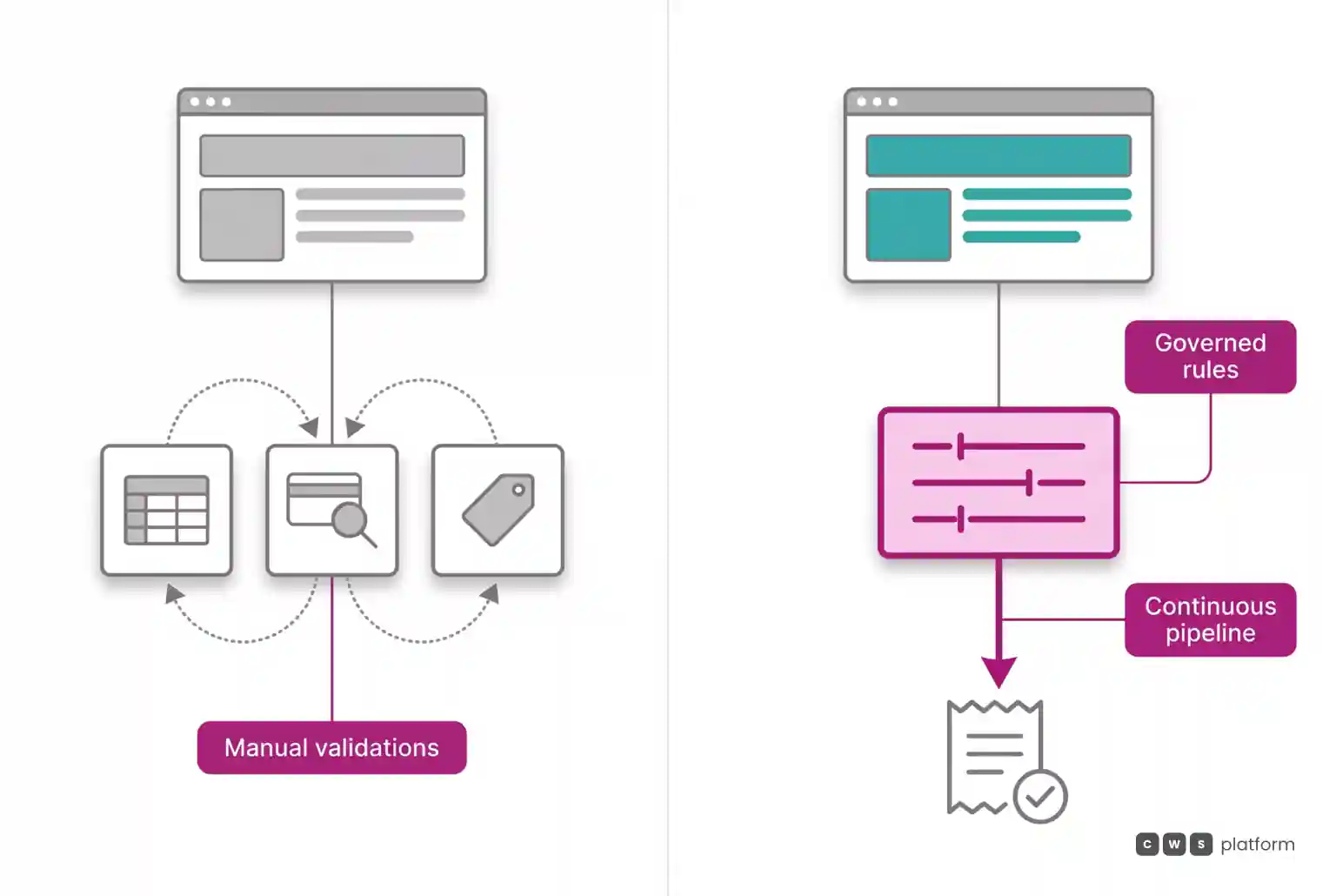
In standard enterprise sales environments, inside sales reps regularly receive orders through a customer portal, only to pause processing, log into the ERP, look up custom pricing on an external sheet, manually verify trade credit limits, adjust tiered discounts, and only then approve the order.
The portal works. The commercial decision, however, remains trapped in the sales rep's head and calendar.
This structure creates a false sense of digital maturity. Orders may no longer arrive via fragmented emails or texts, but they still require human intervention at every decisive milestone. Instead of driving strategic account growth, the enterprise sales professional acts as an expensive data-entry clerk bridging the web interface and corporate sales policy. Without operational discipline, your distribution business gains volume in the marketplace while bleeding margin along the way.
The issue does not stem from team competency, but from underlying operational architecture. When evaluating how to start a B2B marketplace that remains financially sustainable, executive leadership must examine four structural conditions.
1. Does Commercial Policy Operate as Executable Rules?
The first viability requirement is translating tacit commercial knowledge into computable, auditable business logic.
When contract pricing, volume rebates, net payment terms, days sales outstanding targets, and credit thresholds depend on informal consultations or verbal sign-offs, the digital platform acts merely as a backlog inbox. In an enterprise multi-seller environment, this operational vulnerability multiplies as new vendors, catalogs, and distribution policies join the ecosystem.
This dynamic halts scalability, makes margin audits nearly impossible, and ties order fulfillment speed directly to the physical availability of whichever manager holds the critical knowledge.
The central viability question is never whether the platform can capture an order, but how many necessary commercial decisions execute autonomously throughout the workflow.
This approach does not mean eliminating human oversight, but rather categorizing decisions with precision:
- Routine order workflows that follow predefined commercial guardrails.
- Operational exceptions governed by unambiguous delegation-of-authority matrices.
- High-stakes, non-standard negotiations kept under direct leadership oversight.
Without this operational clarity, every order variance becomes an exception. When every transaction is treated as an exception, no digital procurement channel can scale.
2. Does the Workflow Cover the End-to-End Negotiation?
The second condition requires avoiding the fragmented digitization of isolated sales stages. Learning how to cut the cost of recurring contract orders without losing operational procurement control requires every transaction step to execute inside the same governed pipeline.
Deploying a digital catalog covers initial supplier and product discovery. Online quote request forms speed up incoming inquiries. However, operational efficiency disappears entirely when credit line underwriting, delivery scheduling, sales tax compliance, and financial guarantees are still resolved outside the digital platform.
A notable agribusiness case illustrates this bottleneck: in a traditional commercial setup, closing a high-volume input deal typically took five to ten business days. Regional price books, crop-specific parameters, and credit collateral tied to barter agreements were scattered across disconnected spreadsheets.
By unifying these commercial variables inside an integrated digital negotiation workflow, quote-to-close turnaround dropped from five full business days to just eight minutes. That same operational architecture enabled the end-to-end execution of a $200,000 agricultural credit note (CPR) settled via barter directly at checkout.
The lesson here is not a blanket guarantee of identical metrics across every vertical, but a clear diagnosis of where margin leaks: in the manual gaps between pricing, trade credit, legal formalization, and final booking.
Any viable operational strategy must guide the entire interaction through to a binding commercial commitment. Otherwise, it simply builds a more expensive waiting line.
3. Does Data Support Decisions in the Context of Each Account?
The third condition requires your data architecture to mirror the nuances of business-to-business commerce. Whether managing your own proprietary platform or evaluating a third-party marketplace as a B2B demand channel, contextual customer parameterization determines conversion success.
In enterprise commerce, an offer is never static. The validity of any quotation depends on the buyer profile, historical credit risk, physical shipping jurisdiction for tax calculation, volume commitment, and real-time fulfillment capacity at the designated distribution center. These variables are equally vital for any B2B merchant protecting baseline gross margins.
The absence of integrated account context produces immediate operational friction:
- Corporate procurement abandons the portal because payment terms and credit lines require offline confirmation.
- The price displayed on screen conflicts with an existing enterprise master services agreement.
- The customer phones their account manager to confirm whether quoted terms will actually be honored.
- Regional promotions require custom IT support due to rigid product and pricing catalogs.
- Internal catalog search and analytics underperform due to unstandardized technical specifications.
Pouring capital into customer acquisition or digital adoption before resolving these underlying data gaps simply accelerates traffic into a sales funnel incapable of closing accurate deals.
4. Does Commercial Governance Precede Automation and AI?
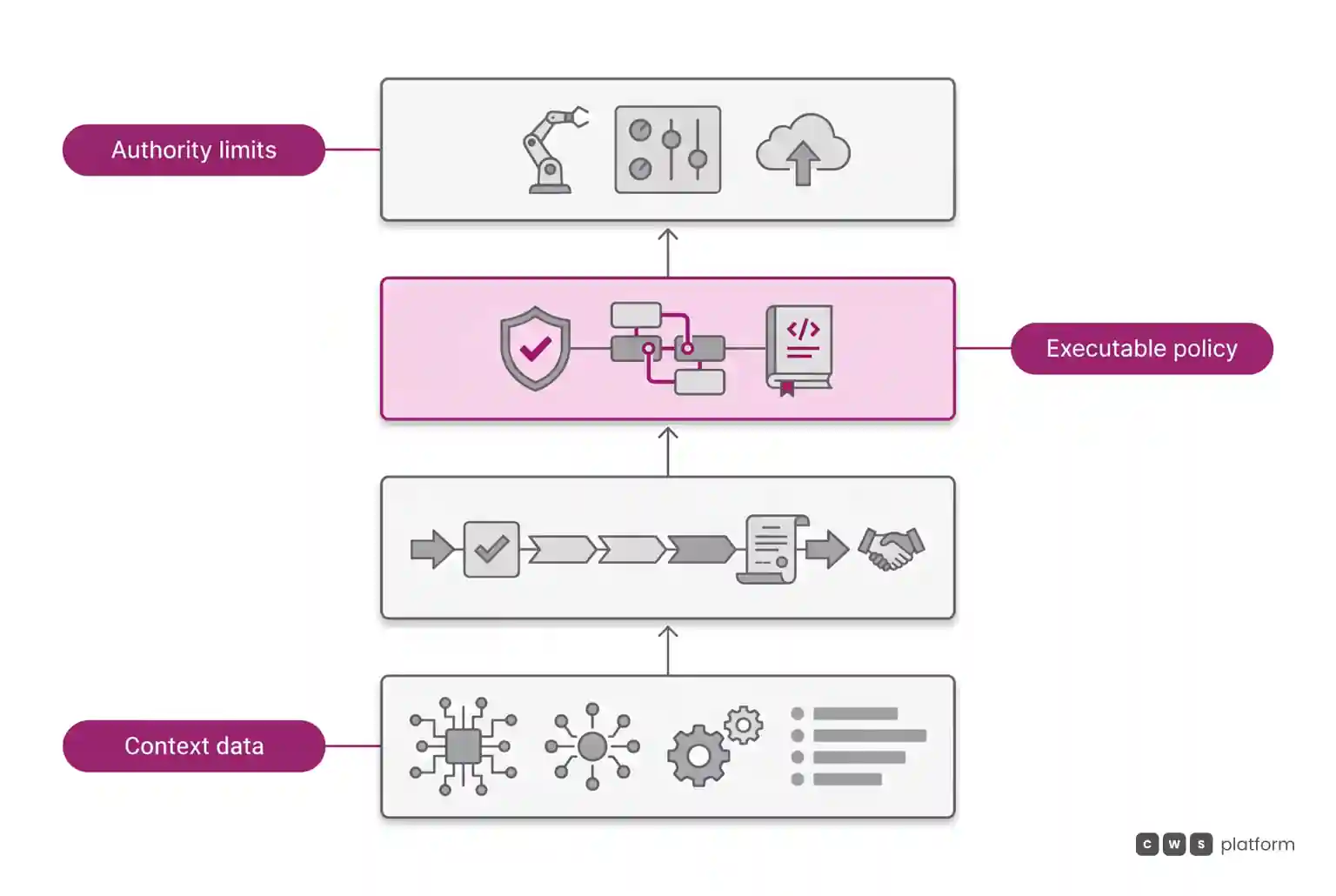
The fourth condition establishes that transactional autonomy demands strict traceability, guardrails, and structured delegation of authority.
The collaborative cross-border trade initiative between Lianlian DigiTech and UnionPay International, powered by autonomous AI agents, highlights this balance. In their global procurement framework, intelligent agents handle supplier discovery, evaluate partner options, and structure payment instructions. Crucially, final transaction approval and the formal release of corporate capital remain under strict, auditable human control.
The operational baseline is simple: governance defines the boundaries before automation receives permission to execute.
For any enterprise team studying how to start a B2B marketplace, reliable governance requires mapping out:
- Clear discount ceilings and net terms delegated directly to automation.
- Automated margin safeguards protecting minimum contribution margins by product line.
- Transparent approval tiers for non-standard pricing deviations and credit exceptions.
- End-to-end transaction logging to satisfy enterprise compliance and financial audits.
Artificial intelligence serves as a powerful multiplier for handling complex requests for quotation (RFQs) and dynamic customer pricing. However, without underlying commercial rules in place, AI simply automates and scales operational errors at record speed.
The Cost of Inaction
Leaving your digital portal as a passive browsing catalog or basic order-entry form often looks like the cautious, low-risk route, but it hides immense transaction costs that steadily drain operating margins.
Sales teams spend hours keying data into ERP systems and cross-referencing price sheets instead of prospecting, cross-selling, and expanding major accounts. Sales leadership remains bogged down signing off on trivial order adjustments. Corporate buyers grow frustrated with prolonged turnaround times for standard reorders that should happen instantaneously.
Beyond direct operational overhead, weak transaction governance erodes institutional intelligence: when real pricing negotiations happen via phone or unrecorded emails, the business permanently loses visibility into lost-deal reasons, pricing friction, and evolving buyer demand.
The primary risk in understanding how to start a B2B marketplace is not initial user adoption, it is designing an operational model whose revenue growth demands an unsustainable, linear increase in back-office headcount.
Principles to Test Commercial Viability
Before committing additional budget to custom platform development or third-party enterprise software, commercial leadership should assess operational readiness against these benchmarks:
- Audit how many steps in your standard order lifecycle still depend on manual spreadsheets or offline approvals.
- Formalize contract pricing, volume tiers, and credit terms as computable business rules rather than personal knowledge retained by veteran staff.
- Ensure all digital order channels run fully synchronized with physical supply chain rules and existing corporate sales policies.
- Establish an auditable delegation-of-authority matrix to process non-standard enterprise orders systematically.
- Clean and normalize customer master data, stock availability, and technical product taxonomy prior to launching AI tools.
- Automate workflows only after all decision boundaries and trade rules are documented, stable, and auditable.
- Reposition commercial account executives away from routine order handling and toward high-value strategic consultative selling.
FAQ
Does launching a digital sales channel replace field and inside sales reps?
No. The goal is to eliminate manual transaction processing and clerical data entry, allowing sales professionals to dedicate their bandwidth to consultative selling, major account development, and long-term pipeline growth.
Does a customer portal with login credentials guarantee commercial viability?
No. A protected portal merely provides an authentication interface. Commercial viability depends entirely on the engine's ability to apply dynamic pricing, evaluate trade credit, and allocate inventory without requiring manual intervention from back-office staff.
At what point should enterprise teams integrate AI into B2B sales negotiations?
Only after baseline commercial governance and business logic are fully established. Autonomous and assisted AI agents require clear margin boundaries, trade credit policies, and structured approval hierarchies to operate safely and effectively.
What are the first priorities when evaluating how to start a B2B marketplace efficiently?
Planning should focus on codifying business policies, pricing tiers, and approval thresholds long before configuring the user interface. Understanding how to start a B2B marketplace requires integrating trade credit management, customer-specific pricing, multi-warehouse inventory, and governed exception paths so deals can close without manual friction.
In the Field
Paulo R., Digital Sales Coordinator, highlighted the business impact of channel synchronization in an industry review:
"Online store running in perfect harmony with our entire traditional commercial operation."
Source: GetApp
A Case in Point
Operational transformations across the enterprise agribusiness sector demonstrate that buyer resistance to digital channels rarely stems from an aversion to technology, but rather from a lack of workflow governance throughout the quoting process.
By bringing custom contract pricing, regional tax rules, customer credit underwriting, and barter settlements into one governed digital pipeline, a large-scale distributor shortened sales response times from five business days to eight minutes, executing an agricultural credit note worth $200,000 via barter directly at checkout.
This commercial turnaround was not driven by visual design updates, but by a radical reduction in transaction costs: removing the endless loop of manual spreadsheets and fragmented emails freed field sales teams to focus on technical advisory work and strategic account growth.
About This Publication
The Cost of Sale breaks down how operational processes, decision frameworks, and commerce technology impact sales productivity and bottom-line margins across B2B markets.
From the perspective of CWS Platform, an enterprise B2B Commerce Platform for Governed Negotiation must translate the commercial complexity of manufacturers and distributors into automated logic, structured workflows, and auditable transaction limits. Solutions such as the B2B Marketplace empower organizations to scale sales volume while driving down the overall cost of sale, ensuring sales teams and automated tools operate within clear, predictable commercial boundaries.
Underlying software architecture must mirror strategic enterprise realities. A digital operation achieves genuine commercial viability only when it reliably supports how your enterprise truly negotiates, trades, and scales without overwhelming its people in manual routines.
Sources
- Lianlian DigiTech and UnionPay International, enterprise case study on human-governed AI workflows in global procurement: https://en.prnasia.com/story/541916-0.shtml
- CWS Platform, verified user reviews on enterprise governance and commercial channel synchronization: https://www.getapp.com/all-software/a/cws-platform/
"responsive, technically engaged, and willing to work through complex commercial rules (negotiated pricing, credit, customer-specific conditions) rather than pushing generic answers"
Want to see this in your operation?
Real B2B operations already run on it.