Manufacturer Marketplace: How to Launch Without Channel Conflict
How enterprise brands deploy governed multi-seller models to capture digital demand while protecting dealer territories and dealer margins.

TL;DR
- A manufacturer marketplace rarely stalls because of technology; it stalls because of the risk of competing directly with its own distributor network.
- The solution is for the manufacturer to operate the portal while distributors join as sellers, each managing their own inventory and assigned territory.
- Channel conflict is avoided through business rules: the portal operator decides which seller is displayed for each item and buyer.
- Central support steps in when a local distributor lacks stock, without taking away sales that belong to that partner.
Should Manufacturers Sell Direct to End Users or Strengthen Their Channel Partners?
Commercial leadership teams face a recurring dilemma when designing digital initiatives. When a brand opens a direct channel to serve end customers, distributors instinctively push back. The distributor views the move as direct competition from the very entity that sets their baseline product cost. If the manufacturer backs down to protect the relationship, it loses fulfillment speed and real-time visibility into downstream demand.
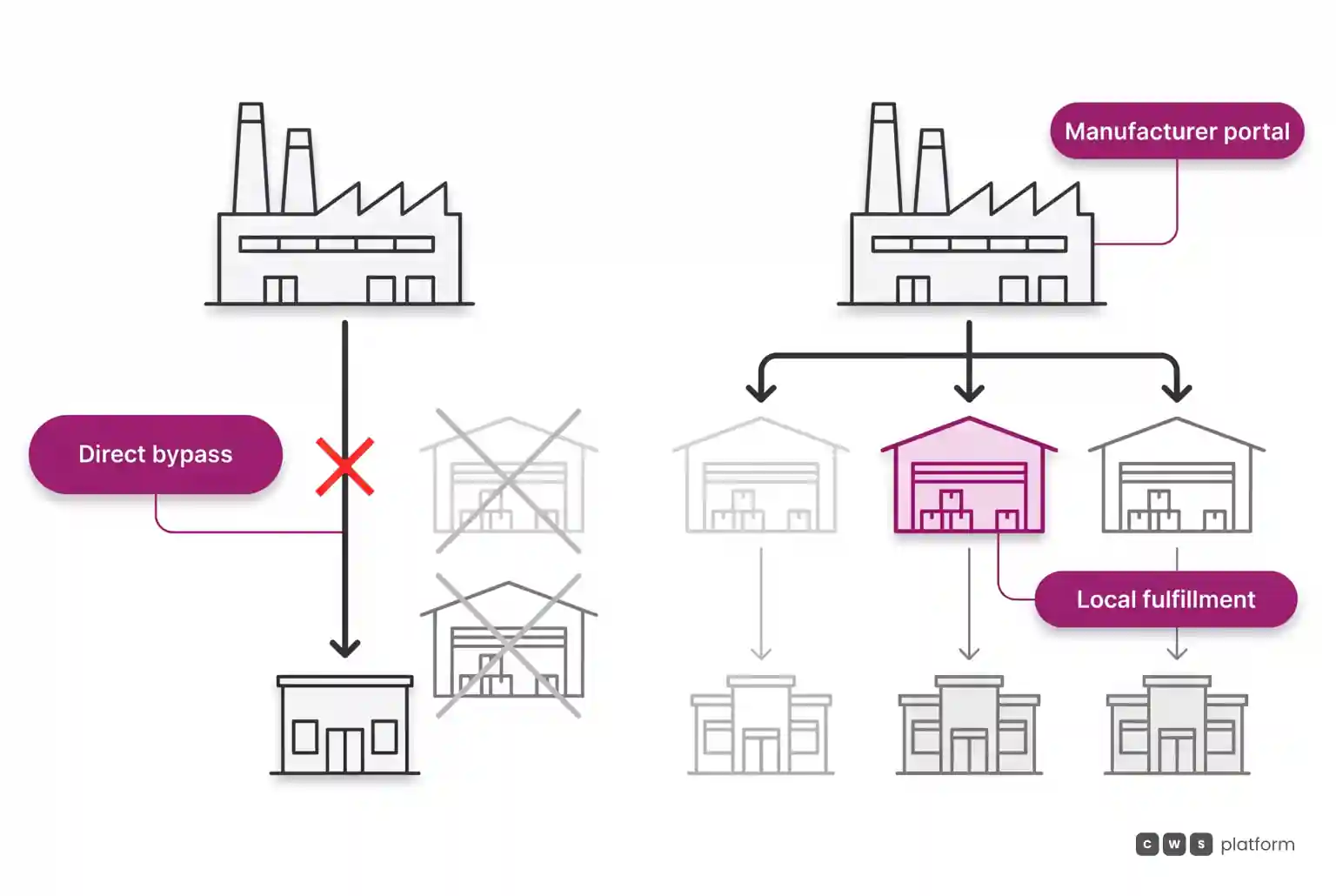
Breaking this deadlock does not require choosing between the plant and the dealer network. The real path forward is structuring a model where channel partners act as the fulfillment and inventory backbone. When building a manufacturer marketplace, leadership must create an environment where the brand manages the digital storefront, brand governance, and demand generation, while authorized distributors act as the sellers responsible for regional service, local stock, and final delivery.
In many scenarios, you are trying to build a marketplace when what you really need is a sales ecosystem capable of aligning divergent interests under unified commercial rules. When a manufacturer launches a transactional channel without factoring in the margins and logistics roles of territorial partners, the result is predictable: channel friction, partner resistance, and lost market coverage.
The Root Causes of Channel Conflict
Channel conflict typically emerges across three distinct areas:
First is visibility. If every distributor can see peer inventory levels and pricing, the portal quickly turns into an internal price war among brand partners.
Second is fulfillment allocation. In consumer retail, open platforms default to the lowest price. In B2B commerce, that mechanism destroys margins across the entire supply chain, creating the exact dynamic where your distributor gains volume on the marketplace but loses margin along the way. Manufacturers maintain territory agreements and long-standing dealer relationships; order routing must honor those commitments.
Third is direct-selling encroachment. Distributors support a digital portal when they know the plant will not use it to bypass them. They grow skeptical the moment commercial boundaries are left undefined.
A multi-seller B2B environment must allow multiple partners to coexist without encroaching on each other's accounts. In practice, this means treating every distributor stocking location as an independent unit with its own catalog, pricing tier, geographic territory, and discount threshold, all managed within corporate guidelines. The parameters governing these rules live inside the core business system and flow into the portal via an ERP integration, without requiring partners to have direct backend access.
How CWS Platform Solves These Three Points
Managing this level of orchestration requires a dedicated B2B Marketplace architecture. Within CWS Platform, three core capabilities address these conflict points directly:
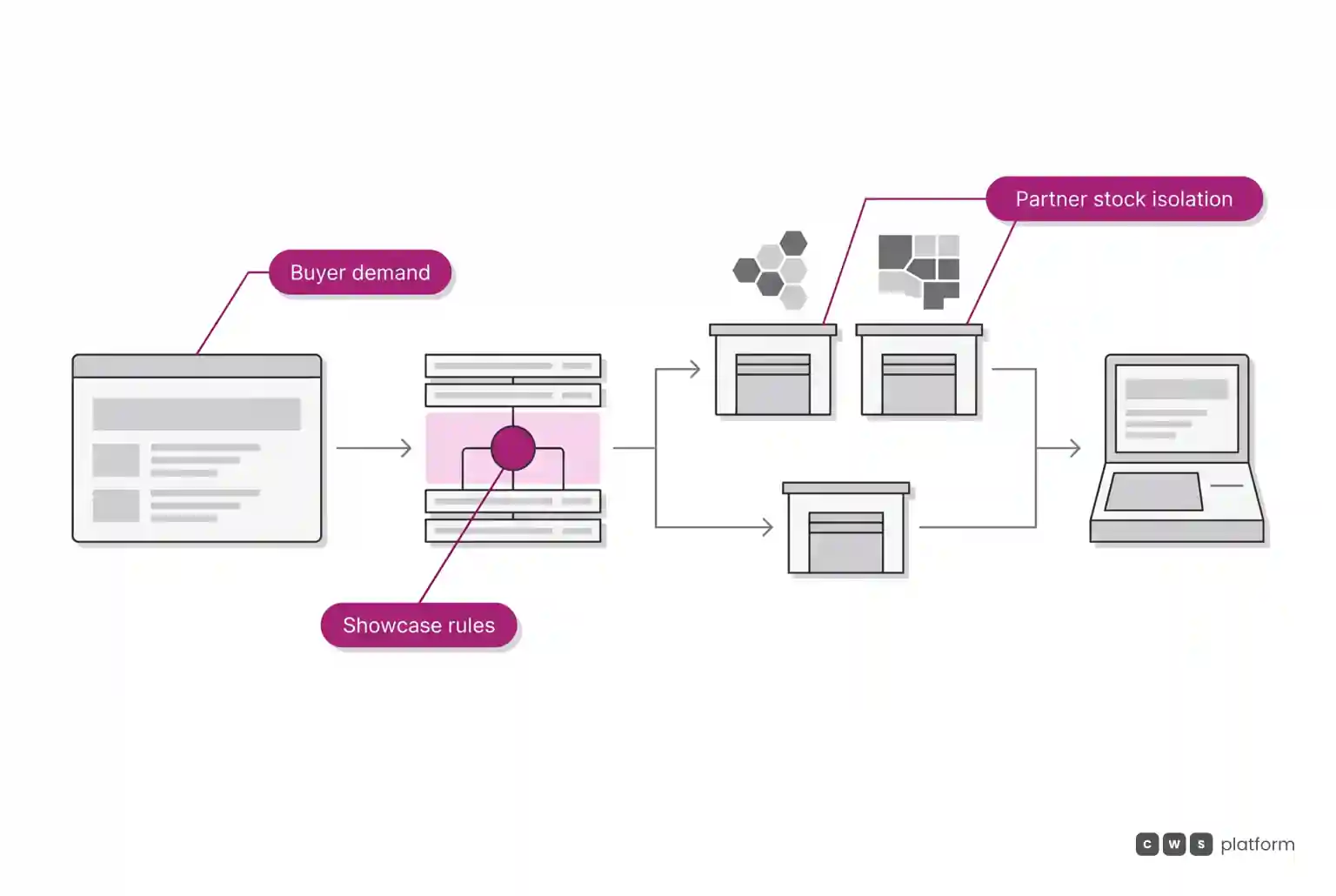
- Seller-assigned inventory: Each inventory pool is tied directly to a specific distributor, who can only view and build carts using their own stock.
- Operator-governed storefront rules: The manufacturer determines which seller appears for each product listing, rather than relying on an automated lowest-price algorithm.
- Central support capabilities: Corporate support teams can sell out of any distributor inventory pool or broader company stock, ensuring buyers are covered when local dealers run out of product.
This operational design follows the framework outlined in how to build a viable B2B marketplace: the 4 conditions that define the operation, connecting an existing distribution footprint directly into the corporate digital strategy.
The Cost of Inaction
Postponing network digitization carries a heavy cost for both the manufacturer and its channel partners. Sales and customer support teams spend valuable hours quoting commodity SKUs, verifying inventory over the phone, and manually processing routine reorders.
Without standardized digital channel governance, business buyers will migrate to competitors offering fast ordering and clear self-service portals. Sticking to legacy, analog workflows does not protect distributor relationships: it merely stalls the channel and leaves the manufacturer blind to true end-market consumption.
Core Principles for Launching Without Channel Conflict
- Align the network early: Distributors must view the portal as a steady source of demand rather than a direct-sales threat from corporate.
- Bind inventory to specific sellers: Each distributor views and fulfills only their assigned stock.
- Establish storefront display rules: Clearly define, as the platform operator, how the system selects which distributor serves each item and customer account.
- Define central support roles: Use corporate customer service to backfill inventory gaps without competing for partner orders.
- Distribute channel rules to the edge without exposing internal ERP systems to third-party partners.
FAQ
How do you launch a manufacturer marketplace without causing distributor conflict?
The manufacturer runs the platform and sets commercial governance, while distributors participate as third-party sellers managing their own stock and territories. Friction is prevented because partners only transact their own inventory, and the manufacturer controls order assignment rules.
Can distributors see competitor inventory levels on the platform?
No. When stock pools are restricted by seller, distributors only view and fulfill from their own inventory allocations. Only the platform central administrative team has visibility across the entire network.
Who determines which distributor wins the order?
The platform operator establishes order allocation logic. Routing rules reflect exclusive sales territories and established partner agreements rather than defaulting to the lowest price on the screen.
About This Publication
This article analyzes marketplace and digital ecosystem models for industrial manufacturers seeking to modernize sales operations while safeguarding their distributor networks. Content is developed and maintained by the CWS Platform editorial team. To explore strategies for B2B channel orchestration, visit cws-platform.com.
"responsive, technically engaged, and willing to work through complex commercial rules (negotiated pricing, credit, customer-specific conditions) rather than pushing generic answers"
Want to see this in your operation?
Real B2B operations already run on it.