Real-Time Pricing in B2B Negotiation: What Changes When Reps See Margin
Why static price sheets fuel margin leakage and how instant margin calculation empowers sales reps to close smarter deals.

"Can I give another 3% to close today?" The sales rep asks the question without knowing the real answer. He sees the list price and the discount he is requesting, but he cannot see what happens to the order margin after sales tax, freight, and payment terms are factored in. The sales manager on the other end of the line does not know either. The decision is made completely in the dark, and the financial reality only surfaces on the following month's report.
Real-time calculated pricing transforms B2B negotiations because it puts the complete math right in front of decision-makers at the exact moment they decide.
Why negotiations happen in the dark
Why does the sales rep fail to see the impact of the discount? Because he only sees the list price. Actual margin depends on product cost, jurisdiction-based sales tax, origin warehouse freight, and payment terms, which are only calculated later.
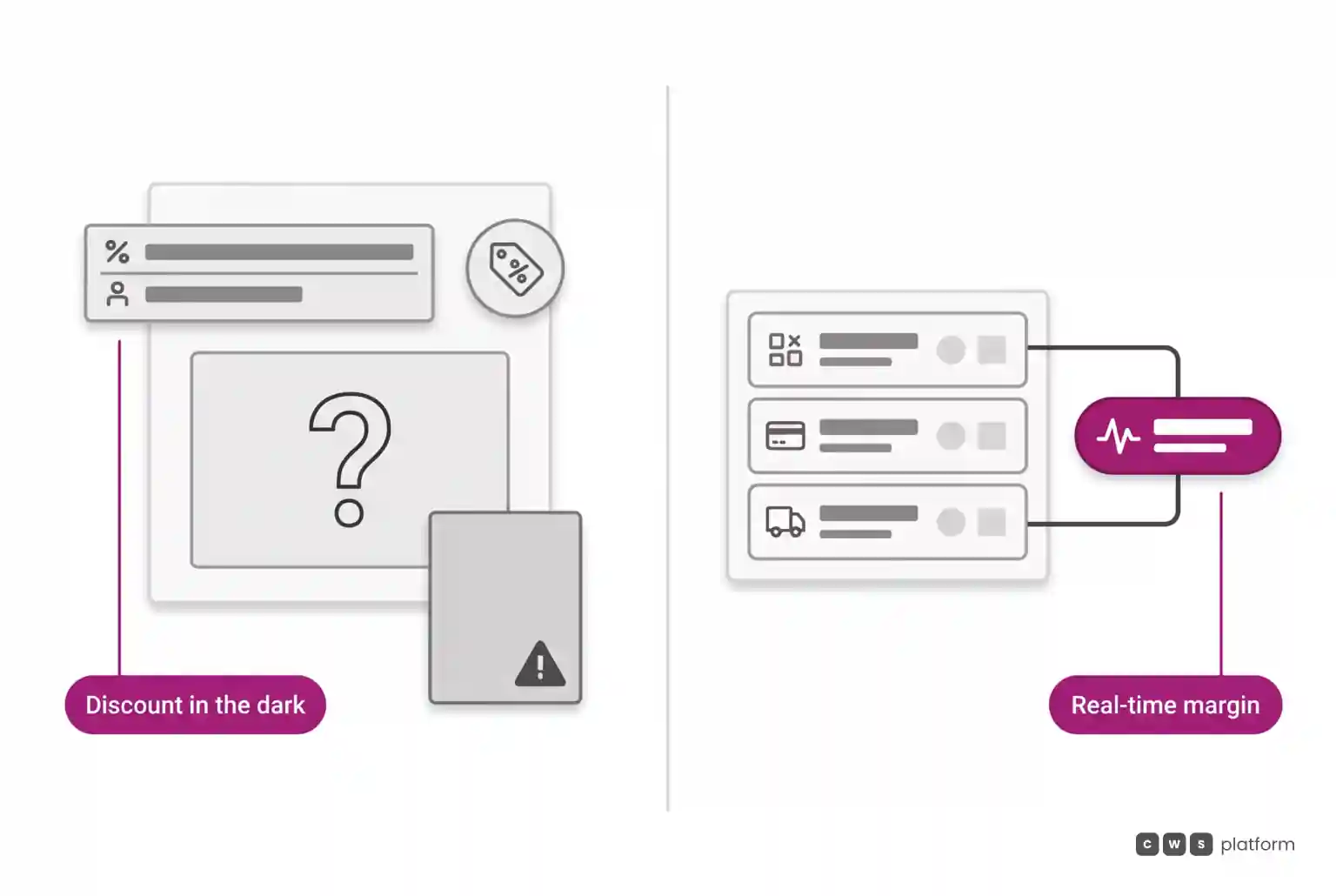
Why are these numbers calculated after the fact? Because the order is only keyed into the ERP at the very end, once the negotiation is already over. Only then does the system run the full calculation.
Why does the manager approve discounts blindly? Because the approval request arrives as "8% discount", instead of showing that "order margin drops from 22% to 14%".
Why does this drive margin erosion? Because without instant math, price discounting becomes the only tool left on the table. Payment terms, volume commitments, product mix, and freight allowances, which cost far less, never enter the conversation.
The root cause: pricing calculations arrive only after the pricing decision is finalized. This is precisely what we explore in quando a negociação vira caixa-preta.
What changes when the math happens instantly
The sales rep negotiates using multiple levers. Seeing the direct impact of every line-item change, he quickly realizes that shifting payment terms from net 90 to net 60, or adding a higher-margin product, protects the bottom line far better than granting that extra 3%.
Approvals arrive with full context. The approving manager sees the entire deal: line items, individual line discounts, resulting net margin, and the documented business justification. Decision-making stops being a guessing game.
Discount authority turns into dynamic guardrails, not roadblocks. Up to a defined limit, the sales rep decides autonomously. Beyond that threshold, the order line locks until a manager with the proper authority approves it with a clear reason. The deal moves forward, fully governed by commercial policy.
The buyer gets an answer during the live call. No more "let me run this by my VP and get back to you tomorrow." In complex B2B sales, cycle delays cost just as much as discounts.
How to bring real-time pricing into negotiations
1. Price the entire order, not just the single item. Final pricing, multi-state tax, shipping zone freight, and credit terms depend on the collective basket. A discount on one product can be offset by margin on another, and the calculation must make this visible immediately.
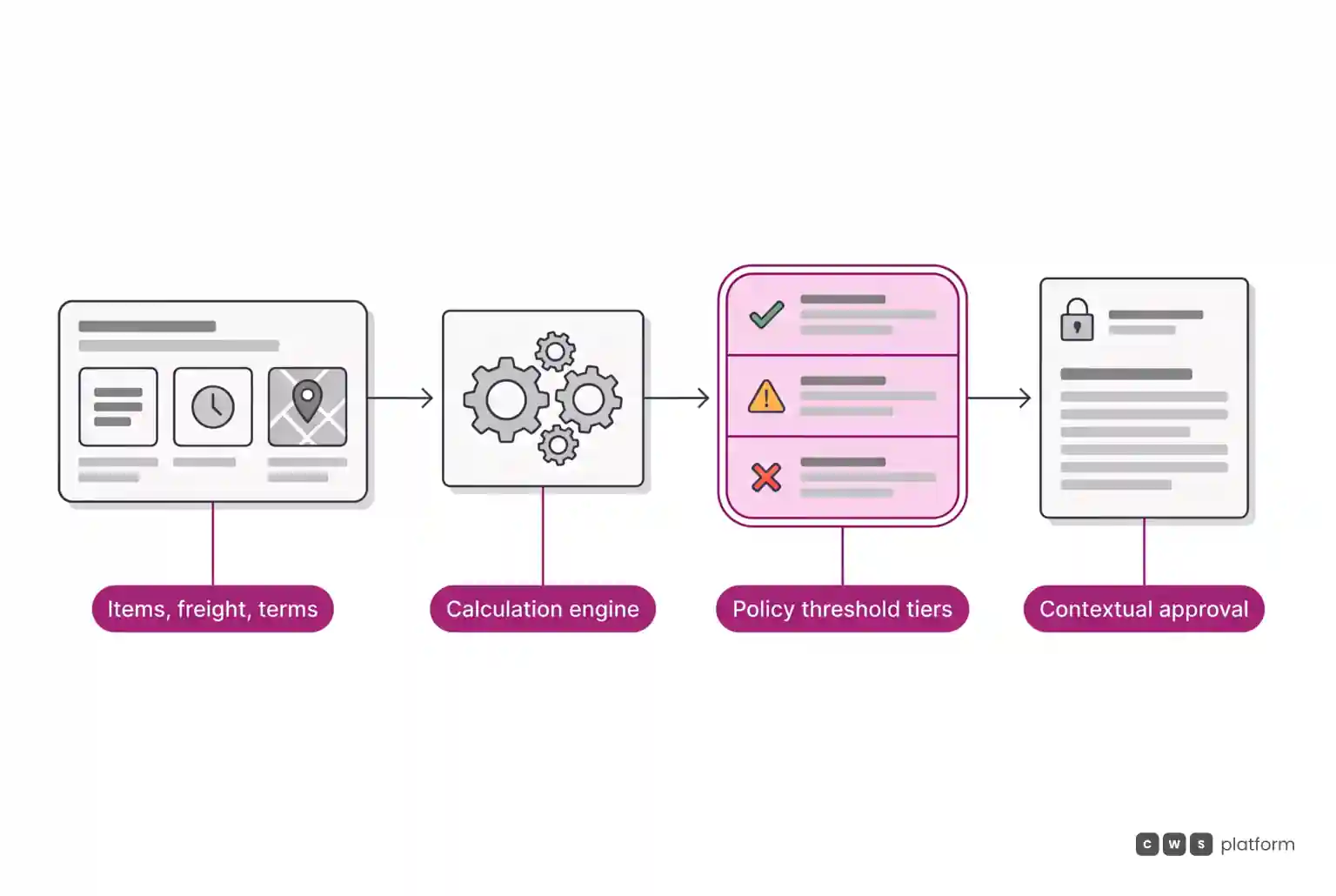
2. Display margins in bands, not exact dollar figures. Many distributors and manufacturers prefer not to expose true product cost to sales reps. A tiered indicator (within policy, warning, out of policy) effectively guides decisions without revealing sensitive internal costs.
3. Put approval limits directly on the screen. The sales rep needs to know, before asking, his exact concession ceiling and who has the authority to approve exceptions above it.
4. Record the reason for every single exception. Over a few quarters, logged justification data highlights where your commercial pricing policy is detached from market reality and where margin concessions have simply turned into bad habits.
5. One single calculation engine across all channels. The price calculated for the field rep must match the price the procurement buyer sees on the customer portal and the pricing used by autonomous AI sales agents.
The sign that margin is being surrendered unnecessarily
Compare your numbers over the past three months: take the average discount on orders closed on the first call versus orders that sat waiting for approval. If the delayed orders closed with steeper discounts, you are paying for sales cycle friction directly out of gross profit. This is one of the classic operational traps analyzed in crescer o faturamento não é crescer a margem.
On CWS Platform, pricing is calculated directly inside the order based on customer profile, inventory warehouse, and tax rules. The sales rep negotiates inside the very same cart as the corporate buyer, backed by an automated authority matrix: any line exceeding threshold limits locks until an exception reason is submitted. These identical rules apply whether buying through a field rep, self-service portal, or AI agents. Review the architecture on the venda assistida page.
Next step
In your next sales pipeline meeting, pull three orders that received special discount approvals last month and recalculate them completely, factoring in destination taxes, logistics freight, and extended payment terms. Ask the sales reps whether they would have asked for that same discount had they seen those final net margins on screen in real time.
Frequently asked questions
How does real-time pricing impact B2B negotiations?
It exposes the immediate impact of discounts, extended terms, and mix adjustments to both the rep and the approving manager during the decision. Negotiations shift toward structural trade-offs rather than pure price cuts, and approvals are backed by true order profitability rather than isolated discount percentages.
Why do margins shrink even when gross revenue increases?
Top-line growth is frequently subsidized by hidden concessions: compounded discounts, extended credit terms, and absorbed shipping costs agreed upon without calculating total order costs. While top-line billing expands, net unit economics steadily deteriorate.
What is margin erosion?
It is the gradual decay of profitability caused by recurring small concessions, such as discounts beyond authorized guidelines, perpetual promotional pricing, or unrecovered freight and carrying costs. It is rarely obvious on a single transaction, but visibly damages quarterly financial statements.
Does a sales rep need to see product cost to negotiate effectively?
No. Reps only need to see the net financial impact of the transaction. A color-coded margin band (within policy, warning, out of bounds) along with visible approval authority allows reps to negotiate strategically without disclosing confidential underlying costs.
Read also
- Como escolher um sistema para distribuidora: cinco testes com o pedido real
- Positivação no atacado: por que a carteira não volta a comprar quando o pedido depende do vendedor
- B2B pricing and margin
About this publication
A publication by CWS Platform. Learn more at cws-platform.com.
"responsive, technically engaged, and willing to work through complex commercial rules (negotiated pricing, credit, customer-specific conditions) rather than pushing generic answers"
Want to see this in your operation?
Real B2B operations already run on it.