Volume Pricing in B2B: How to Build Tiered Pricing Without Sacrificing Margins
How to structure quantity-based discount tiers grounded in operational cost savings and automated governance.

Tiered discounting is a pricing model where discounts increase in tiers as the order quantity grows: buyers who purchase more units, or reach a higher spend, pay a lower unit price. In B2B, it is the most common form of volume pricing, and it works best when each tier is a transparent rule calculated automatically by the system rather than a concession negotiated order by order.
Tiered pricing is designed to drive larger order sizes. When it turns into ad-hoc negotiation, it merely erodes the price.
How Tiered Discounting Works
The discount structure is set using clear quantity breaks. Here is an example with illustrative figures:
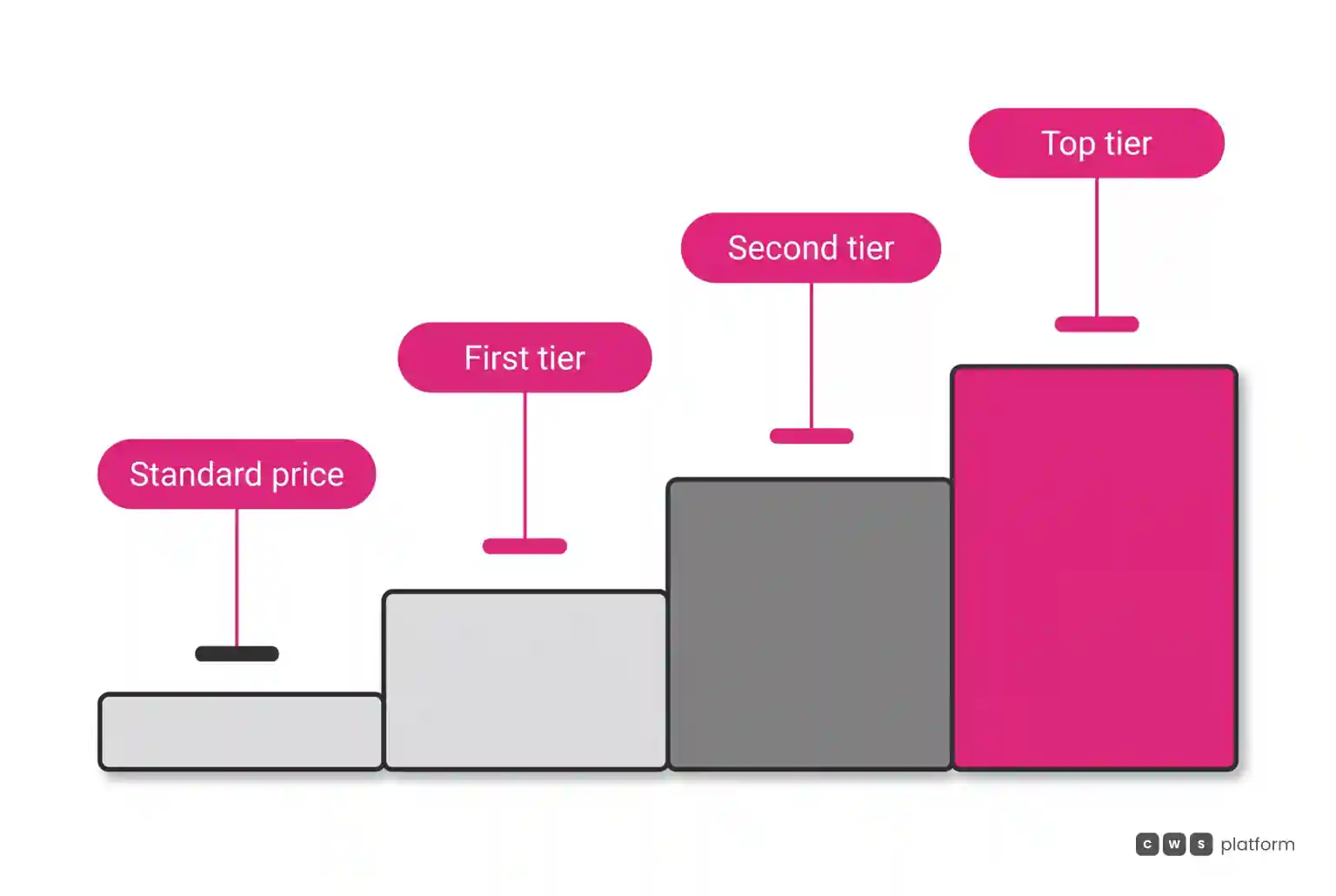
| Order Quantity | Discount |
|---|---|
| 1 to 49 units | List price |
| 50 to 199 units | 3% |
| 200 to 499 units | 5% |
| 500 units or more | 7% |
These pricing tiers can be measured by individual SKU volume, total order value, cumulative units within a product line, or historical order volume over a specific time horizon.
Tiered Discounts by SKU vs. by Order Value
By SKU. Each individual product has its own quantity tiers. This approach suits high-velocity items where scale directly lowers procurement, picking, and freight costs.
By order value. The discount applies across the entire invoice once total order spend crosses a set dollar threshold. This encourages buyers to consolidate their purchases into larger baskets.
By product family. Units purchased across different items within the same category count toward a shared tier. This is ideal when buyers need varied configurations of the same product group.
By cumulative volume. The discount accounts for total spend over a monthly or quarterly period. This rewards buyer loyalty, though it requires strict tracking of order histories.
Why Tiered Discounts Erode Margins
Why do tiers turn into negotiations? When a buyer falls just shy of the next tier, they often ask for the lower price anyway, and the sales rep grants it.
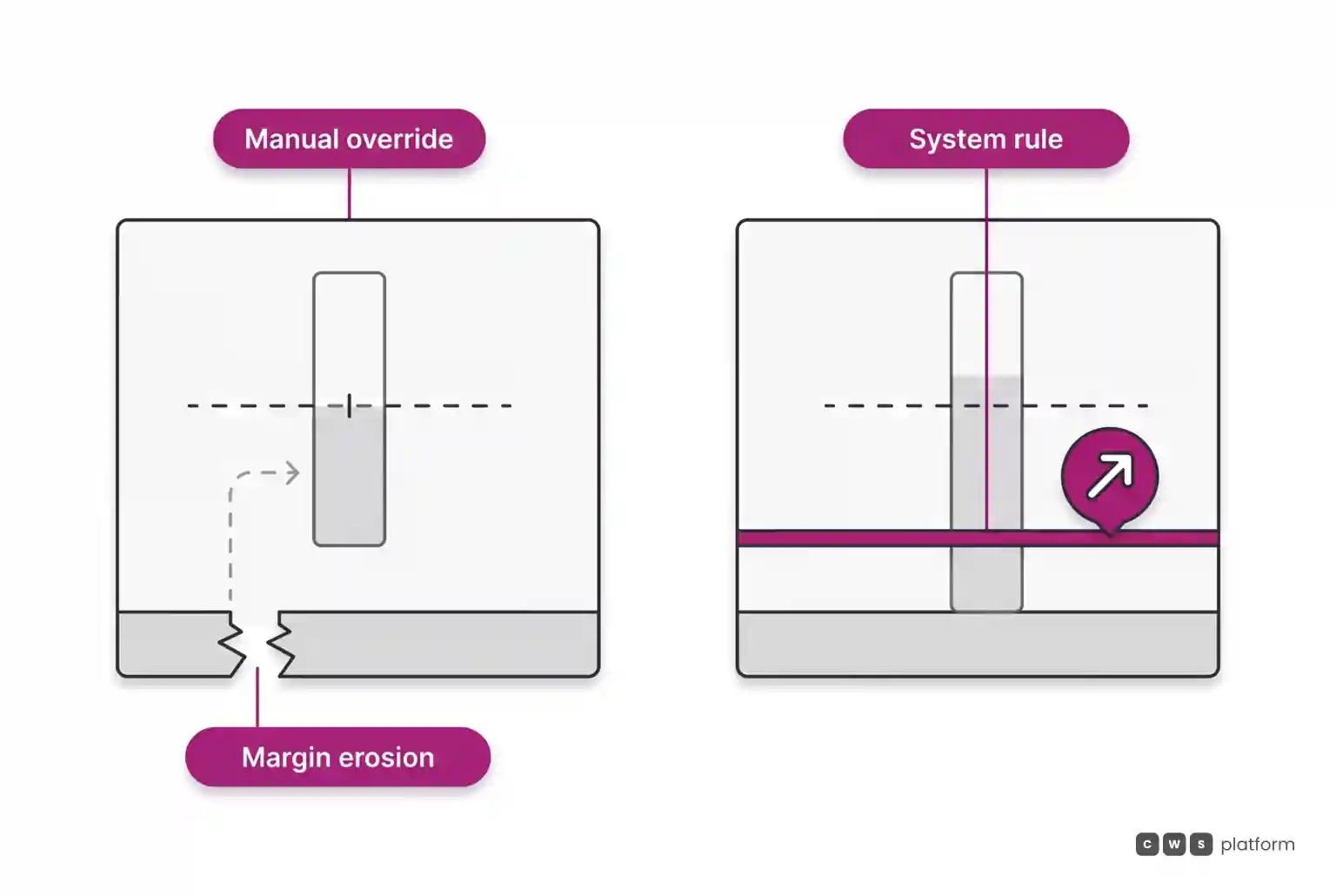
Why does the sales rep concede? Because pricing rules are not locked into the system, leaving every exception up to verbal discretion.
Why are tiers rarely reviewed? Teams rarely measure how many orders land just above a tier threshold versus how many fall just short.
Why does this destroy gross margin? Because the discount meant to incentivize higher volume is surrendered without securing that volume.
The root cause: tiered pricing was architected as a business rule but executed as an open-ended negotiation.
How to Build Tiered Discount Structures
1. Anchor tiers to real cost efficiencies. Freight consolidation, pallet-level fulfillment, and procurement economies of scale improve with volume. The discount in each tier should be funded by these operating savings, not taken entirely out of gross margin.
2. Keep tiers simple. Three or four clearly defined tiers are easy for customers to understand and frictionless to calculate. Too many tiers create a complex pricing matrix that no one uses.
3. Make the next tier visible. Showing buyers in the cart exactly how many units or dollars they need to unlock the next discount level is what converts standard orders into larger transactions.
4. Align with customer contract terms. Explicitly define whether progressive discounts stack on top of negotiated customer contract rates and active promotions.
5. Enforce strict limits on unearned discounts. Any discount granted above the earned volume tier must pass through formal approval workflows with recorded business justifications. We cover this process in detail in what is an approval workflow.
6. Audit order volume distribution. If most orders land comfortably above a threshold, the tier is functioning properly. If orders cluster just below it, the hurdle is set too high for your typical buyer profile.
Tiered Pricing in the B2B Portal
Inside a digital customer portal, volume pricing ceases to be a subjective conversation. The buyer sees current tier pricing in real time, the system applies the discount automatically when the threshold is hit, and the portal can show how far the buyer is from the next tier. Sales reps only step in when custom terms fall outside automated rules. We explore overall discount governance in commercial discounts: types and execution without margin loss.
On the CWS Platform, pricing rules can run in cascades or operate independently based on your configuration, complete with contractual guardrails. Discounts, customer contracts, base price books, and promotional codes carry configurable caps, and programs can be localized across subsidiaries, regional branches, online storefronts, or customer groups. Learn more on our dedicated page for customer-specific pricing.
Next Step
Review last quarter's orders for a high-velocity product line and map where each order landed relative to your quantity breaks. If a large share of transactions sits just below a price break, displaying the remaining gap to the buyer can lift average order value without giving away extra margin.
Frequently Asked Questions
What is a tiered discount?
It is a pricing structure where the discount increases across predetermined tiers based on unit volume or total order value. Higher order quantities receive lower per-unit prices based on preset commercial policies.
How do you calculate a tiered discount?
Establish clear quantity or spending brackets along with the corresponding discount rate, then apply the earned rate once an order crosses a bracket threshold. Each discount tier should be offset by real supply chain efficiencies, such as bulk shipping and picking economies.
What is the difference between tiered discounting and volume pricing?
Volume pricing is the umbrella term for any pricing model linked to purchase quantities. Tiered discounting is a specific structure built around explicit volume brackets, where each defined tier yields a distinct per-unit rate.
Can tiered discounts stack on top of negotiated contract rates?
Yes, provided your commercial pricing policy permits it. The rule must be enforced by your ordering system, defining whether tiered markdowns apply to standard list price, override negotiated contract pricing, or are excluded entirely for contracted accounts.
Read Also
About This Publication
A publication by CWS Platform.
"responsive, technically engaged, and willing to work through complex commercial rules (negotiated pricing, credit, customer-specific conditions) rather than pushing generic answers"
Want to see this in your operation?
Real B2B operations already run on it.