B2B Discount Management: How to Protect Margins on Every Deal
Why ungoverned price concessions erode enterprise profitability and how to enforce pricing guardrails

A trade discount is a price reduction granted to a customer to close or expand a sale, based on volume, payment terms, account relationship, or competitive pressure. In B2B, it is the most common commercial tool and the biggest silent margin killer, because every discount feels negligible in the moment and only hurts once aggregated.
A study by McKinsey examining S&P 1500 companies revealed that a 1% improvement in average price, assuming volume remained constant, increased operating profit by roughly 8% (The power of pricing, McKinsey Quarterly, 2003). The math cuts both ways: every percentage point conceded unnecessarily comes almost entirely out of operating profit.
Types of trade discounts in B2B
Volume discounts. The larger the order quantity, the lower the unit price. When structured in tiered thresholds, this is called tiered discounting.
Terms discounts. Early payment or cash upfront in exchange for a lower invoice price, such as 2/10 net 30.
Mix discounts. Better terms for buyers ordering across multiple product lines or adding slow-moving inventory to their basket.
Contract pricing. Negotiated rates set for a specific account over an agreed period, formalized in an MSA or custom price book.
Discretionary negotiation discounts. Concessions made at the point of sale to win an order. This category presents the greatest challenge for discount management.
Stated discounts vs. conditional discounts
Accounting and sales tax treatments make this distinction critical. A stated trade discount appears directly on the invoice and does not depend on any future action; a conditional cash discount relies on an event that happens later, such as paying within ten days. As a general rule, direct line item discounts reduce the taxable sales amount immediately, while settlement discounts may require adjustment vouchers or specific tax treatments depending on the jurisdiction. Because tax regulations differ by state, finance teams should align discounting structures with their CPA or corporate tax advisor.
Why discounting gets out of hand
Why does the average discount keep rising? Because sales reps make ad hoc decisions in real time while customers push back.
Why does nobody notice? Because discounts are evaluated transaction by transaction, while the financial damage only surfaces in monthly gross margin reports.
Why do price cuts become a habit? Because a buyer who gets a concession once expects the same concession on their next reorder.
Why does the pricing policy fail? Because rules live in static PDF manuals instead of the quoting software where calculations happen.
The root cause: pricing concessions happen in the deal room, but governance remains detached from the sales workflow.
How to discount without destroying margin
1. Establish account-specific pricing before the call. Dedicated price books by customer tier or vertical market minimize the need for spot discounting.
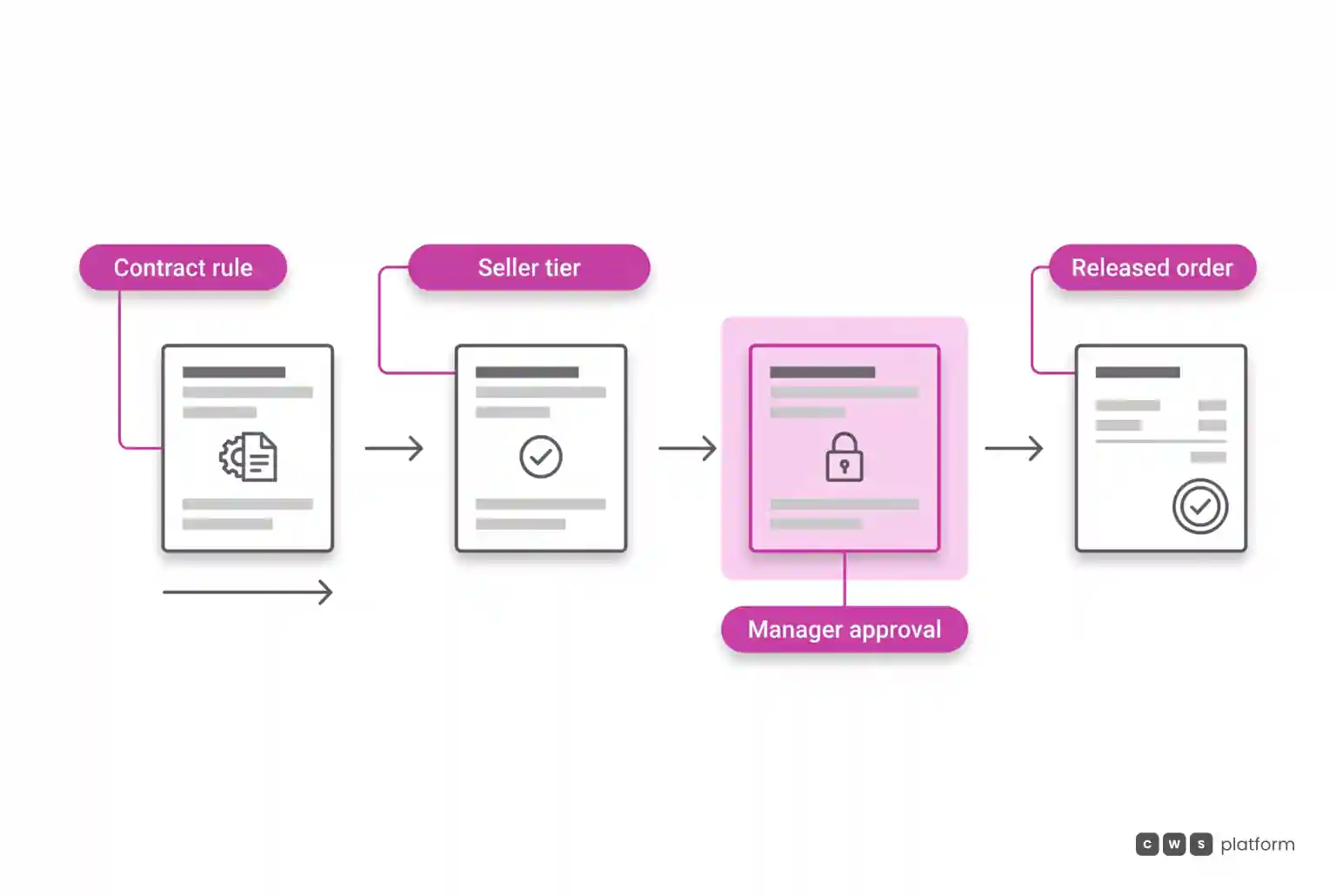
2. Never give a concession without getting something back. Demand volume commitments, accelerated payment terms, broader product mix, or extended contracts. Unconditional concessions are pure margin giveaways.
3. Restrict concessions by margin dollars, not flat percentages. A 5% markdown on a product with a 15% gross margin inflicts far more damage than the same percentage on an item with a 45% margin.
4. Enforce clear approval thresholds. Build automated tiers: sales rep limit, sales manager limit, executive sign-off, requiring documented business justification for any exception above the base tier. Sound discount management prevents rogue pricing behavior. We cover how to set the tiers in how to structure discount approval tiers.
5. Track average discounting by rep and customer. This metric reveals immediately which reps follow standard operating procedures and where margins are leaking. We cover the tactical process in off-policy discounting.
Automated discounts visible to the customer
In a modern B2B customer portal, substantial pricing logic moves out of live negotiations: contract catalogs, tiered volume breaks, and standardized terms populate automatically in the online cart. Account reps step in only when a buyer requests an off-book exception.
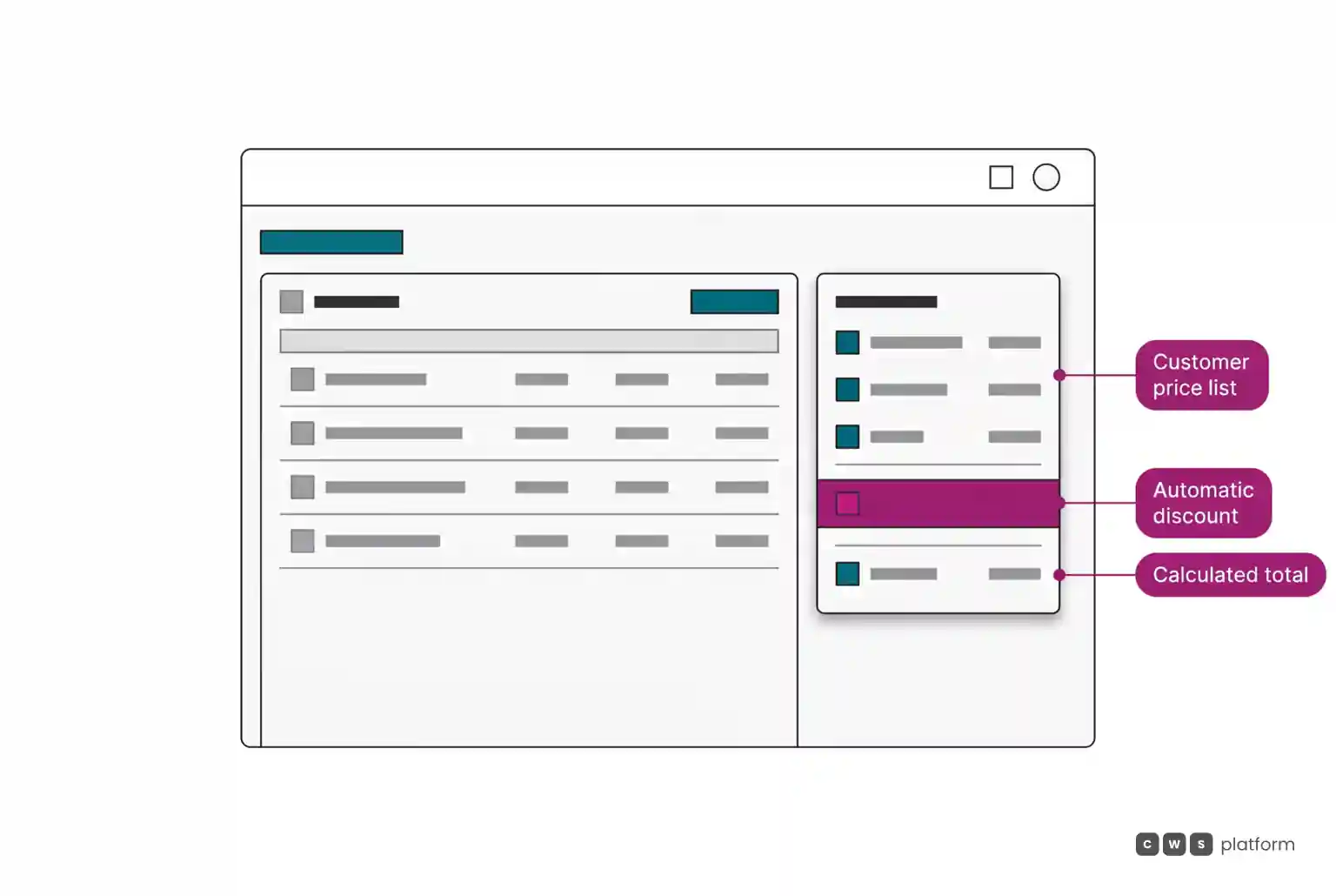
Inside CWS Platform, discounts, contracts, custom pricing tiers, and promotional codes operate within rigid guardrails to eliminate unauthorized pricing leakage. Sales teams and procurement buyers collaborate inside the same digital cart, while any concession exceeding a rep's assigned limit is routed for approval alongside a mandatory business reason. Review the mechanics on our account-specific pricing page.
Next steps
Calculate the average discount percentage by sales representative over the last quarter. If you see wide variance among reps selling to comparable accounts, your pricing is dictated by individual rep discretion rather than structured corporate policy.
Frequently asked questions
What is a trade discount?
It is a price reduction given to a commercial buyer to close or grow an order, structured around purchase volume, payment terms, order mix, master contracts, or competitive counteroffers.
What is the difference between an invoice discount and a conditional discount?
An invoice discount is applied directly to the line item at the time of purchase and requires no future trigger. A conditional discount depends on a future action, such as an early payment rebate. In most states, direct invoice discounts immediately reduce the taxable sale value, whereas cash discounts require specific bookkeeping reconciliations.
What is tiered discounting?
Tiered discounting is a structured volume pricing strategy where unit costs decrease as order sizes reach defined quantity thresholds. It encourages larger basket sizes by offering predictable, transparent savings.
How do distributors regain control of pricing concessions?
By establishing clear customer price tiers upfront, requiring reciprocal concessions on volume or terms, setting floor limits based on gross margin rather than flat percentages, enforcing approval workflows, and systematically reviewing discount management metrics across reps and accounts.
Related reading
- Operational costs in wholesale distribution: where margin leaks and how to fix it
- Discounts, approval thresholds, and audit trails
About this publication
Published by CWS Platform.
"responsive, technically engaged, and willing to work through complex commercial rules (negotiated pricing, credit, customer-specific conditions) rather than pushing generic answers"
Want to see this in your operation?
Real B2B operations already run on it.