What Is B2B: How Selling Changes When the Buyer Is a Business
Why inter-company commerce demands contextual pricing, trade credit, and operational governance

B2B stands for business to business: selling from one company to another. A manufacturer selling to distributors, a distributor supplying dealers and repair shops, a wholesaler stocking grocery stores and pharmacies. In all these cases, the buyer is not the end consumer, but a business that will resell, manufacture, or use the product in its own operations.
The definition fits in a single sentence. What it changes in how you sell is much bigger.
What Defines a B2B Company
The buyer is a business with formal processes. On the other side sits a professional buyer, often backed by a budget, vendor onboarding requirements, internal approvals, and approved vendor lists. The purchase is rarely impulsive.
The relationship is recurring. A B2B customer buys today, next month, and next year. Most revenue comes from repeat orders, not the initial sale.
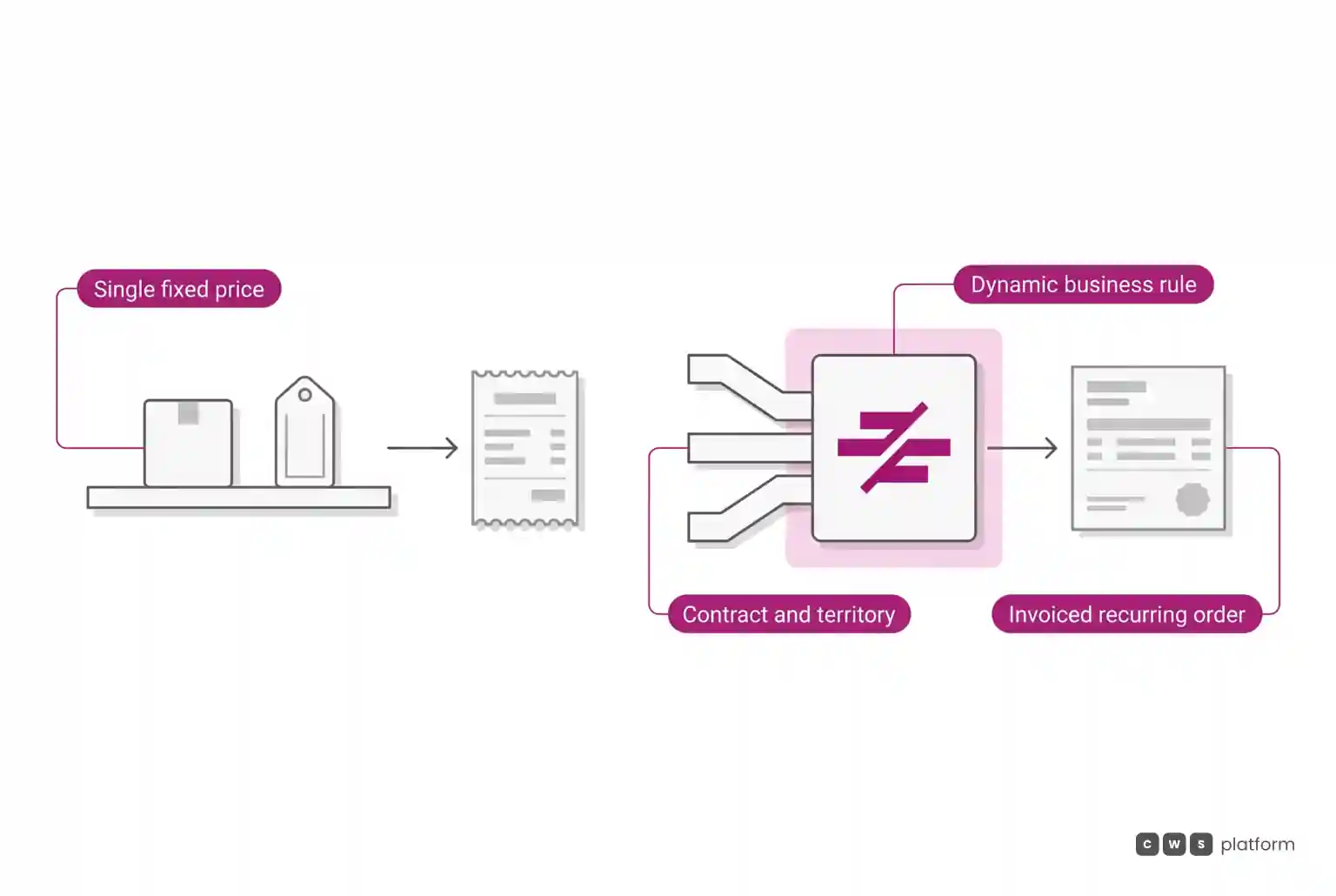
Pricing depends on who is buying. The exact same item carries different price points for different accounts, depending on volume tiers, geography, contract terms, payment terms, and channel. We explore this dynamic in B2B pricing is not a single number.
Payment typically runs on net terms. Instead of paying immediately, the customer buys against an approved line of credit and pays on net 30, net 60, or net 90 terms. The credit limit becomes an active constraint of the sale.
Orders are larger and far more complex. Dozens or hundreds of line items, shipped from multiple warehouses, with state and local sales tax calculated by destination and negotiated freight terms.
B2B Examples
- Manufacturer to distributor. An auto parts manufacturer sells to a regional distributor, who in turn sells to retail shops and service centers.
- Distributor to dealer. A building materials distributor supplies local lumberyards and hardware stores.
- Wholesaler to retail. A broadline food distributor supplies grocery stores, restaurants, and convenience stores.
- Supplier to commercial end-user. A company selling replacement fleet parts to a logistics carrier, or raw materials to a manufacturing plant.
The Key Players in B2B Commerce
The B2B customer is the purchasing organization, represented by a professional procurement agent or centralized purchasing team. Their goal is finding the right SKU, seeing their negotiated terms, and placing reorders with zero friction.
The B2B account executive or sales rep manages the account portfolio: negotiating deals, resolving order exceptions, and maintaining the relationship. In many operations, they still manually enter purchase orders, which consumes a major share of their day.
The independent sales rep or agency sells on behalf of one or more manufacturers, typically earning a commission while operating within pre-approved discount thresholds.
The B2B market encompasses this entire network of relationships: manufacturers, master distributors, wholesalers, dealers, and commercial end-users, each operating under specific commercial policies.
How B2B Is Shifting
B2B buyers now expect the convenience of consumer digital commerce: they want to research on their own, view their account-specific pricing, and check out without waiting for a rep. According to Gartner research on B2B buyers published in 2025, 61% of B2B buyers prefer a rep-free buying experience. Furthermore, McKinsey's 2024 B2B Pulse reports that buyers interact across an average of ten distinct channels throughout their purchasing journey, double the number recorded in 2016.
The core challenge for B2B enterprises is serving this self-directed buyer without discarding what makes B2B unique: customer-specific pricing, trade credit limits, tiered discount approvals, and the strategic negotiations that still drive large contract orders.
What This Means for Sales Operations
Modern B2B commerce requires balancing two capabilities simultaneously: self-service for routine repeat orders, displaying exact contract pricing and terms for every account, alongside structured governance for custom negotiations, ensuring discounts and payment terms respect company policy across every sales channel.
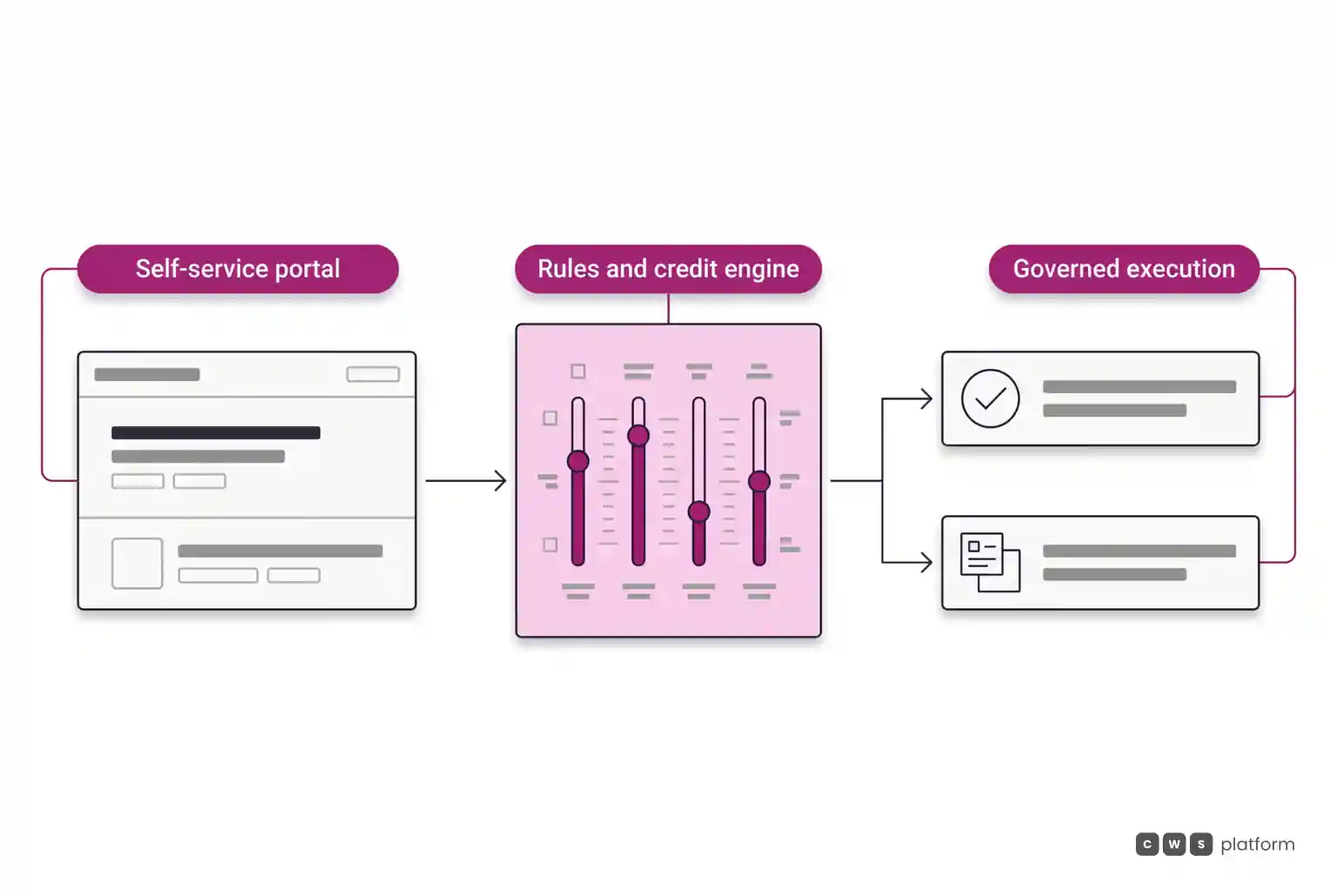
CWS Platform was designed specifically for this operational model: a customer portal where procurement teams order independently against their contract rates and credit limits, collaborative cart management where reps can step in for custom quotes, and a centralized commercial rule engine governing all channels. Review more core concepts in our B2B commerce glossary.
Next Step
If your business sells to other companies, review your order volume from last month and calculate the percentage generated by routine reorders from existing accounts. That figure highlights the exact share of your B2B transactions ready for self-service automation.
Frequently Asked Questions
What is B2B?
B2B (business to business) refers to commercial transactions conducted between two companies, such as a manufacturer selling to distributors or a wholesaler supplying retailers. The buyer is an enterprise purchasing products to resell, process, or support its daily operations.
What is a B2B company?
A B2B company is an enterprise whose customer base consists of other businesses. Manufacturers, wholesale distributors, and commercial suppliers are classic examples. These organizations typically operate with account-specific price lists, trade credit terms, and recurring account relationships.
What is a B2B customer?
A B2B customer is an enterprise purchasing goods or services from another business, represented by procurement specialists or purchasing departments. These accounts typically order on a recurring schedule with pre-negotiated contracts, volume discounts, and approved net payment terms.
What is the B2B market?
The B2B market encompasses the entire ecosystem of commercial transactions between businesses: manufacturers, distributors, wholesalers, value-added resellers, and enterprise end-users. Each link in the supply chain maintains distinct pricing, credit, and delivery policies.
What are common examples of B2B?
Examples include manufacturers selling inventory to wholesale distributors, distributors supplying independent retail stores, broadline food distributors supplying restaurants and hospitality groups, and industrial suppliers providing equipment and maintenance parts to commercial fleets.
Read More
- B2B fundamentals (definitions)
- ERP Sales Module vs Dedicated B2B Platform: How to Choose
- How to Automate Complex Commercial Policies in B2B
About This Publication
Published by CWS Platform. Visit cws-platform.com to learn more.
"responsive, technically engaged, and willing to work through complex commercial rules (negotiated pricing, credit, customer-specific conditions) rather than pushing generic answers"
Want to see this in your operation?
Real B2B operations already run on it.