B2B Contract Pricing: Why Negotiated Rates Fail at Invoicing
Margin erosion occurs when commerce platforms stack promotions and rep concessions on top of contract terms without price prevalence rules.

"The contract specifies a 12% discount. The invoice went out with 17%." This gap is rarely fraud. It is the buildup of small layers that nobody planned to stack: the monthly promotion applied on top of the contract, the discretionary discount the sales rep offered to close, the freight costs the house absorbed, the promotional bonus units added to another order. The contract was negotiated with precision. The invoiced price was decided along the way.
Contract pricing in B2B only protects margins when the platform guarantees that the agreed price is the price that reaches the invoice.
Why the invoiced price drifts from the contract
Why does the order carry a steeper discount than the contract? Because the contract discount and everyday promotional discounts live in different systems, and the platform simply adds them together.
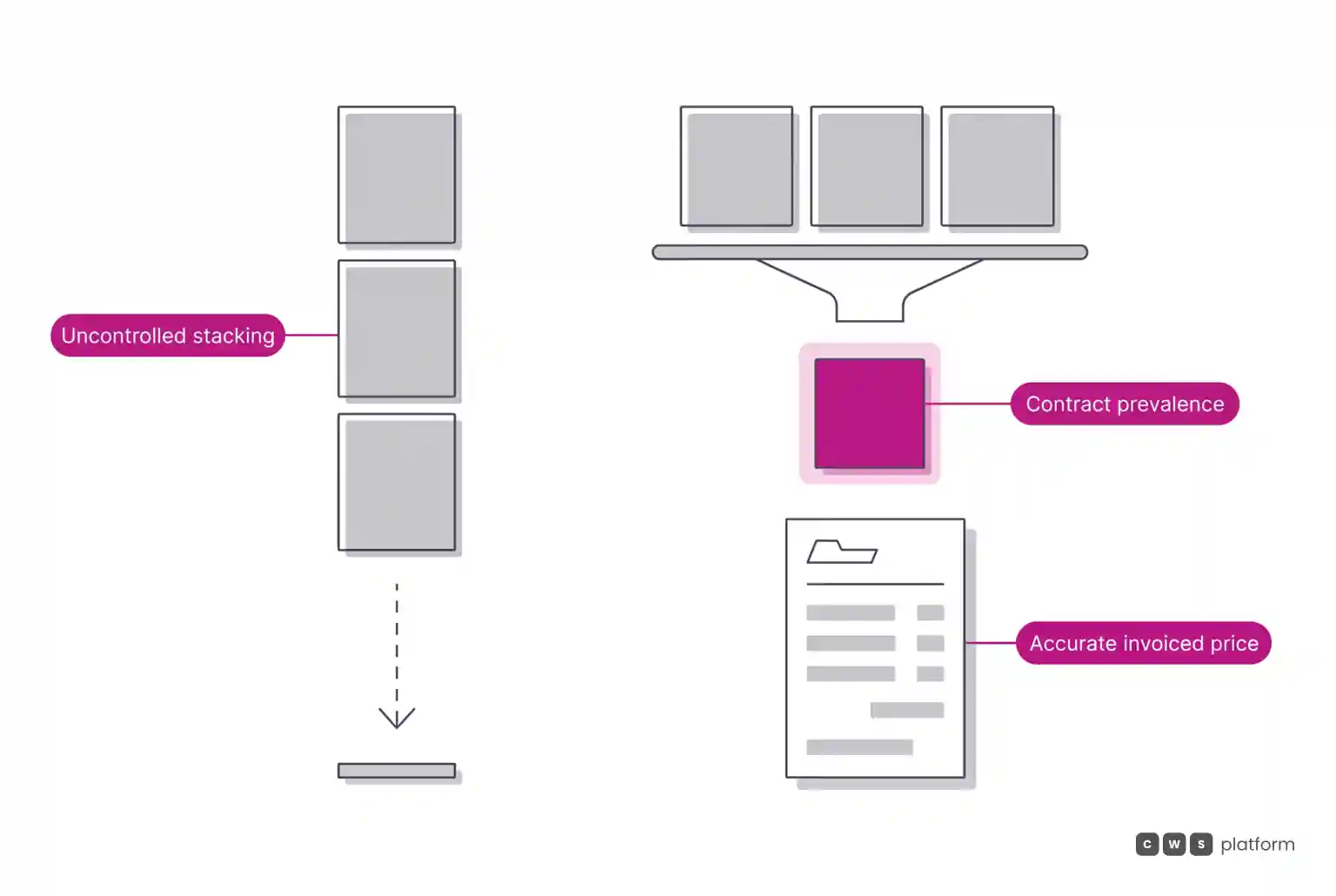
Why does the system add them? Because no one configured the logic stating that the contract overrides promotional campaigns, or that a sales rep concession overrides standard coupon codes.
Why does nobody notice? Because a line by line audit comparing contract terms against the final invoiced price is rarely included in operational reports.
Why does the contract lose authority over time? Because price adjustments, new catalog items, and product line updates never make it into the contract parameters, leaving each exception to be handled manually.
The root cause: the agreement was treated as a legal document, rather than a system-level pricing rule enforced on every single order for that account. Weak governance here directly undermines price realization.
What every leaking point is worth
The math is unforgiving. According to the article "The power of pricing," published in McKinsey Quarterly in 2003, a 1% price improvement, assuming stable volume, would generate an 8% increase in operating profit for a typical S&P 1500 company. The reverse is equally true: every discount point that leaks past the contract comes straight out of net profit, because product and operating costs remain unchanged.
To estimate this across your accounts: (average invoiced discount minus average contracted discount) multiplied by the total revenue from contracted accounts. The result represents your total margin leakage.
What the platform must guarantee
The contract becomes a customer master rule. The moment a buyer authenticates, their agreed terms load automatically: fixed price per SKU, discount tier per category, payment terms, and validity windows. The order calculates against these rules, both on the self-service portal and inside internal sales tools.
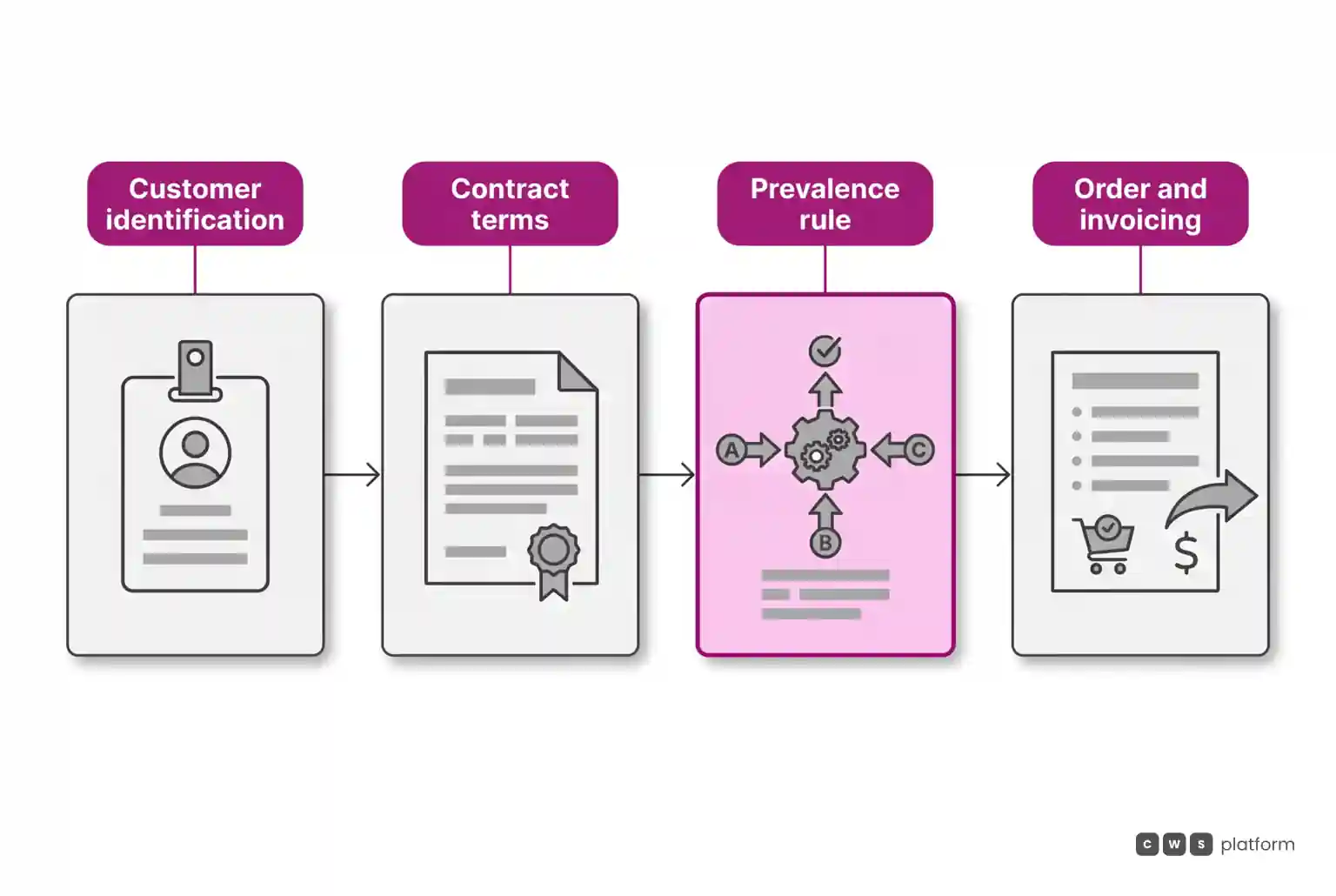
Explicit pricing hierarchy. When a contract, a general marketing campaign, and a sales rep concession collide on the same order, the rules must define which one prevails. In most environments, one rule should override another rather than stacking on top.
Validity and automatic adjustments. Every contract has an effective date, an expiration date, and adjustment index parameters. When it approaches expiration, the system flags it in advance, preventing customers from ordering for months under expired pricing that nobody renewed.
Reason codes and escalation paths for exceptions. Going beyond contracted terms must require explicit manager approval with a recorded business reason. Without this workflow, today's exception turns into tomorrow's informal baseline. The underlying mechanism matches the handling of out of policy discounts.
Auditing contracted versus realized revenue. For every contracted account, the spread between agreed discounts and invoiced figures must remain fully visible, SKU by SKU and order by order. This metric reveals whether your contract pricing holds up in practice.
Core principles for sustainable contract pricing
- The contract is customer master data, not an email attachment. If it does not live in your transactional database, it cannot control the order.
- Nothing stacks by default. Cumulative discounts must require explicit, automated authorization rules.
- Every exception has an owner. Capture who approved it, the exact timestamp, and the commercial justification.
- Unified pricing across all touchpoints. The contracted buyer must see identical terms whether purchasing through the digital portal or through an account rep.
On CWS Platform, each order is calculated using account tier parameters, warehouse routing, and sales tax rules. Manual sales rep concessions automatically override system promotions instead of stacking, requiring documented justifications. Any concession exceeding standard approval limits requires administrative authorization. See the full architecture on our B2B pricing engine page.
Next steps
Review your five largest contracted accounts over the last quarter. Compare their negotiated discount against their actual invoiced discount rate. If the variance exceeds one percentage point, your contract margins are quietly eroding order by order, without any renegotiation at the table. Strengthening these guardrails is the most dependable path to protecting price realization.
Frequently asked questions
Which platform handles B2B contract pricing best?
The platform that treats contracts as programmatic rules rather than static PDFs: managing item-level net prices and line discounts, enforcing clear hierarchy between agreements and promotions, automating expiration alerts, and tracking realized margins against negotiated terms.
How do you prevent margin leakage in B2B sales?
By blocking unapproved discount stacking, establishing approval tiers with documented business reasons for discretionary concessions, and continually auditing agreed pricing against actual invoiced amounts. Margin leakage usually stems from incremental layers stacking unnoticed rather than a single massive discount.
Why does the invoiced price differ from the contracted rate?
Because contract terms, temporary promotions, rep concessions, and absorbed freight charges originate across separate touchpoints, and unconfigured commerce engines add them together instead of applying override rules. Without explicit precedence, orders accumulate compounding discounts.
What is price realization?
It is the percentage of the target list price or negotiated rate that an organization actually retains after factoring in every discount, rebate, freight allowance, and concession. In contracted B2B commerce, it evaluates how much of the original agreement successfully reaches the bottom line.
Read also
- B2B pricing and margin
- How to choose wholesale distribution software: five real order workflow tests
- Wholesale account activation: why dormant accounts stall when reorders rely on reps
About this publication
Published by CWS Platform.
"responsive, technically engaged, and willing to work through complex commercial rules (negotiated pricing, credit, customer-specific conditions) rather than pushing generic answers"
Want to see this in your operation?
Real B2B operations already run on it.