Customer-Specific B2B Pricing: Enforcing Contract Rates Without Spreadsheets
Why static price sheets erode gross margin and how to automate contractual pricing across digital and direct channels.

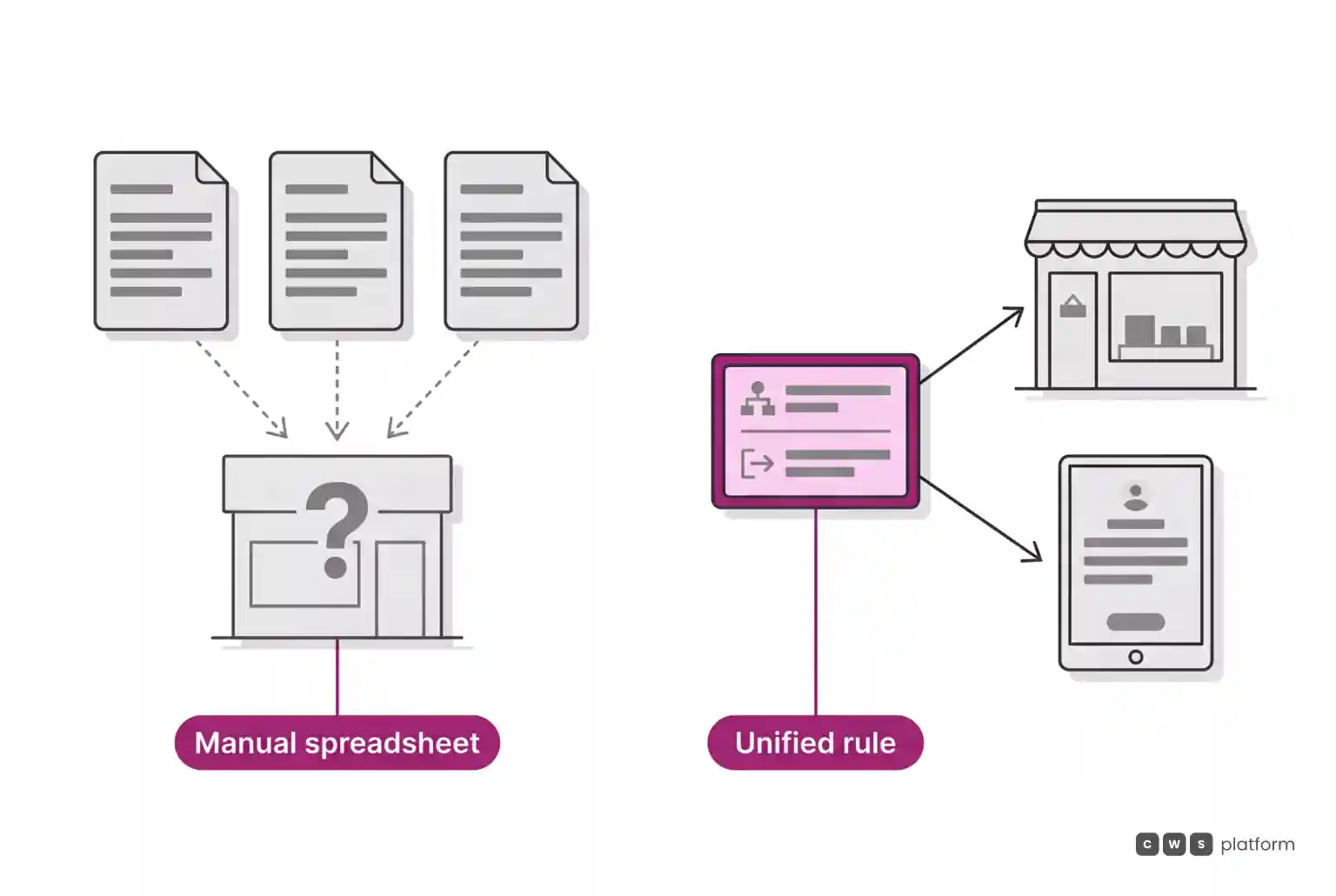
"This customer has a custom rate, but it is saved on the sales manager's spreadsheet." Across almost every distributor and manufacturer, that spreadsheet exists. It holds what was negotiated with top accounts: a discount off list, a fixed price on a product line, non-standard payment terms. As long as the order routes through a sales rep, the spreadsheet works, because someone checks it before booking. The moment the customer orders self-service, or the rep goes on vacation, that pricing vanishes.
Customer-specific pricing is the most universal rule in B2B and, at the same time, the one least likely to live in the core system.
Why Negotiated Pricing Lives Outside the System
Why is the agreement on a spreadsheet? Because the system only supports one price list per channel or territory, and custom customer terms do not fit into it.
Why do they not fit? Because the agreement is not just a number. It is a business rule: "8% off list across the braking category, fixed pricing on fast-moving parts, prepaid freight above a minimum order value."
Why does nobody configure the rule? Because every exception turns into a brand-new price book, and maintaining dozens of price books is harder than keeping a spreadsheet.
Why does this matter right now? Because when an account logs into the customer portal, they see standard list price, call to complain, and realize the digital channel ignores their negotiated terms.
The root cause: customer pricing was treated as static data (a single number in a matrix), when it is actually a dynamic rule that depends on who is buying, what they are buying, and which warehouse ships the order.
Where Negotiated Terms Belong
In the customer account profile, not in the rep's head. Once authenticated, the buyer inherits their commercial tier and account-specific contract terms. The pricing applies consistently across the customer portal, the rep's mobile app, and orders entered by customer service.
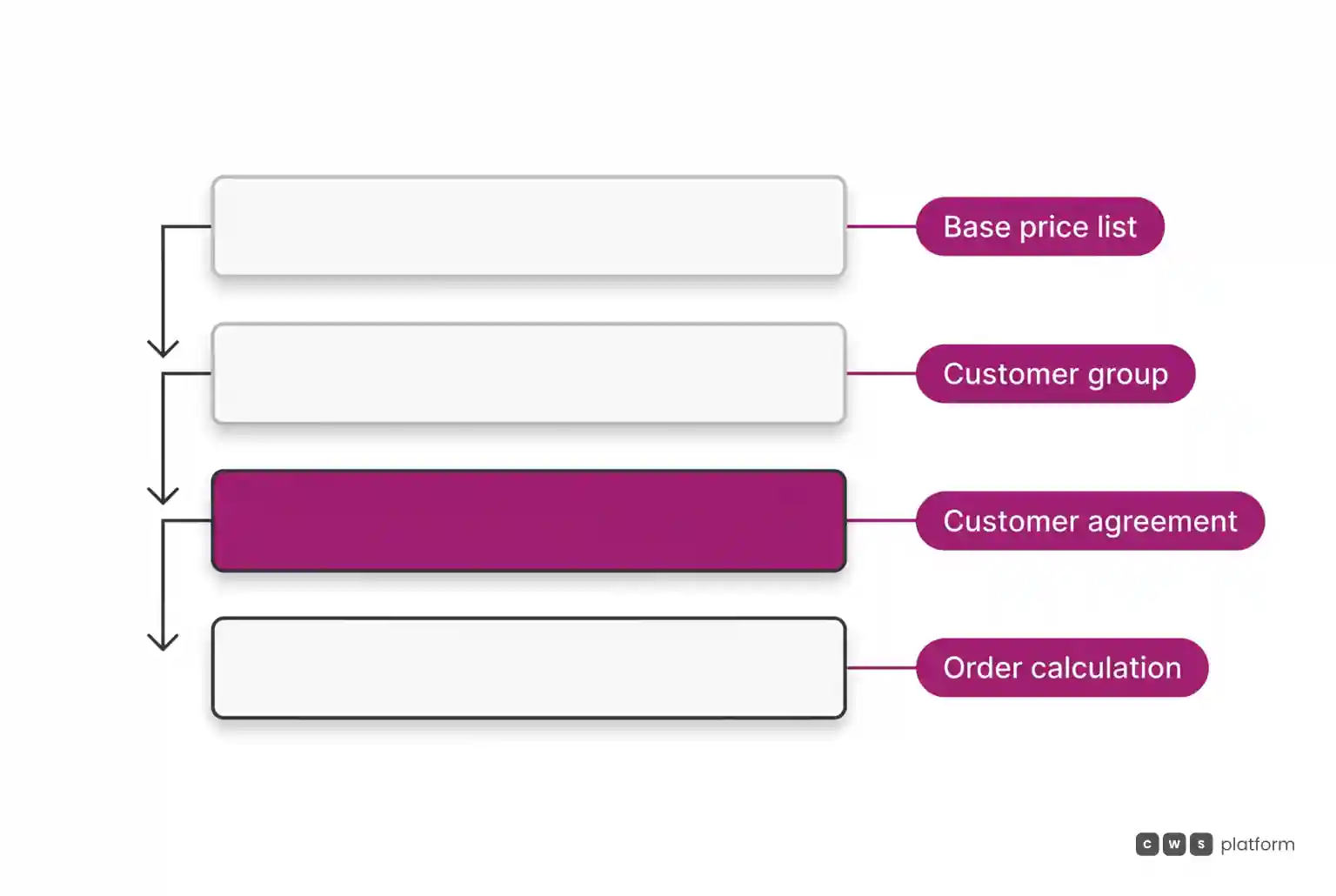
As a rule, not as a static price book. "X% discount off list in category Y" is defined once and automatically adjusts whenever base prices update. A cloned price book created for every account becomes obsolete the moment base lists change.
With clear rule hierarchy. When an account qualifies for multiple terms (their pricing tier, a seasonal promo, a contracted rate), the system must know which rule takes precedence, and the buyer should see the final outcome, not a pricing conflict.
Within order context. The same item can have more than one valid price: the fulfillment warehouse changes, state and local sales taxes shift, freight costs vary. That is why customer pricing must be calculated at the order level, not simply read from a static spreadsheet column. We detail this dynamic in B2B price is not a number.
How to Implement Without Losing Control
1. Start with existing agreements. Document the terms currently stored in spreadsheets, email threads, or tribal knowledge, account by account. The final list is usually shorter and more standardized than expected: a handful of common structures covers the vast majority of accounts.
2. Group accounts before creating one-off rules. Organize customers by account profile (volume tier, industry vertical, territory, channel), and reserve individual contract pricing strictly for accounts that truly warrant it.
3. Assign expiration dates. Negotiated pricing without an end date quietly becomes a permanent entitlement. Every custom agreement needs a clear start date, an expiration date, and an assigned owner.
4. Keep pricing identical across portal and sales rep. If an inside sales rep can offer a rate the portal does not show, buyers quickly learn to bypass self-service and call in. The exact same pricing logic must govern both channels.
5. Require a business justification for exceptions. When a rep needs to go below standard negotiated terms, the request must flow through clear approval thresholds with an audit trail explaining why. That discipline separates deliberate negotiations from discounts outside policy.
What Changes When the Rule Lives in the System
Buyers stop having to ask for quotes, and the digital portal becomes the fastest path to reorder. At Tracbel, a Volvo equipment dealer network, with roughly 131,000 SKUs accessible online, orders placed through the portal delivered an additional 10 percentage points in operating margin, according to the Tracbel case study.
On CWS Platform, each line-item price is calculated at order entry based on account profile, origin facility, and tax rules, with the exact same logic serving the portal buyer, field sales reps, and AI agents. See the complete architecture on the B2B pricing engine page.
Next Step
Ask your commercial leadership for a list of the top ten accounts with custom pricing agreements, and verify where those terms are officially recorded today. Every answer that is not "inside our core system" represents an order at risk of someone forgetting the deal.
Frequently Asked Questions
How do you implement customer-specific pricing in B2B?
By treating negotiated terms as logic configured on the customer profile, rather than maintaining cloned price books. Once logged in, the buyer inherits their tier and custom terms, and order pricing calculates dynamically using fulfillment locations and tax rules, delivering identical pricing on the self-service portal and through rep-assisted channels.
How do you manage custom account pricing efficiently?
By grouping buyers into customer tiers before writing individual contracts, setting expiration dates and owners for every exception, and defining discounts as formulas relative to the master price list so they adjust automatically with price updates without manual work.
How does a B2B ecommerce platform securely display negotiated customer rates?
By requiring account authentication before revealing catalog pricing and dynamically evaluating that buyer's rule set. Every logged-in user only accesses their approved terms, while any rep overrides remain subject to approval workflows with documented justifications.
How should distributors handle tiered customer pricing and volume discounts?
By establishing clear hierarchy across account tiers, custom contract terms, and promotional discounts, while keeping prices synchronized across digital portals and sales reps. Any override beyond policy must follow structured approval tiers rather than off-system manual adjustments.
Read Also
- B2B pricing and margin
- How to choose software for wholesale distribution: five tests using real orders
- Wholesale account activation: why accounts stop buying when reorders depend on sales reps
About This Publication
Operational performance metrics cited are from Tracbel, a CWS Platform customer, shared with permission.
Brands mentioned in this article

Trademarks and logos belong to their respective owners. Mention does not imply partnership or endorsement.
"responsive, technically engaged, and willing to work through complex commercial rules (negotiated pricing, credit, customer-specific conditions) rather than pushing generic answers"
Want to see this in your operation?
Real B2B operations already run on it.