OroCommerce or CWS Platform: What Goes Into the Math When the Digital Channel Grows?
An architecture comparison through the CFO lens: what the license is calculated on and who pays for the ERP integration.

Editorial note: an architecture comparison between OroCommerce and CWS Platform, written for those who answer as CFO. Every fact about OroCommerce comes from its public documentation, with the address next to it.
When a distributor puts a B2B commerce platform into the budget, the first line is usually the license. The lines that move the most over time show up later: how much the license grows when the digital channel sells more, and what it costs to keep the ERP integration running, since that is where an order turns into an invoice.
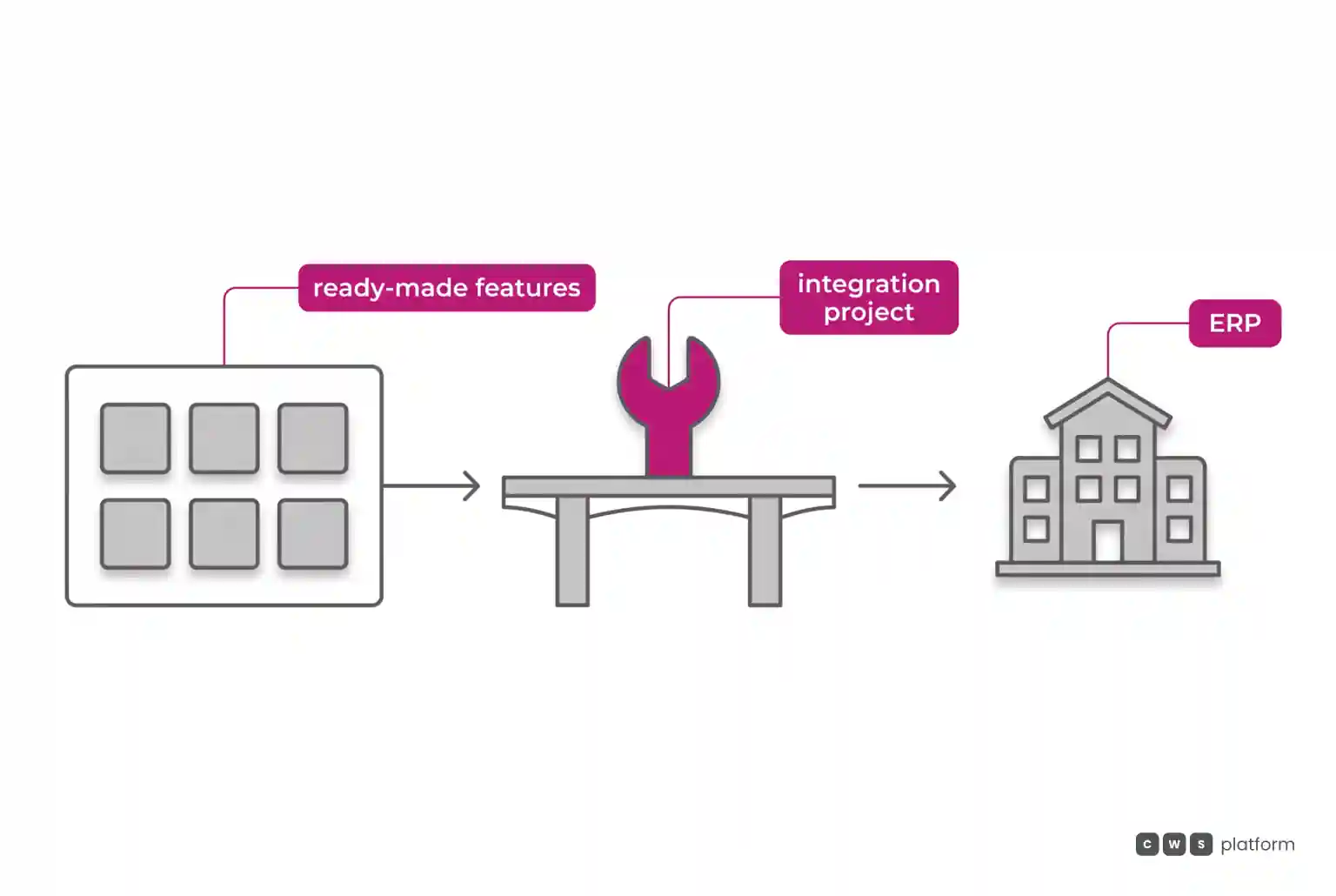
There are two models in play. In one, the license tracks the value sold through the channel, and the ERP integration is a separate project, run by the customer's team or by a partner. In the other, the license covers the platform and the integration, and it does not depend on what flows through them.
This comparison looks at OroCommerce and CWS Platform from that angle only: what enters the license calculation, who is responsible for the ERP integration, and where commercial policy is maintained. It is not a feature ranking.
What OroCommerce does well
OroCommerce covers the essentials of B2B selling on a single platform. Price lists can be assigned per customer, per customer group, per website, or globally, with quantity tiers and calculation rules.
Negotiation has its own path: the buyer requests a quote from the product page, the shopping list, or the quick order form, and the RFQ can be converted into a quote or directly into an order, as the RFQ and Quotes guide describes. Customer-specific payment terms, such as net 10, 20, or 30, carry into checkout.
For field sales, the Field Sales App is an app for sales reps that works with limited connectivity and syncs orders when the connection comes back. And the platform can be deployed in the cloud managed by Oro, in a public or private cloud, or on the customer's premises, according to the infrastructure documentation.
Where the architecture diverges
The divergence that matters to the budget sits in two lines: the license calculation base and who pays for the ERP integration. The vendor's own pricing page and documentation record both points:
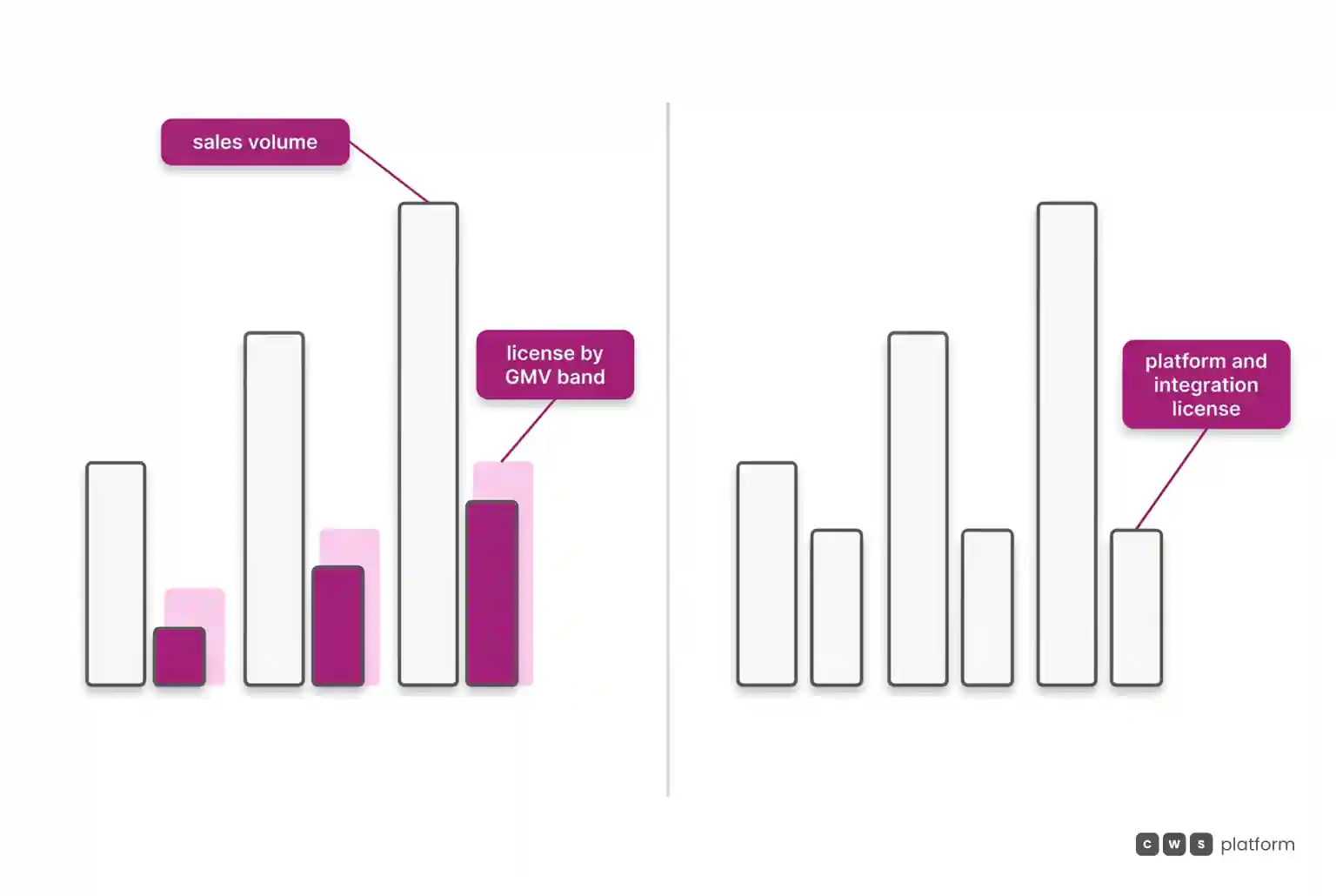
- limitation recorded in the vendor's documentation, accessed on October 16, 2026: the license is aligned to GMV bands based on the value of goods sold through OroCommerce; integrations are handled by the customer's internal team or implementation partner ("Licenses are aligned to GMV bands based on the value of goods sold through OroCommerce.", "Integrations are handled through your internal team or implementation partner.", https://oroinc.com/b2b-ecommerce/orocommerce-pricing/).
- limitation recorded in the vendor's documentation, accessed on October 16, 2026: the SAP integration is a custom extension, not a core feature, and is not covered by the Oro User License Agreement ("This is a custom extension, not a core feature of OroCommerce, and is not covered by the Oro User License Agreement.", https://doc.oroinc.com/user/integrations/pre-built/erp/sap/).
Put together, the two lines describe the economics of the digital channel: when the channel sells more, the GMV band can change, and the ERP integration is a project and maintenance cost that stays with the customer or the partner.
On CWS Platform, billing is a platform license plus an integration license, with no percentage of sales or GMV. In marketplace operations, the percentage that shows up in the payment split is the marketplace owner's commission, not CWS's. Commercial policy sits in parameters of the Commerce Rules Engine (CDL Workspace), and all customers run the same version of the platform.
| decision | OroCommerce, per the documented mechanism | CWS Platform |
|---|---|---|
| What the license is calculated on | GMV bands, based on the value of goods sold through the platform | Platform and integration license, with no percentage of sales or GMV |
| Who is responsible for the ERP integration | The customer's internal team or the implementation partner; the SAP connector is an extension outside the license | A dedicated integration license; REST APIs and webhooks for ERP, CRM, tax, and payments |
| Where commercial policy is maintained | Price lists and rules configured on the platform | Parameters in the Commerce Rules Engine (CDL Workspace), changed by configuration or received through an API |
The financial decision is choosing which variable will move the software line in the budget: the volume you sell or the scope of the platform and the integration.
What changes in operations, through the CFO lens
For a three-year budget, the difference shows up in predictability. When the license tracks GMV, growing the digital channel also moves the software line, and the two curves have to be projected together. When the ERP integration is a separate project, it lands as implementation and support cost that does not appear in the license proposal.
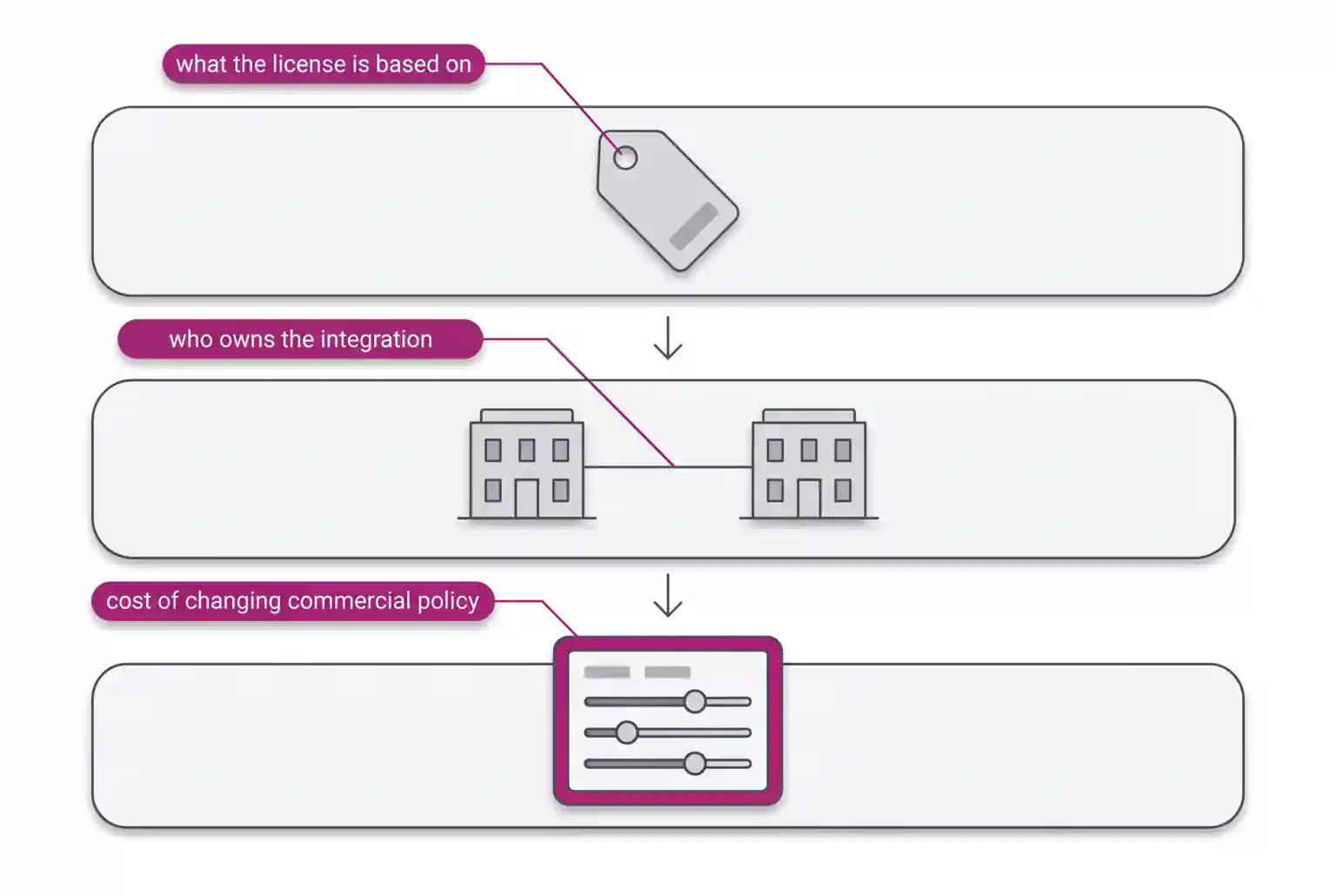
Three questions help bring this point into a negotiation with any vendor: what the license measurement unit is and what happens when the channel moves past the contracted band; who is responsible for the ERP integration, and under which contract; and what it costs to change commercial policy after go-live.
On CWS Platform, the rules that drive the cost of each order sit in parameters. Price tables, rules, and contracts are configured on the platform and can come from the ERP, the CRM, or another system through an API. Tax comes from the ERP or from the tax engine the customer already uses. Net terms work with split shipments, scheduled deliveries, multiple ship-to addresses, and multiple ship-from locations, and thousands of promotions can run at the same time.
When to choose OroCommerce
OroCommerce fits scenarios with these characteristics:
A distributor that wants a ready-made B2B platform, with the option to deploy in its own environment. Choose this architecture when the company wants ready-made B2B features, such as customer-specific price lists and quoting, and needs to choose between managed cloud, its own cloud, or on-premises.
A field sales force with limited connectivity. Choose this architecture when sales reps sell in areas with poor coverage and need to capture orders offline, as the Field Sales App allows.
An internal team or partner already lined up for the integration. Choose this architecture when the company already has a team or a partner that will build and maintain the ERP integration as its own project.
When CWS Platform is the right choice in this scenario
CWS Platform is the right choice when the budget calls for a software line that does not track the volume you sell and an ERP integration that is part of the contract.
A license that does not track the volume you sell. Choose this architecture when financial planning needs a software line that does not vary with GMV. Billing is a platform license plus an integration license, with no percentage of sales. In a marketplace, the split percentage is the marketplace owner's commission.
Commercial policy by configuration. Choose this architecture when commercial policy changes often. Tables, rules, and contracts are configured on the platform, on the principle of configuration over code, or received through an API; the sales rep's discount goes through multi-level approvals, and the customer's credit is maintained on the platform.
One sales rep for thousands of customers. Choose this architecture when the sales team needs to cover the whole book of business without multiplying tools. One sales rep serves thousands of customers, customer and sales rep use the same interface, and the order records who built the cart and who chose the payment.
One version for every customer. Choose this architecture when the company wants to always run on the current version of the platform. All customers run the same version.
Where to go from here
If your question is still which architecture fits your operation, and not which vendor to choose, the path is the seven questions that separate B2B commerce architectures.
If the decision depends on how much your digital channel should grow over the next few years, it is worth talking to a CWS Platform specialist to model both curves with your own numbers. The pages When Selling More Doesn't Mean Earning More and When Integration Breaks Everything cover the pain behind this scenario in depth, without talking about any vendor.
Read also
Brands mentioned in this article

- OroCommerce
Trademarks and logos belong to their respective owners. Mention does not imply partnership or endorsement.
"responsive, technically engaged, and willing to work through complex commercial rules (negotiated pricing, credit, customer-specific conditions) rather than pushing generic answers"
Want to see this in your operation?
Real B2B operations already run on it.