AI Agent with Business Guardrails
Merchandising Agent
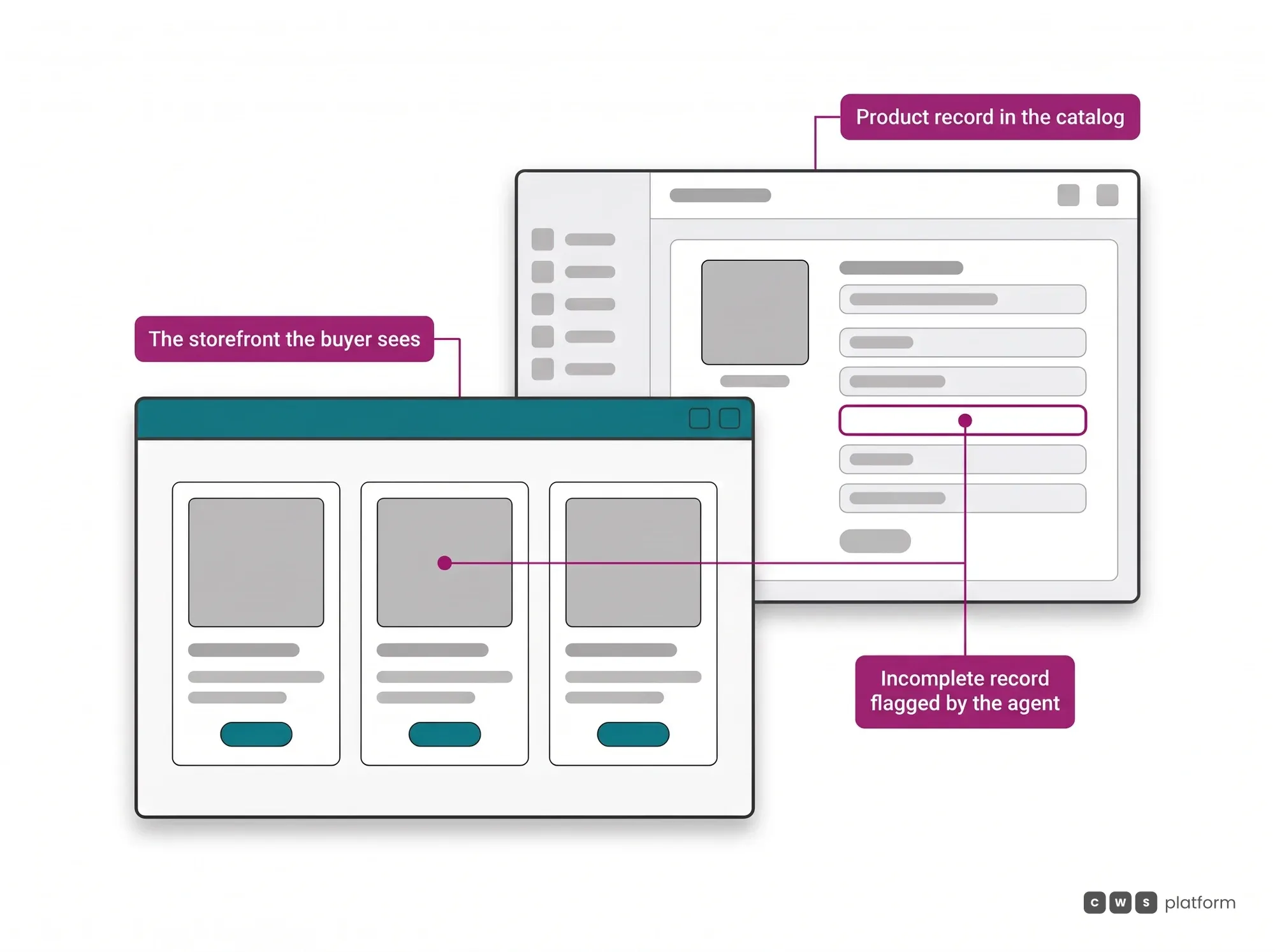
Nobody wakes up deciding to let the storefront rot. The record is born incomplete because the entry was rushed, the campaign stays live after the item ran out because nobody was told, and the missing photo is always on a product almost nobody opens, until the day somebody does. The damage does not show up as an error, it shows up as conversion that never came, and conversion that never came does not file a ticket.
What it is
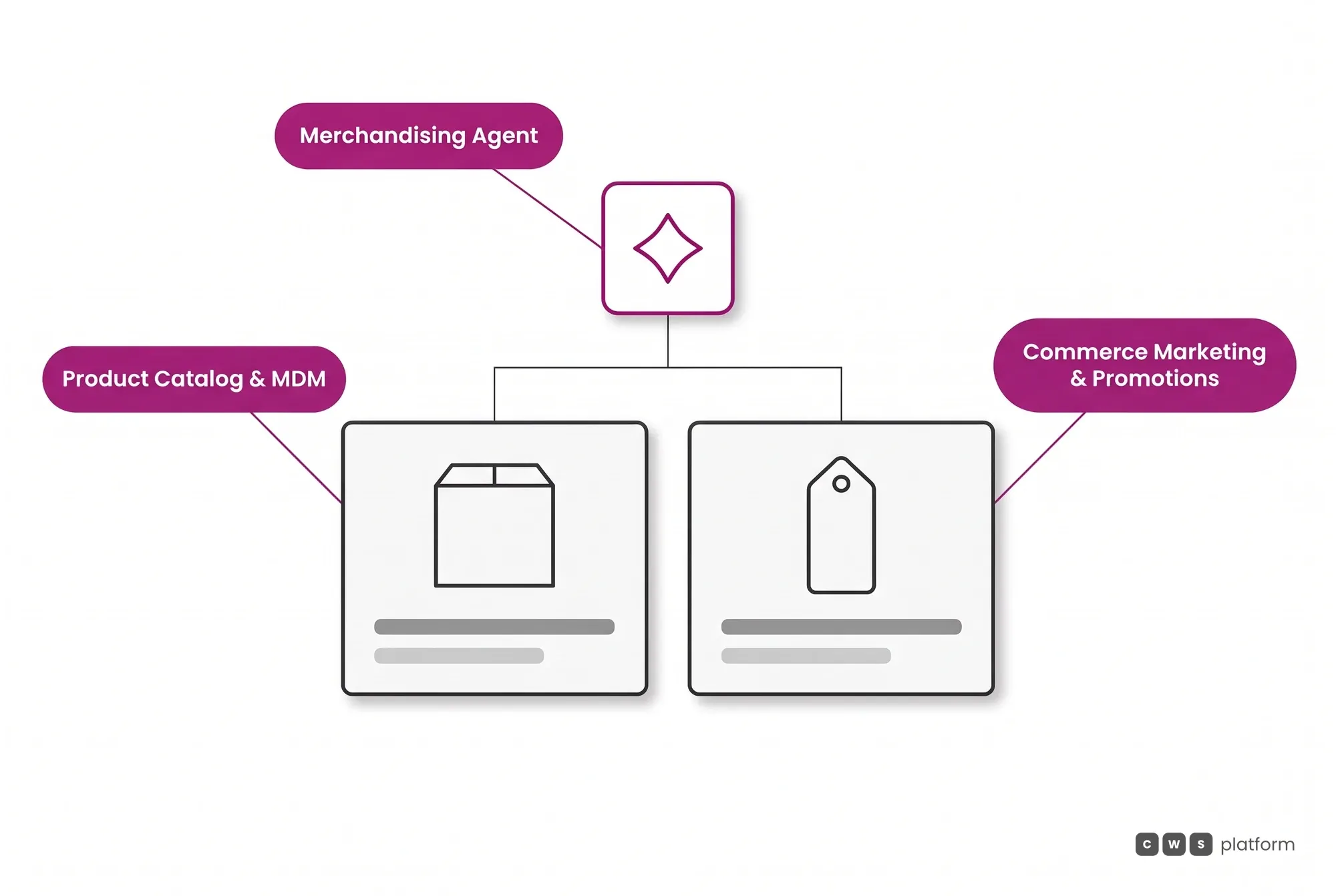
The agent that keeps the digital store's operation in shape continuously. It monitors what is published, flags the incomplete product record before it costs a sale, and suggests campaigns from what the operation already shows, backed by Product Catalog & MDM and Commerce Marketing & Promotions. It has a two-sided interface: the same agent serves the merchant, who has to keep the storefront standing, and the buyer, who has to find what they came for.
The capability no one replicates
Continuous hygiene beats a data-entry task force
Catalog quality is not fixed by a concentrated effort, because it degrades every day: new items arrive, suppliers change descriptions, campaigns expire. A task force fixes the photograph and not the film. The agent works at the frequency at which the problem appears, and what it returns is not a list of everything that is wrong, it is what is wrong and matters now, ordered by what the store is losing to it.
It sees the store from both sides of the counter
Most merchandising tools look only at the merchant's console, and therefore measure what was published instead of what was found. Because the same agent also serves the buyer, it knows what was searched for and not found, and that is the information that turns catalog hygiene into a priority: an incomplete record on an item nobody looks for is debt; the same record on an item searched every week is lost revenue with a date on it.
Suggesting a campaign is different from publishing one
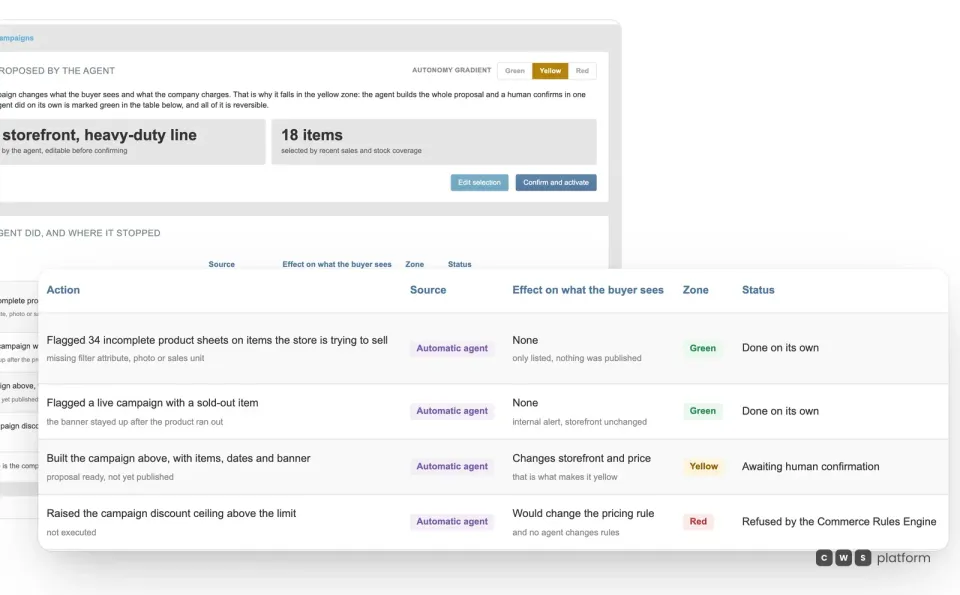
The agent proposes: this mix has the turnover and the margin for an activation this week, this item is sitting still in the warehouse that serves this region, this combination sells together often and has never been offered together. Publishing is another matter. Activating a campaign changes what the buyer sees and what the company charges, so it lands in the yellow zone of the Autonomy Gradient: the agent assembles, the human confirms. And the activation is inventory-aware by construction, because the same base that answers for the campaign answers for the warehouse balance. A campaign promoting an unavailable item is a problem solved in the architecture, not in the discipline of whoever operates it.
What goes to a human
The agent builds the campaign. Activating it is human.
The Merchandising Agent flags incomplete product sheets and campaigns with out-of-stock items on its own, and builds the campaign. Activating it is human, and a discount ceiling change is refused by the Commerce Rules Engine.
Frequently asked questions
How does it know a product record is incomplete?
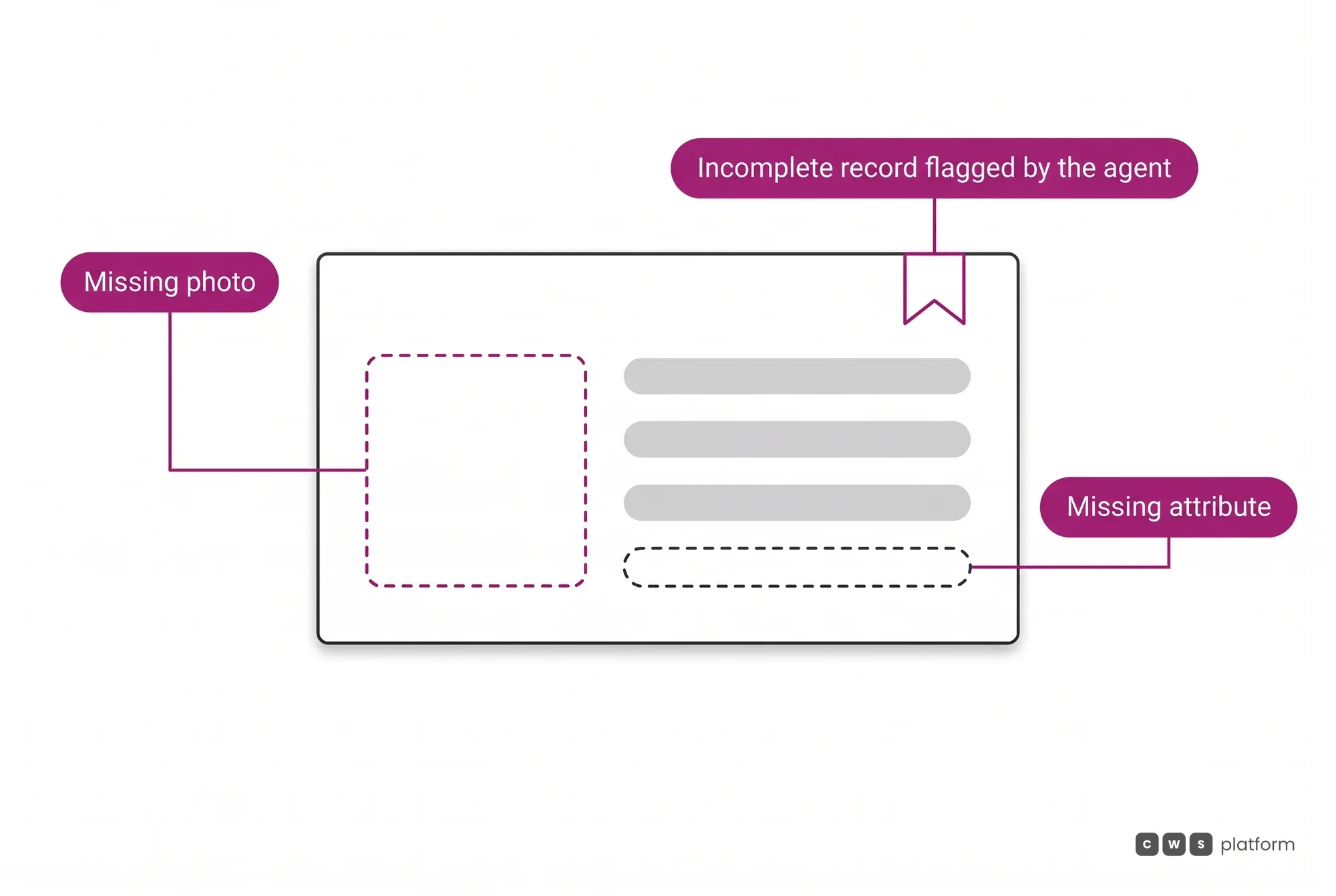
By comparing what is published against what that category needs in order to be found and bought: photo, useful description, the attribute that works as a filter, selling unit, tax data. An incomplete record is not the one with an empty field, it is the one that cannot support a buying decision. That is why the agent does not return a list of everything missing, it returns what is missing on items the operation is actually trying to sell.
Who approves a campaign it suggests?
A person. Activating a campaign changes what the buyer sees and what the company charges, so it lands in the yellow zone of the Autonomy Gradient: the agent assembles the proposal and the human confirms. What it does on its own is the reversible part, such as flagging what is incomplete and preparing the suggestion. The zone each action falls into is the company's configuration, not the agent's decision.
Does the buyer notice they are talking to an agent?
That is the customer's decision, not the platform's. The same two-sided interface serves the merchant, who keeps the storefront standing, and the buyer, who is looking for what they came for. How the agent presents itself to the buyer, under which name and with how much personification, is part of each operation's configuration. The platform does not impose a persona.