Portals · for manufacturers with a network
Your network buying together, on a portal you own
For manufacturers with a network of dealers, repair shops, franchises or co-ops. The network purchasing portal brings the manufacturer, approved suppliers and stores into one place, and sends every order to the offer the network's rule picks. Joining the network becomes buying better from day one.
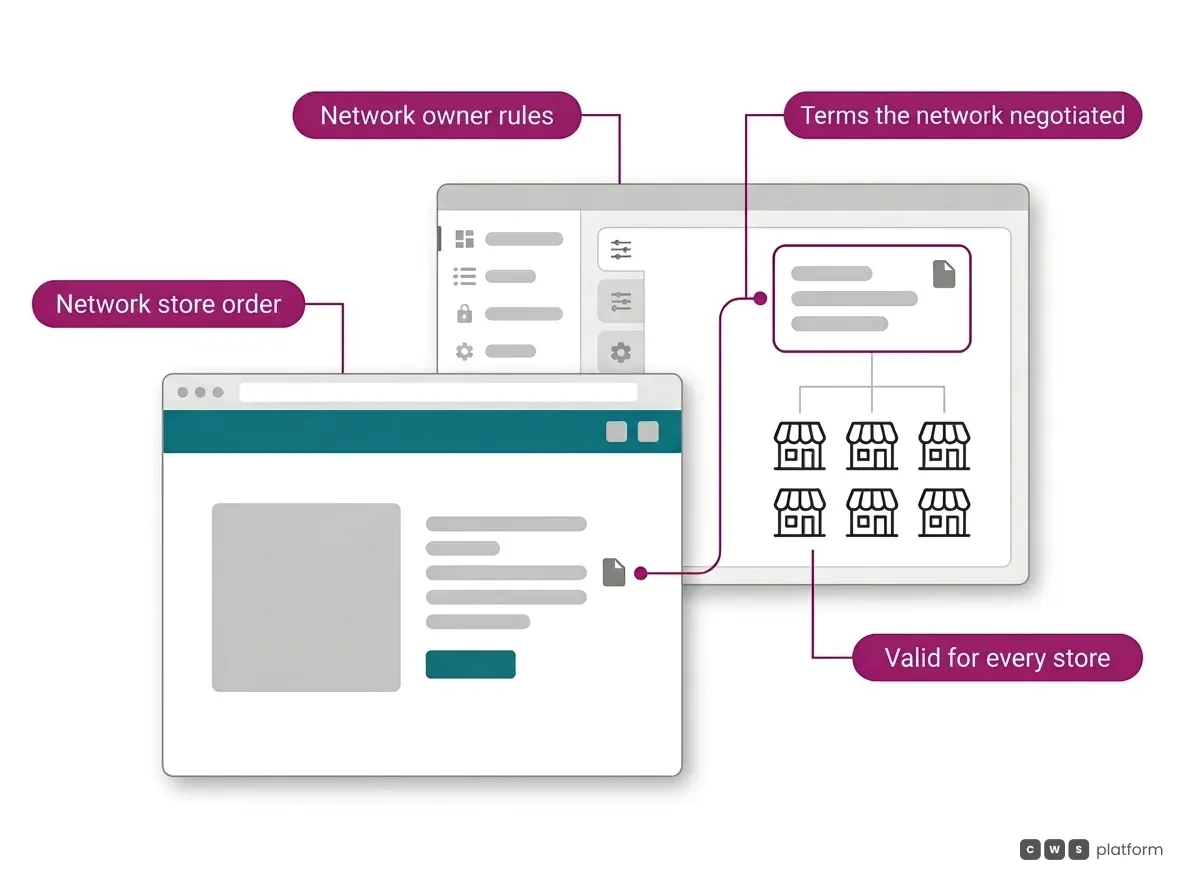
Where the network loses today
The better offer never becomes the price paid
The network negotiated terms, but each store keeps buying from its usual supplier, and the savings stay on the table.
Suppliers won't connect their stock
Without knowing how much the network will buy, suppliers don't integrate stock or compete on price, and the portal stays thin.
New stores join without a reason
A candidate asks what they gain by joining, and the answer is brand and training. The gain in their own cash never shows up.
Network purchasing portal or governed marketplace?
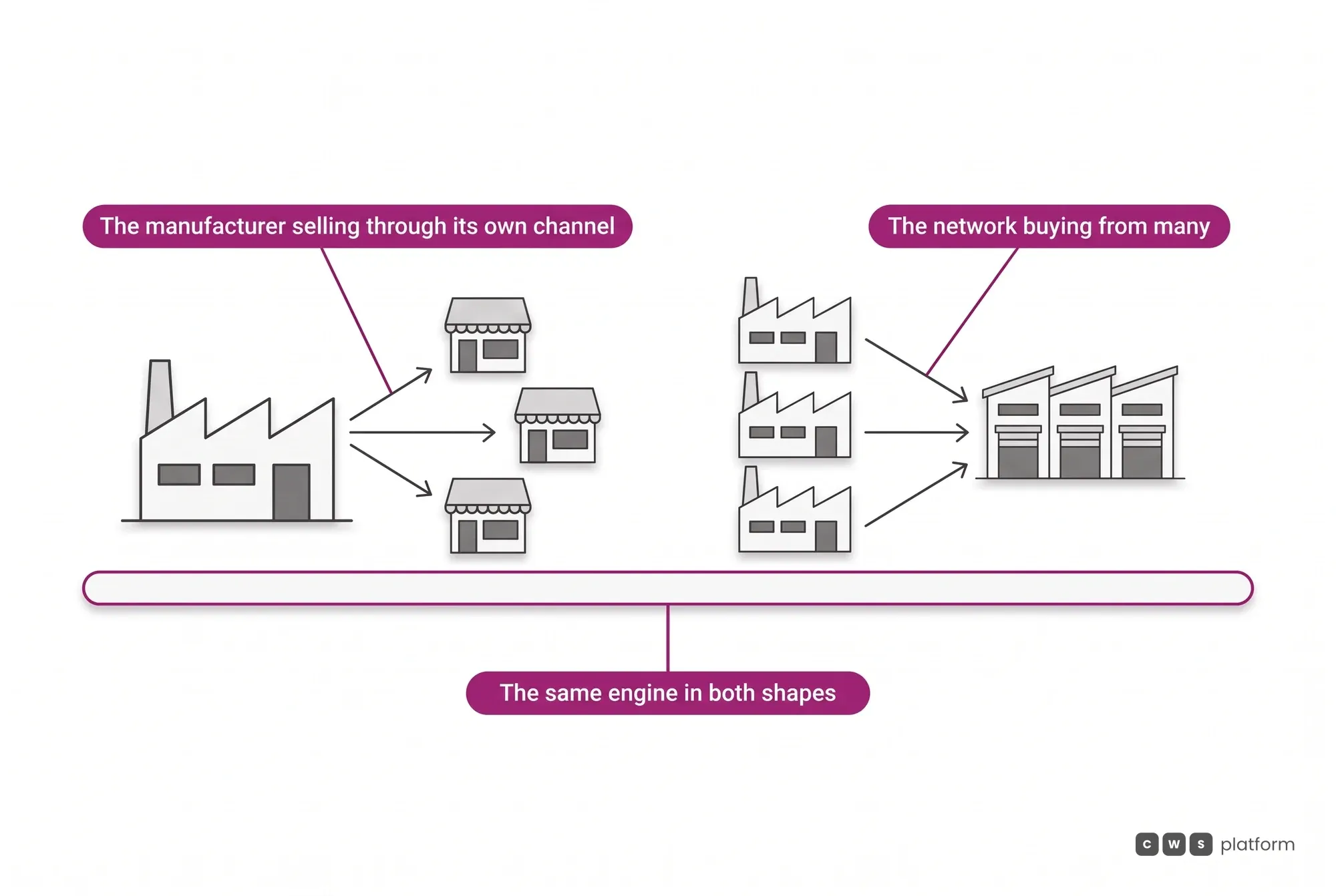
Both run on the same Marketplace Management Platform (Marketplace Center); the difference is which side of the network you look at. The governed marketplace answers to sellers: who joins, what each one can list, how offers compete and how the value is split.
The network purchasing portal answers to buyers: the network's buying policy, the store that just joined, the assortment a store sells without stocking it, and the savings that do, or don't, reach the order. In practice the manufacturer that owns the network usually needs both, and starts with whatever is stuck the most.
The first turn starts with the anchor buyer
A network portal is born with a chicken-and-egg problem: no offers, no buyers; no buyers, no supplier integration. Waiting for both sides to grow together usually leaves the portal empty for a long time.
The way out is sequencing. The network's largest buying group, or its purchasing office, starts buying everything the portal carries through the portal. With predictable volume, suppliers agree to connect stock and compete on price; with more offers, the other stores join because they buy better; with more stores comes more volume. The anchor's buying policy is the push for the first turn, and operations keep the offers clean so the network effect keeps turning.
Assortment without cash
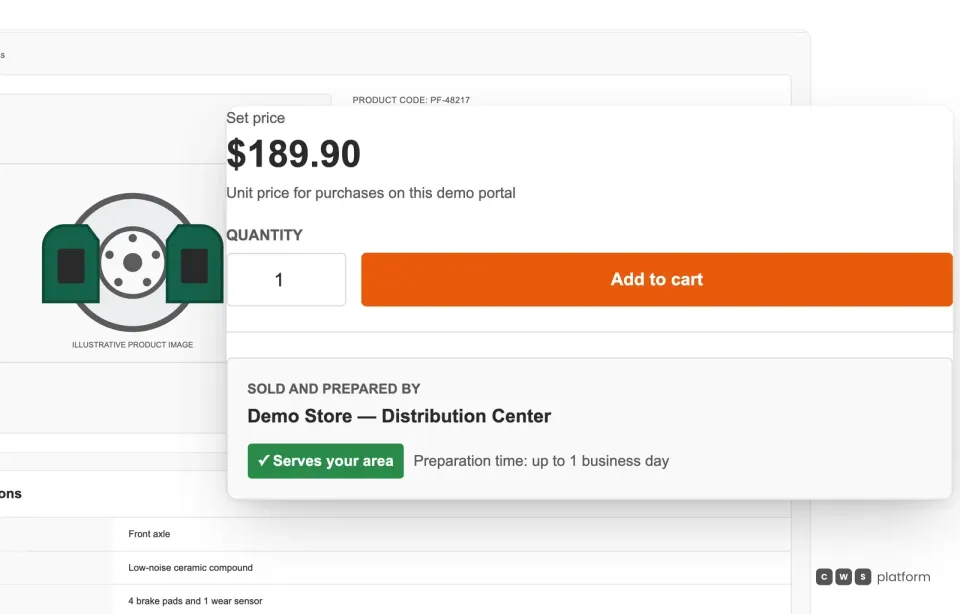
The offer says where the order ships from, and how fast.
In Distributed Inventory (Inventory Hub), stock from suppliers, the distribution center and partner stores shows on the product page, physical or virtual, with each source's prep time. Stores sell the long tail, the accessory and the non-standard item without tying up cash in them.
Multiple sources
One order, each source with its own lead time.
The store places one order, and the Order Management System (OMS) splits what ships from the distribution center and what ships from the partner store, each with its own lead time. When the main store runs out, the partner steps in as backup, in the order the network set.
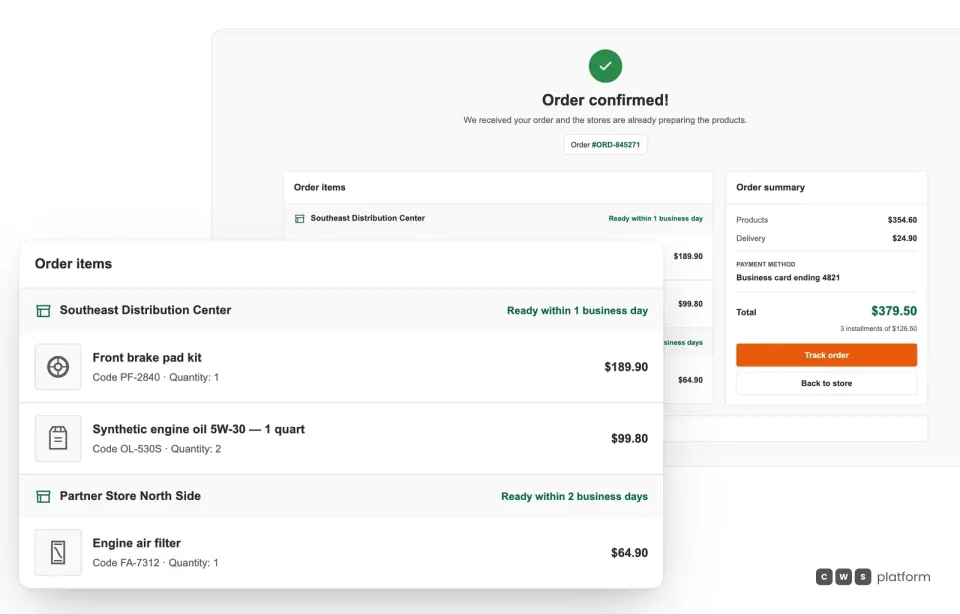
Joining the network means buying better from day one
For a manufacturer growing its network, the purchasing portal becomes part of the offer. The candidate compares what they pay today with the portal's terms, and the gain starts before their first sale. Joining also brings standardization: the new store comes in with the same catalog, the same ordering process, the network's mix and suppliers that are already approved.
The entry terms are explicit in Contextual Pricing (Pricing Engine), with price rules per customer group in the network, and who sells what is governed in the Commerce Rules Engine (CDL Workspace), with no IT project for each new store.
Many stores, one account
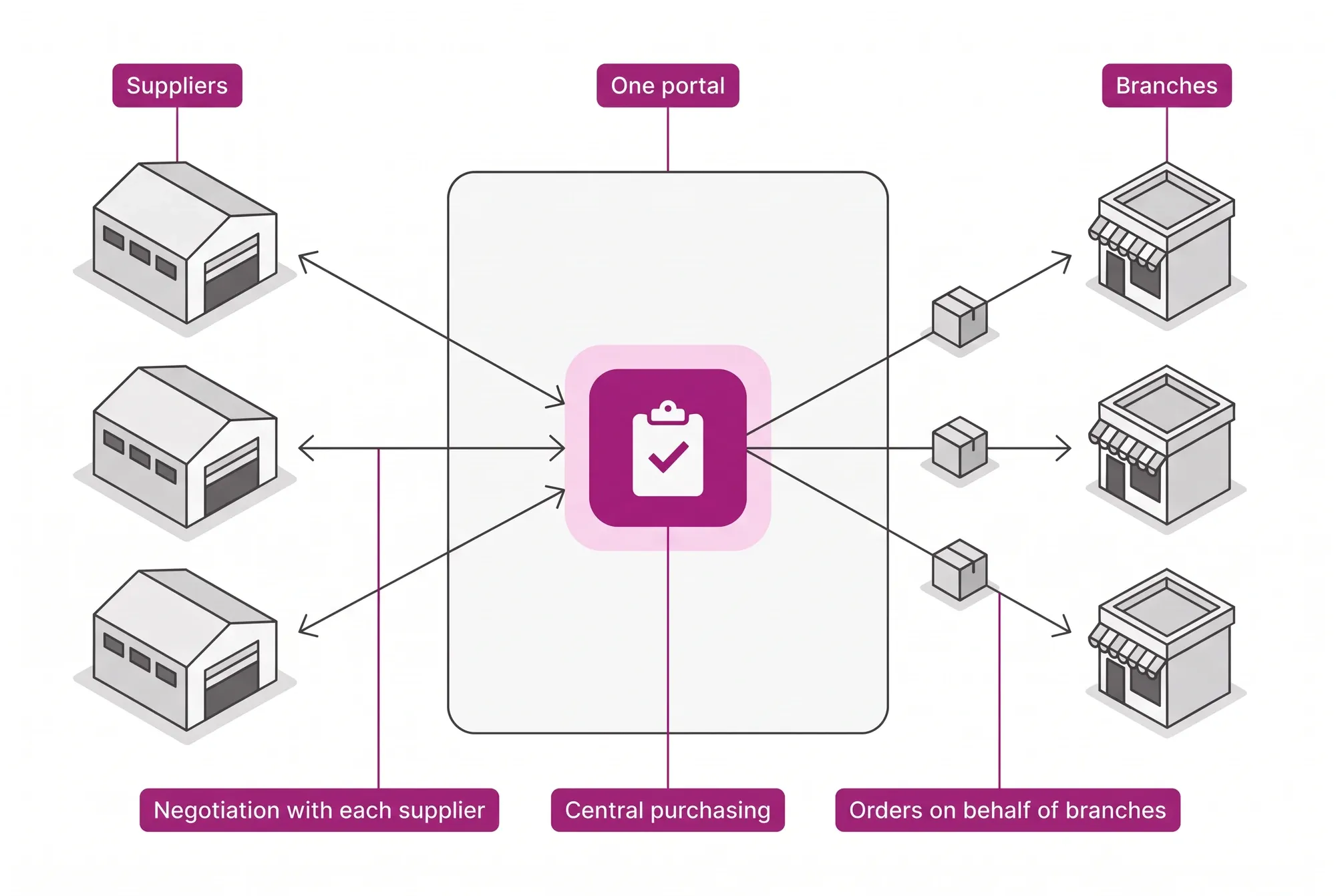
Several banners and branches in one account.
A group with several stores in the network buys for all of them from one account, picking the branch on each order. That is how the anchor buyer moves its purchasing onto the portal without changing how each store runs.
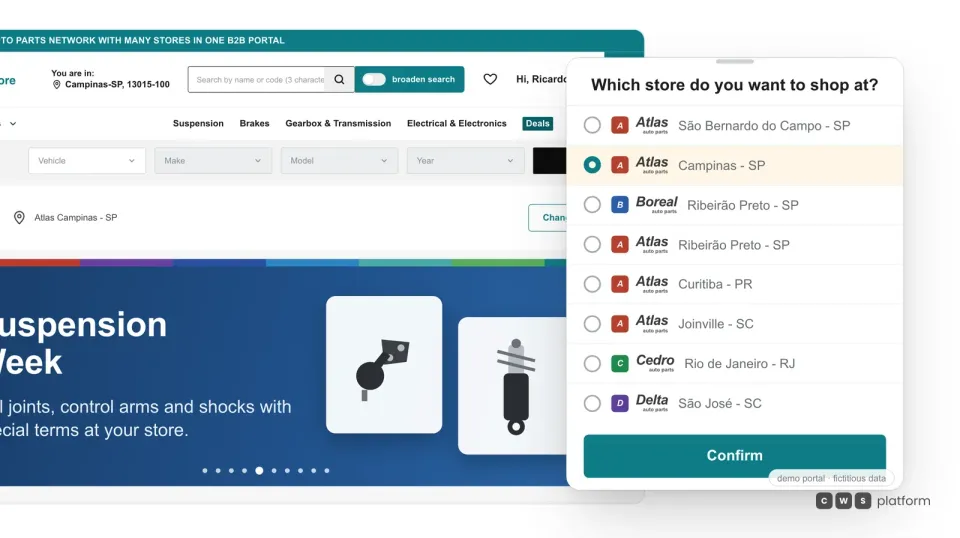
Want to see the portal with your network inside?
Tell us how your network buys today, who the largest buyer is and which suppliers you want to bring in, and a specialist builds the demo with your rules.

Persona · Portal owner
A new store joins the network and buys on everyone's terms from day one.
The purchasing portal became my expansion pitch, and every store arrives with the same catalog and the same approved suppliers.

Persona · Buyer
I sell the item I don't stock, with the lead time of whoever has it.
Stock from suppliers and other stores in the network shows on the product page, and I don't tie up cash in slow movers.
The same mechanism, each network in its own industry
The examples below are illustrative, not customer data. They show the same logic in different networks.
Auto parts and repair-shop networks
The shop group with the most locations starts buying replacement parts through the portal, and regional distributors publish their stock. The rare-fitment part shows on the product page with the lead time of whoever has it.
Agribusiness: co-ops and dealers
The central co-op buys for its branches through the portal, and input manufacturers join as suppliers because the season's volume is predictable. Members buy on the co-op's terms.
Building materials
The buying group negotiates terms for every store, and the portal carries the order to them. The special tile ships straight from the manufacturer's stock, without the store having to buy it first.
The same logic applies to lubricant and quick-lube networks, paint manufacturers with franchised stores and heavy-equipment dealers.
Joint campaigns and new revenue
With the network buying on one portal, a campaign with a supplier stops being a spreadsheet and becomes a rule set up in the Merchandising & Promotion Engine (Marketing Suite): store group, coupon, price and period, with simultaneous promotions by branch, by store or for the whole portal. And the network's attention becomes valuable to whoever sells to it.
What usually gets in the way, and how it works
What if stores stick with their usual supplier?
The main offer is picked by the network's rule, by lowest price or nearest store, and the same item from different suppliers shows up together. The buying policy does the rest.
Who grows the network after go-live?
A live portal doesn't bring suppliers on its own. Onboarding, catalog, price curation and campaigns need an owner with a target, and that decision comes before go-live.
Do suppliers lose control of their price?
No. Each supplier still owns its price and its stock, and the network decides whether offers compete or complement each other.
Frequently asked questions
What is a network purchasing portal?
It is the portal where the stores in a network (dealers, repair shops, franchisees or co-op members) buy together from the manufacturer and approved suppliers, each with its own price, stock and delivery rules. For the manufacturer that owns the network, it is a supply channel and a recruiting pitch at the same time.
How is it different from a governed marketplace?
A governed marketplace looks at who sells: who joins as a seller, what each one can list and how offers compete. A network purchasing portal looks at who buys: the network's buying policy, the store that just joined and the savings that reach the order. Both run on the same Marketplace Management Platform (Marketplace Center).
Does the store need the item in stock to sell it?
No. Stock from suppliers, the distribution center and partner stores can show on the product page, with each source's prep time, and the order is split by source.
Does it work for co-ops and franchise networks?
Yes. The mechanism is the same for dealers, repair shops, franchises and co-ops: what changes is who the anchor buyer is, who the approved suppliers are and which price rules apply to each group of stores.
Go deeper
- Governed marketplace: governing who sells on the portal.
- Marketplace Management Platform (Marketplace Center): main offer, partner and competing stores.
- Distributed Inventory (Inventory Hub): stock from many sources on one product page.
- Manufacturers: the manufacturer's network in one portal.
- Procurement savings leakage: why the network pays more with a better offer on the portal.
- B2B retail media and data: new revenue from suppliers and manufacturers.
Design your network's purchasing portal
Tell us a bit about your operation and a CWS Platform specialist will reach out within one business day, no strings attached.