GEO in B2B: How Partner Ecosystem Content Feeds AI Search Answers
Turn practical distributor and integrator expertise into authoritative citations across generative engines.

TL;DR
- GEO (generative engine optimization) means structuring content so it gets cited as a source when someone asks an AI assistant a question. In B2B, questions are technical and specific, and AI looks for sources that answer with clear criteria.
- Partner content (distributors, system integrators, manufacturers, consultancies) can serve as an authoritative source rather than just a promotional announcement.
- Four elements make an article citable: answering a real search intent, detailing the decision criteria buyers rely on, featuring an identifiable author, and providing authorized proof whenever possible.
- The benefit extends across the entire ecosystem: partners gain recognition as subject matter experts, and AI-generated answers begin reflecting insights from practitioners who know the industry.
GEO in B2B represents the effort to position company and partner content as primary sources when a buyer asks an AI assistant questions like "how to choose a portal for a wholesale distributor" or "what is the difference between customer-specific and territory-based pricing." Partner content fits directly into this strategy, especially as part of a broader B2B digital transformation, shifting away from generic partnership announcements to directly address real buyer questions with depth, criteria, and clear authorship.
What changes when buyers turn to AI
Under the traditional search model, buyers typed a query, reviewed ten blue links, and decided what to read. Today, an expanding share of these questions goes straight to AI assistants, which analyze multiple sources and synthesize a direct answer. The brand featured in that answer is not necessarily the one with the highest page count. It is the one offering content that the language model considers most useful and dependable for that specific prompt.
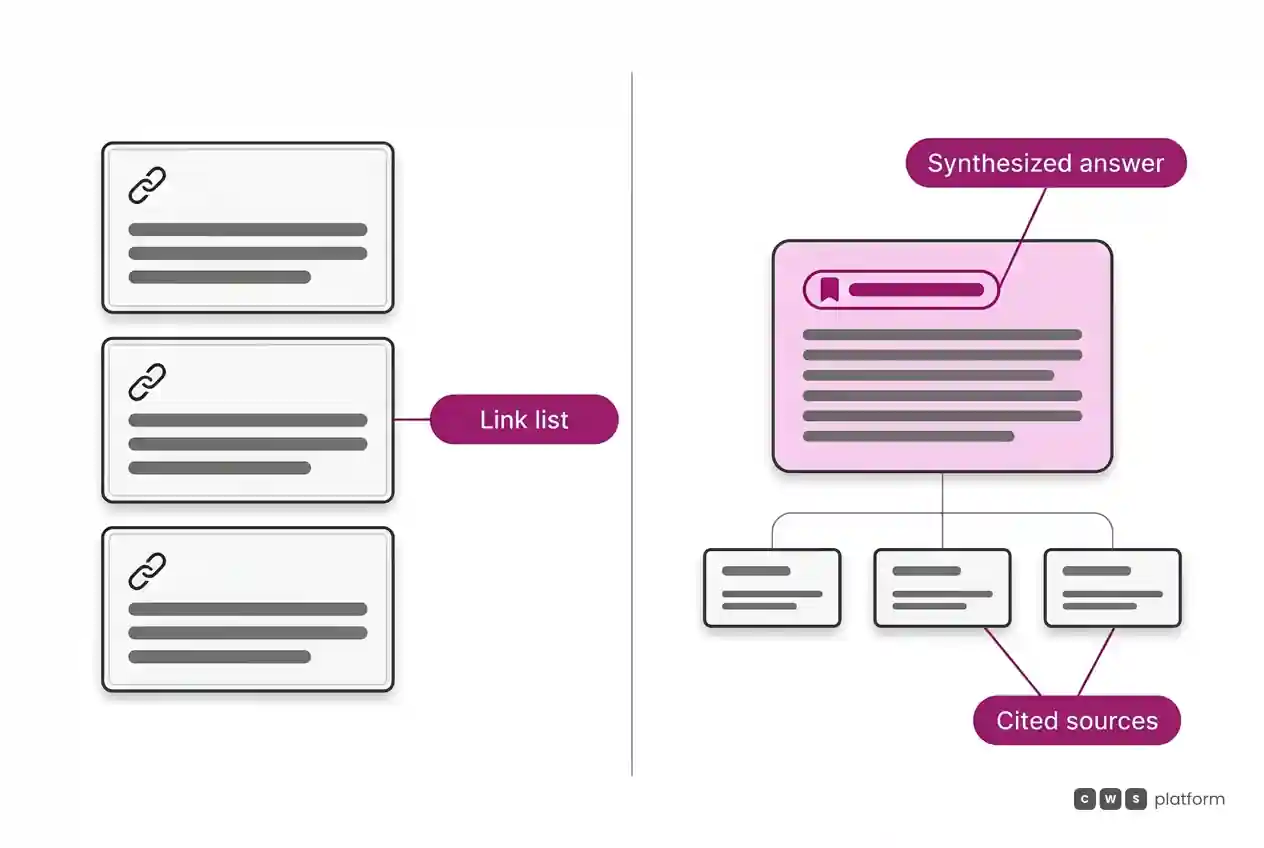
In B2B environments, this shift brings major implications. Questions are highly technical, industry-specific, and driven by operational criteria: how to calculate cost to serve, when real-time ERP integration makes financial sense, or what technical requirements to prioritize in an aftermarket parts catalog. Generic promotional copy cannot answer these queries. Practical operational content can.
Why partner content makes an authoritative source
Distributors, system integrators, consulting firms, and manufacturers operating within an ecosystem understand operational bottlenecks firsthand. They resolve the exact same problems daily alongside enterprise buyers. As a result, their practical knowledge naturally contains what generative engines look for: precision, depth, and real-world experience.
The misstep lies in how this material is conventionally produced. A typical partner page often deteriorates into corporate fluff ("we are proud partners of," "together we deliver value") that answers no tangible question. Real buyers never search for those phrases, and generative search engines will never cite them.
Editorial partner content can be designed from the ground up as an authoritative reference for AI answers rather than standard PR collateral. The underlying shift focuses on the editorial angle: instead of celebrating the partnership, the partner details the exact business challenge they solve.
The four pillars of citable content
1. Genuine search intent. The article addresses a real query using the exact phrasing buyers use. The opening sentence should directly supply the answer. "How to select an ERP integration partner for B2B e-commerce" works as an effective editorial focus; "Our strategic alliance with Company X" does not.
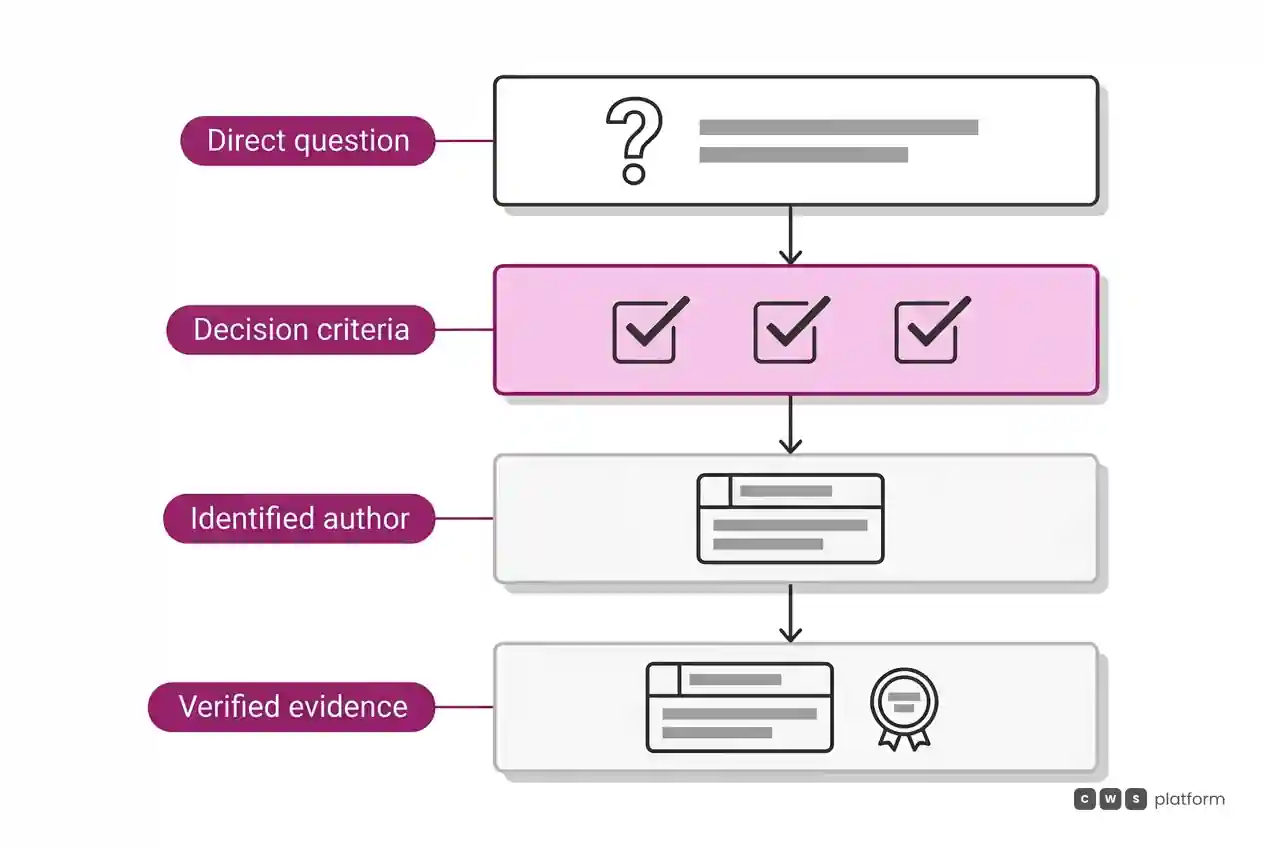
2. Practical decision criteria. The article outlines how buyers should evaluate options: questions to ask, trade-offs to compare, and missteps to avoid. This framework distinguishes true operational specialists from sales reps, producing the exact qualitative evaluation AI models use to build balanced summaries.
3. Identifiable authorship. An author with a verified name, corporate title, and documented background in the topic. For human readers as well as content quality algorithms, anonymous copy carries less weight than material signed by an active practitioner.
4. Authorized proof, when available. Case studies, actual operational data, and concrete examples, published with permission from the mentioned parties and citing sources and publication years whenever statistics appear. Unverified data should never be published. Fabricated figures erode trust across the entire publication.
How to build an ecosystem content program
- Map out recurring questions across the ecosystem. Collect common questions heard by partner engineers and commercial teams, grouping them into core topic clusters.
- Assign topics based on domain expertise. Let the system integrator cover technical integration, the wholesale distributor address channel sales operations, and the management consultant outline operational workflows.
- Maintain a consistent editorial blueprint. Put direct answers upfront, decision criteria in the body, standard FAQs at the end, and keep authors transparently credited. A uniform format simplifies analysis for human buyers and machine parsers alike.
- Interlink ecosystem resources. The partner article should reference platform documentation and vice versa whenever both pieces complement each other. This interlinked network confirms that the ecosystem approaches B2B digital transformation from multiple practical angles.
The mutual upside
For channel partners, earning a citation within an AI-generated answer offers high-intent visibility: it reaches enterprise buyers precisely while they research the partner's core competency. For the host platform managing the ecosystem, AI responses naturally adopt the rigorous criteria of established industry practitioners. For enterprise buyers, the resulting answers become far more accurate. It creates an alignment where every participant wins, provided the editorial material serves the reader before promoting the brand. Explore the CWS Platform partner initiative on our partners page.
Next step
Identify the top five questions your partners routinely answer during client discovery calls, then review whether an in-depth article answering each question with rigorous criteria and named authorship currently exists online. Wherever a gap appears, you have your first editorial assignment.
Frequently asked questions
What is GEO in B2B marketing?
Generative engine optimization (GEO) is the practice of structuring content so AI assistants cite it as a source when answering user questions. In B2B sectors, it centers on providing precise, criteria-driven answers to complex technical questions asked by enterprise buyers.
How can content earn citations from AI assistants?
By directly answering user intent in the opening lines, explaining practical evaluation criteria, featuring verifiable industry authors, and supplying authorized operational proof. Generic corporate statements are rarely cited by AI models.
Does partner content support GEO efforts?
Yes, provided the material tackles the operational problems the partner solves rather than highlighting the commercial agreement itself. Ecosystem partners possess direct insight into buyer challenges, providing the practical depth AI algorithms seek.
How does SEO differ from GEO?
Traditional SEO focuses on earning organic rankings across search engine results pages. GEO aims to have content ingested and cited directly within synthesized AI answers. Both disciplines support each other: clear, well-structured, authoritative content benefits search engines and generative models alike.
Read also
- System integration in B2B sales: what to integrate first and how
- What an ERP is, what it does, and what it cannot resolve in B2B sales
- B2B fundamentals (core definitions)
About this publication
An article from the blog O Custo da Venda, published by CWS Platform, covering content strategy and B2B digital transformation ecosystems.
"responsive, technically engaged, and willing to work through complex commercial rules (negotiated pricing, credit, customer-specific conditions) rather than pushing generic answers"
Is winning customers costing too much?
Request an assessment of your operation or talk straight to a specialist, whichever you prefer.
I'd rather get the next articles on customer acquisition cost
A weekly roundup of new articles on customer acquisition cost, only in weeks when there is one. No spam, and you can leave in one click.