What Is a B2B Sales Order and What Must It Include?
Why orders fail in fulfillment and how real-time validation protects commercial margins.

A sales order is the document that records what the customer bought and under what terms: items, quantities, pricing, sales tax, shipping, payment terms, delivery address, and requested date. It authorizes the business to pick, pack, invoice, and ship, and it serves as the foundation for generating the commercial invoice.
In B2B, the sales order carries far more business logic than in retail, because each customer has dedicated pricing, credit lines, and contract terms. As a result, most billing and fulfillment issues originate in a poorly structured sales order.
What a Sales Order Needs to Include
- Customer. Legal business name, EIN or tax ID, resale certificate details when applicable, plus billing and shipping addresses.
- Items. SKU, item description, unit of measure, and ordered quantity.
- Pricing. Customer-specific contract pricing, including applied discounts and the documented reason for any override.
- Taxes. State and local sales tax, destination-based tax calculations, and tax-exempt status when supported by valid certificates.
- Shipping. Freight terms (FOB origin or FOB destination), shipping method, freight charges, and delivery timeline.
- Payment. Terms (such as Net 30) and payment method, validated against the customer available credit limit.
- Sales rep and channel. Assigned account executive or representative, plus the entry channel (EDI, portal, inside sales).
- Status. The current stage of the order: open, approved, picking, invoiced, or delivered.
Sales Order, Quote, and Invoice
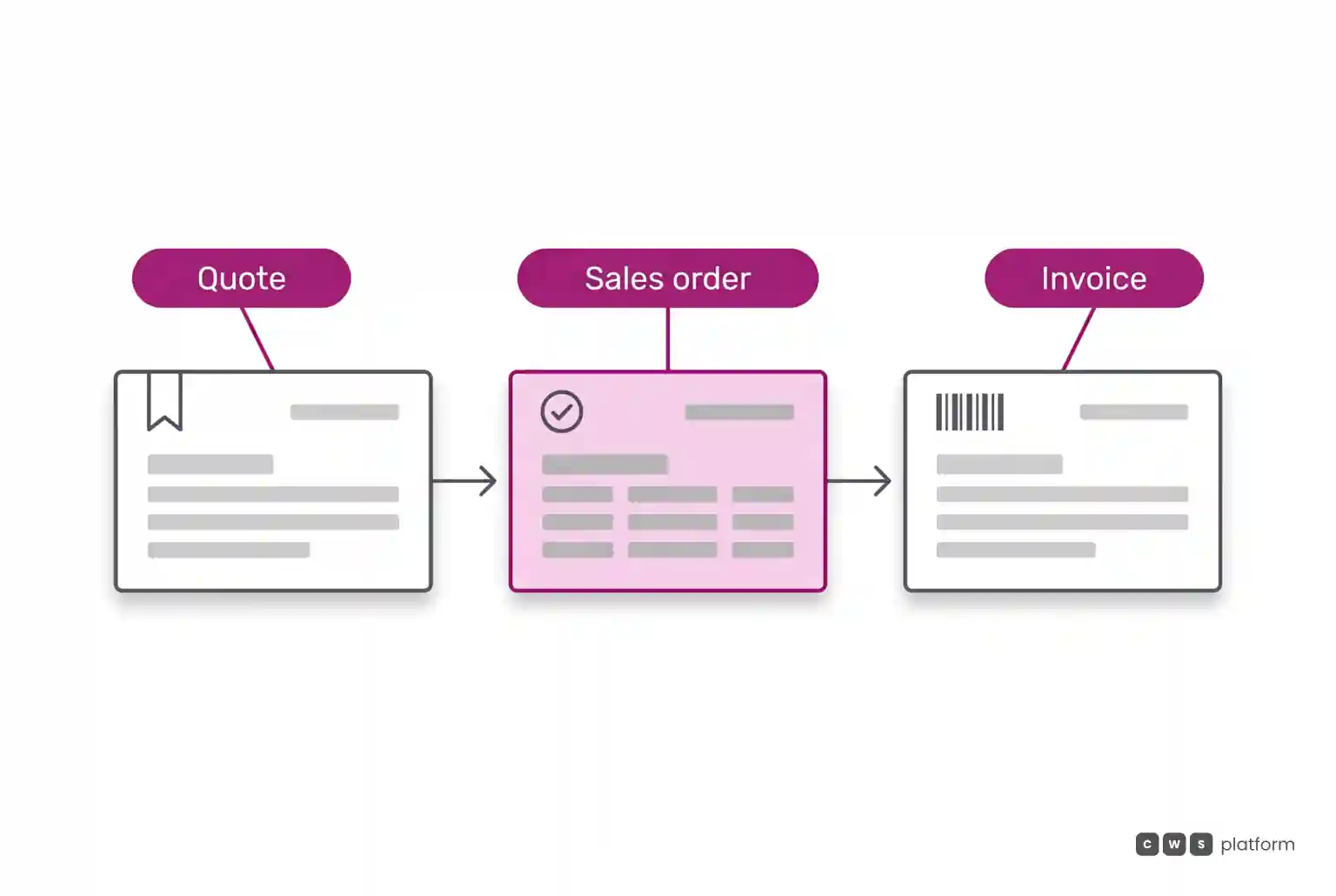
The quote (or price estimate) is the proposal: pricing and terms offered before the customer makes a purchasing decision. The sales order is the confirmed purchase reflecting agreed-upon conditions. The invoice is the accounting document issued against the order once goods ship or services are delivered. We explain the preceding stage in what is a quote and how to manage B2B quoting.
Why Sales Orders Run into Problems
Why do orders get rejected by billing or operations? Because they arrive with inaccurate pricing, an exceeded credit line, out-of-stock items, or missing tax exemption documentation.
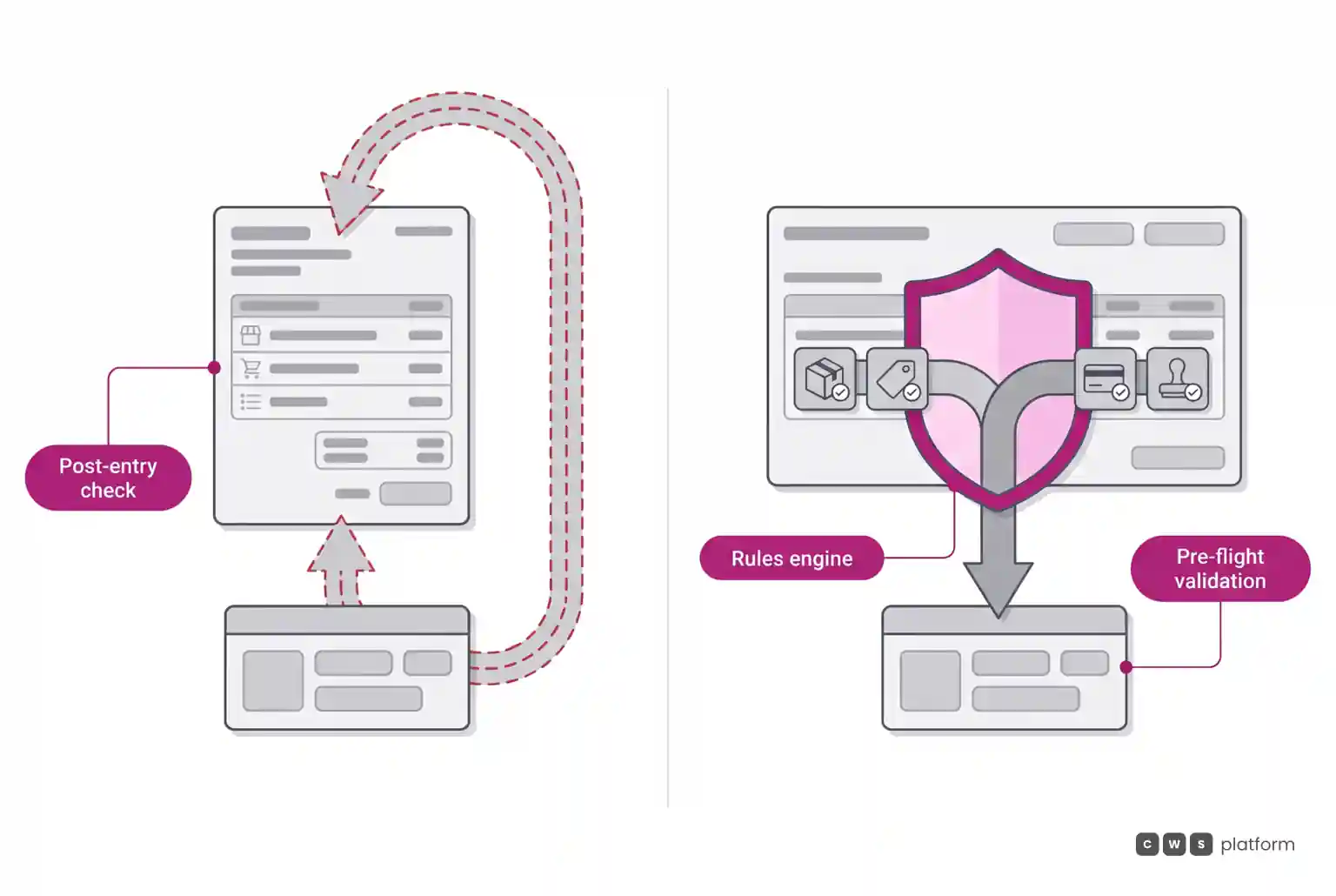
Why did they arrive that way? Because they were manually keyed in from an email, a spreadsheet, or a phone call, without real-time validation at the moment of entry.
Why did nobody catch it earlier? Because review is manual and occurs downstream, after the order is already sitting in the fulfillment queue.
Why is this expensive? Because every reworked order burns the time of data entry clerks, sales operations, and billing teams, while delaying customer delivery.
The root cause: the sales order is created without the guardrails required to make it instantly clean and billable.
How to Ensure Sales Orders Arrive Clean
1. Validate at the moment of creation. Check inventory availability, customer pricing, credit status, and sales tax while the order is built, not days later.
2. Apply customer-specific pricing automatically. Start with the customer contract or tiered price sheet rather than a generic master catalog.
3. Calculate taxes based on delivery destination. The destination state, county, and city determine nexus and applicable sales tax rates, which directly impact order margins.
4. Empower customers to place their own orders. In a B2B self-service portal, reorders are generated directly inside the system, removing manual rekeying. We cover this in sales order entry automation.
5. Capture reasons for any exceptions. Non-standard discounts and line-item cancellations must require an explanation, ensuring management maintains visibility into revenue leakage.
6. Integrate directly with the ERP. A pre-validated order must flow straight into the ERP ready for fulfillment and invoicing, without manual touches.
The Sales Order in a B2B Portal
When an order is created inside a digital portal, whether by the buyer or by an inside sales rep, company business rules apply directly in the cart. The buyer sees accurate contract pricing, available credit balance, and calculated freight. The sales rep uses the exact same interface whenever assisted selling or price negotiation is required.
On the CWS Platform, inventory, pricing, credit limits, and sales taxes are validated at checkout. Tax is calculated dynamically by destination jurisdiction, credit limits can be configured to block, route for credit review, or proceed, cancellation reasons are mandatory, and the verified order flows straight into the ERP. See the system workflow on our B2B ordering portal page.
Next Step
Tally how many sales orders were modified, placed on hold, or reworked over the past month, and track the underlying reason: incorrect pricing, credit holds, stockouts, or invalid master data. The single most frequent cause points directly to the first business rule you need to move out of manual checks and into automated logic.
Frequently Asked Questions
What is a sales order?
It is the internal document confirming a customer purchase, detailing items, quantities, pricing, sales tax, shipping terms, payment terms, and delivery instructions. It gives the organization the operational green light to pick, ship, and invoice.
What is the difference between a sales order and a quote?
A quote is an initial commercial proposal submitted prior to buyer commitment. A sales order represents a confirmed transaction under accepted terms, authorizing warehouse fulfillment and billing.
What is the difference between a sales order and an invoice?
A sales order records what was purchased and under what agreed terms. An invoice is the accounting demand for payment generated from that order once the products ship or services are delivered.
What must be included on a B2B sales order?
Account details and tax identification, line items with SKU and quantity, contract pricing with applied discounts, applicable sales taxes, freight terms, payment terms, assigned sales representative, order channel, and current order status.
Read More
About This Publication
A publication by CWS Platform.
"responsive, technically engaged, and willing to work through complex commercial rules (negotiated pricing, credit, customer-specific conditions) rather than pushing generic answers"
Want to see this in your operation?
Real B2B operations already run on it.