B2B Stacked Discounts: How to Balance Price Cuts and Payment Terms Without Margin Loss
How commercial leaders prevent margin erosion by establishing discounting waterfalls, exclusion rules, and item-level caps.

TL;DR
- In a B2B promotion, campaign discounts stack on top of customer-specific tier discounts, volume breaks, and payment term discounts. Without stacking rules, an order goes through with four discounts that nobody approved together.
- The solution comes down to three rules written before launching the campaign: application order, what stacks with what, and an overall discount ceiling per item.
- Cash discounts and extended terms are two sides of the same coin. If the promotion offers a price cut and the buyer also selects extended terms, the campaign pays twice.
- The practical test is simulating the worst possible order scenario before the campaign goes live.
To choose between discounts and payment terms in a B2B promotion, define three rules before launch: the sequence in which discounts apply, which discounts stack and which are mutually exclusive (for instance, promotional pricing does not combine with early payment discounts), and the maximum discount cap per line item. Margin erosion in promotions rarely comes from the planned discount itself. It comes from adding that discount to pre-existing terms.
The scenario is familiar. Marketing runs a 10% promotion on a product line. The buyer already has a 5% contract discount, hits a 3% tier via quantity break, and chooses wire or ACH for an additional 2% early payment discount. The order closes at 20% off on products budgeted to absorb only 10%.
Why discounts stack without anyone deciding
Each discount originates in a different department, each with its own logic:
- Contract pricing comes from strategic account negotiations.
- Volume breaks come from tiered pricing tables.
- Payment method discounts come from treasury to accelerate cash flow.
- Campaign promotions come from marketing or vendor co-op programs.
In isolation, each makes complete sense. The problem is that no one evaluates all four combined on a single order. Every department spreadsheet checks out, yet the final order bleeds margin.
The three rules you need before the campaign
1. Application order. Discounts can apply sequentially in a cascade (each percentage applied to the already discounted subtotal) or additively (all percentages combined against the list price). Two 10% discounts calculated in a cascade equal a 19% net reduction. Added together, they equal 20%. That difference looks small on one line item, but it is massive across a full quarter.
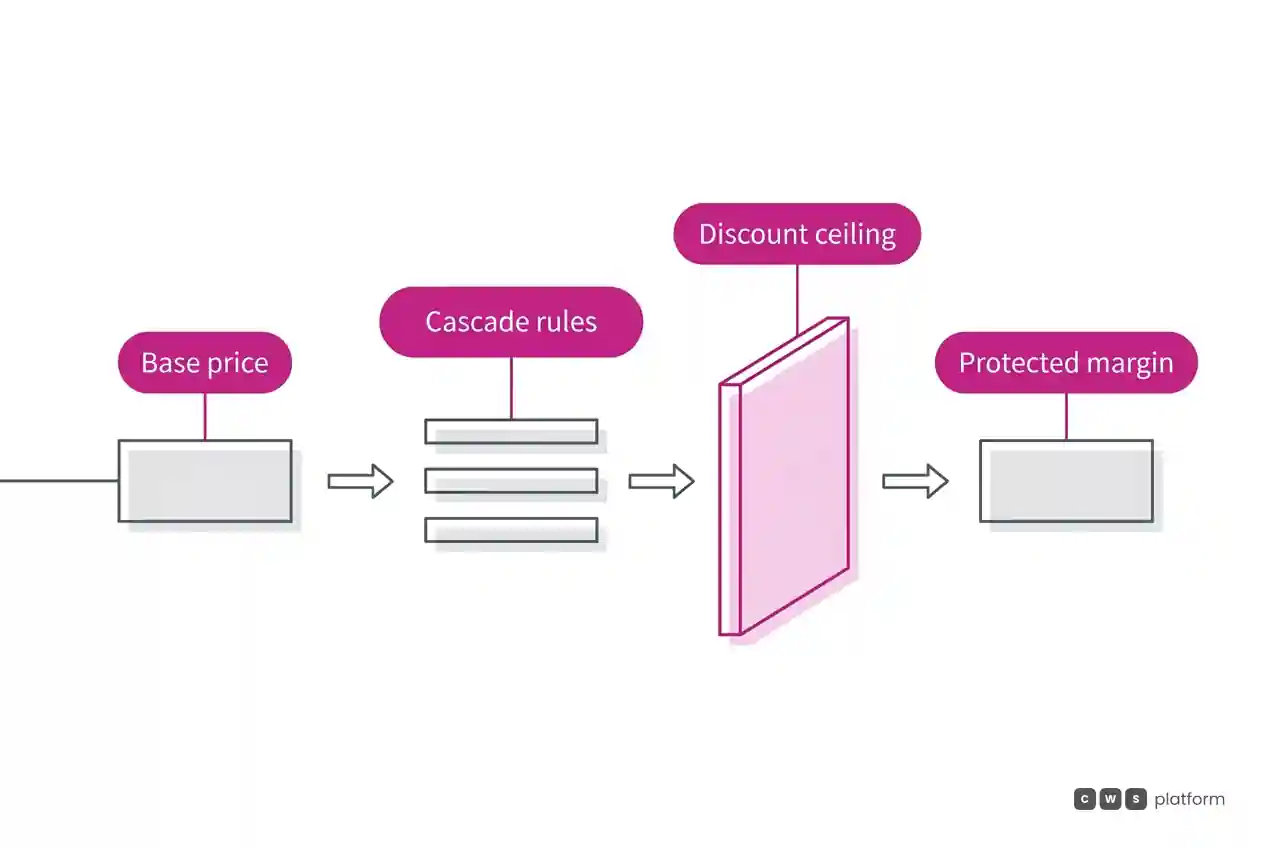
2. Stacking and exclusivity. For every discount pair, business policy must define whether they combine. A common rule: promotional discounts do not stack with customer contract pricing, the system simply awards whichever is greater. Another rule: the promotion only applies to standard payment terms, excluding early payment or cash discounts.
3. Ceiling per line item. Regardless of how many rules trigger simultaneously, the total discount must not exceed a strict cap per item or product category, calculated from the minimum acceptable margin. Any order crossing that threshold requires manager override.
Discounts or payment terms: the same currency
Prompt payment discounts and extended terms are two sides of the same balance sheet. Accelerating receivables creates working capital value, while financing terms carries a real cost of capital. When a promotion cuts the unit price and also allows extended terms (such as net 60 or net 90), the business pays for the price cut while absorbing the financing cost.
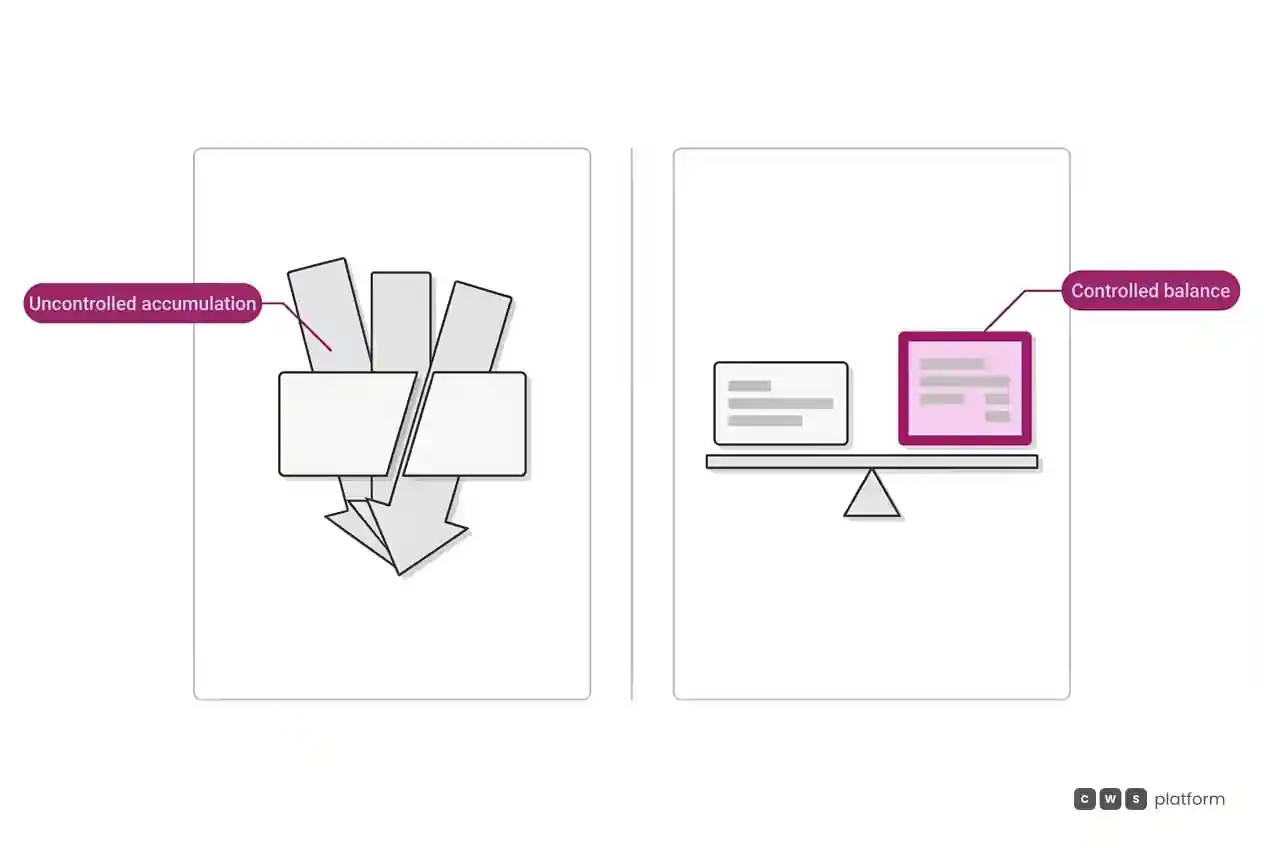
In real-world implementations, successful campaigns isolate a single commercial lever:
- Price campaigns: a discount on the promotional product line paired with standard payment terms. Early payment discounts do not stack.
- Financing campaigns: standard pricing with extended payment terms as the core incentive. The carrying cost of the terms is calculated and tracked as the campaign discount.
- Payment method campaigns: a discount tied strictly to a specific payment method, excluding any other campaign pricing.
What never works is allowing the buyer to claim all three simultaneously.
How the commerce platform must handle this
These rules only protect gross margins if they execute at the exact moment the order is priced across every sales channel, rather than caught manually downstream in accounts receivable. This requires the commerce engine to recognize discount priority hierarchies, blocked combinations, and exceptions, while displaying the final applied discount and its underlying logic directly in the cart.
The challenge of promotional pricing in B2B explains how to run campaigns without breaking account-level price books. Composite payment terms combining terms, methods, and discounts are covered in Checkout & Payments by CWS Platform. For the fundamentals of B2B pricing structures, read commercial discounts: types and definitions.
Next step
Before your next campaign, build out the worst-case order: your account with the deepest contract pricing, buying at the highest volume tier, choosing the payment method with the highest cash discount, and purchasing only promotional items. Run the numbers on that order margin. If it falls below acceptable thresholds, implement clear stacking rules and maximum discount ceilings before launch.
Frequently asked questions
What is discount stacking?
Discount stacking occurs when two or more price concessions apply to the same line item within a single transaction, such as combining a promotional discount with a contract tier and an early payment term.
Cascading vs. additive discounts: what is the difference?
Cascading discounts apply each subsequent percentage to the already discounted subtotal. Additive discounts sum the total percentage points and apply them against the original list price. Two 10% discounts yield a 19% reduction when cascaded, but a 20% reduction when added together.
Can promotional discounts combine with prompt payment discounts?
They can, provided commercial policy permits it and the item margin supports it. Many organizations use an exclusivity rule (applying whichever discount is higher) to avoid funding the campaign twice.
How do you prevent losses in B2B promotions?
Define discount application priority upfront, document which incentives stack and which are mutually exclusive, and enforce a hard margin ceiling per line item calculated directly in the cart engine.
Related articles
- Volume pricing: how to structure tiered discounts without eroding margin
- Discounts, approval thresholds, and audit trails
About this publication
Article from the Cost of Sales blog by CWS Platform, covering pricing policies and promotional management in B2B commerce. Does not reference specific client identities or internal performance metrics.
"responsive, technically engaged, and willing to work through complex commercial rules (negotiated pricing, credit, customer-specific conditions) rather than pushing generic answers"
Is selling more not turning into margin?
Request an assessment of your operation or talk straight to a specialist, whichever you prefer.
I'd rather get the next articles on margin and discounts
A weekly roundup of new articles on margin and discounts, only in weeks when there is one. No spam, and you can leave in one click.