How to Activate Sellers on a B2B Marketplace: Clearing the Path to First Order
Cut vendor onboarding friction and shrink time-to-first-order through streamlined catalog setup and operational guardrails.

TL;DR
- Activating a vendor means taking them from a signed agreement to their first delivered order. What slows this path down the most is friction: complicated logins, lengthy onboarding forms, confusing communication, and a sales workflow with too many steps.
- The step by step playbook that works has four stages: simple initial access, straightforward vendor profiles, a minimum viable catalog published, and a hands-on first order.
- After onboarding, ongoing engagement is sustained through bite-sized educational content and contextual in-app support right where questions arise.
- Track time to first order, not just the number of registered vendors.
To activate vendors in a B2B marketplace, eliminate everything standing between contract signing and the first completed order: access that works on day one, an onboarding form requesting only what is needed to make a sale, communication that tells the vendor exactly what to do next, and an order management process with fewer steps. Once they secure that first sale, bite-sized training and in-app guidance keep vendors engaged.
What Counts as an Active Vendor
A registered vendor is not an active vendor. In real-world enterprise deployments, the metric that truly matters is different: how many vendors have successfully fulfilled their first order, and how long it took them to get there after signing up. A marketplace with hundreds of registered vendors but only a handful booking transactions has assortment on paper, but empty digital shelves for commercial buyers.
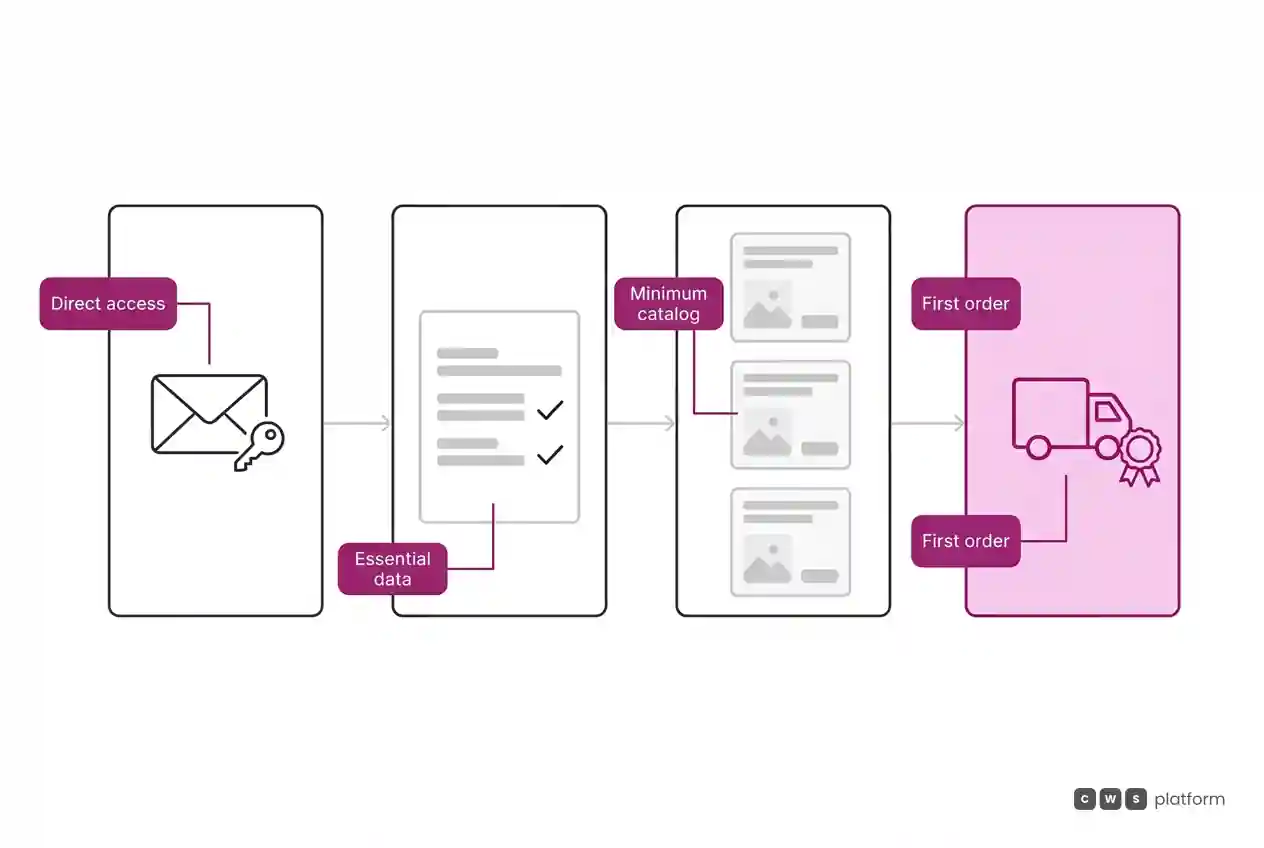
Vendor activation depends on combining frictionless access, a straightforward profile setup, clear communication, and an order fulfillment flow with minimal operational hurdles. Dropping the ball on any of these four elements is enough to make a vendor abandon the platform halfway through.
Step 1: Frictionless Initial Access
The vendor receives an invitation, clicks, and lands in their portal. It sounds obvious, yet this is precisely where many B2B initiatives stall.
- One invite, one link, one password. No cumbersome pre-qualification forms prior to initial portal entry.
- Account owners track engagement. The merchant success manager monitors who received the invite but has not logged in, and proactively reaches out.
- Self-service password recovery that just works. No administrative roadblocks or reliance on manual IT support tickets.
Step 2: Streamlined Onboarding, Only the Essentials
Vendor registration workflows typically demand everything all at once: corporate tax IDs, ACH banking details, logistical capabilities, warranty policies, and an exhaustive master catalog. The vendor opens the portal, sees an overwhelming checklist, and postpones it indefinitely.
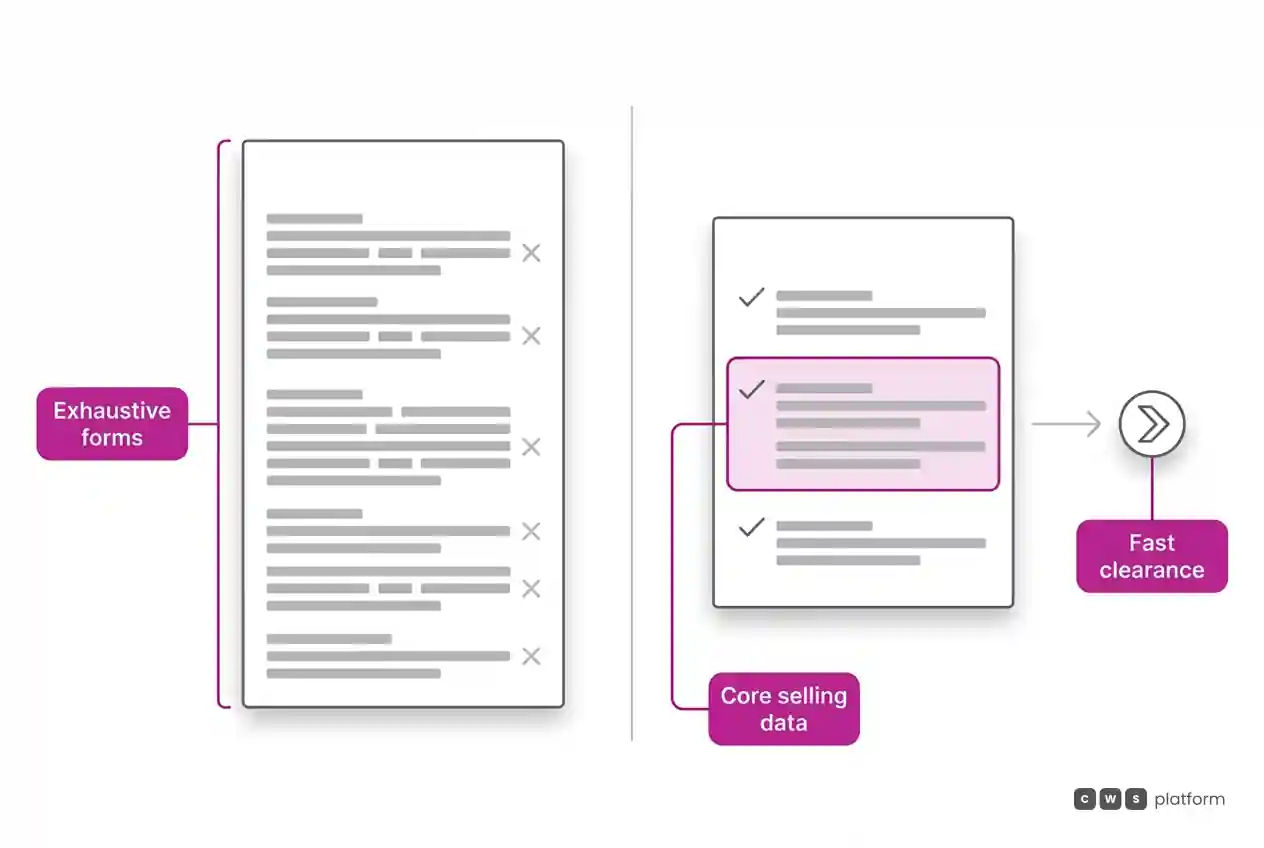
An effective activation workflow asks only for what is required to process the initial sale: tax identification, disbursement bank account information, shipping service regions, and fulfillment terms. The rest, such as comprehensive compliance policies, complete catalog uploads, or complex ERP integrations, can be rolled out in phases once the vendor sees commercial traction and has a financial incentive to invest their time.
Step 3: Minimum Viable Catalog Published
Vendors do not need to list their entire inventory to get off the ground. They only need to publish enough SKUs to start surfacing for the right B2B buyers:
- Their top-selling commercial items outside the marketplace;
- Accurate wholesale pricing, live inventory counts, and eligible delivery zones;
- Direct mapping to the existing marketplace master product record, when the SKU is already in the central index, to prevent duplicate product listings.
A focused, clean, accurate initial assortment activates vendors much faster than an extensive catalog loaded with pricing discrepancies and bad data. You can learn more about managing duplicate records and catalog hygiene in our guide to marketplace governado.
Step 4: A Hands-On First Order
The first order represents the highest risk moment in vendor retention. The supplier is unfamiliar with your platform, does not know where to review purchase orders, how to confirm availability, how to upload invoices, or how to enter tracking details. If friction occurs here, they quickly conclude that participating in your digital channel is not worth the operational overhead.
Because of this, the first transaction demands white-glove support: a member of your merchant operations team should alert the vendor the moment an order drops and guide them through fulfillment. Furthermore, the operational workflow must be as lean as possible: confirm, invoice, ship. Every supplementary confirmation status is an extra point of failure where a live B2B purchase can stall.
Beyond the First Order: In-Context Content and Support
Short instructional content and contextual platform support help sustain vendor participation long after launch day. Two specific formats consistently outperform lengthy PDF operating manuals:
- Bite-sized, task-driven guides. A two-minute video demonstrating how to reply to buyer RFQs, or a one-page reference on optimizing product descriptions for search.
- Embedded screen guidance. Helpful tooltips appear exactly where execution happens: a brief explanation of status triggers on the order dashboard, or a validation checklist showing what data points are missing before a SKU can go live.
What to Measure
- Time from invitation sent to first portal login.
- Time from first login to initial catalog published.
- Time from onboarding completion to first order fulfilled.
- Vendor retention rate, measured as the percentage of activated suppliers with repeat orders over the trailing 30 days.
Monitoring each of these velocity milestones reveals precisely which of the four operational steps is stalling your marketplace participants. You can manage seller onboarding workflows and core catalog operations directly within the Marketplace Center on the CWS Platform.
Next Steps
Review all suppliers onboarded over the last quarter and identify the exact stage where each one currently sits: initial login, profile verification, catalog mapping, or first sale. The stage with the largest drop-off represents your greatest operational bottleneck and where you must eliminate onboarding friction first.
Frequently Asked Questions
How do you activate vendors in a B2B marketplace?
By providing seamless day-one portal access, keeping onboarding forms limited to transactional requirements, publishing a focused high-demand catalog with accurate pricing and inventory, and providing hands-on operational support through their first completed order.
What information should you request during initial B2B vendor onboarding?
At the start, collect only what is strictly required to process a transaction and clear payouts: tax compliance details, ACH payment instructions, serviceable delivery territories, and baseline fulfillment lead times. Extended vendor policies and secondary product lines can be incorporated later.
Why do B2B suppliers register for digital marketplaces but never sell?
Usually because of administrative friction: broken activation links, exhausting registration questionnaires, unclear next actions, or an order fulfillment process that requires too many manual verification steps.
How do you maintain long-term vendor engagement after onboarding?
Provide focused, task-oriented micro-learning resources, embed contextual UI guidance directly within their order management screens, and maintain active outreach from your merchant success team across their initial transactions.
About This Publication
This article highlights operational best practices observed during enterprise B2B marketplace deployments supported by CWS Platform. It does not disclose client names or proprietary transaction figures.
"responsive, technically engaged, and willing to work through complex commercial rules (negotiated pricing, credit, customer-specific conditions) rather than pushing generic answers"
Is every order costing your operation more?
Request an assessment of your operation or talk straight to a specialist, whichever you prefer.
I'd rather get the next articles on the cost of each order
A weekly roundup of new articles on the cost of each order, only in weeks when there is one. No spam, and you can leave in one click.