Peak Traffic in B2B Portals: Preparing Tech, Catalog, and Teams
Platform stability during product launches and trade shows demands synchronized preparation across four core fronts

TL;DR
- B2B peak dates (product line launches, trade shows, pre-season ordering campaigns, quarter-end rushes, dealer network conventions) concentrate visits and high-value orders into a few intense hours. The portal must be prepared across four fronts simultaneously: infrastructure, application, catalog, and team.
- Stability is capacity planned in advance, not real-time reaction. Run load tests, pre-scale capacity, and enforce code freezes days ahead.
- Protect and strictly isolate the demo environment used by sales reps at event booths from live production systems.
- Define adoption metrics (first-time digital orders, reorder rates) beforehand to turn one-day traffic spikes into recurring active buyers.
To prepare a B2B portal for a peak event, treat the date as an operational project across four coordinated fronts: infrastructure with load-tested and pre-scaled capacity, an application layer under a strict code freeze with active monitoring, catalog data and pricing verified item by item for campaign promotions, and a fully staffed support team with clear escalation paths. Combine this with an isolated demo environment and pre-established adoption metrics to ensure the surge yields long-term active customers.
Why B2B Peaks Are Different
In B2C retail, peak shopping holidays are broadly distributed and traffic spreads across an entire day or weekend. In B2B, peak volume is much shorter and far more concentrated: the opening morning of a major industry expo, a seasonal wholesale line launch, an annual dealer meeting, or a tight quarter-end discount deadline. Hundreds of procurement managers and corporate buyers log in at the exact same moment, many for the first time, and every single order represents significant revenue.
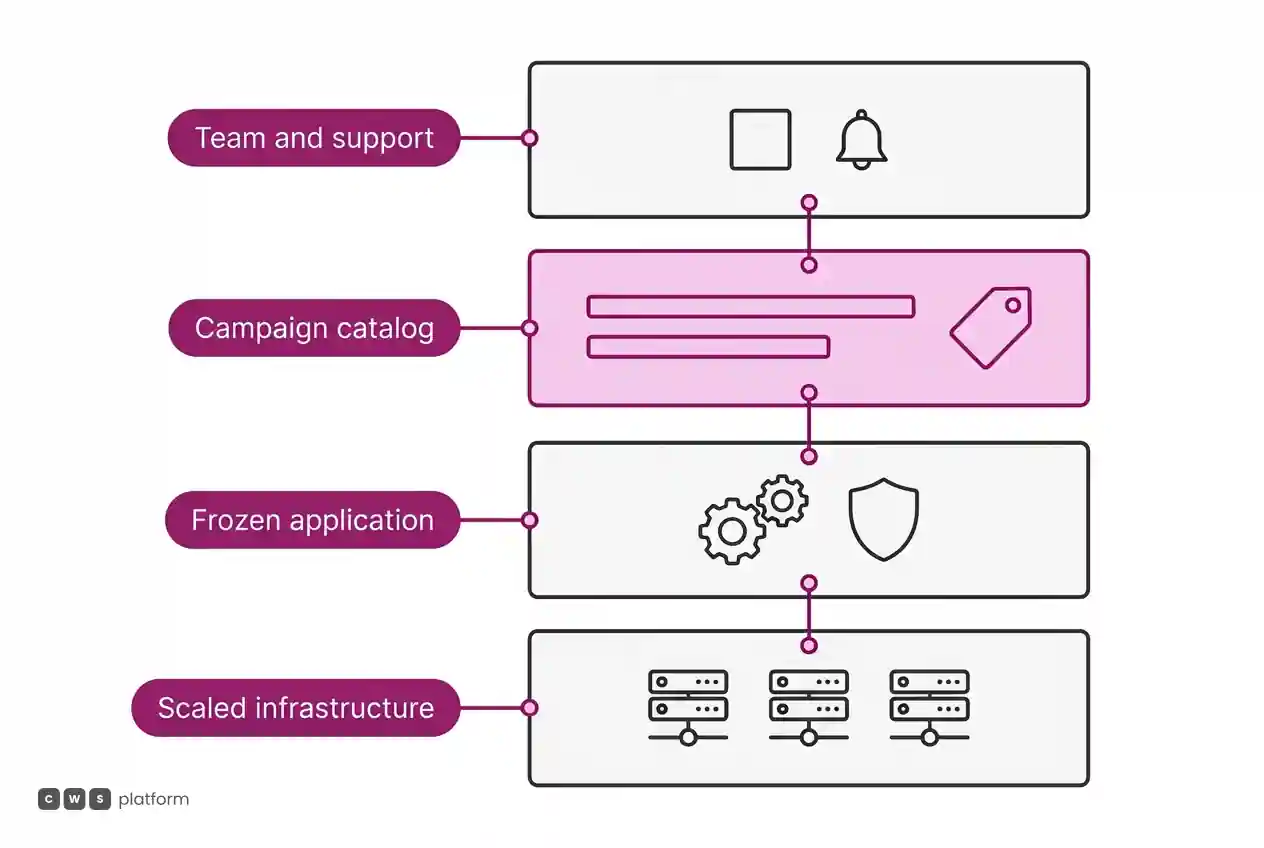
In real-world rollouts, peak failures rarely trace back to a single isolated layer. They stem from a lack of alignment: the cloud infrastructure holds up, but the campaign catalog displays incorrect contracted pricing; the catalog is spotless, but tier-1 support has no playbooks; or the portal runs smoothly, yet the live booth demonstration freezes because it shares backend resources with production.
High-stakes commercial launches demand synchronized preparation across infrastructure, software, AI endpoints, and adoption analytics.
Front 1: Infrastructure and Capacity
- Load test the worst-case scenario. Avoid benchmarking against average daily traffic. Test against the peak concurrent user count anticipated during the tightest rush, executing resource-heavy operations such as faceted search, complex cart calculations, and checkout.
- Pre-scale capacity in advance. Schedule cloud instances to scale out well before the launch window opens, rather than waiting for reactive autoscaling policies to trigger after users experience latency. Operational stability depends on proactive headroom.
- Audit third-party dependencies. Credit limit checks, real-time freight quoting, automated tax engines, and payment gateways operate under their own rate limits. Your digital portal is only as fast as its slowest external API call.
Front 2: Application and Change Management
- Enforce a strict code freeze. In the days leading up to the launch, allow only critical bug fixes into the release pipeline. Ship no new features or structural updates on the eve of a major event.
- Implement business-centric telemetry. Look beyond CPU utilization, memory pressure, and server response times. Configure alerts for failed ERP order ingestions, checkout exception spikes, and empty search queries.
- Audit and tune AI agents. If the portal leverages AI for automated customer service or catalog recommendations, verify that models are grounded on current promotional pricing and stock rules, and confirm API rate limits accommodate the anticipated volume.
Front 3: Campaign Catalog and Pricing Rules
- Audit campaign SKUs item by item. Double-check wholesale price lists, tiered volume tiers, available inventory, product images, and technical specifications. A pricing error during a wholesale rush scales directly with order volume.
- Reserve or allocate stock tiers. If promotional SKUs carry hard caps or limited availability, test allocation and out-of-stock logic ahead of time. For deeper technical architecture, review systems integration in B2B sales, specifically the section on inventory synchronization.
- Codify commercial rules into the platform. Build event-specific discounts, payment terms, and minimum order quantities directly into the platform logic, eliminating the need for manual rep approvals during the rush.
Front 4: Team Readiness and Isolated Demos
- Define event-day shift rosters. Clarify who monitors backend telemetry, who handles direct buyer inquiries, and who owns the call on feature flags or failover protocols. Establish dedicated communication channels and direct phone trees in advance.
- Equip support with standard response playbooks. Document ready-to-use answers for the ten most frequent transactional and account access questions.
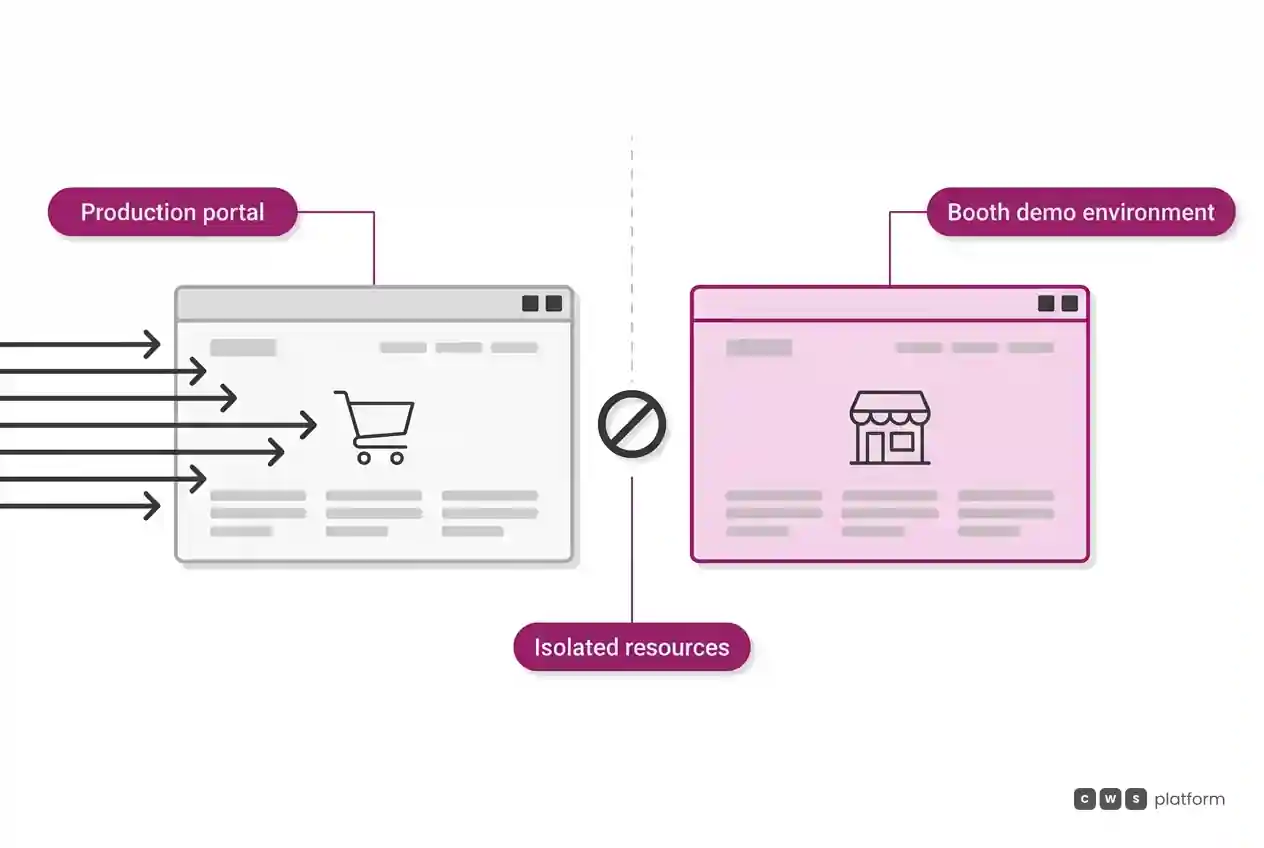
- Isolate the live demo environment. Sales teams presenting the portal at an event booth need a dedicated staging environment provisioned with independent sandbox data and isolated compute resources. A crashing demo in front of a major prospect damages credibility, while testing live transactions in production introduces unneeded operational risk.
The Metrics That Validate the Peak
Spike events generate raw traffic, but business value lies in what sustains once the rush settles:
- First-time digital orders placed by accounts onboarded during the event.
- Digital reorder rates from those buyers across subsequent weeks and quarters.
- Orders escalated back to field reps, which pinpoint exact friction points in the digital self-service experience.
Establishing baseline tracking for these indicators before launch ensures peak campaigns build an ongoing base of profitable, active accounts.
Next Steps
Identify your next scheduled commercial peak and map out the remaining weeks. If the launch is less than a month away, prioritize stress testing and SKU auditing, as both require significant lead time. To explore an enterprise portal designed for frictionless self-service purchasing with account-specific terms, visit the B2B digital sales portal page.
Frequently Asked Questions
How do you prepare a B2B e-commerce platform for peak traffic?
Execute load testing based on worst-case concurrent user spikes, pre-scale cloud infrastructure before the launch opens, review third-party API limits, enforce a code freeze, and track real-time business telemetry like ERP order intake rather than just server load.
What catalog data should be audited before a wholesale B2B campaign?
Verify tiered pricing tables, customer-specific terms, available inventory levels, product photography, and descriptions for every campaign SKU, while validating platform automation for allocation caps and promotional order minimums.
Why should event demo environments be isolated from production?
Isolating demo sandboxes prevents field presentations from degrading due to shared production resource spikes, while protecting production databases from rogue test orders entered during live sales conversations.
How do you measure success after a B2B peak ordering date?
Track first-time digital orders captured during the window, account reorder velocity over the following 30 to 90 days, and the volume of transactions that fell back to manual rep workflows due to portal friction.
Related Articles
About This Publication
This article documents architectural and operational standards observed across enterprise B2B portal implementations by CWS Platform. It does not disclose confidential customer identities, specific commercial events, or private performance metrics.
"responsive, technically engaged, and willing to work through complex commercial rules (negotiated pricing, credit, customer-specific conditions) rather than pushing generic answers"
Is every order costing your operation more?
Request an assessment of your operation or talk straight to a specialist, whichever you prefer.
I'd rather get the next articles on the cost of each order
A weekly roundup of new articles on the cost of each order, only in weeks when there is one. No spam, and you can leave in one click.