How to Test a B2B Platform Before Buying: Sandboxing with Real Data and Business Logic
Why generic vendor demos fail and how to validate complex pricing, credit, and sales rep workflows prior to signing

TL;DR
- The test that decides whether to buy a B2B platform runs on your real data and business rules: an actual customer price book, a rep territory, an order clearing credit checks and multi-state tax logic.
- Demos loaded with sample data only show the interface. They never prove whether the platform can handle your exceptions.
- Keeping a dedicated sandbox separate from your staging environment lets you trigger errors and notification flows without risk, exposing bottlenecks well before launch.
- Rep workflows must be tested end to end: dashboard, quoting, customer messaging, and account portfolios operating as a single unit.
Before signing a contract for a B2B platform, ask for a test environment (sandbox) populated with a slice of your real data: accounts, tiered price sheets, discount schedules, credit terms, and multi-location inventory. Then, run the exact edge cases that routinely jam up daily operations, tracking each test order to the point it enters the back office. A standard product tour shows what software can do in theory; a tailored sandbox reveals how your ERP ecommerce integration handles your true operating rules.
Why a Standard Demo Is Never Enough
Vendor demonstrations rely on curated catalogs, dummy accounts, and flat pricing tiers. Everything glides through without friction. The trouble is that your wholesale operation is rarely that clean: one account has negotiated contract rates, tiered volume discounts, and custom payment terms; certain SKUs carry different sales tax jurisdictions or exemption certificates across states; an account executive manages accounts across multiple warehouse regions with conflicting inventory allocation logic.
During software rollouts, post-launch issues almost never stem from the happy path. They emerge from operational edge cases that no one modeled during sales demos. A realistic test environment surfaces these breakdowns before contracts are finalized.
What to Load Into Your Sandbox
A compact, authentic data sample. There is no need to migrate your entire database upfront. Instead, select:
- Ten customer accounts across distinct operational profiles, making sure to include your most complex relationship.
- Specific contract price lists and discounting structures tied to those accounts.
- Fifty to one hundred active SKUs, specifically choosing items subject to complex tax rules or freight classifications across state lines.
- The active customer accounts assigned to one or two sales reps.
- Credit limits, terms, and hold statuses tied to those selected accounts.
Your most problematic daily scenarios. Identify the five order types that produce the most manual rework: orders exceeding approved discount thresholds, accounts hitting credit limits, line items split across regional fulfillment centers, or quotes requiring manager approval. These form your core validation scenarios.
Sandbox and Staging Are Distinct Environments
Integration errors and internal alert triggers should always be tested within a controlled environment prior to go-live. Across projects deployed by CWS Platform, separating staging environments from experimental sandboxes eliminates data pollution and clarifies technical bottlenecks:
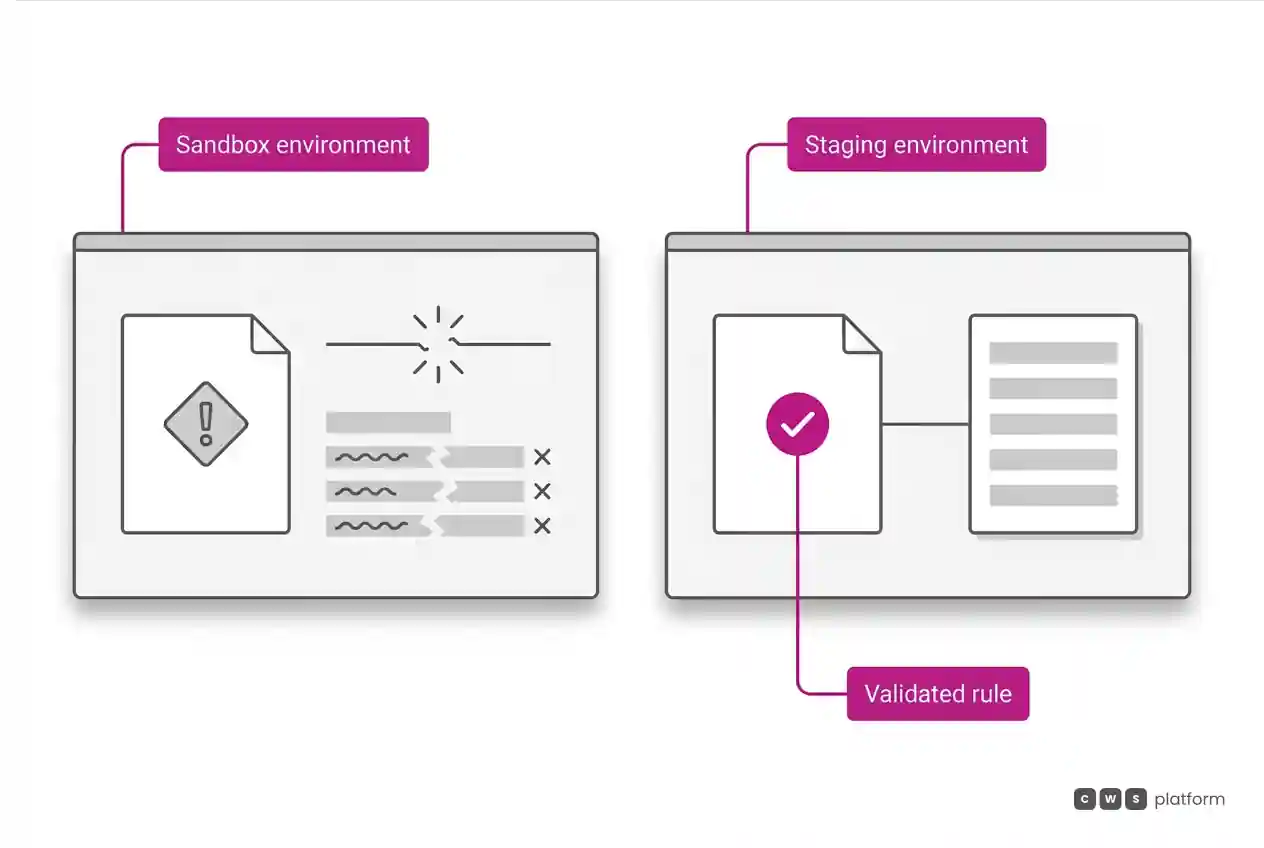
- The Sandbox is an unconstrained space to break things: trigger system failures, fire notifications, and lock customer accounts. Nothing tested here impacts downstream deployment assets.
- The Staging Environment serves as the final dry run: a pre-production replica featuring your active system connections, thoroughly reviewed by operational leads prior to switchover.
Merging both purposes creates clear operational costs. Teams either avoid testing ugly edge cases to keep staging pristine, or they run stress tests that leave junk data throughout an environment meant to mirror production.
Testing the Complete Sales Rep Workflow
Field sales workflows require validation using representative accounts and pricing logic. Merely testing an order entry screen misses how reps actually operate across daily tasks:
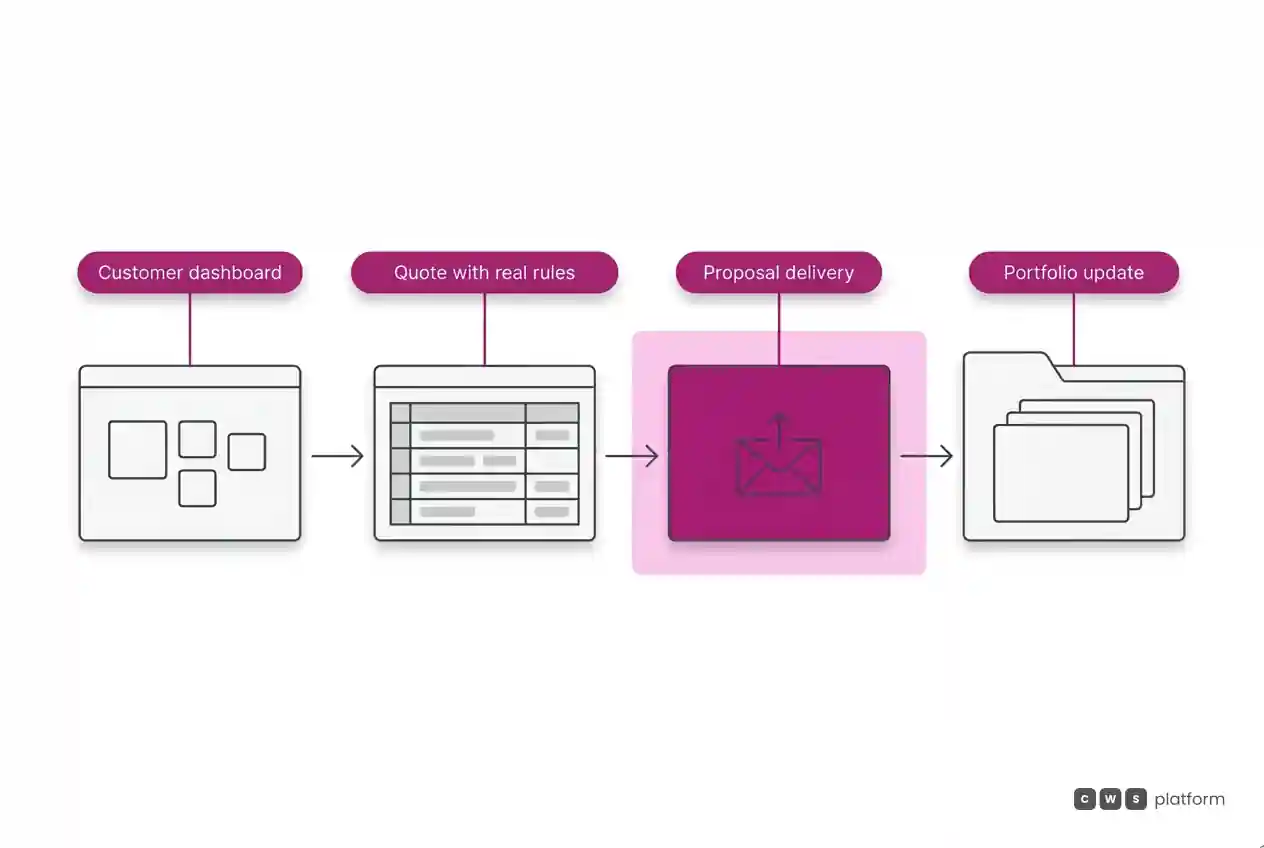
- Dashboard. The rep logs in and sees their specific territory, assigned accounts, and performance indicators.
- Quote Generation. They assemble a formal proposal for a real buyer, automatically applying that client contract pricing and volume discounts.
- Outbound Communication. They dispatch the quote directly to the customer through their preferred communication channel.
- Account History. The proposal updates the customer profile, and once approved, routes cleanly into the assigned rep pipeline.
When any of these steps run on placeholder data, you validate a workflow destined to collapse during live operations. Representative dashboards, CPQ features, messaging, and account ownership must work in concert prior to rollout. Rep enablement within the ordering portal is covered in assisted sales.
How to Evaluate Your Test Results
Once sandbox testing wraps up, four concrete questions demand clear answers:
- Did your five complex edge cases process according to business rules without manual intervention?
- Did incoming orders translate into the exact payload your ERP ecommerce framework requires, including accurate sales tax and terms?
- Could a sales rep complete a full day of routine tasks, from territory reviews to finalized quotes?
- Did intentional system errors trigger proper notifications to the appropriate team members?
If the answer to any point is no, determine whether resolving it requires routine configuration or bespoke development. That distinction dictates delivery timelines and operational budgets. Deciding which connections to build first is addressed in B2B system integration.
Next Step
Before scheduling your next software evaluation, document the five transaction scenarios that trigger the most manual handling in your business and require vendors to run them in a sandbox loaded with your operational data. How a software vendor responds to that request tells you everything you need to know. An architectural breakdown of how CWS Platform structures commercial logic, product catalogs, and transactions can be found on our platform overview page.
Frequently Asked Questions
How should you test a B2B ecommerce platform before buying?
Request a sandbox loaded with a representative slice of your real operating data, including customer profiles, price matrices, credit limits, and warehouse inventory. Run your most difficult order exceptions through the system and verify that output files align with back-office requirements.
What is the difference between a sandbox and a staging environment?
A sandbox is designed for unrestricted testing, error generation, and exception modeling without business risk. Staging provides a production-grade dry run using live integrations to validate system readiness. Keeping them apart protects the environment mirroring production from corrupted test data.
What data should be used to test an enterprise B2B platform?
Ten customer accounts reflecting distinct operational complexity, corresponding contract price sheets, fifty to one hundred SKUs featuring varied tax profiles, one or two sales rep territories, and actual credit parameters. Keep the volume small, but ensure the logic is authentic.
How do you evaluate sales rep workflows on a wholesale platform?
Review the entire operational cycle: portfolio visibility, quote creation using custom account terms, proposal delivery, and account ledger updates. Testing order entry alone risks approving software that fails reps in the field.
Read Also
About This Publication
This article reflects operational patterns identified across enterprise B2B portal deployments handled by CWS Platform. It does not disclose client identities or confidential business performance data.
"responsive, technically engaged, and willing to work through complex commercial rules (negotiated pricing, credit, customer-specific conditions) rather than pushing generic answers"
Does your implementation never end?
Request an assessment of your operation or talk straight to a specialist, whichever you prefer.
I'd rather get the next articles on implementation
A weekly roundup of new articles on implementation, only in weeks when there is one. No spam, and you can leave in one click.