B2B Customer Portal Onboarding: Credentialing, Accounts, and Dealer Approvals Without Go-Live Delays
Account data friction and missing commercial policies derail digital adoption at launch. Here is how to secure rollouts.

TL;DR
- B2B portal go-lives typically stall on first-time access, not system integration: customers cannot log in, passwords expire, account records are outdated, or no one has decided who can buy and under what terms.
- First-time access, password expiration and resets, credential revalidation, and master data confirmation are recurring operational tracks. They require clear owners and business rules before launch day.
- Integrating systems is not enough as long as the business has not defined which channels and distributors are authorized, which accounts they serve, and under what conditions.
- Solving these operational details before go-live prevents the "almost done" trap that turns into months of master data cleanup.
To keep first-time access from derailing your B2B portal go-live, three prerequisites must be resolved prior to launch: the access workflow (invitations, credential creation, password resets, expiration, and periodic revalidation), master data confirmation for every customer account, and clear business rules governing who can buy what, through which channel, and under what terms. Login technology is the easy part. What actually creates delays are unresolved commercial decisions and customer master records that nobody bothered to audit.
Why Go-Lives Stall on First-Time Access
In real-world rollouts, the portal gets built, the integration passes testing, and the entire first week post-launch is consumed by support tickets that have nothing to do with placing orders:
- "I never received the welcome email."
- "My temporary password expired, and I cannot reset it."
- "The EIN or Tax ID displayed belongs to another entity," or "the shipping address is wrong."
- "I can log in, but I cannot see the catalog or negotiated pricing we usually buy."
Every single one of these tickets represents a customer who tried to adopt the digital portal and retreated back to phone calls and emails. First-time access carries the highest purchase intent, but it also suffers the highest abandonment rate when friction arises.
First-Time Access, Passwords, and Revalidation: Critical Operational Tracks
Invitations and onboarding. Who receives the invitation, through which channel, and what happens if the registered email is invalid or out of date. The most effective approach is having sales reps verify primary contacts before invitations go out, then actively follow up during the initial login.
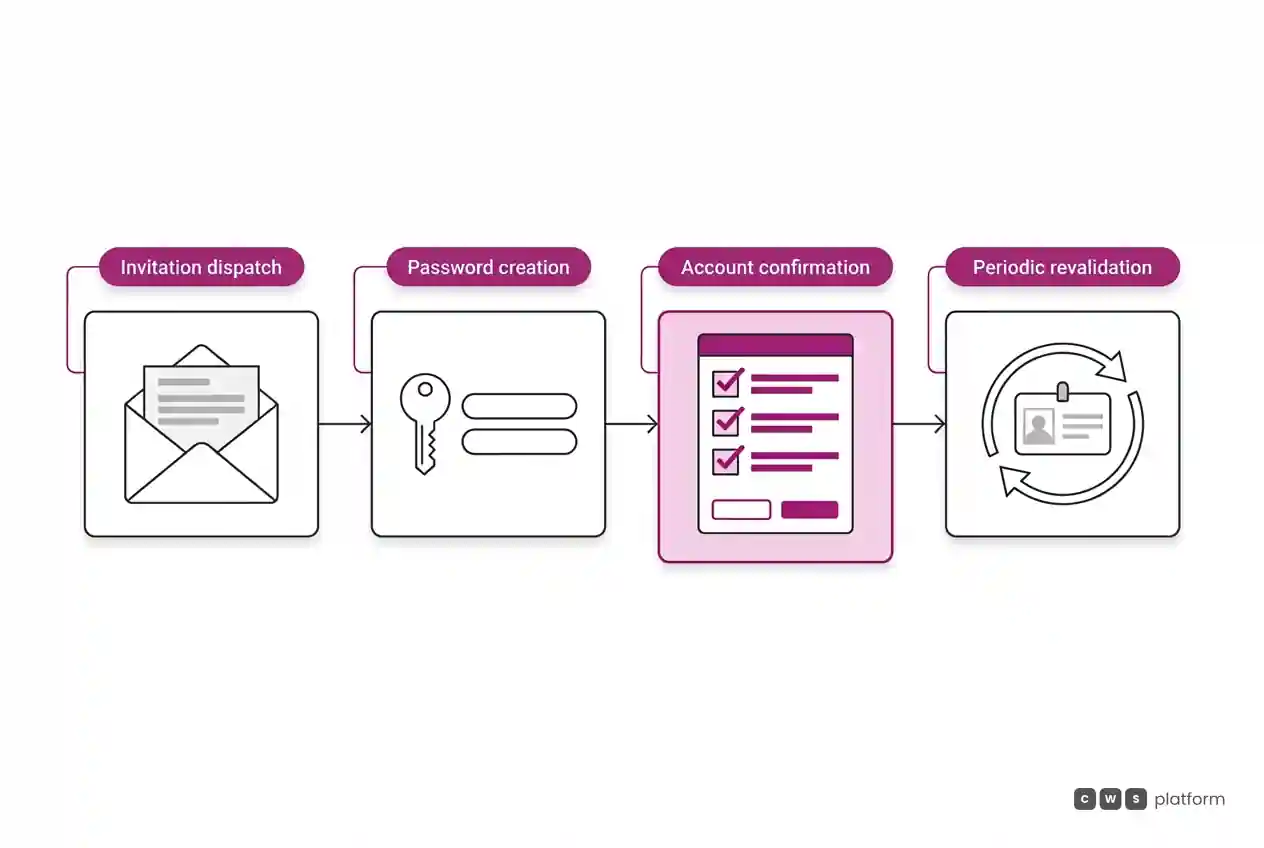
Password expiration and self-service resets. Passwords that expire without advance warning paired with reset flows that depend on manual IT support generate tickets every single week. Password resets must be frictionless and fully automated, and expiration warnings should be delivered well in advance.
Credential revalidation. Buyers who leave a customer company often retain active portal access. A standard operational cadence to revalidate who holds purchasing authority for a given corporate account (for example, every six months, or whenever an account executive flags organizational turnover) safeguards both your business and the client.
Master data confirmation. Shipping addresses, tax exemption certificates, state tax IDs, purchasing leads, and accounts payable contacts. Asking the customer to review and confirm these records during first-time login resolves in minutes what would otherwise take months of manual, order-by-order corrections.
Authorizing Resellers and Dealers: A Commercial Decision, Not a Technical One
The single biggest roadblock in indirect channel rollouts sits right here. System integration achieves very little until leadership explicitly defines which channels, distributors, or dealers are authorized, which accounts each partner serves, and under what contractual conditions.
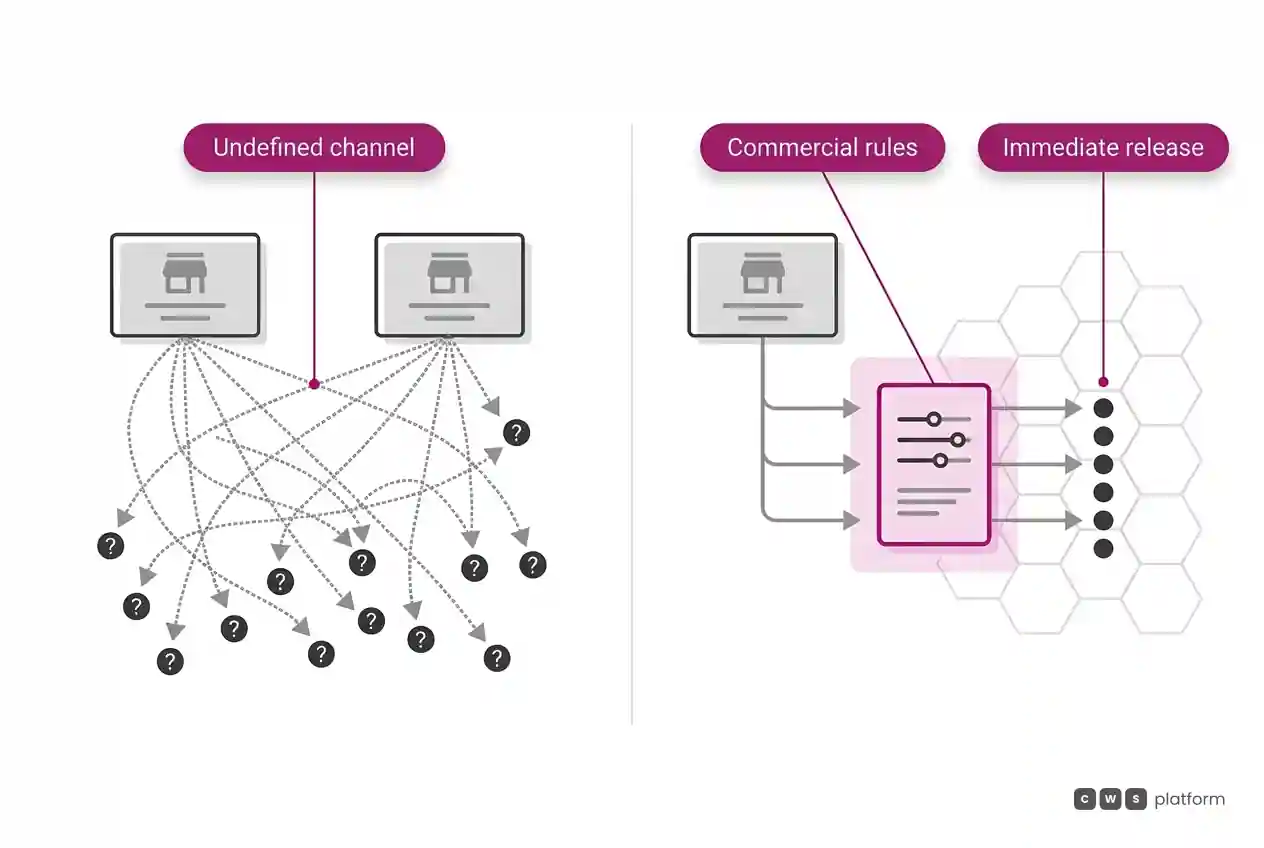
Without these explicit definitions, the portal remains perpetually "almost ready." The technical pipeline works, but every dealer onboarded raises questions no policy has resolved: Can they sell outside their primary assigned territory? Do they get access to the same price list as direct accounts? If a customer previously ordered through a distributor, are they permitted to purchase directly from the manufacturer? The entire rollout deteriorates into endless reconciliations between ERP records, conflicting channel policies, and legacy exceptions.
Prior to go-live, the checklist of commercial decisions is straightforward, but it must be finalized:
- which dealers and distributors enter the first rollout wave;
- what territory or account book each partner is authorized to serve;
- which price tiers, discounts, and payment terms apply to each;
- how accounts served by multiple overlapping channels are routed.
Once documented and enforced through software, these business rules allow new partner onboarding to happen simultaneously with account approval. A structured approach to configuring commercial logic for automated execution is detailed in the CDL Workspace.
A First-Time Access Playbook That Works
- One week before launch: Sales reps verify contact details and account master data for every customer included in wave one.
- On launch day: Personalized invitations are sent, reinforced by a quick call or message from the assigned account rep.
- During the initial login: The customer verifies corporate addresses, tax exemption status, and billing contacts before setting permanent credentials.
- Throughout week one: The commercial team tracks who received invitations but failed to log in, proactively reaching out to remove roadblocks.
- Ongoing: Fully automated password resets, advance expiration notices, and scheduled credential revalidation.
Next Steps
Before locking in your go-live date, pull a random sample of twenty customer accounts and audit their primary email addresses, billing and shipping locations, and tax identification numbers. If more than two records contain inaccuracies, the top priority on your project roadmap is customer master data hygiene, not UI tweaks. To see how buyers access personalized pricing and contract terms online, explore the B2B digital sales portal, and review baseline architecture priorities in systems integration in B2B sales.
Frequently Asked Questions
Why do B2B portal go-lives get delayed?
Delays most commonly stem from first-time access friction and dirty customer master data: obsolete email addresses, unmanaged password expirations, outdated account details, and unmapped channel conflict rules. System integrations are frequently ready long before these commercial policies are resolved.
How should businesses manage first-time customer onboarding on a B2B portal?
By verifying contact records and account details prior to sending invites, having sales reps personally notify buyers, and prompting customers to validate shipping locations, tax status, and billing contacts upon their first login. During launch week, teams should proactively monitor and follow up with unactivated accounts.
How do you authorize dealers and resellers on a B2B portal?
By establishing clear upfront rules: define which partners launch first, their assigned territories or account books, their respective price tiers and payment terms, and the governance policy for multi-channel accounts. When these business rules are codified in your platform, partner activation occurs automatically as soon as onboarding is approved.
How often should buyer access credentials be revalidated?
Periodically, typically every six months, as well as whenever an account rep detects personnel turnover at the customer company. Former purchasing managers who leave an organization often retain access indefinitely unless an automated or enforced revalidation protocol is in place.
Read Also
About This Publication
This article outlines real-world implementation patterns observed during B2B portal deployments by CWS Platform. It contains no customer names, proprietary branding, or unverified performance figures.
"responsive, technically engaged, and willing to work through complex commercial rules (negotiated pricing, credit, customer-specific conditions) rather than pushing generic answers"
Does your implementation never end?
Request an assessment of your operation or talk straight to a specialist, whichever you prefer.
I'd rather get the next articles on implementation
A weekly roundup of new articles on implementation, only in weeks when there is one. No spam, and you can leave in one click.