One System for the Whole Ecosystem: How Many Tools Does Your Team Need to Learn?
The tools each vendor documents by role and how CWS Platform treats the same point.

A B2B channel is not operated by one person alone. There is someone who registers products, someone who publishes content, someone who handles campaigns, someone who follows orders, and someone who integrates systems, and in a marketplace there are also the sellers' teams. Each of these roles uses a tool, and the question of this text is how many tools your operation would have to learn.
We gathered what the public documentation of SAP, Salesforce, and Adobe records about the tools for each role, and we describe how CWS Platform treats the same point. Counting tools does not say which platform is the right one. It says how much training and how much coordination enter the project.
What each vendor's documentation records
SAP. In SAP's own training material, Backoffice is described as the principal tool of business users, with specialized interfaces by role: the text lists the Administration Cockpit, the Product Cockpit, the Adaptive Search perspective, the Customer Support Cockpit, the Order Fulfilment Cockpit, and the Integration UI Tool. Web content is managed in SmartEdit, presented as the content management tool of SAP Commerce Cloud. Build and deployment go through the SAP Commerce Cloud Portal. The marketplace is a separate product, SAP Commerce Marketplace Management by Mirakl.
Salesforce. In B2B Commerce, portals are created with Lightning components and Experience Builder. Order management appears as its own product, Salesforce Order Management, with which the store integrates. B2B marketing automation is Marketing Cloud Account Engagement, and integration with other systems is documented with MuleSoft. Part of this set came from 2018 acquisitions: Salesforce completed the purchase of CloudCraze, a B2B commerce platform built on Salesforce, and announced the agreement to acquire MuleSoft.
Adobe. The Commerce Admin is the place where the merchant sets up products and promotions and manages orders. Content can be managed in Adobe Experience Manager, connected to commerce by the Commerce Integration Framework. Marketing automation is Adobe Marketo Engage. Customizations run outside the Commerce process, as App Builder applications. For a marketplace with several vendors, Adobe's own blog advises using a marketplace extension.
How CWS Platform treats the same point
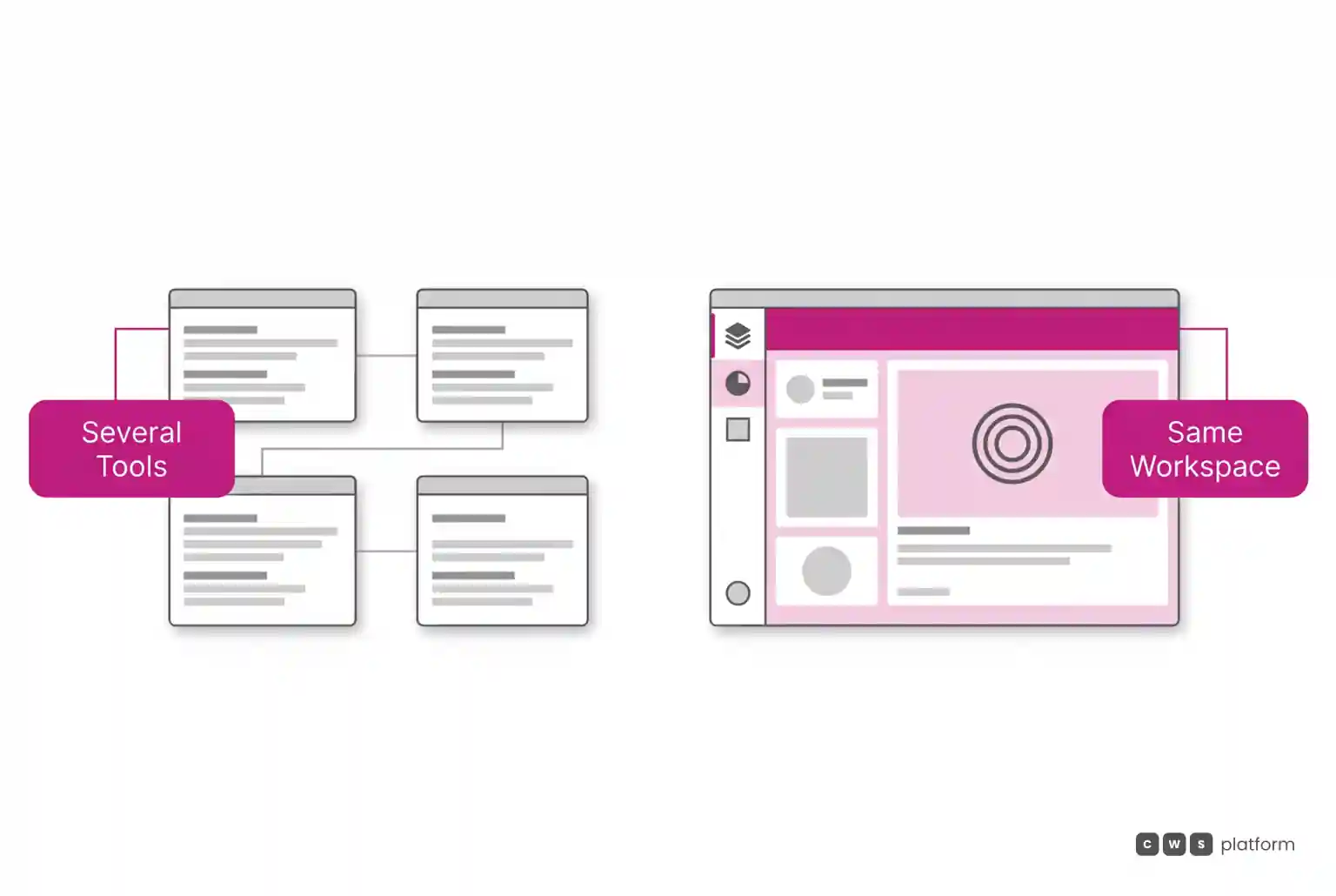
On CWS Platform, all users of the ecosystem use the same CDL Workspace: the portal owner, sellers, store managers viewing orders, marketing for campaigns, and the product team for registration, both in the portal owner's team and in the sellers' teams. Customer and seller use the same system and the same interface.
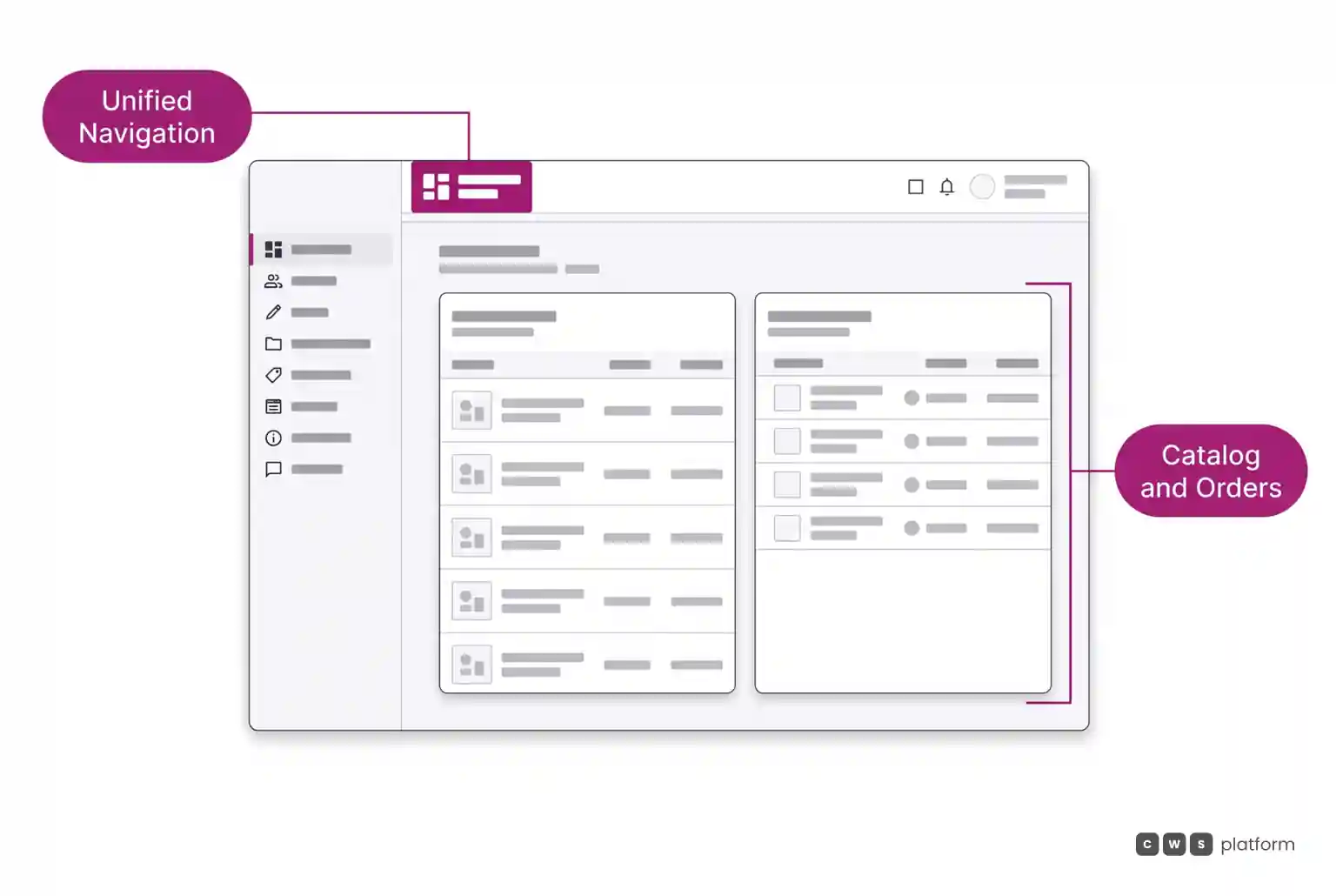
This reduces the cost of learning and of training, makes it easier to find people who already know the system, and reduces the cost of implementation.
| role | what the vendors' documentation records | CWS Platform |
|---|---|---|
| Product registration | At SAP, the Product Cockpit. At Adobe, the Commerce Admin. | CDL Workspace. |
| Content and storefront | At SAP, SmartEdit. At Salesforce, Experience Builder. At Adobe, Experience Manager. | CDL Workspace. |
| Campaigns and marketing | At Salesforce, Marketing Cloud Account Engagement. At Adobe, Marketo Engage. | CDL Workspace. |
| Orders | At SAP, the Customer Support Cockpit and the Order Fulfilment Cockpit. At Salesforce, Order Management. At Adobe, the Commerce Admin. | CDL Workspace. |
| Marketplace with sellers | At SAP, Marketplace Management by Mirakl. At Adobe, a marketplace extension. | Sellers use the same CDL Workspace. |
What to ask before signing
How many systems do your team and your sellers need to learn to operate the channel? Who trains each role, and how long does it take until a new person is productive?
When it makes sense to stay in the SAP, Salesforce, or Adobe ecosystem
Nothing above is, by itself, a reason to change platforms. There are scenarios in which staying in the ecosystem is the right decision.
A company already standardized on SAP. When the organization operates under global corporate guidelines and contracts already signed with the vendor, the edition connected to the back end synchronizes master data and invoices in a structured way, on the clean core strategy.
A commercial operation built on Salesforce. When pipeline, territories, and revenue splitting among teams already live in Sales Cloud, keeping commerce in the same ecosystem preserves that design.
A purchasing structure delegated to the customer, on Adobe. When the buyer company needs to manage its own divisions, users, and purchasing roles, the company accounts of Adobe Commerce resolve this natively.
Where to go from here
If your question is still which architecture fits your operation, and not which vendor to choose, the path is the seven questions that separate B2B commerce architectures.
Brands mentioned in this article

- Salesforce
- SAP Commerce Cloud
- Adobe Commerce
Trademarks and logos belong to their respective owners. Mention does not imply partnership or endorsement.
"responsive, technically engaged, and willing to work through complex commercial rules (negotiated pricing, credit, customer-specific conditions) rather than pushing generic answers"
Want to see this in your operation?
Real B2B operations already run on it.