What Independent Retailers Actually Want in a B2B Ordering App
Complex wholesale portals fail when they ignore operational simplicity, human support, and the daily hustle of small business owners.
TL;DR
- Small retail buyers do not want an all-in-one system. They want to order fast, reach a real person when an issue arises, and get help marketing products on social media.
- Complex inventory tools push them away: they run their store their own way and will not trade that for a dashboard packed with fields.
- Product descriptions drive the purchasing decision, because they cannot physically inspect the item.
- App adoption happens through on-the-ground presence: field reps and in-person showroom support get the merchant to install, place the first order, and return.
In a wholesale ordering app, the independent discount retailer wants three things: fast purchasing with accurate product details, real human support when needed, and assets to promote what they buy on social media. They reject complex inventory management tools, and they adopt an app when someone on-site walks them through it. Anyone designing this app like an enterprise ERP interface loses this buyer.
Who is the independent retail buyer
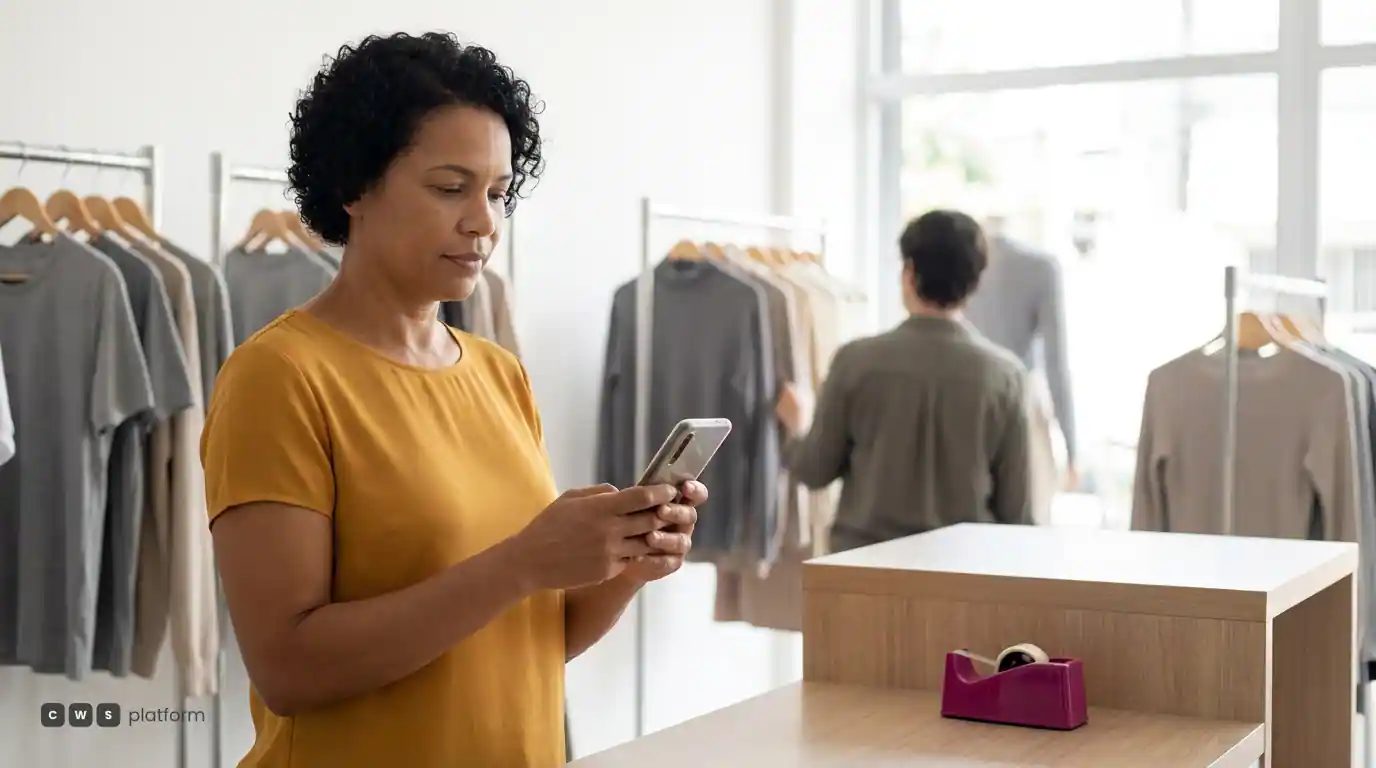
This is the owner of a small shop, often selling fashion, accessories, or general merchandise, who sources from wholesale garment districts or trade hubs to resell locally. They handle almost everything alone: sourcing, merchandising, customer service, social media posting, and managing the cash register. Their time is short and constantly divided.
Across deployments of B2B apps for this audience, the behavioral pattern repeats itself, and it runs counter to what many expect from a "B2B app."
What they value
Human support. When an order runs into an issue, they want to speak with a person immediately. A chatbot with canned responses will not cut it. A person on the other end who knows the vendor and understands what is happening with the order is an essential part of the product.
Help selling on social media. Their primary storefront is their smartphone. High-quality product photos, ready-to-use captions, and tips on structuring posts are worth far more than an analytics report. The app that helps them sell through their inventory is the app they open every day.
Product descriptions that seal the deal. They cannot hold the physical item. Fabric type, exact measurements, material blend, fit details, and package contents: detailed specifications replace touch. Thin descriptions create hesitation, and hesitation triggers support tickets or abandoned carts.
Fast reordering. They purchase the same core size runs and SKU packs repeatedly. Placing a repeat order in just a few taps is what makes the app beat an in-person trip to the wholesale showroom.
What they reject
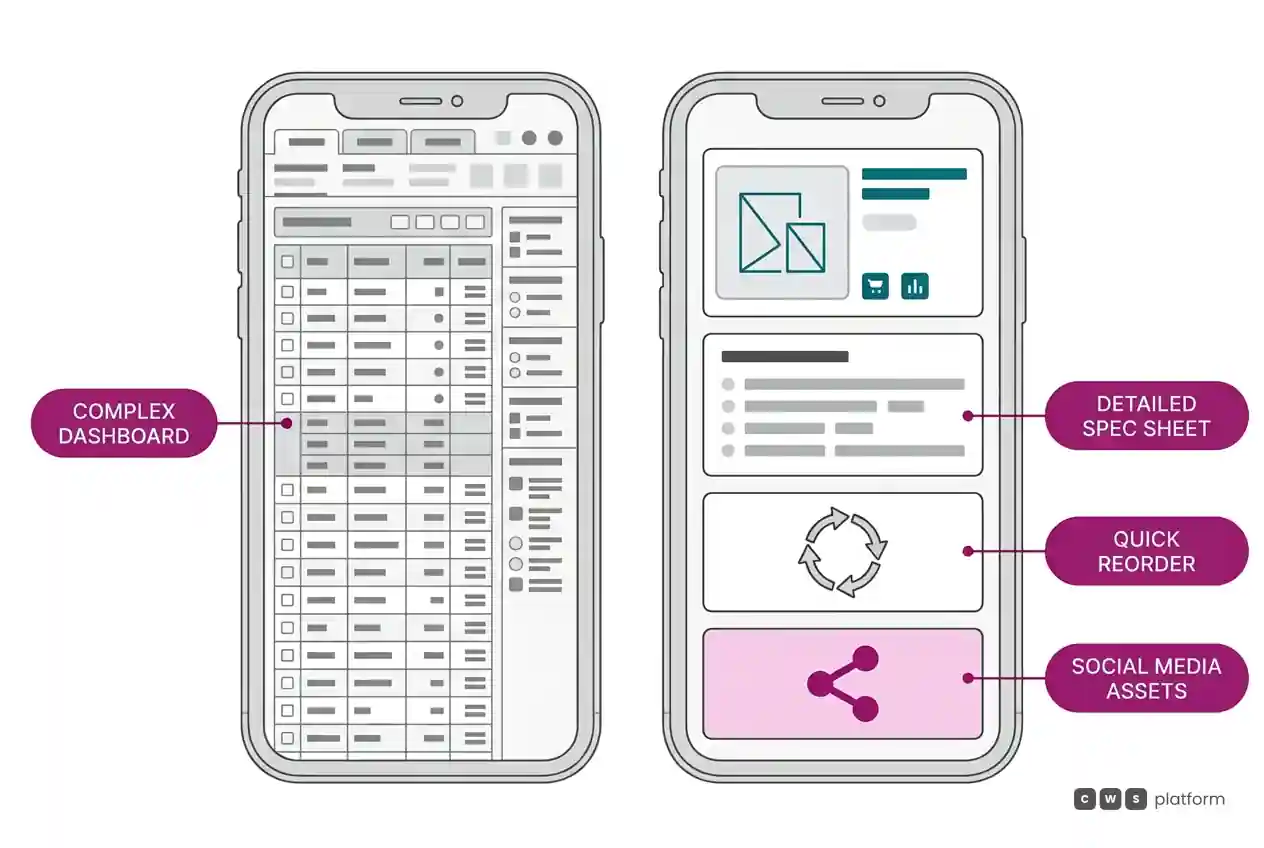
Complex inventory management. Administrative dashboards with dozens of input fields, granular stock counts, and reports that require training to interpret. These shop owners manage their stores their own way, often intuitively or in a simple notebook, and they will not swap that for software that feels like extra work.
That does not mean they do not need information. It means the information must arrive ready to use at the right moment: "this item sold fast on your last purchase," or "the prepack size run you always order is back in stock," rather than a heavy management interface.
How adoption actually happens
For this audience, an app does not scale through digital ads alone. Physical presence makes all the difference:
- Brand ambassadors at the showroom or trade hub. A representative who demonstrates the app, helps install it, and guides the merchant through their first order on the spot.
- Support that carries over into the app. The account rep they met in person is the same contact answering inside the app. Small merchants rely on people they know and trust.
- An incentive on the first order. A compelling reason to submit that initial order through the app instead of at the checkout counter.
Digital complements the in-person relationship. It does not replace it. Apps that attempt to bypass this step end up installed once and quickly forgotten.
What this changes in app design
- Fewer features, executed better. A clean catalog, rapid ordering, one-tap reorders, and real human support.
- Social media assets alongside the product. High-resolution images and pre-written copy ready for the retailer to post.
- Product descriptions as the core catalog priority. Copy and specs must replace physical touch.
- Actionable insights, not administrative tools. Simple prompts instead of multi-tiered analytics dashboards.
How CWS Platform designs ordering workflows for wholesale retail and apparel is detailed on our fashion wholesale solutions page, and how high-volume distributors serve small independent retailers is covered in distributor solutions.
Next step
If you sell to small independent merchants, audit how many features your app has and how many are actually used. Then ask five active buyers what would get them to open the app every single week. Their answers almost always boil down to three things: order fast, reach a real person, and get content they can post.
Frequently asked questions
What does an independent retail buyer expect from a wholesale app?
Fast purchasing with thorough product details, access to human support when issues surface, frictionless reordering, and promotional material to help resell items on social media.
Why do small merchants avoid inventory tools inside wholesale apps?
Because they run their operations largely on their own using simple, familiar routines. A complex dashboard adds administrative friction. They prefer straightforward, contextual buying prompts over management tools.
How do you increase B2B app adoption among small retailers?
Through physical onboarding: field reps or showroom staff who help install the app, walk through the first purchase, and maintain that same relationship within the digital channel.
Why are detailed product descriptions so critical in digital wholesale?
Because buyers cannot feel the merchandise. Fabric weight, dimensions, material composition, and pack configurations must compensate for the lack of touch. Incomplete details introduce doubt and cause dropped orders.
Read also
- How to choose a distribution management system: five stress tests with a real order
- Wholesale account activation: why accounts stop buying when reorders depend on sales reps
About this publication
This article covers behavioral patterns identified during digital channel rollouts by CWS Platform. It contains no client names, specific trade districts, or proprietary financial metrics.
"responsive, technically engaged, and willing to work through complex commercial rules (negotiated pricing, credit, customer-specific conditions) rather than pushing generic answers"
Do your customers buy once and disappear?
Request an assessment of your operation or talk straight to a specialist, whichever you prefer.
I'd rather get the next articles on repeat purchases
A weekly roundup of new articles on repeat purchases, only in weeks when there is one. No spam, and you can leave in one click.