B2B Trade Credit: How Limits Win the First Order and Stall the Second
Relying on credit cards inflates acquisition costs, while rigid net terms create silent churn on repeat purchases.

TL;DR
- In B2B, a credit limit is what allows a new customer to place their first order on the portal without relying on a credit card or upfront payment.
- That same credit limit can stall reorders: the onboarding limit fails to grow with the customer, the campaign that acquired them offered terms that credit underwriting does not recognize, and the second order gets stuck.
- When this happens, no one connects the lost revenue to credit. Marketing sees a customer who churned; finance sees a blocked order.
- The solution is treating credit as part of commercial policy: campaign terms, credit limits, and review rules all communicating in the same place.
A credit limit unlocks the first B2B purchase because it allows new buyers to order through the portal on net terms, without corporate cards or prepayment. Yet it can easily block the second order when the initial limit does not scale with order volume, or when the promotional terms used to acquire the buyer are not applied during reorders. For repeat purchases to happen, credit, marketing campaigns, and commercial terms must follow a single, unified policy.
Why Credit Drives B2B Customer Activation
B2B buyers rarely pay with corporate credit cards. They purchase on net terms: invoicing with trade credit (Net 30, Net 60), based on negotiated payment terms. For a new customer, this creates a major hurdle. Without an approved credit limit, they cannot place their first order on the portal, forcing them back to an offline sales rep who handles terms manually behind the scenes.
Across implementations delivered by CWS Platform, trade credit limits serve as the operational lever that enables initial customer activation without relying on cards. A starter limit, granted through a simple rule, allows the buyer to place that initial order and experience the portal. This approach minimizes launch dependencies, eliminating the need to integrate complex merchant card processing just to onboard a buyer, but it requires tight alignment between commercial scope and backend integration: who grants credit, under what logic, and how the limit synchronizes with the ERP and finance.
To explore how trade credit works inside the portal, see B2B invoiced payment on net terms.
How Credit Limits Stall the Second Purchase
The first purchase goes through seamlessly. The second one hits a wall. Three common breakdown points explain most of these drop-offs.
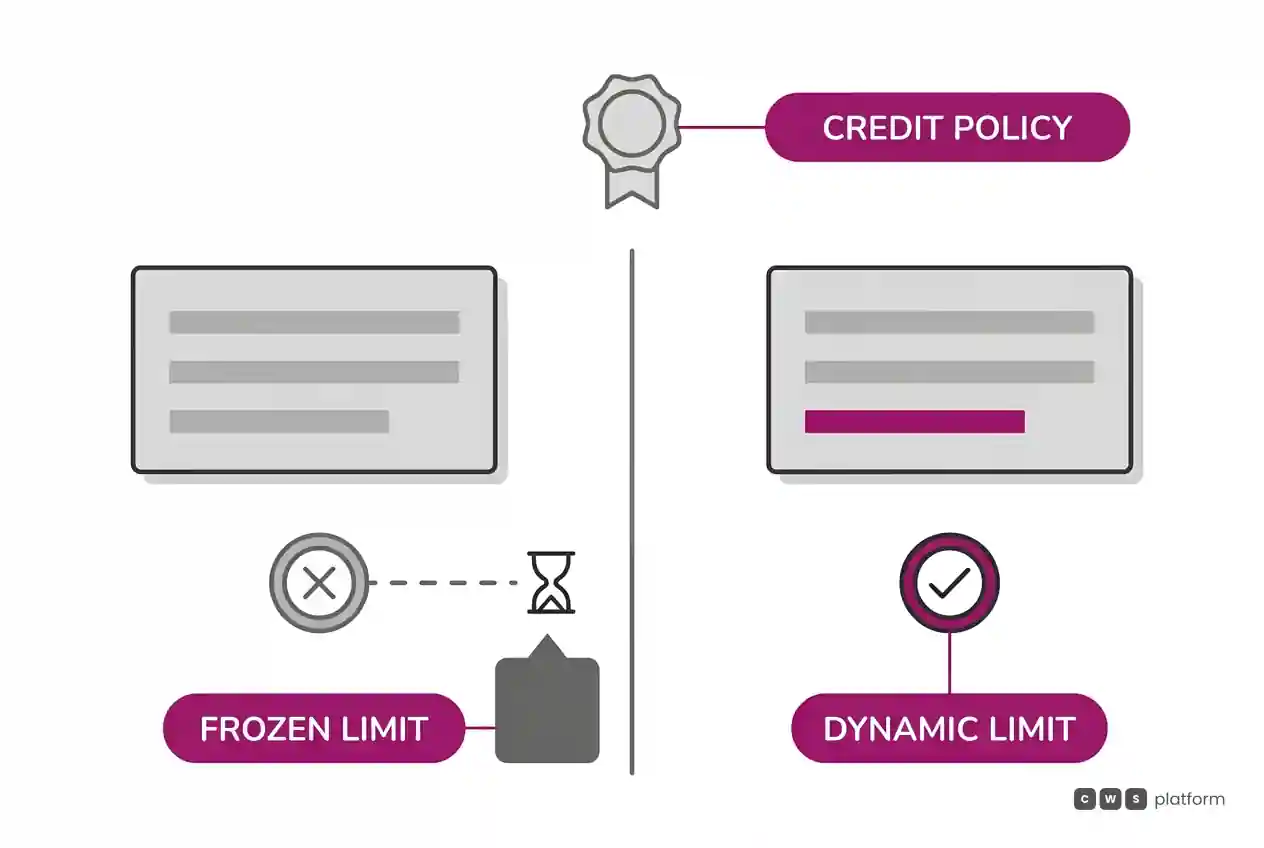
The entry limit stays frozen. The customer received a modest starter limit for their first order. For their second purchase, they want to buy larger volumes, pushing the order into manual underwriting review. The review stalls, leading the buyer to turn to an alternative supplier or call their sales rep.
Marketing campaigns and credit underwriting are disconnected. Marketing acquired the customer with an incentive: extended net terms or streamlined onboarding. While automated credit assessment accelerates that initial purchase, the repeat order encounters conflicting business rules if campaigns, limits, and customer-specific terms do not share a single policy engine. The promised payment terms vanish, or the order gets held up by underwriting rules the customer never agreed to.
The credit hold provides zero context. The order sits in "under review" status without clear messaging, a defined timeline, or alternative checkout options. The procurement buyer has no way of knowing whether to wait, wire an advance payment, or pick up the phone.
Why This Churn Goes Unnoticed
The outcome is silent account churn. Marketing logs an acquired customer who failed to reorder. Finance logs an order on hold due to credit limits. Sales assumes the customer simply preferred doing business offline. Each department only sees its own siloed metric, and no one traces the churn back to credit friction.
When companies look to fix this by swapping out technology or deploying new credit scoring models, they look in the wrong place. The competitive edge does not come from the credit scoring model itself. It comes from the operational consistency of the checkout rules that support the commercial promise made to the buyer.
How Credit Drives Consistent Reorders
1. Credit limits that scale with payment history. Establish clear review rules: after N invoices paid on time, the customer credit limit increases automatically up to a defined ceiling, bypassing manual approval queues.
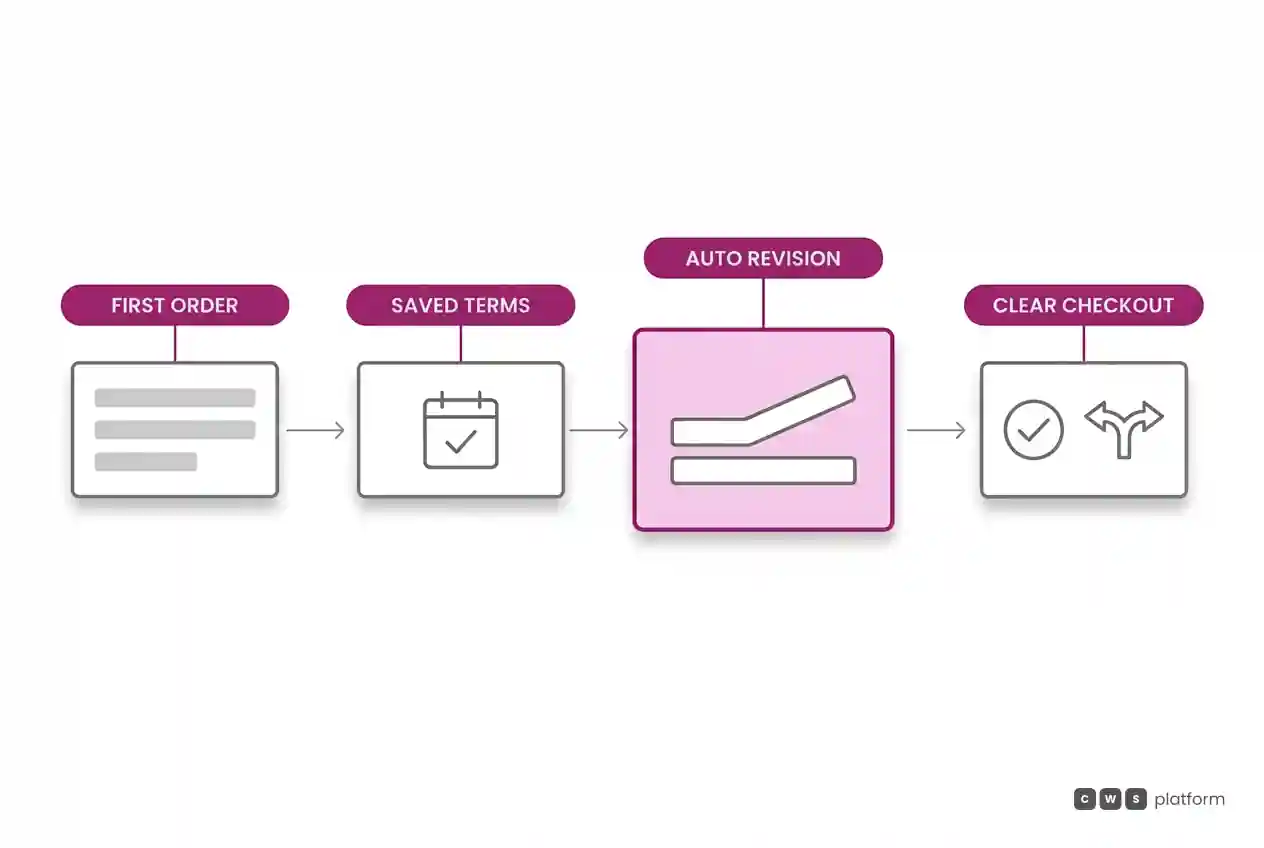
2. Campaign terms tied directly to the customer account. If a buyer onboarded under custom terms, those payment terms must live directly on their account record, with clear expiration dates that underwriting systems automatically respect.
3. Actionable credit holds. When an order exceeds available credit, the portal should explain the issue clearly and provide immediate paths forward: split the shipment, pay a portion upfront via ACH, or request an expedited credit line increase with a guaranteed response window.
4. A single operational view of the buyer. Sales, credit, and marketing must share the same data: current limit, credit utilization, active terms, and blocked orders.
These automated checkout rules are managed directly within Checkout & Payments on the CWS Platform, organizing trade credit, payment terms, and invoicing as core elements of the transaction flow.
Next Step
Pull a report of all accounts that placed exactly one portal order over the last six months, then cross-reference it against orders flagged for credit holds during the same window. The overlap reveals exactly how many buyers your credit policies let in, only to lock them out on the reorder. To see how a digital portal allows buyers to purchase against their assigned terms and limits, visit the B2B digital sales portal page.
Frequently Asked Questions
How do credit limits help activate buyers on a B2B portal?
They allow new business accounts to place their first order on net terms without corporate cards or advance payments. An automated starter limit removes friction from the initial transaction.
Why do B2B customers fail to place a second order on the portal?
A common driver is credit friction: the onboarding limit does not scale with order volume, promotional terms are not recognized on repeat visits, or the order gets held up without clear messaging or payment alternatives.
How can a business increase B2B credit limits automatically?
By defining automated credit review policies based on buying history: after a set number of orders are paid on time, the portal automatically increases the credit ceiling without manual intervention.
What should happen when a B2B order hits a credit hold?
The checkout should display the hold reason and offer practical alternatives: split the order, pay the overage via wire or ACH, or submit an expedited limit increase request with a clear turnaround SLA. An unexplained hold creates churn.
Read Also
- B2B sales process: key stages and where commercial policy fits in
- How to turn your commercial policy into automated business rules
- Commercial governance and executable sales policy
About This Publication
This article outlines implementation patterns observed across B2B digital portal deployments by CWS Platform. It does not disclose client names or specific performance metrics.
"responsive, technically engaged, and willing to work through complex commercial rules (negotiated pricing, credit, customer-specific conditions) rather than pushing generic answers"
Do your customers buy once and disappear?
Request an assessment of your operation or talk straight to a specialist, whichever you prefer.
I'd rather get the next articles on repeat purchases
A weekly roundup of new articles on repeat purchases, only in weeks when there is one. No spam, and you can leave in one click.