B2B Product Data: Maturity Levels That Make a SKU Sellable
How the L1, L2, and L3 funnel turns catalog enrichment into an operational operational goal.

TL;DR
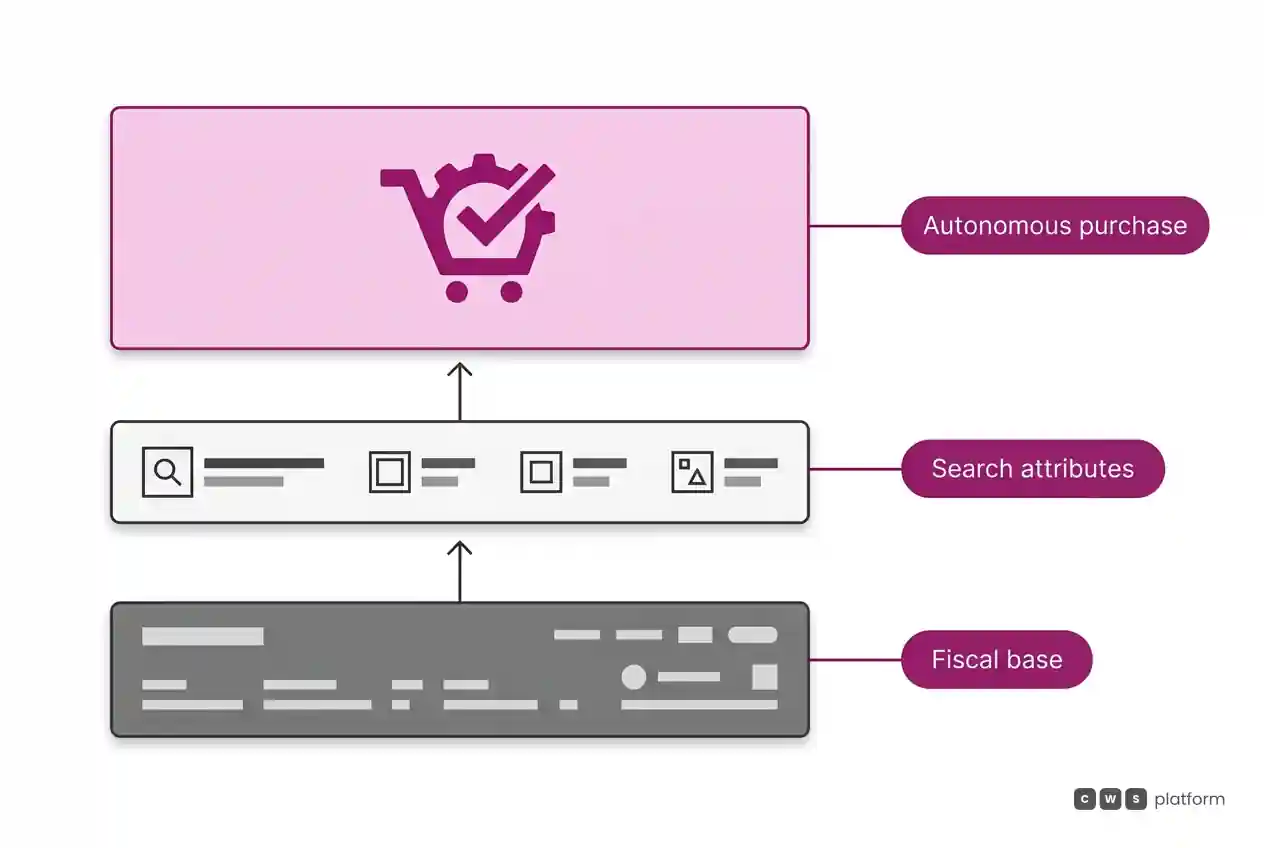
- An entered SKU is not a sellable SKU. Between an item existing in your ERP and a customer finding, understanding, and buying it unassisted, there are three distinct data maturity levels.
- Level 1 is the data required for billing: item code, description, unit of measure, tax classifications, price, and inventory. Level 2 is the data required to be found: imagery, application-driven taxonomy, filterable attributes, and spec sheets. Level 3 is the data required for self-service sales: fitment, cross-references, related parts, and rich technical content.
- The L1, L2, L3 funnel becomes an operational KPI: how many active SKUs sit at each stage and what share of revenue runs through Level 3 items.
- The practical playbook is prioritizing Level 3 readiness by top-grossing items rather than trying to fix the entire catalog at once.
Product data transforms an ERP SKU into a truly sellable product once it passes three maturity tiers: Level 1 lets you invoice it, Level 2 lets buyers find it, and Level 3 lets them order it without picking up the phone. Measuring how many SKUs live in each tier turns catalog enrichment from an open-ended chore into a quantifiable operational target.
The most common complaint following a B2B portal launch is: "customers can't find our products." Almost always, the data is completely accounted for inside the ERP. What is missing is the layer of commercial product content required for the search engine to index it and for the buyer's technical questions to be answered.
Level 1: The SKU That Exists
This is the baseline record the ERP requires to process an order and issue an invoice: item code, internal description, unit of measure, tax codes (such as Harmonized Tariff Schedule or standard tax classifications), price sheet, and on-hand inventory. Every item sold in your business has Level 1 data.
With Level 1 alone, a transaction only happens if the buyer already knows the exact part number. A veteran inside sales rep can write the quote. A new buyer using the digital portal, however, hits a wall: cryptic legacy descriptions (like "TAPER ROL BRG 30205 STD") do not match standard search terminology.
Level 2: The SKU That Gets Found
This tier provides the attributes needed for an item to surface in site search, navigate browse trees, and be compared side by side:
- Standardized imagery displaying the product cleanly.
- Application-driven taxonomy, mapped to how buyers use the part rather than how the warehouse slots it. Read more in B2B catalog taxonomy.
- Faceted search attributes: dimensions, materials, horsepower, finish, voltage, or whatever parameters engineers and buyers filter by.
- Specification sheets containing the hard technical data that informs the purchase.
- Customer-facing product titles, readable and intuitive, presented alongside internal ERP part numbers.
At Level 2, the buyer successfully locates the part and evaluates alternatives. However, they may still hesitate about whether it fits their specific job or machine.
Level 3: The SKU That Sells Itself
This layer answers technical edge cases before they turn into inbound customer support calls:
- Fitment and compatibility tables: which equipment, vehicle, production line, or system the component works with.
- Cross-references and interchange data: OEM part numbers, competitor equivalents, and superseded codes.
- Related items: companion hardware, drop-in substitutes, consumables, and repair kits.
- Technical documentation: installation guides, service manuals, CAD files, and technical FAQs.
- Packaging specs and order multiples: minimum order quantities (MOQs), case pack multiples, and pallet tiers formatted for B2B ordering.
The exact field architecture that eliminates support calls is detailed in B2B product detail pages.
The L1, L2, L3 Funnel as an Operational Metric
Treating product data as a funnel gives your catalog initiative clear metrics and governance:
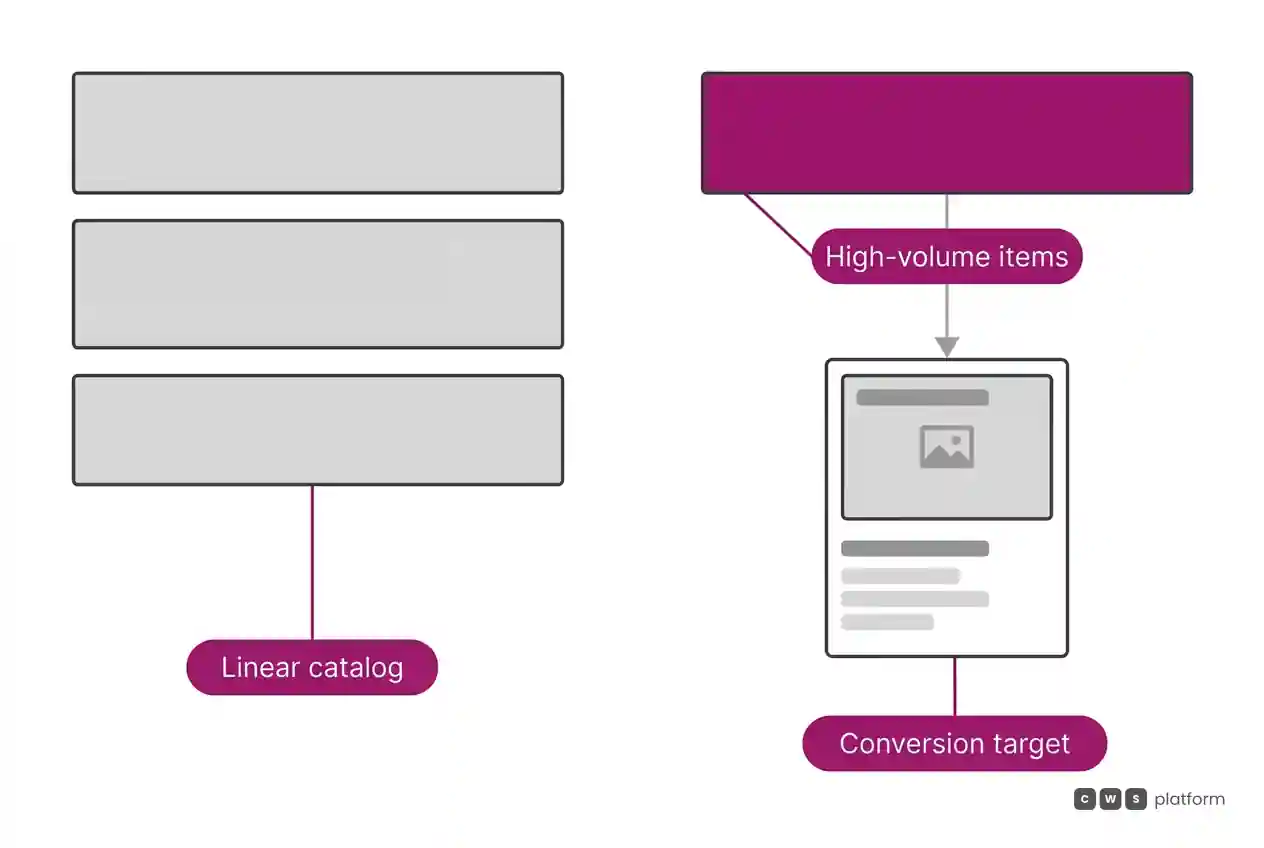
- Active SKU count per tier: how many items sit in L1, L2, and L3 today.
- Revenue coverage at Level 3: the metric that matters most. Having 10,000 long-tail SKUs at Level 3 delivers minimal ROI if your top 200 revenue-generating parts are trapped at Level 1.
- Enrichment velocity: how many SKUs graduate to a higher tier each week, tied to clear team ownership.
Priorities emerge from cross-referencing sales history: start with high-velocity SKUs and zero-result search queries, then work down into the long tail.
Catalog Enrichment Is an Ongoing Operation, Not a Project
A commercial catalog is never static. In high-performing B2B operations, three workflows run continuously:
- Bulk digital asset ingestion mapped by SKU or UPC whenever new manufacturer media libraries or seasonal lines drop.
- Catalog integrity monitoring against accidental deactivations: catching items that dropped off the portal due to an unannounced ERP status change.
- Price logic and entitlement audits across branches, customer groups, and contract tiers whenever commercial agreements change.
In real-world rollouts, what separates an active sales engine from a dormant product list is assigning operational owners to these workflows. Structuring data with multi-tier maturity, dynamic attributes, application tables, and interchange mappings forms the core of the Catalog Engine inside CWS Platform. Scaling product media and merchandising copy across massive inventories is explored further in AI-powered product content and imagery.
Next Step
Pull your top 100 grossing SKUs from the past quarter and audit their maturity: Level 1, 2, or 3. Calculate what percentage of total revenue flows through Level 3 items. That percentage is your baseline KPI for catalog performance.
Frequently Asked Questions
What is product data maturity in B2B?
It measures the completeness of an item's commercial information across tiers: Level 1 supports invoicing, Level 2 enables search discovery and comparison, and Level 3 empowers buyers to purchase unassisted.
What fields are required for a complete B2B eCommerce product page?
Beyond base pricing, inventory, and accounting data: high-resolution imagery, application-specific categories, filterable attributes, specification sheets, equipment fitment, cross-references, related accessories, and order multiples.
Why can't buyers find products on our B2B ordering portal?
Because product records frequently remain at Level 1, relying solely on ERP billing descriptions without faceted attributes, user-friendly titles, or search indexing keywords that mirror real-world buyer phrasing.
How should we prioritize catalog enrichment?
Begin with your top-performing revenue drivers and frequent zero-result search logs, tracking the percentage of company revenue covered by fully realized Level 3 SKUs.
Read Also
- Channel Conflict in B2B: What to Do When Your Portal and Sales Reps Quote Different Prices
- B2B System Integration: What to Connect First and How
- B2B eCommerce Fundamentals (Definitions and Concepts)
About This Publication
Published by The Cost of the Sale, a CWS Platform blog focused on B2B product catalogs, data architecture, and commercial operations. Case studies and operational metrics are discussed without specific client references.
"responsive, technically engaged, and willing to work through complex commercial rules (negotiated pricing, credit, customer-specific conditions) rather than pushing generic answers"
Is your catalog getting in the way of the sale?
Request an assessment of your operation or talk straight to a specialist, whichever you prefer.
I'd rather get the next articles on catalog management
A weekly roundup of new articles on catalog management, only in weeks when there is one. No spam, and you can leave in one click.