Messaging Apps in B2B: Account Channel or Off-Book Rep Sales?
How to transform direct rep messaging into an authenticated, governed channel that protects price discipline and margin.

TL;DR
- In modern B2B, direct messaging apps like WhatsApp, SMS, or chat have effectively become core infrastructure: buyers use them to ask questions, place orders, and increasingly, recover passwords or verify portal access.
- The real question is not whether your company communicates this way, but who actually owns the conversation: is it tied to the governed customer account, or sitting on a sales rep's personal phone outside every rule?
- When the sales rep owns the thread, it becomes a shadow channel for off-policy deals, meaning marketing spends money to attract buyers digitally only to have them close off the books.
- The solution is treating messaging as an account-level channel: linked directly to the customer master record, sharing the exact same price lists and commercial policies as the self-service portal.
Direct messaging in B2B must belong to the customer account, not to an individual sales rep's personal device. This means the interaction history is logged in the company record, any order originating from it follows the identical price list and business policies enforced on the customer portal, and leadership knows precisely what was offered and to whom. When messaging runs purely on personal devices, it quickly becomes the blind spot where commercial discipline falls apart.
Why Messaging Has Become Essential B2B Infrastructure
For today's business buyer, direct messaging is not merely an extra support channel. It is where they already collaborate with vendors, share part photos, request duplicate invoices, and track logistics. A clear indicator of this shift is visible across modern B2B digital operations: messaging tools are actively being deployed in production for portal password recovery and two-factor authentication. When an app handles user authentication, it ceases to be a casual support desk; it becomes critical relationship infrastructure.
This brings clear benefits. Buyers are already active on these platforms, respond faster, and do not need to download proprietary software. Yet it introduces a serious operational risk: everything discussed there can easily happen completely outside organizational control.
The Core Problem: Who Owns the Conversation?
In many B2B organizations, direct buyer communication happens on the sales rep's personal phone. The entire customer relationship lives inside their pocket. That reality triggers three major consequences:
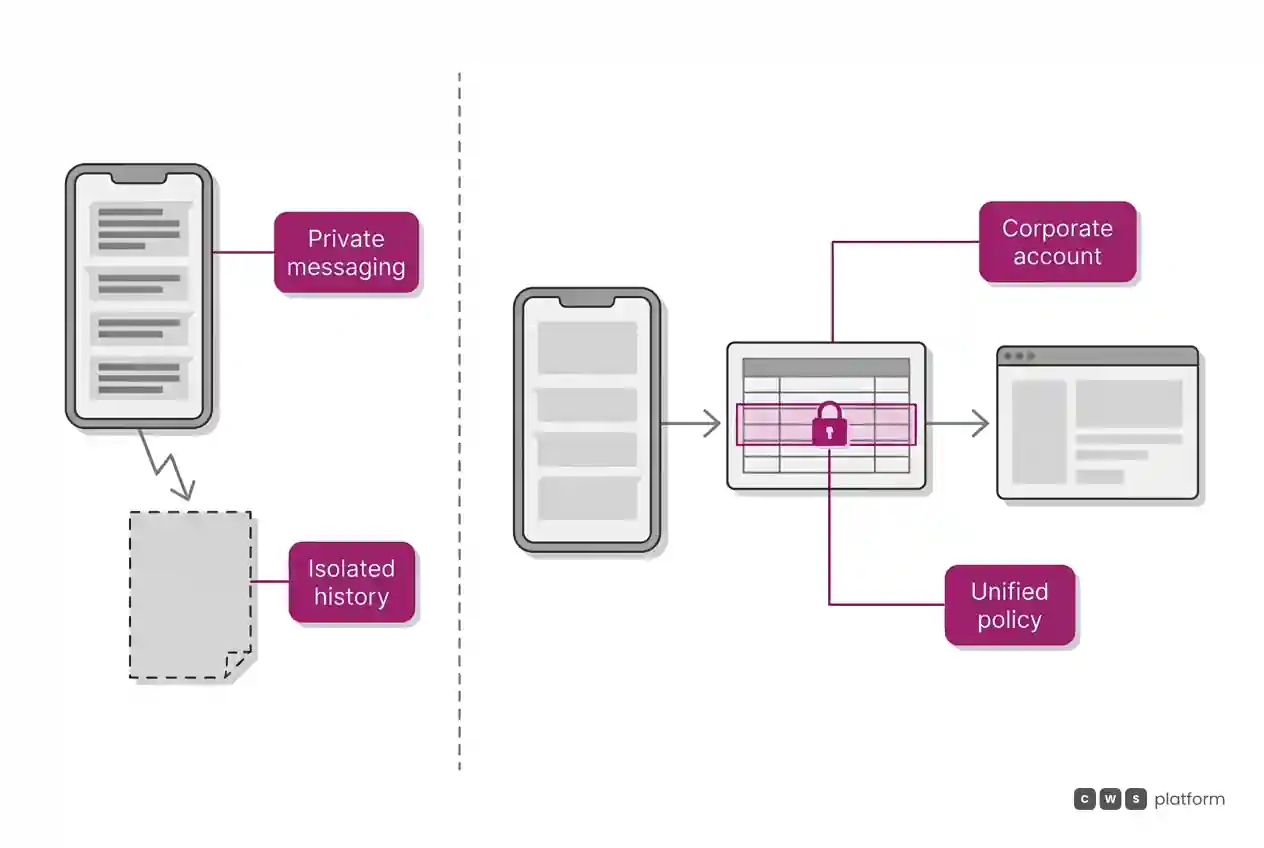
The company has zero visibility into what was promised. Custom discounts, payment terms, and delivery commitments stay trapped in private chat threads. If the sales rep leaves, the entire customer history leaves with them.
Off-policy deals become frictionless. A buyer checks a price on the digital portal and instantly messages the rep asking, "Can you do better than this?" The rep, incentivized primarily by gross volume, cuts the price. The negotiation occurs completely off-policy, and leadership only spots the damage when quarterly margins compress.
Customer acquisition spend leaks away. Spending heavily to drive and convert commercial buyers digitally is wasted if field teams can offer alternate terms over the phone. Marketing absorbs the customer acquisition cost (CAC), the portal attracts the buyer, yet the transaction closes via a rep's direct message under rogue rules. The self-service portal becomes nothing more than a top-of-funnel lead generator for offline side deals.
How to Turn Messaging into an Account-Level Asset
Banning direct messaging never works: buyers will continue reaching out through their preferred channel regardless. The real fix is bringing the conversation inside the formal customer account structure.
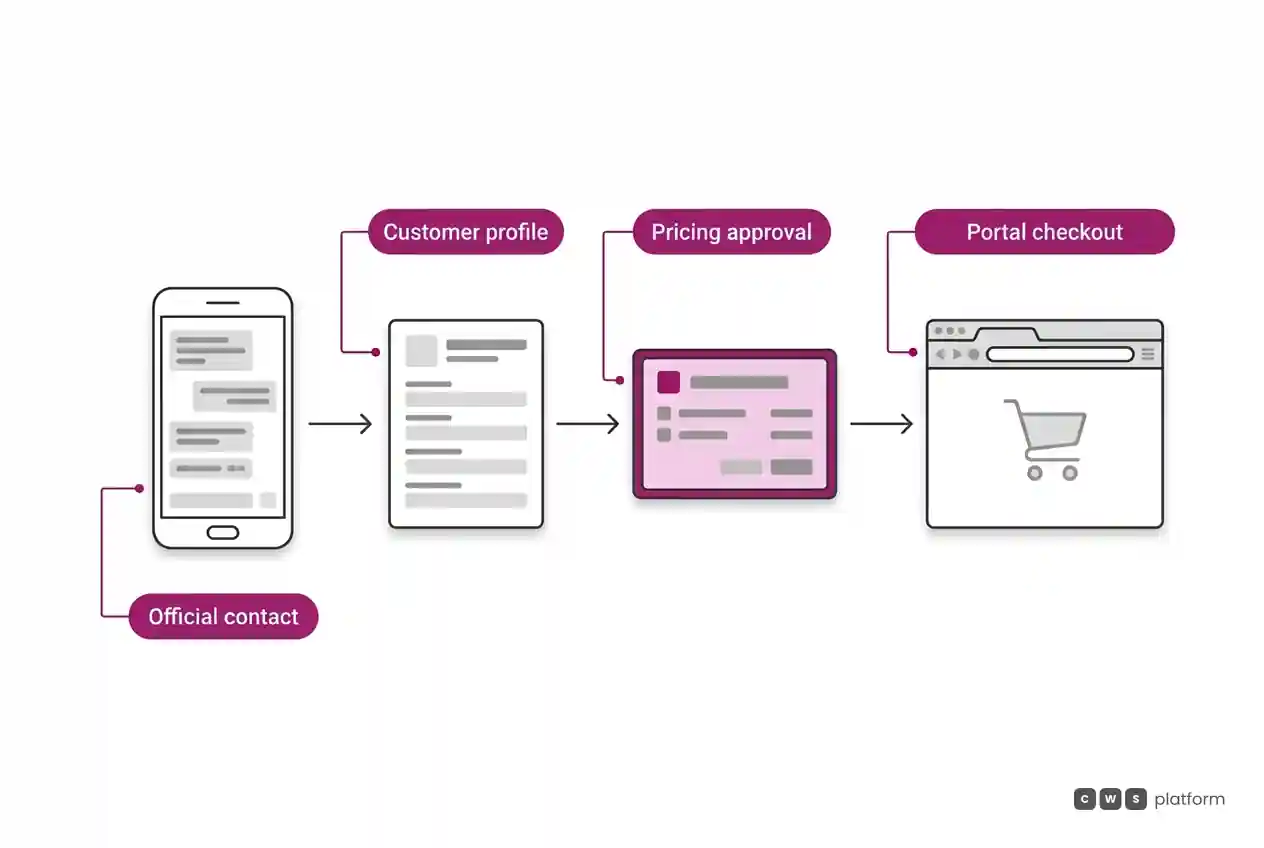
1. Corporate numbers integrated into the master record. Interactions must take place over managed corporate numbers or official enterprise channels tied directly to the CRM and ERP account history. Reps handle queries through this shared inbox, and the entire audit trail stays preserved even if territory assignments shift.
2. Unified pricing, uniform rules. Any quote delivered through direct message must pull from the exact same pricing tables and margin policies that power the self-service portal. Reps can negotiate, but strictly within pre-approved guardrails; any discount exceeding those thresholds triggers a governance workflow, exactly as it would in any other channel. This relates directly to formal discount approval matrices.
3. Directing orders back to the portal. The dialogue should conclude with a persistent pre-populated cart link that reflects the buyer's negotiated terms. The customer confirms the order directly within the portal, ensuring the checkout automatically validates credit limits, live inventory levels, and tax calculations.
4. Compensating reps across all account touchpoints. If commission plans only reward orders manually entered by a sales rep, reps will actively steer buyers toward private channels. If they are credited for all revenue generated by their assigned book of business, regardless of where the order is placed, they become vocal advocates for driving buyer self-service.
Warning Signs That Messaging Has Become a Shadow Channel
- Buyers with active portal logins still have their orders manually key-entered by inside sales reps.
- Off-policy price overrides and steep discounts are heavily concentrated among a handful of reps.
- Customers routinely log in to review catalog pricing, only to complete transactions through alternative channels that very same day.
- Account histories, deal notes, and interaction logs completely vanish whenever a sales rep resigns.
Next Steps
Review your order data from the past month: count how many transactions from portal-enabled buyers were manually entered by sales reps via direct message or phone, and contrast the average discount on those orders against purely digital portal checkouts. The variance reveals exactly how much margin your commercial policy is losing to shadow sales channels. To explore an operating model where sales reps assist buyers using the exact same system and rules, visit our page on assisted sales.
Frequently Asked Questions
How can B2B teams use direct messaging without sacrificing governance?
By routing conversations through managed business numbers connected directly to the central customer profile, sourcing quotes from the same pricing matrix used by the e-commerce portal, and closing transactions via pre-populated digital checkout links. The conversation remains part of the company's historical record, not personal property on an employee's smartphone.
Can personal messaging apps cause rogue sales in B2B operations?
Yes, whenever conversations occur outside governed enterprise workflows. A customer spots standard pricing on a portal and asks the sales rep for a private concession. The rep grants an unapproved discount to hit volume targets, eroding margins without immediate operational oversight.
Should companies ban sales reps from messaging clients directly?
Outright bans rarely succeed, as buyers naturally gravitate toward fast, low-friction communication. A far more effective strategy is supplying authorized, monitored business channels that enforce portal-level commercial policies while paying reps on overall territory revenue, regardless of fulfillment channel.
Can messaging apps be safely used for login and password recovery in B2B portals?
Yes, and enterprise organizations increasingly adopt this for secure verification. It demonstrates that mobile messaging is now core relationship infrastructure, which makes it even more vital to tie these communication endpoints directly to governed customer records.
Read More
- B2B Sales Process: Core Stages and Where Commercial Policy Fits
- How to Turn Commercial Policy into Automated Execution Rules
- Commercial Governance and Enforceable Sales Policies
About This Publication
An article from O Custo da Venda by CWS Platform, exploring relationship channels and commercial policy governance in modern B2B sales. It mentions no specific clients or proprietary financial figures.
Brands mentioned in this article
 WhatsApp
Trademarks and logos belong to their respective owners. Mention does not imply partnership or endorsement.
"responsive, technically engaged, and willing to work through complex commercial rules (negotiated pricing, credit, customer-specific conditions) rather than pushing generic answers"
Are your channels competing for the same customer?
Request an assessment of your operation or talk straight to a specialist, whichever you prefer.
I'd rather get the next articles on channel conflict
A weekly roundup of new articles on channel conflict, only in weeks when there is one. No spam, and you can leave in one click.