When Marketplace APIs Change: Mapping Integration Risk Before Outages
A structured dependency inventory turns deprecation notices into controlled migration plans rather than emergency revenue outages.

TL;DR
- Every operation selling on marketplaces relies on external APIs that constantly change: versions are deprecated, field formats shift, and rate limits drop.
- The risk is not the change itself. It is finding out the day orders stop flowing in. That is why dependencies must be cataloged long before the deprecation notice arrives.
- The inventory connects each API endpoint to a critical workflow (orders, inventory, pricing, invoicing, tracking), revealing true operational impact and replacement priority.
- With the map in place, a deprecation notice becomes a scheduled project rather than an emergency incident.
When a marketplace API changes, risk is controlled through a map built before the notice arrives: a comprehensive list of every endpoint the operation calls, tied directly to the workflow it supports (receiving orders, syncing inventory, publishing prices, sending invoices, updating tracking) and the operational impact if it fails. With this inventory, a version sunset turns into an orderly migration plan. Without it, it turns into a fire drill the day orders suddenly halt.
Why API Changes Catch Operations by Surprise
Marketplaces constantly evolve their APIs. Legacy versions are deprecated with a few months of notice, a field becomes mandatory, call rate limits decrease, or response schemas change. The notice usually lands in a technical email inbox, a developer portal, or an announcement that no one on the operational team ever reads.
In enterprise implementations, the surprise follows a familiar pattern. The integration was built years ago by an engineer who has since left the company, and no one currently knows exactly which endpoints are being called. When the version is finally shut down, the first signal is purely operational: inventory sync stops, orders vanish from the queue, or prices freeze.
The Dependency Inventory
External API dependencies must be inventoried before a deprecation notice lands. The inventory does not need to be overly complex, but it must answer five questions for every single call:
- Which call? The exact resource and API version used (orders, inventory, pricing, catalog, invoicing, tracking).
- Which workflow does it support? What stops inside the business if this call fails.
- How often does it run? Real-time webhooks, every hour, once a day.
- Who owns it? The internal owner or third-party vendor responsible for maintaining it.
- What happens on failure? Does the operation halt completely, experience delays, or simply run on stale data?
The Impact Map: What Breaks First
With an active inventory, an impact map lets you evaluate risks to mission-critical workflows and plan migrations accordingly. The priority hierarchy typically looks like this:
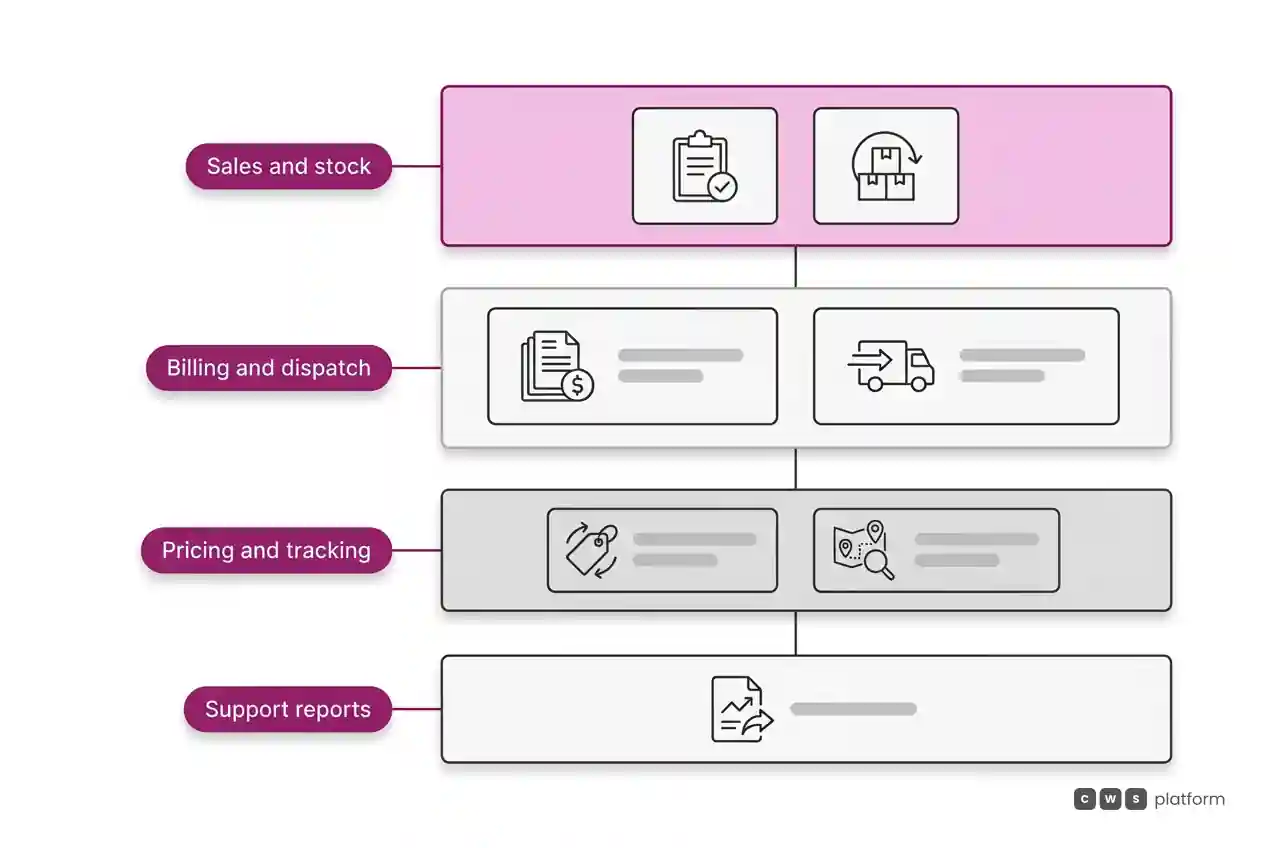
Workflows that halt sales. Order ingestion and inventory synchronization. If inventory fails to update, the marketplace sells stock that does not exist, leading to order cancellations that damage seller ratings and often trigger account penalties.
Workflows that halt fulfillment and revenue. Invoice generation and shipping confirmation. Orders flow in, but they cannot be closed, fulfilled, or billed.
Workflows that degrade operations. Price updates, tracking information, customer messaging. Transactions continue, but with outdated information or friction.
Supporting workflows. Reporting and financial reconciliation. These can wait.
This classification dictates what must be replaced immediately and what can tolerate a temporary workaround for a few weeks.
From Notice to Execution Plan
When a deprecation alert arrives, the dependency map converts the technical notice into actionable tasks:
- Identify affected endpoints within the inventory.
- Classify by workflow impact to establish project priority.
- Schedule the migration with a deadline well ahead of the sunset date, leaving room for end-to-end testing.
- Test in a staging environment using simulated real-world orders before deploying to production.
- Monitor closely during the first week post-launch, with dedicated alerts for dropped orders or failed inventory updates.
Consolidating connections across multiple channels into a single orchestration layer makes this maintenance vastly simpler. Channel updates are handled in one centralized place without disrupting the core ERP. This is the role of Marketplace Center within CWS Platform, and the strategic approach to prioritized integration is explored further in system integration in B2B sales.
Warning Signs That Risk Is High
- No one on the current team can list the exact API calls the integration makes.
- The system lacks automated alerts when an order fails to ingest.
- Marketplace developer notifications go to an unmonitored inbox.
- Multiple sales channels connect directly to the ERP, each built with custom, inconsistent logic.
Next Steps
Ask your engineering team or integration provider for a definitive list of API calls your operation makes to each marketplace, including the specific version numbers in use. If that list does not exist or takes more than a week to produce, that visibility gap is your primary operational risk. At the same time, audit who receives developer and technical alerts for each connected channel.
Frequently Asked Questions
What should you do when a marketplace API is being deprecated?
Cross-reference the affected endpoints against your dependency inventory, rank them by operational impact, plan the migration with a buffer well ahead of the cutoff date, and test thoroughly in staging before deploying to production.
How do you map API dependencies in an e-commerce operation?
List every outbound and inbound call, its version, the workflow it supports, execution frequency, technical owner, and the operational outcome if the call fails. A straightforward inventory immediately clarifies business impact and project priorities.
Which marketplace integrations are the most critical?
Order capture and inventory synchronization are the most critical because failures stop sales or generate out-of-stock cancellations. Next in line are invoicing and fulfillment confirmations, which stall revenue realization.
How do you prevent marketplace integrations from breaking unexpectedly?
Maintain an updated endpoint inventory, set up proactive alerts for missing orders and failed inventory syncs, and designate an owner to monitor technical announcements from every channel.
Read Also
- Buy box in B2B marketplaces: why the lowest price cannot decide alone
- How to build a viable B2B marketplace: the 4 defining operational conditions
- B2B Marketplace
About This Publication
This article outlines integration patterns observed across enterprise deployments managed by CWS Platform. It does not disclose client names, specific marketplaces, or confidential performance metrics.
"responsive, technically engaged, and willing to work through complex commercial rules (negotiated pricing, credit, customer-specific conditions) rather than pushing generic answers"
Is integration holding your operation back?
Request an assessment of your operation or talk straight to a specialist, whichever you prefer.
I'd rather get the next articles on ERP integration
A weekly roundup of new articles on ERP integration, only in weeks when there is one. No spam, and you can leave in one click.