Markup vs Margin: Key Differences and How to Apply Them in B2B Pricing
Why confusing the two drains bottom-line profitability and how to structure clear discount guardrails

TL;DR
- Markup is the percentage added to cost to arrive at the price. Margin is the percentage of the price that remains after covering the cost. Both stem from the exact same calculation, but rely on different baselines.
- A 50% markup yields a 33.3% margin, not a 50% margin. Confusing the two is the single most expensive mistake in pricing strategy.
- Use markup to build your price list and margin to govern discounts, approval thresholds, and sales targets. A sound B2B pricing policy requires both, each in its proper place.
- Logical pricing is pricing that fluctuates based on visible business rules (volume, payment terms, customer tier), rather than the personal bargaining skills of whoever is negotiating.
Markup is the percentage applied on top of cost to set a price; margin is the percentage of the selling price left over after deducting that cost. If an item costs $100 to produce or acquire and sells for $150, the markup is 50% (calculated over cost) and the profit margin is 33.3% (calculated over price). In B2B pricing strategy, markup serves to build your catalog rates, while margin defines how deep a discount you can afford to grant.
Mixing up the two might look like a harmless spreadsheet oversight, but it causes real financial damage on the sales floor every single day. A sales rep hears that the company operates on a "40% target" and assumes they can offer a 30% discount while still walking away with healthy profits. They cannot.
How to Calculate Markup and Margin
With cost C and selling price P:
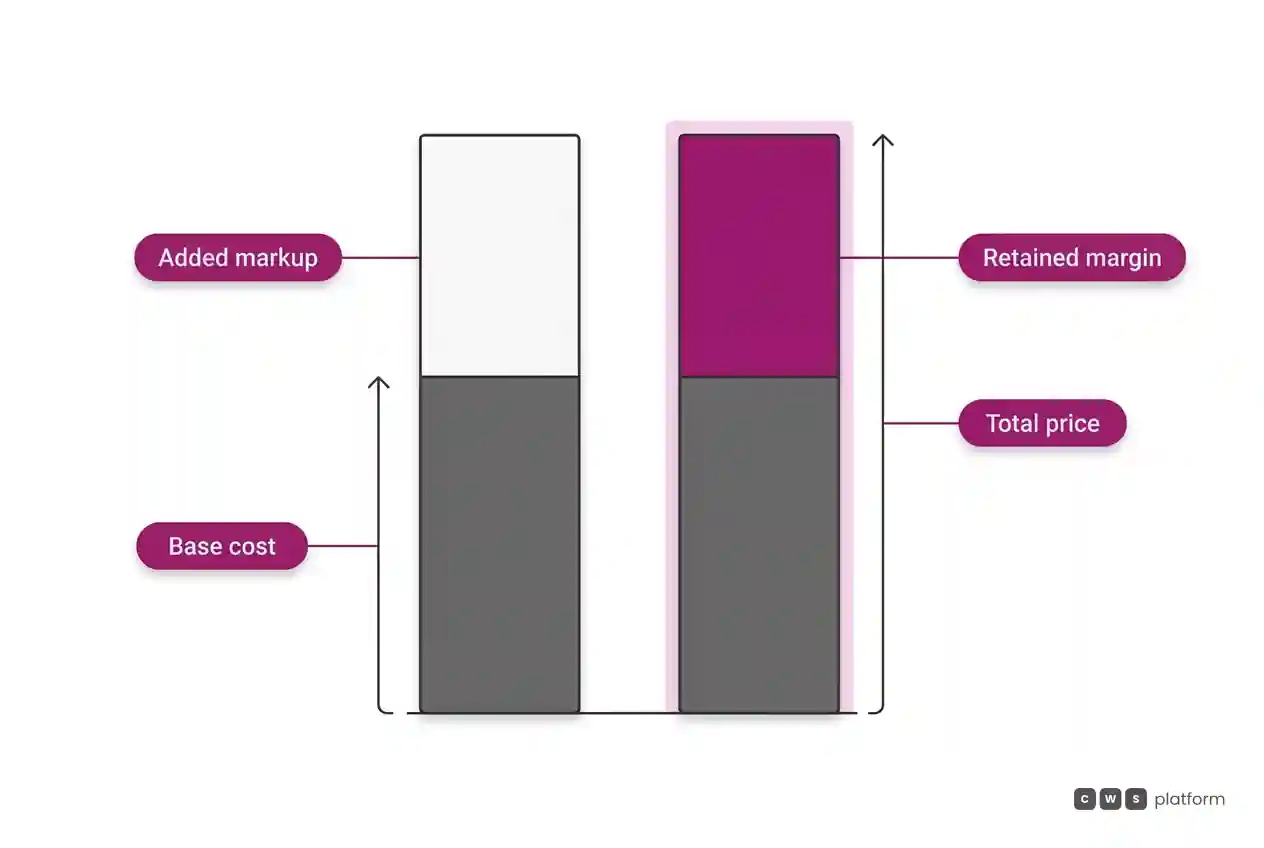
- Markup = (P minus C) divided by C. It also appears as a multiplier: P divided by C.
- Margin = (P minus C) divided by P.
Taking an item with a $100 baseline cost:
| Price | Markup | Margin |
|---|---|---|
| $120 | 20% | 16.7% |
| $150 | 50% | 33.3% |
| $200 | 100% | 50.0% |
To convert between them: Margin = markup divided by (1 + markup), and Markup = margin divided by (1 minus margin). Margin can never reach 100%. Markup can easily exceed 100% with no theoretical limit.
Why the Difference Destroys Margins During Discounting
Discounts are applied directly to the selling price, which means they erode your margin dollar-for-dollar, not your markup. On a product with a 50% markup and a 33.3% margin, a 20% discount on the selling price brings the price down to $120, slashing the final margin to just 16.7%. Half of your entire profit margin evaporates under a discount that seemed minor compared to the "50%" figure the rep had in mind.
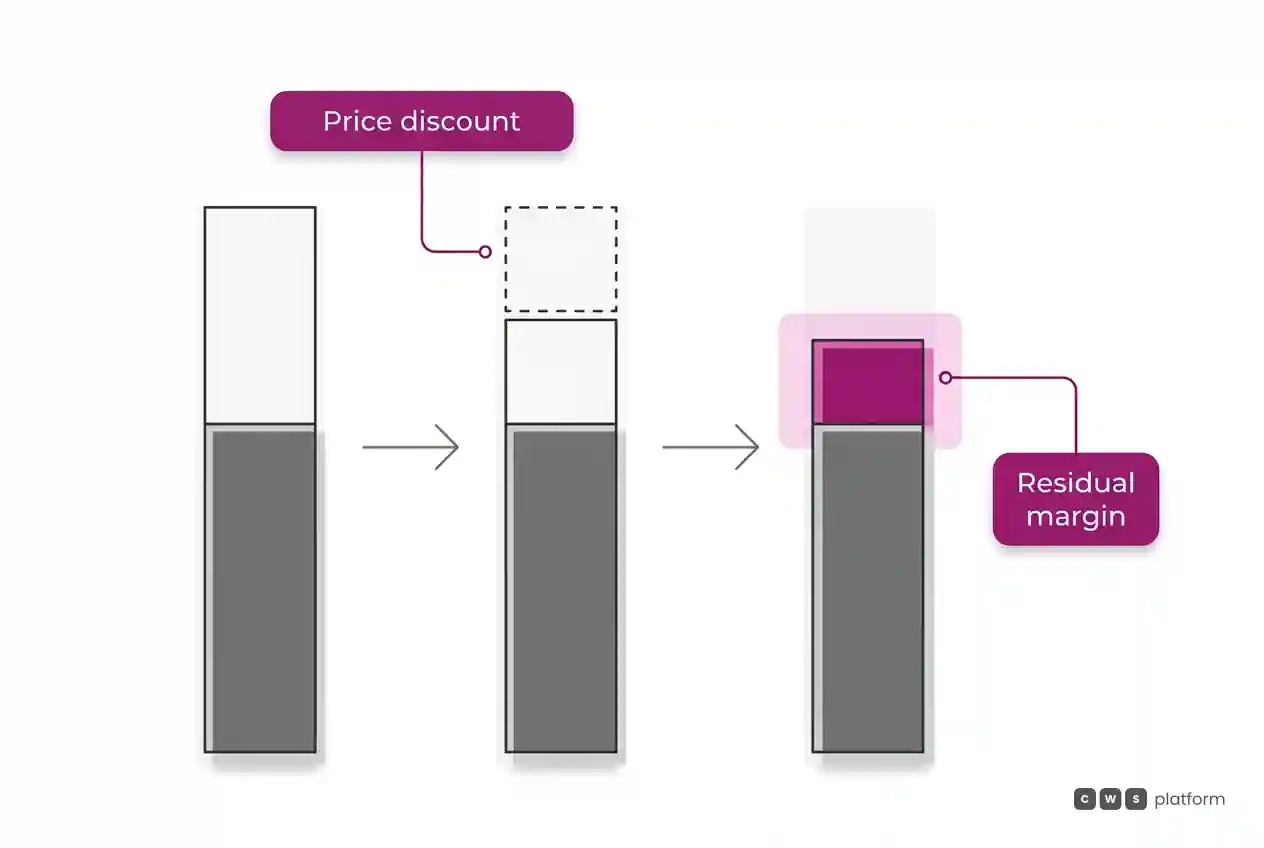
This is why discount approval levels, sales quotas, and customer profitability analyses must always be framed around gross margin. Markup is the language of catalog setup. Margin is the language of deal governance and profitability. For an in-depth breakdown of how to structure approval workflows, read what is an approval workflow.
When to Use Each Metric Across Your Pricing Strategy
When establishing base pricing, use markup. It starts with your cost basis, which is the foundational data point internal teams already possess. Applying differentiated markups across product categories, sales channels, and geographical territories builds your standard price book.
During deal negotiations, use margin. A sales rep discount floor must always be defined by a minimum gross margin, never as a blanket discount percentage. This structure ensures a 10% discount can be executed autonomously on a high-margin line while requiring management sign-off on a low-margin SKU.
When analyzing account profitability, use contribution margin. This factors in not just cost of goods sold (COGS), but all variable order costs, such as freight, commissions, payment terms (DSO impact), and regional taxes, revealing what an account genuinely contributes to your bottom line.
Logical Pricing: What Changes When Rules Are Transparent
The next milestone is transitioning your commercial policy away from a sprawling list of arbitrary exceptions. In many B2B organizations, two accounts of identical size and creditworthiness end up paying drastically different rates simply because one buyer pushed harder. Dealmaking turns into a roulette wheel.
Logical pricing operates on clear, predictable rules that any stakeholder can inspect:
- Tiered volume breaks. As purchase volumes scale, unit prices drop predictably along a pre-established curve identical for all peers in that customer tier. This reflects the core logic of volume tiering and tiered discounts.
- Terms and payment structure adjustments. Extended payment terms tie up working capital, and that carrying cost must be reflected systematically in the quote, not conceded as an unbilled favor.
- Measurable approval workflows. Sales reps receive autonomous leeway down to an explicit margin floor. Below that floor, approvals are formally logged, providing full visibility into which reps request pricing exceptions and how often.
When these commercial rules live natively inside the platform calculating quote and order totals, rather than in disconnected sales spreadsheets, reps no longer negotiate blind. That is precisely the role of the Pricing Engine on CWS Platform: enforcing markups, tier schedules, and margin controls at checkout across every sales channel.
Next Step
Pull your top fifty revenue-generating items and audit two numbers for each: the catalog markup and the actual realized gross margin from the previous quarter. Wherever an excessive gap exists between the two, unmonitored discounting is quietly draining profitability without executive awareness. Start enforcing your formal approval workflows on those specific lines first.
Frequently Asked Questions
What is the difference between markup and margin?
Markup is the percentage added to cost to establish the selling price. Margin is the percentage of the selling price that remains after covering that cost. Given a $100 cost and a $150 selling price, the markup is 50% and the profit margin is 33.3%.
How do you convert markup to margin?
Margin = markup divided by (1 + markup). A 50% markup translates to 0.5 divided by 1.5, which equals 33.3%.
Is a 100% markup the same as a 100% margin?
No. A 100% markup means selling an item for double its cost, which results in a 50% gross margin. A margin can never reach 100% unless cost is zero.
Should discounts be based on markup or margin?
Margin. Discounts are calculated directly against the selling price, impacting profit margin dollar-for-dollar. Anchoring discounting limits to minimum gross margin thresholds prevents your team from quoting below economic viability.
Read More
- B2B Selling Price Strategy: From Cost to Customer-Specific Pricing
- Customer-Specific Pricing in B2B: How to Apply Negotiated Terms Without Spreadsheets
About This Publication
Article from the Cost of Sales blog by CWS Platform, covering B2B pricing methodology and commercial policy. It contains no client disclosures or unverified operational figures.
"responsive, technically engaged, and willing to work through complex commercial rules (negotiated pricing, credit, customer-specific conditions) rather than pushing generic answers"
Is selling more not turning into margin?
Request an assessment of your operation or talk straight to a specialist, whichever you prefer.
I'd rather get the next articles on margin and discounts
A weekly roundup of new articles on margin and discounts, only in weeks when there is one. No spam, and you can leave in one click.