← The Cost of Selling Sales Costs
When the Catalog Becomes Chaos

B2B Product Data: Maturity Levels That Make a SKU Sellable
An ERP-ready SKU is not an e-commerce-ready item. Discover the three product data maturity stages that unlock frictionless B2B digital self-service.
Read →
Low Inventory on B2B Portals: What to Display So Buyers Don't Call In
Publishing exact residual stock levels pushes B2B buyers to pick up the phone. Discover how availability tiers and localized lead times prevent friction.
Read →
Managing Universal Fit Parts in Auto Catalogs: ACES/PIES Best Practices
Universal automotive parts break traditional YMM lookup logic. Discover how structuring attribute-based fitment reduces friction in B2B digital transformation.
Read →
B2B Catalog Taxonomy: How to Organize by Customer Use Case
Structuring B2B product categories around ERP internal hierarchies hides inventory. Learn to build buyer-centric catalog navigation.
Read →
B2B Product Pages: The Fields That Stop Buyers from Calling Sales
Discover the technical fields and commercial rules that turn B2B product pages into true self-service buying tools.
Read →
B2B Portal Search: Helping Buyers Find Parts Using Their Own Terms
When B2B search only matches strict ERP descriptions, buyers hit dead ends and call reps. Learn how to map synonyms, applications, and cross-references.
Read →
AI Product Images in B2B Catalogs: How to Audit Quality by Category
Relying on aggregate accuracy metrics hides critical AI classification errors in B2B catalogs. Learn how to audit image quality by product family.
Read →
AI for Technical Parts Lookup: What to Audit Before Upgrading Your Model
Upgrading an LLM will not fix missing cross-references. Audit these four catalog fundamentals before deploying AI for technical sales.
Read →
OroCommerce vs Optimizely: how does each organize the B2B catalog?
A comparison for COOs between OroCommerce and Optimizely Configured Commerce for the B2B catalog: pricing, quoting, ERP integration, billing, and implementation, with each vendor's public records on categories, multiple sites, customer part numbers, and search.
Read →
Salesforce Commerce Cloud vs Adobe Commerce: where does the catalog limit live?
A CTO comparison of Salesforce Commerce Cloud and Adobe Commerce: Salesforce documents search of up to 1 million products in a 4-million-product store and at most 70 searchable attributes, filterable attributes, and sort rules per store; Adobe ships quotes and shared catalogs in its B2B extension, three deployment options, and, on record, indexers stuck in an open issue and 20 items per synchronous API request.
Read →
Auto parts catalog: VTEX or CWS Platform?
An auto parts comparison for the CIO: VTEX records that the Catalog Search API returns at most 2,500 results (marked No Fix) and that spreadsheet import fails above roughly 4.5 MB. On CWS Platform, the design starts from integration, API-first, with REST and webhooks.
Read →
Multi-branch B2B portal: VTEX or CWS Platform?
A comparison for the COO of a multi-branch distributor: VTEX records as an open known issue that search does not sort or filter by price tables and, on its official forum, answered that the requested regionalization cannot be done with trade policies alone. On CWS Platform, tables, rules, and contracts live on the platform.
Read →
Dealer marketplace: VTEX or CWS Platform?
A dealer marketplace comparison for the Director of Commerce: VTEX gives dealers a standardized Seller Portal and an external seller protocol, but records that sellers cannot modify the marketplace catalog and that the marketplace waits 2.5 seconds at most for the fulfillment response. On CWS Platform, CDL Workspace is a single system for the entire ecosystem, with API integration.
Read →
Building materials distribution: OroCommerce or CWS Platform?
Architecture comparison for building materials distribution: in OroCommerce, a product lives in a single master catalog category and the LTS version is supported for 48 months; on CWS Platform, contracts and price tables are parameters and all customers run the same version.
Read →
Auto parts distribution: Optimizely Configured Commerce or CWS Platform?
In auto parts, a replenishment order starts with the number the customer uses and usually has many lines. We compare Optimizely Configured Commerce and CWS Platform on search, search migration, and the replenishment cart.
Read →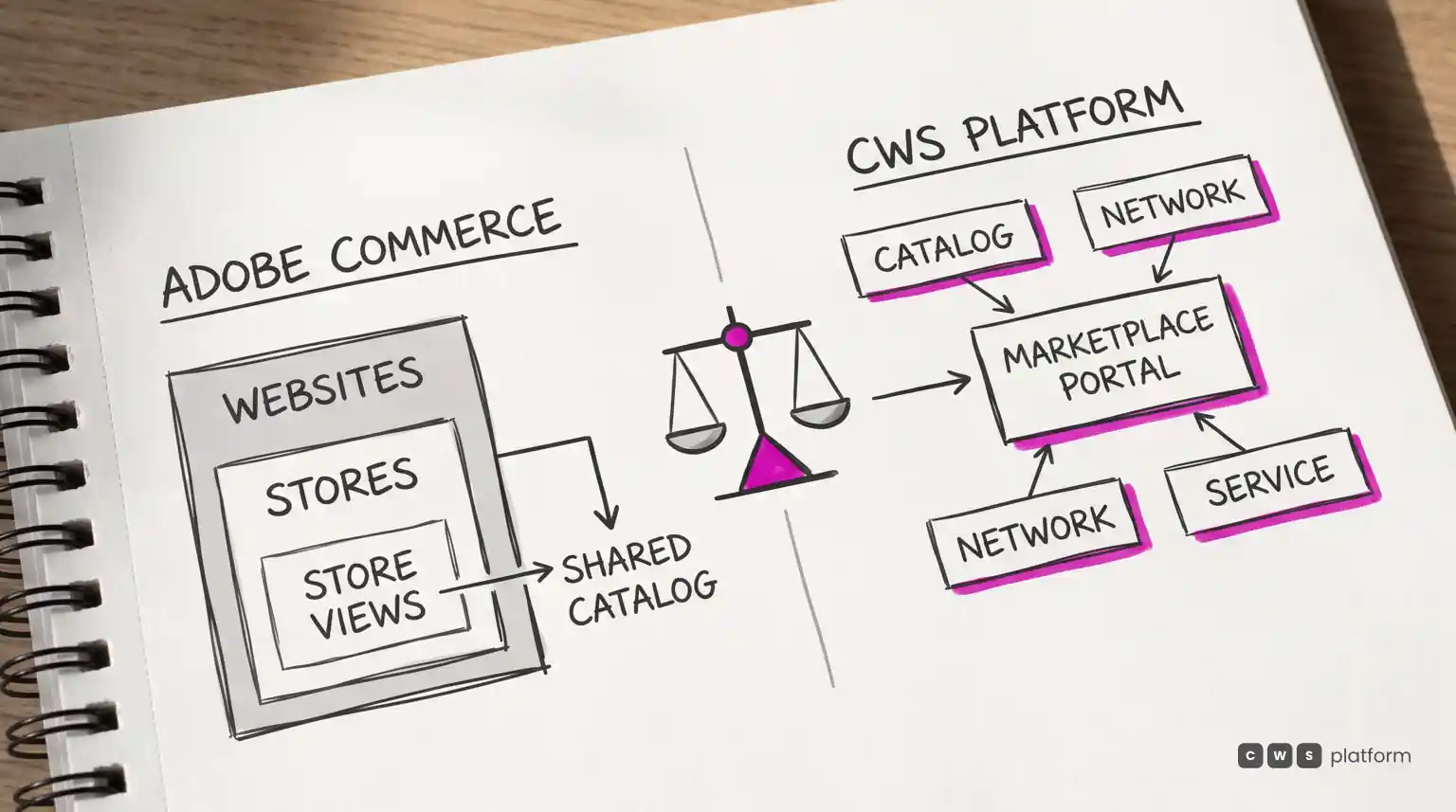
Dealer Marketplace: Adobe Commerce or CWS Platform for Catalog, Network, and Service Operations?
This comparison examines how Adobe Commerce and CWS Platform structure fitment data, regional dealer preference, assisted selling, and multi-source orders.
Read →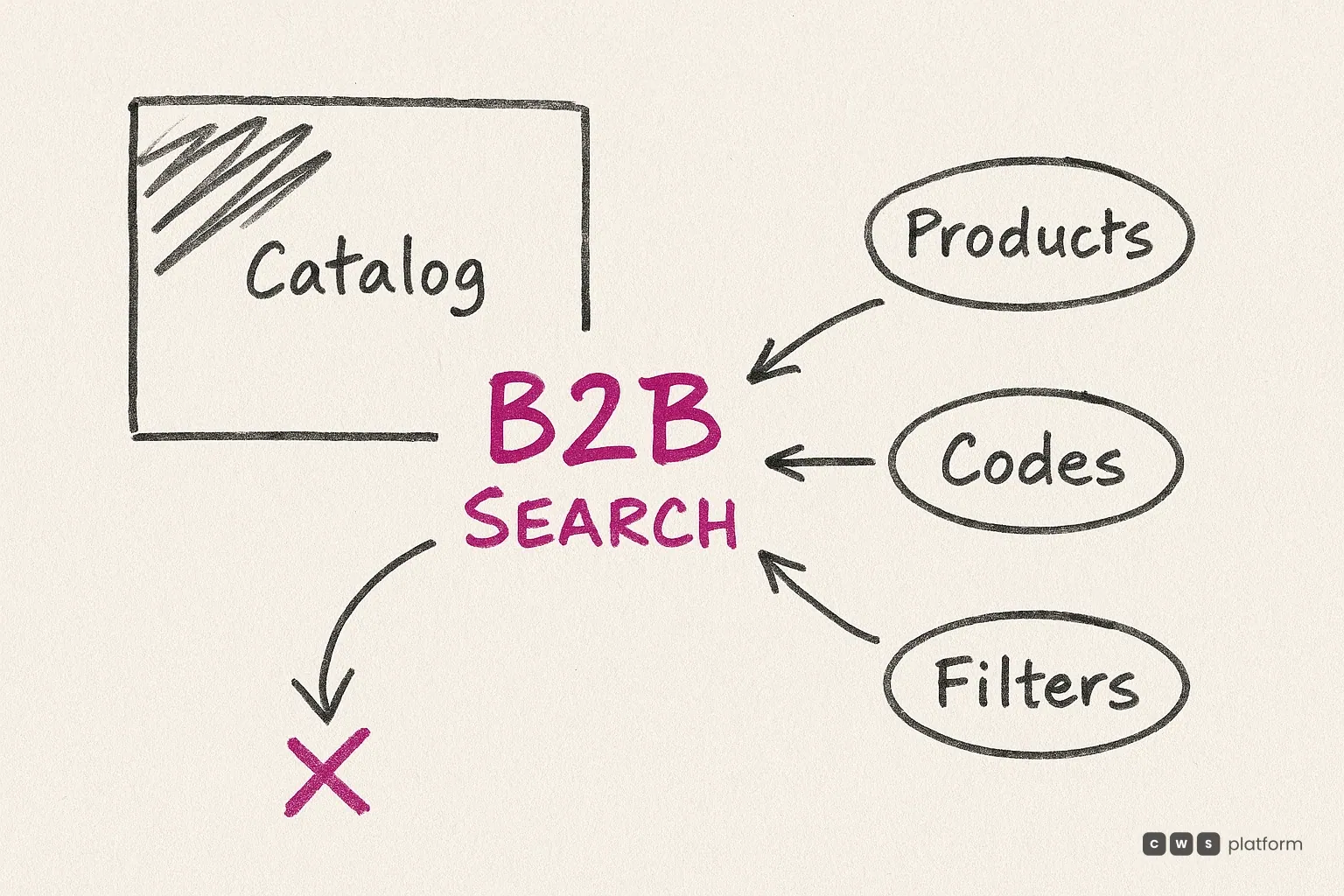
When the Catalog Breaks, B2B Search Stops Supporting Sales
B2B search becomes unreliable when product data, SKUs, and fitment filters are inconsistent. A better interface may hide the issue, but it cannot fix the underlying structure.
Read →
When the Catalog Turns Chaotic, AI Starts Deciding on a Truth That Doesn’t Exist
General-purpose agents amplify the gap between what enterprise systems report and what actually applies to a B2B transaction. Before delegating decisions, CTOs must govern data authority, business context, and traceability.
Read →
The portal says it’s in stock. The phone confirms it isn’t.
When the storefront and operations don’t share the same truth on catalog, price, and availability, the digital order ends in a call and rework. The online channel stops cutting cost and starts a second round of negotiation.
Read →
The AI Agent Confirmed the Order. The Price Was Wrong.
An AI agent acts on the data it finds — and if the catalog doesn't hold the right answer, it confirms the wrong order with speed and the appearance of a formal approval. The cost isn't in the model: it's in the source it queried.
Read →
When the customer doesn't know the supplier's full catalog
In B2B, the pain often isn't a lack of product, it's a lack of visibility. A catalog of thousands of SKUs in printed form shows only a fraction, and the customer buys within what they see, not what exists.
Read →
The Catalog Isn't a Product List: It's What Price, Stock, and the Sale Rest On
When the catalog is ambiguous, the ambiguity doesn't stay in the catalog — it leaks into the price, the stock, the invoice, and the report the board uses to decide. Why the product record is the most invisible and most decisive layer of a B2B operation.
Read →