Building materials: VTEX or CWS Platform?
Thousands of units of the same item in the cart simulation and a discount that rounds per item: the job site order from the seat of whoever owns the commerce experience.

Editorial note: an architecture comparison between VTEX and CWS Platform for the building materials distribution scenario, where a job site order arrives in large quantities and in units that are not always whole. The person who decides here is the Director of Commerce. Every fact about VTEX comes from its public documentation and its known issues page, with the address next to it.
A job site order does not look like a store order. It comes in thousands of blocks, hundreds of bags of cement, boxes of flooring that cover an uneven area, and feet of cable. The buyer is the general contractor, the subcontractor, or the dealer supplying several job sites, and whoever owns that buyer's experience is the Director of Commerce. For that role, the moment that decides conversion is the cart: that is where the buyer sees freight, lead time, and discount, and that is where they give up if something does not add up.
The question that separates platforms in this scenario is not whether the catalog carries the product. It is whether the cart can handle the real quantity of the job and whether the discount math holds when the unit is fractional. Both look like details in a demo and turn into rework after go-live.
This comparison looks at VTEX and CWS Platform from that angle only. It is not a feature ranking. The overall map of models is in the post on the three B2B commerce platform models, and the full series is in the comparisons hub, with the comparison of what VTEX B2B commerce delivers out of the box as the starting point.
What VTEX does well
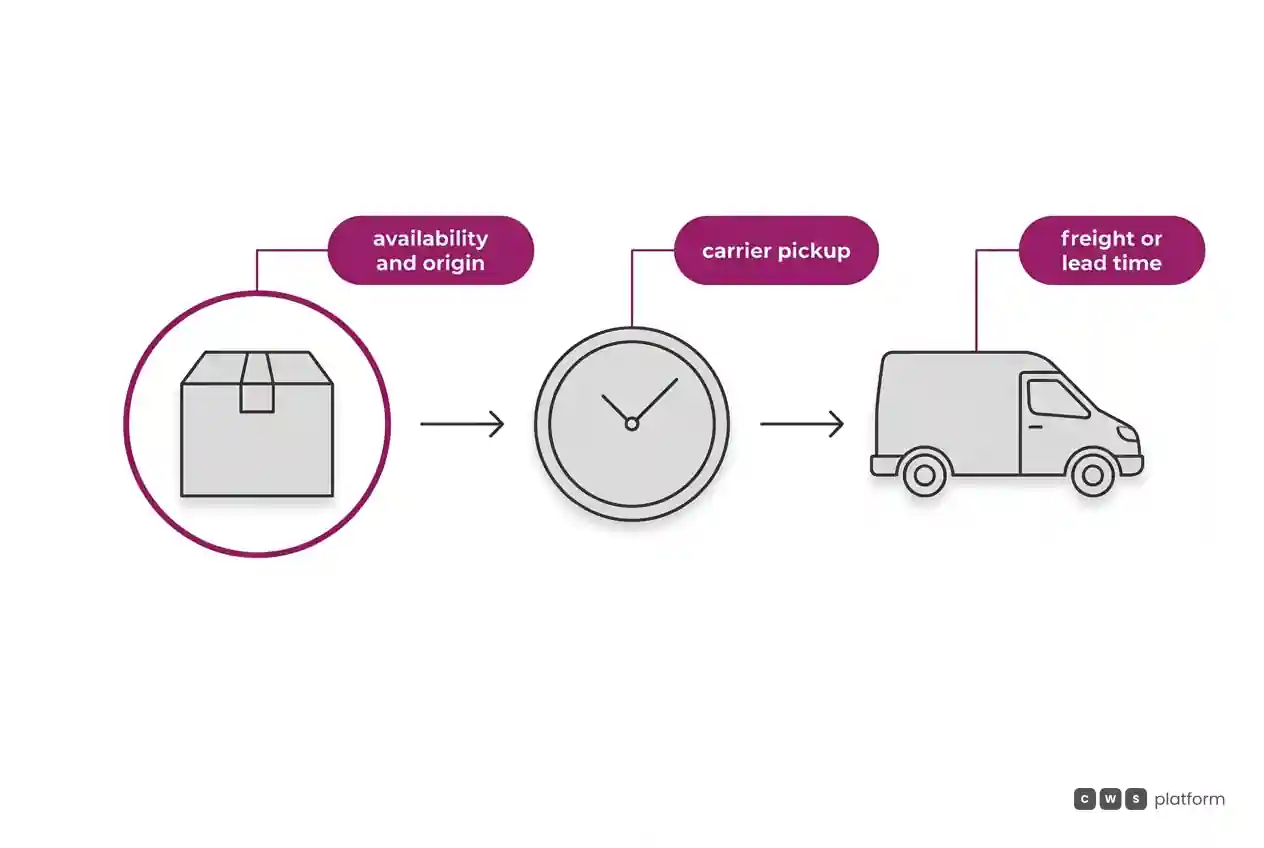
VTEX has a well-described fulfillment flow. Per the Fulfillment and Logistics guide, once the buyer enters a location, the platform checks item availability and identifies where it will ship from, sets the place and time for the carrier pickup, and calculates the freight or SLA options offered. External inventory and shipping management integrates through APIs with the back office, whether ERP, PIM, or WMS.
Inventory is organized by warehouse. The Inventory track links catalog items to warehouses, shows availability, reserved items, and history, and lets you set a critical stock level alert that warns when an item is close to running out.
On the commercial side, the promotions module offers six promotion types (Regular, Buy Together, More For Less, Progressive Discount, Buy One Get One, and Campaign Benefit), which can be scheduled, activated, deactivated, or archived, with coupons tied to one or more promotions.
Where the architecture diverges
The divergence that matters to a Director of Commerce sits in two lines of VTEX's known issues page, one about quantity and one about the discount math:
- recorded by VTEX as a known issue, published in February 2021; VTEX marked it No Fix (page accessed on November 5, 2026): the Logistics service errors when simulating a purchase with thousands of units of the same SKU ("We have an error in the Logistics service when trying to simulate a purchase with thousands of units of the same SKU.", https://help.vtex.com/en/known-issues/checkout-simulation-with-a-great-quantity-of-the-same-sku-receives-a-logistics-timeout)
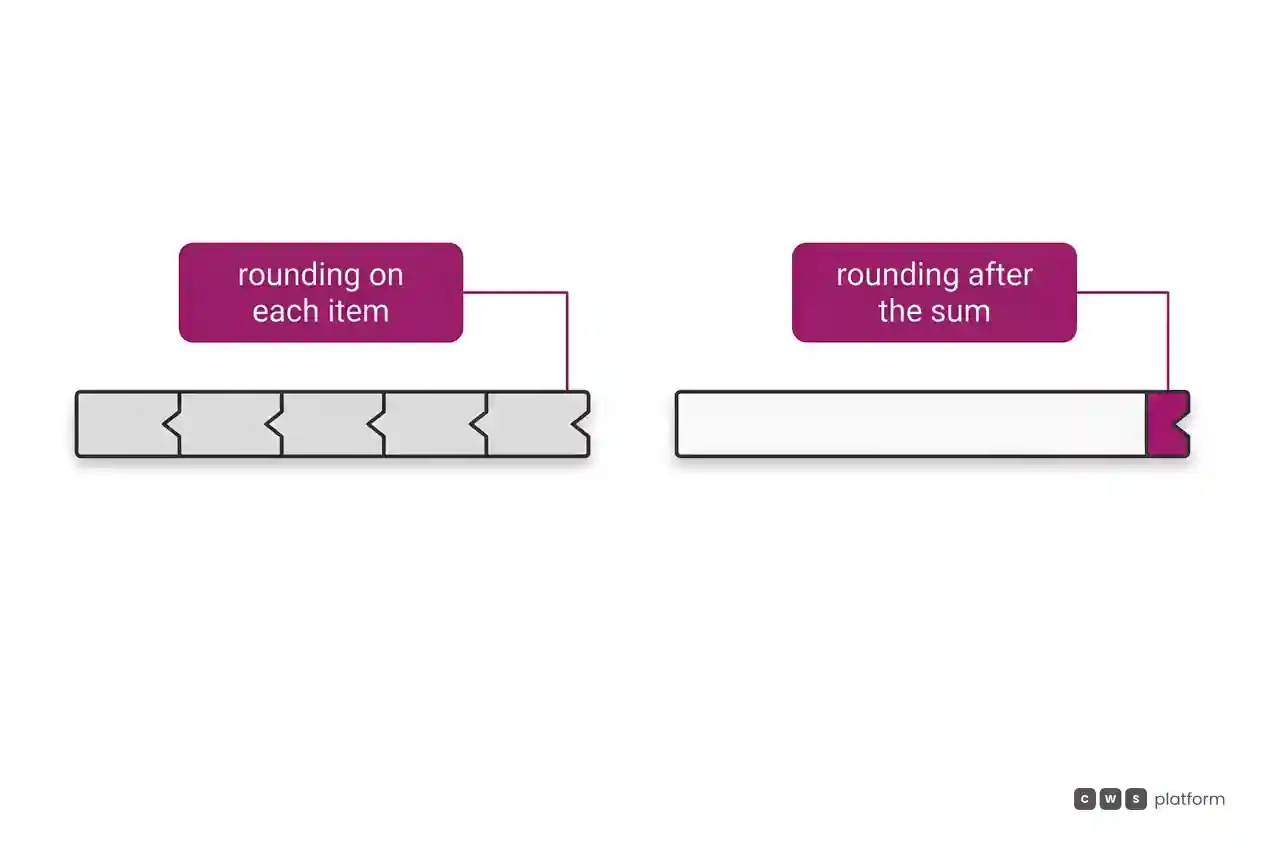
- recorded by VTEX as a known issue, still open as of November 5, 2026 (open since March 2018): in discounted orders with non-integer multiplier items, rounding is done per item rather than after the sum of all items, which can lose a few cents ("In cases of orders with discount that have non-integer multiplier items, rounding is performed per item, not after the sum of all items. This can result in the loss of a few cents.", https://help.vtex.com/en/known-issues/error-in-apportioning-the-discount-when-there-is-a-multiplier-unit)
The first record lands on exactly the step described above: simulation is when checkout confirms availability, ship-from location, and freight. In ordinary retail, thousands of units of the same SKU are the exception. On a job site order, they are the normal order. Because VTEX marked the item No Fix, the project has to decide up front how a large order reaches checkout: split into smaller orders, through another channel, or through the sales rep. Each of those paths is a different experience for the buyer, and all of them have to be designed before launch.
The second record is about the unit. In building materials, a non-integer multiplier is routine: flooring sold by the box that covers a fractional area, cable sold by length. A few cents per order looks small, but the Director of Commerce owns the price the buyer saw, and the gap between the discount apportioned in the cart and the amount the ERP invoices turns into reconciliation and support tickets. The same multiplier shows up, from another angle, in the comparison on sales rep quotes.
On CWS Platform, price tables, rules, and contracts can be configured on the platform or received from the ERP and CRM through an API, with customizable decimal places, and tax comes from the ERP or the tax engine the company already uses. Net terms work with split shipments, scheduled deliveries, multiple ship-to addresses, and multiple ship-from locations. The real quantity of the job and the discount apportionment on the real unit, though, are a test for any vendor, CWS included: the honest proof is to simulate the true order, at the true quantity and in the true unit, before signing.
| decision | VTEX, per the mechanism and the records | CWS Platform |
|---|---|---|
| Large quantity of the same item | Logistics error when simulating thousands of units of the same SKU, marked No Fix | A question for the proof, with a real job site order |
| Discount on a fractional unit | Per-item rounding with non-integer multipliers, open issue since 2018 | A question for the proof, with the real fractional order; customizable decimal places in price tables |
| How the job site receives | Three-step checkout flow: availability and origin, pickup, freight or SLA | Net terms with split shipments, scheduled deliveries, multiple ship-to addresses, and multiple ship-from locations |
| How promotions coexist with negotiation | Six promotion types, schedulable, with coupons | Thousands of promotions running together; sales rep discounts with multi-level approval |
The commerce decision is whether the large job site order will be the cart's normal case or an exception handled outside it.
What changes in building materials operations
A job site buys by phase. Foundation, framing, rough-in, and finishes each have different materials, quantities, and dates, and the same buyer often runs several job sites at once. That is why a construction order is rarely a single purchase: it is a supply agreement that unfolds into deliveries.
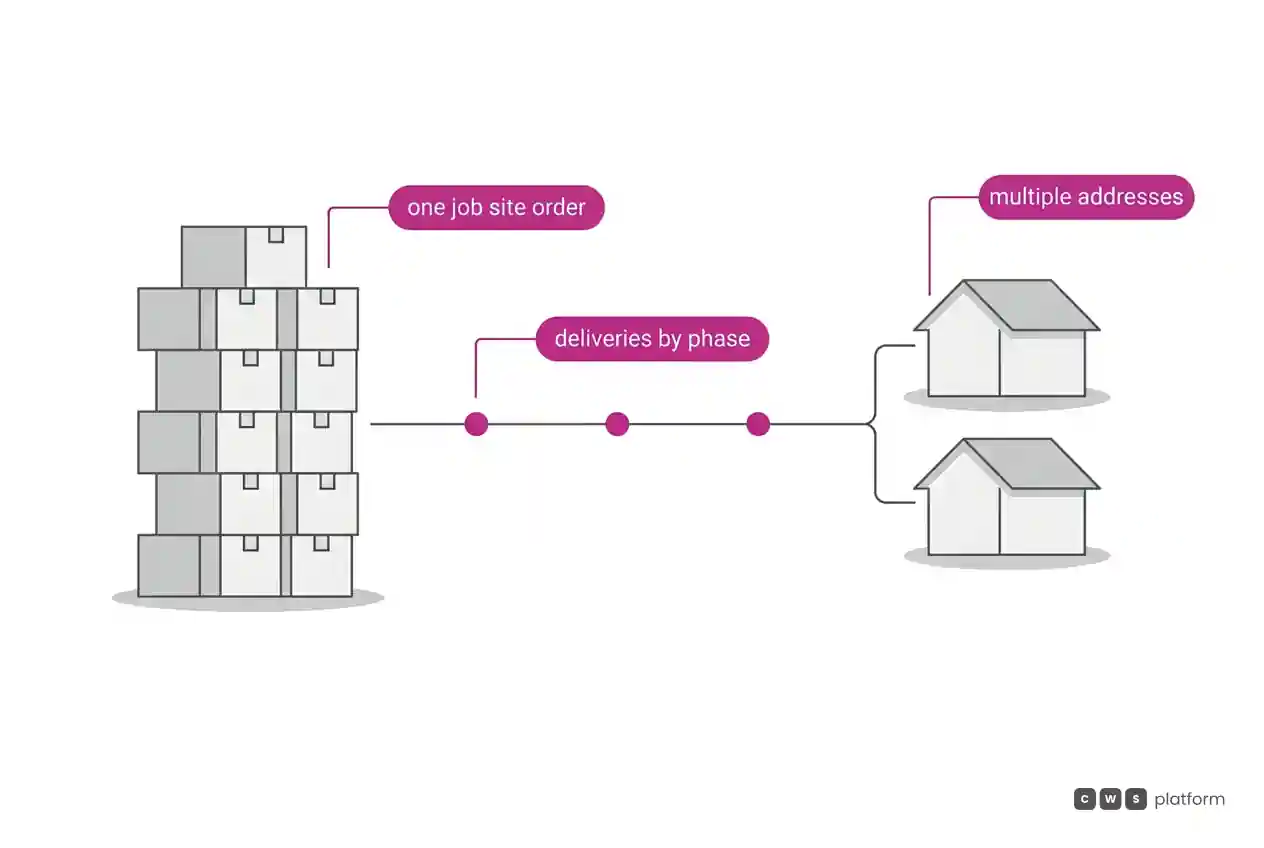
Three questions help bring this point into any evaluation. First: what is the largest quantity of the same item the cart simulation supports, measured with a real job site order, and what does the buyer see past that point. Second: how is the discount apportioned when the unit is fractional, and does the cart total match, cent for cent, what the ERP invoices. Third: how does one order become several deliveries, on different dates and to different addresses, without the buyer placing one order per job site.
Then there is negotiation. A large contractor negotiates price by contract, and the sales rep negotiates discounts order by order. On CWS, the sales rep's discount goes through multi-level approval, thousands of promotions can run together, and the customer's credit limit is maintained on the platform. The sales rep can build the cart, with the items and the source of each one, and send the link for the job site buyer to complete the purchase.
When to choose VTEX
VTEX fits scenarios where building materials sales are mainly retail:
A home improvement retailer selling to consumers. Choose this architecture when the sale is B2C and growth comes from mechanics like Buy Together and More For Less, described in the promotions module.
A store network with inventory by warehouse. Choose this architecture when retail orders ship from several warehouses and operations need stockout alerts, as the Inventory track describes.
An operation that unifies stores, ecommerce, and a retail marketplace. Choose this architecture when the goal is to unify ecommerce, physical stores, and marketplace with order orchestration, as the VTEX Commerce Platform page presents.
When CWS Platform is the right choice in this scenario
CWS Platform is the right choice when the job site order is the center of the operation, not an exception to retail.
A job site that receives by phase. Choose this architecture when the same order unfolds into deliveries over the life of the job. Net terms work with split shipments, scheduled deliveries, multiple ship-to addresses, and multiple ship-from locations.
Contract pricing with configurable precision. Choose this architecture when price depends on the contract and the unit of sale. Tables, rules, and contracts are configurable on the platform or received from the ERP through an API, with customizable decimal places; apportionment on your real unit goes into the proof.
Negotiated discounts with governance. Choose this architecture when the sales rep negotiates order by order. The sales rep's discount goes through multi-level approval, and commercial policy sits in parameters of the Commerce Rules Engine (CDL Workspace), on the principle of configuration over code.
Where to go from here
If your question is still which architecture fits your operation, the path is the seven questions that separate B2B commerce architectures.
If the decision depends on how your job sites buy today, it is worth talking to a CWS Platform specialist and simulating, with a real job site order, the quantity, the discount, and the deliveries before you choose. The page When Selling More Doesn't Mean Earning More covers the pain behind a discount that does not add up, without talking about any vendor.
Comparisons with other vendors
To compare VTEX with other platforms, without CWS Platform in the middle:
- VTEX vs Adobe Commerce: which one handles the typical B2B order?
- VTEX vs Salesforce Commerce Cloud: can B2B and retail coexist?
- VTEX vs SAP Commerce Cloud: what can a CFO predict before signing?
- VTEX vs. commercetools: Packaged B2B Suite or Composable APIs?
- VTEX vs Spryker: which fits a B2B marketplace with sellers?
- VTEX vs Optimizely: what goes on the B2B bill?
- VTEX vs OroCommerce: what can change after an order is invoiced?
- B2B ecommerce platforms: the 9 leading options compared
Brands mentioned in this article
 VTEX



- Adobe Commerce
- Salesforce
- SAP Commerce Cloud
- Optimizely
- OroCommerce
Trademarks and logos belong to their respective owners. Mention does not imply partnership or endorsement.
"responsive, technically engaged, and willing to work through complex commercial rules (negotiated pricing, credit, customer-specific conditions) rather than pushing generic answers"
Is selling more not turning into margin?
Request an assessment of your operation or talk straight to a specialist, whichever you prefer.
I'd rather get the next articles on margin and discounts
A weekly roundup of new articles on margin and discounts, only in weeks when there is one. No spam, and you can leave in one click.