Agribusiness B2B: VTEX or CWS Platform?
The receivable that comes due unpaid, the terms that must reach the ERP intact, and where customer credit lives: selling on terms in agribusiness from the CFO's seat.

Editorial note: an architecture comparison between VTEX and CWS Platform for distributors and dealers of agricultural inputs, where most sales are on credit terms and receivables follow the crop season. The person who decides here is the CFO. Every fact about VTEX comes from its public documentation and from the known issues page VTEX publishes, with the address next to it.
In agribusiness, an input order is rarely paid at the time of purchase. The grower buys seed, fertilizer, and crop protection at planting and pays at harvest, and the distributor carries those terms on its balance sheet. For the CFO, the order ends when the receivable is paid, renegotiated, or written off, and until then the terms agreed with the grower have to reach the ERP, collections, and credit review intact.
That stretch is where the cost shows up. A past-due receivable that still looks alive, payment terms that arrive differently in collections, a credit condition checked by hand: each one becomes reconciliation, concentrated in the weeks when the season closes.
This comparison looks at VTEX and CWS Platform from that angle only: what happens to a sale on terms after the order closes. It is not a feature ranking. The overall map is in the post on the three B2B commerce platform models, and the three-year cost math is in the comparison on the total cost of B2B on VTEX and CWS Platform.
What VTEX does well
VTEX has a broad, well-documented payment gateway. Per its payments overview, the Payment Gateway receives the request from checkout and routes it to the appropriate connector, which bridges to acquirers, sub-acquirers, payment service providers, anti-fraud, and gift card providers to authorize, settle, or refund the transaction. The same documentation lists, among supported methods, cards, digital wallets, gift cards, and customer credit, and three purchase flows: transparent, redirect, and payment app.
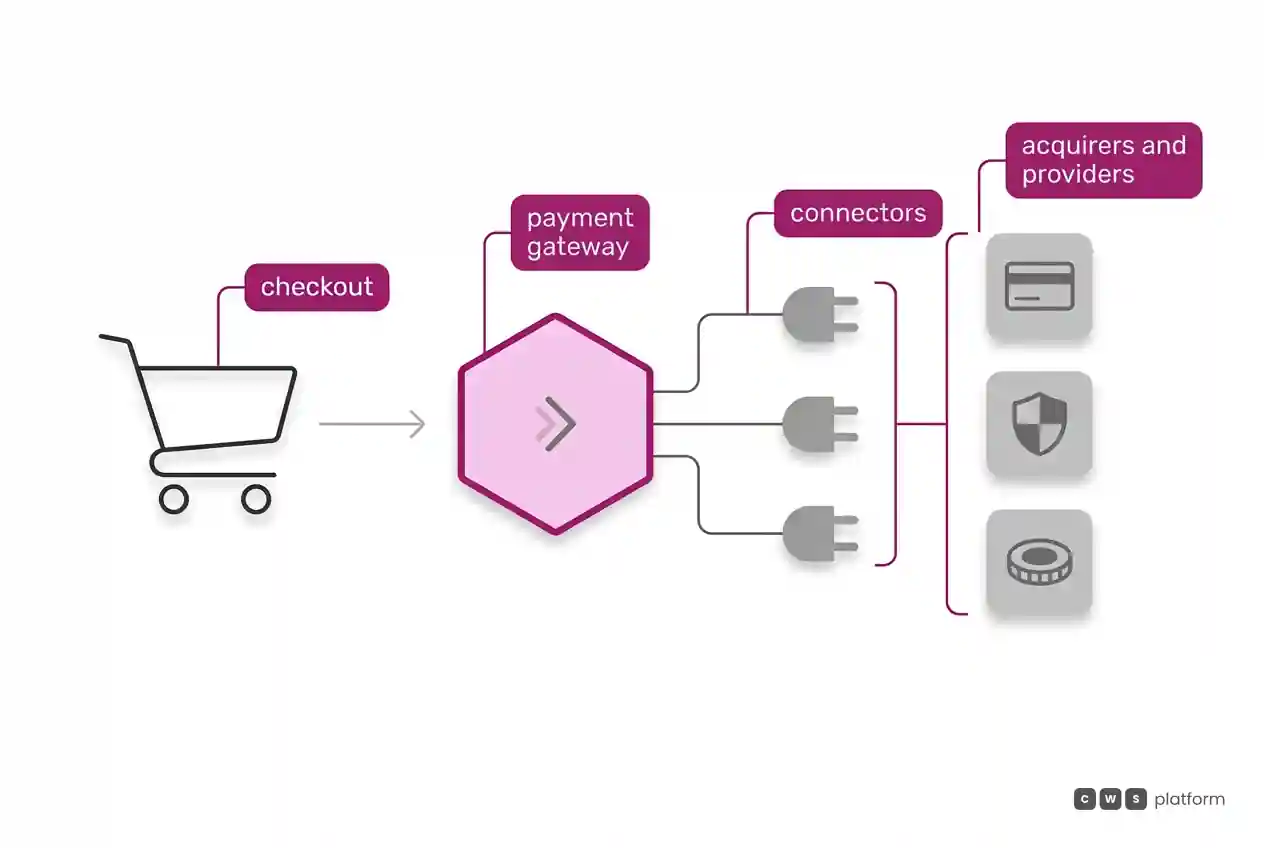
When a provider does not respond, the gateway retries, for example when the operator is offline or the order is in manual fraud review.
For campaigns, the promotions module offers six promotion types, scheduling, coupons linked to one or more promotions, and campaign promotions with a defined audience.
Where the architecture diverges
The divergence that matters to a CFO sits in two entries on VTEX's known issues page, both about selling on terms:
- issue recorded by VTEX as a known issue, still open as of November 5, 2026 (open since September 2021): transactions with the notes payable (promissory note) payment method are not automatically cancelled after the payment expires; when a customer orders with that method and does not pay, the gateway does not cancel the transaction after the due date ("If a customer places an order with the notes payable payment method and the payment is not made, the transaction is not cancelled by the gateway after the payment due date.", https://help.vtex.com/en/known-issues/transactions-with-notes-payable-note-are-not-automatically-cancelled-after)
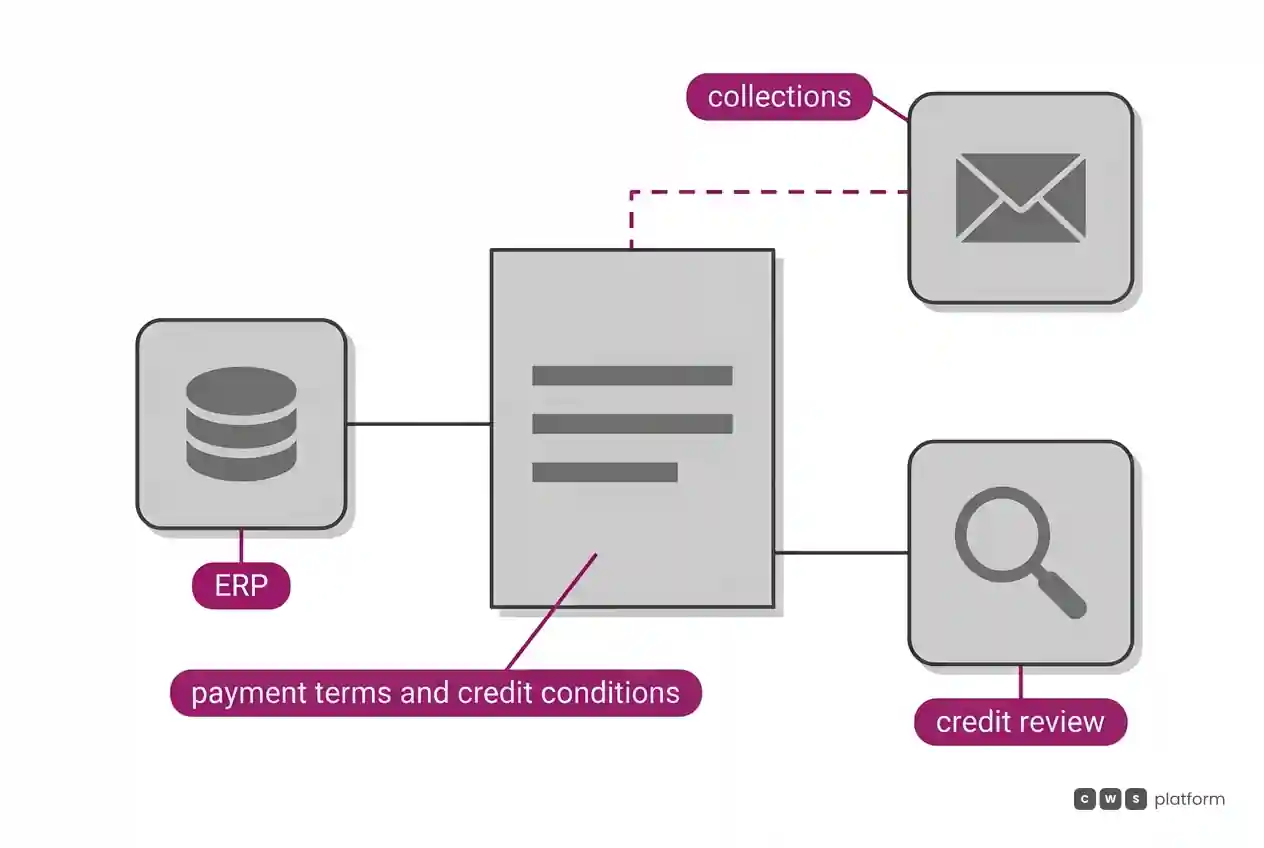
- issue recorded by VTEX as a known issue, still open as of November 5, 2026 (open since February 2021): there is an inconsistency in the deadlines of Customer Credit invoices, and integrations that rely on this order data, such as payment terms or specific credit conditions, may fail ("As a result, integrations that rely on this data (such as payment terms or specific credit conditions) may fail.", https://help.vtex.com/en/known-issues/inconsistency-on-the-deadlines-of-customer-credit-invoices)
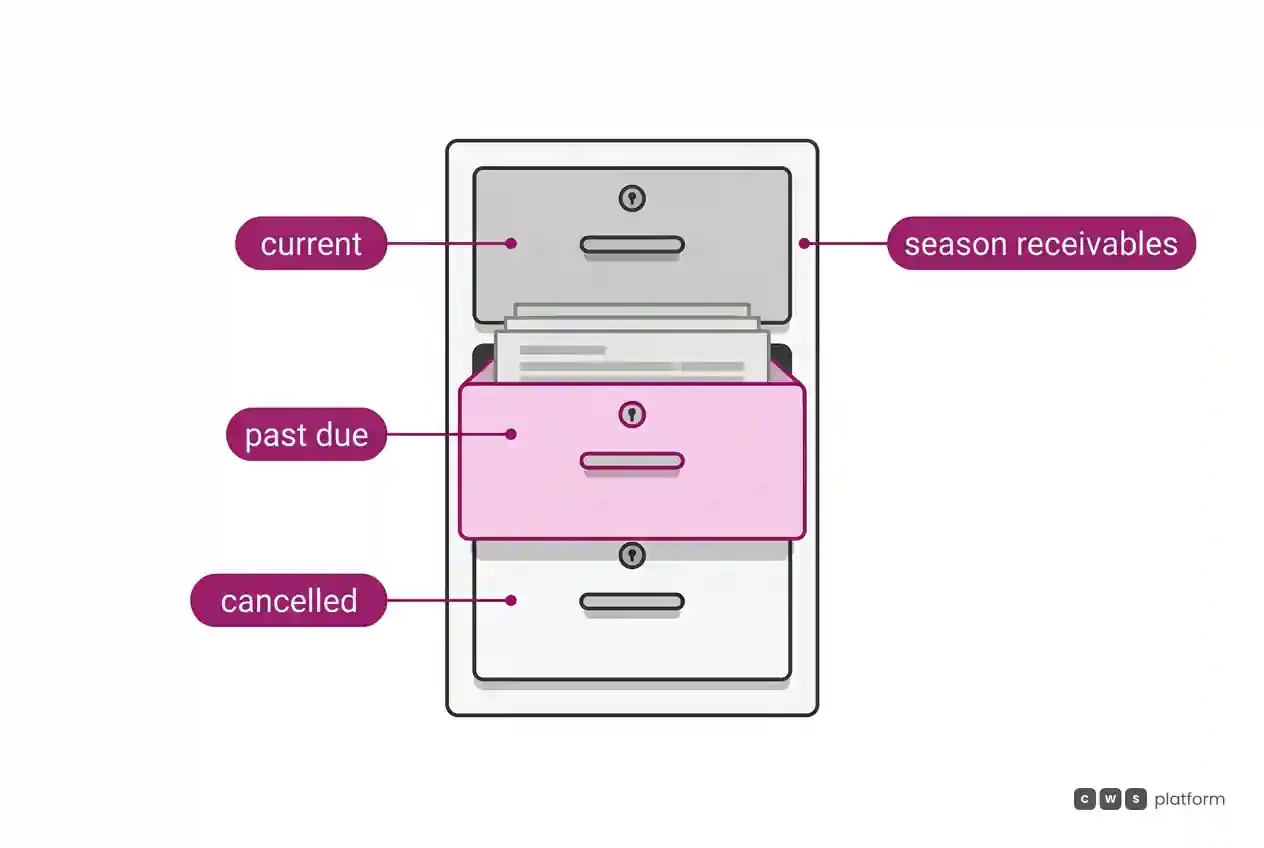
The first record is about the receivable that came due. In agribusiness, late payment is part of the business, and the CFO needs to know clearly what is current, what is past due, and what was cancelled. While the issue stays open, an unpaid notes payable order keeps its transaction alive after the due date, and separating receivables from defaults comes to depend on a manual routine.
The second record is about terms in transit. In agribusiness, payment terms are the commercial condition: the same seed on thirty-day terms or at harvest is a different negotiation. If the integrations that read terms and credit conditions may fail, the ERP and collections work with data that has to be checked, and month-end close becomes reconciliation between order and receivable.
While both remain open, selling on terms calls for a parallel control in finance, designed before the first digital order.
On CWS Platform, the customer's credit limit is maintained on the platform, as a running account, granted in CDL Workspace or through an API. The same order accepts more than one payment method, with the rules combined in CDL Workspace and maintained through an API, and CWS is API-first, with REST APIs and webhooks for the ERP and collections. The path from terms to receivable goes into the demo, with any vendor.
| decision | VTEX, per the documented mechanism | CWS Platform |
|---|---|---|
| What happens to a past-due receivable | Known issue open since 2021: the gateway does not cancel a notes payable transaction after the due date | A question for any vendor's demo: an order on terms past due without payment, which status does it take and who acts |
| How terms reach the ERP and collections | Known issue open since 2021: integrations that rely on payment terms or credit conditions may fail | REST APIs and webhooks for the ERP and collections; check in the demo that a real order's terms arrive unchanged |
| Where the customer's credit lives | Customer credit among the gateway's payment methods | Customer credit limit maintained on the platform, as a running account, granted in CDL Workspace or through an API |
The financial decision is knowing, before signing, where the truth about the receivable lives: in the platform's order or in a spreadsheet finance maintains on the side.
What changes in agribusiness distribution
For the CFO, the difference shows up in three routines. The first is season close, when a large share of receivables comes due together. Every past-due order that still looks alive is handled by hand, right when the calendar is shortest.
The second is negotiating terms. Discount and payment terms are the same currency: a rep who can move the terms, within limits, does not have to burn margin on discount. That only works if the negotiated terms reach finance as agreed. On CWS Platform, the sales rep's discount goes through multi-level approvals, commercial policy sits in parameters of the Commerce Rules Engine, and net terms work with split shipments, scheduled deliveries, multiple ship-to addresses, and multiple ship-from locations, which fits delivery by stage of the season.
The third is credit. B2B credit stops being a favor negotiated at the counter when the rule goes into the order; if the limit lives in one system and the order in another, every release becomes a conversation. On CWS, the credit limit is maintained on the platform, and tax comes from the ERP or the tax engine the company already uses.
Three questions bring this point into any evaluation. First: what happens, without human intervention, to an order on terms that is past due without payment? Second: which systems read the order's terms, and how do you confirm they arrived unchanged? Third: where does the credit limit live, and who updates it when the grower pays?
When to choose VTEX
VTEX fits scenarios with these characteristics:
Sales paid electronically through many providers. Choose this architecture when most volume is paid at purchase, by card or wallet, and the operation needs many payment connectors, as the payments overview describes.
Promotional campaigns for defined audiences. Choose this architecture when the commercial strategy revolves around promotions, coupons, and campaigns with an audience, as the promotions module describes.
A brand store selling direct to consumers. Choose this architecture when the manufacturer wants to sell to end consumers with a headless front end, a no-code CMS, and one-click checkout, as the VTEX Commerce Platform page describes.
When CWS Platform is the right choice in this scenario
CWS Platform is the right choice when selling on terms is the rule, and the customer's credit needs to live in the same place as the order.
Customer credit on the platform. Choose this architecture when each grower or dealer has its own limit. The credit limit is maintained on the platform, as a running account, granted in CDL Workspace or through an API.
Terms and delivery that follow the season. Choose this architecture when the order is delivered in stages. Net terms work with split shipments, scheduled deliveries, multiple ship-to addresses, and multiple ship-from locations.
More than one payment method on the same order. Choose this architecture when part of the order is paid up front and part goes on terms. The same order accepts more than one payment method, with the rules combined in CDL Workspace and maintained through an API.
Discount approvals and a license with no percentage of sales. Choose this architecture when discounts need limits. The sales rep's discount goes through multi-level approvals, and CWS charges a platform license and an integration license, with no percentage of sales.
Where to go from here
For what VTEX B2B ships ready-made, see the comparison on what comes out of the box in VTEX B2B. If your question is still which architecture fits your operation, the path is the seven questions that separate B2B commerce architectures, and the other comparisons are in the comparisons hub.
If the decision depends on how your sales on terms work today, it is worth talking to a CWS Platform specialist to map, with your own customer base and season calendar, the path from order to receivable. The pages When Selling More Doesn't Mean Earning More and When Integration Breaks Everything cover the pain behind this scenario in depth, without talking about any vendor.
Comparisons with other vendors
To compare VTEX with other platforms, without CWS Platform in the middle:
- VTEX vs Adobe Commerce: which one handles the typical B2B order?
- VTEX vs Salesforce Commerce Cloud: can B2B and retail coexist?
- VTEX vs SAP Commerce Cloud: what can a CFO predict before signing?
- VTEX vs. commercetools: Packaged B2B Suite or Composable APIs?
- VTEX vs Spryker: which fits a B2B marketplace with sellers?
- VTEX vs Optimizely: what goes on the B2B bill?
- VTEX vs OroCommerce: what can change after an order is invoiced?
- B2B ecommerce platforms: the 9 leading options compared
Brands mentioned in this article
 VTEX



- Adobe Commerce
- Salesforce
- SAP Commerce Cloud
- Optimizely
- OroCommerce
Trademarks and logos belong to their respective owners. Mention does not imply partnership or endorsement.
"responsive, technically engaged, and willing to work through complex commercial rules (negotiated pricing, credit, customer-specific conditions) rather than pushing generic answers"
Is integration holding your operation back?
Request an assessment of your operation or talk straight to a specialist, whichever you prefer.
I'd rather get the next articles on ERP integration
A weekly roundup of new articles on ERP integration, only in weeks when there is one. No spam, and you can leave in one click.