B2B procurement: VTEX or CWS Platform?
A purchasing policy limited to selected accounts and a purchase button that does not hold credit: where each control will live, from the seat of whoever owns credit risk.

Editorial note: an architecture comparison between VTEX and CWS Platform for the B2B procurement marketplace scenario, where the buyer executes a purchasing policy that already exists, with negotiated prices, several suppliers, several ship-to addresses, and net terms. The person who decides here is the CFO. Every fact about VTEX comes from its public documentation and its official known issues page, with the address next to it.
For a CFO, a B2B procurement channel is where the customer company's spend policy gets executed, order by order. Two questions decide whether it is actually executed: does the order respect the purchasing rule, meaning who can buy, up to what amount, and with whose approval, and does the order respect the credit that was granted.
When either rule sits outside the transaction, the deviation shows up later: in the invoice nobody expected, in the receivable past due, in the order that has to be canceled after it was picked. That is why the CFO's question is not whether the platform has an approver role. It is where each of these two controls will live, and who answers for it.
The overall map of models is in the three B2B commerce platform models, and the other vendors we have assessed are in the comparisons hub. The broad view of what VTEX B2B delivers out of the box is in what comes ready in VTEX B2B commerce; here the focus is only spend control and credit.
What VTEX does well
The B2B Organizations app, part of the B2B Suite, groups a company's users into organizations that share commercial rules. Each organization can have its own payment methods, price tables or price lists, and exclusive product collections, and each one is divided into cost centers with their own shipping addresses, as the organization management guide details.
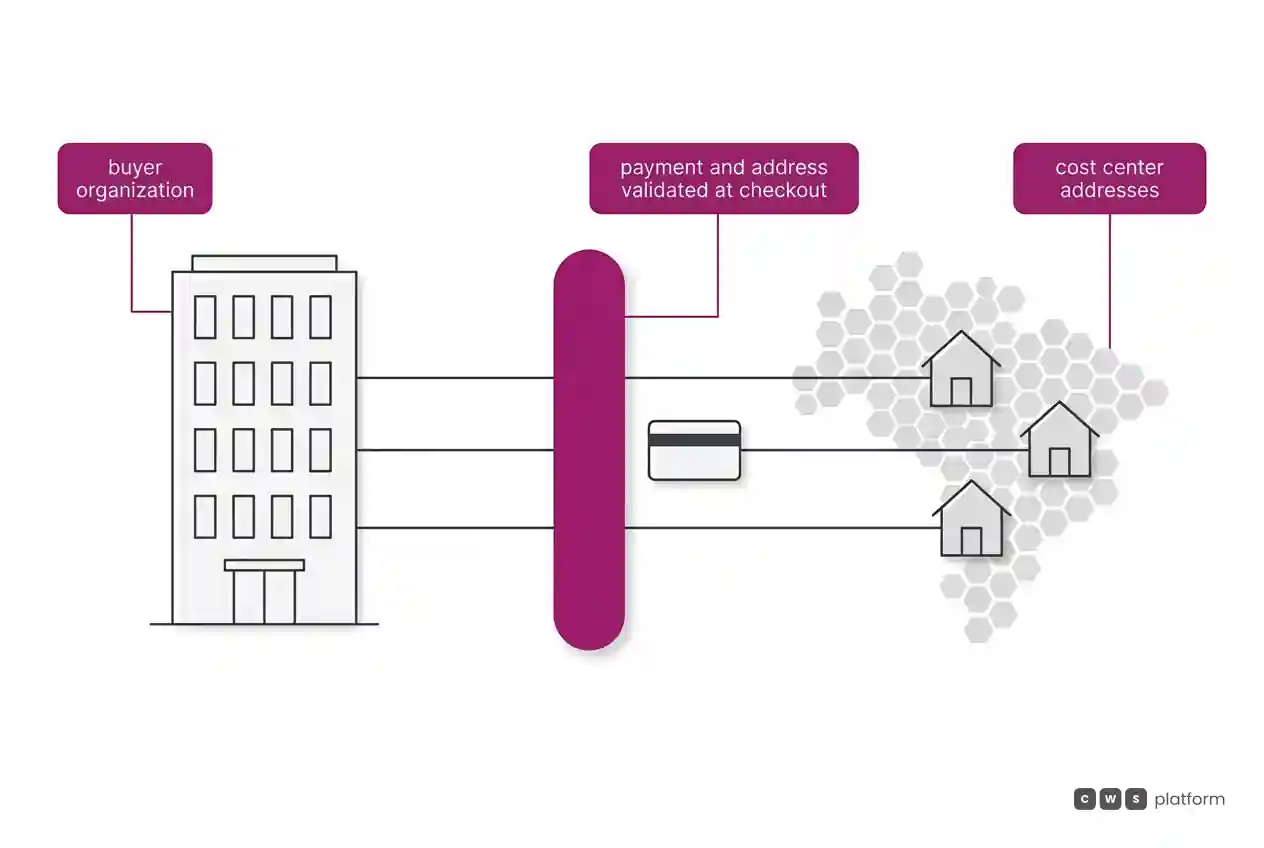
Buyer roles come ready too. The Storefront Permissions app ships a predefined set, including the approver, who creates orders from saved carts or quotes, and the buyer, who adds items to the cart. At checkout, B2B Checkout Settings validates access and applies the payment methods and addresses defined for the organization or cost center.
And the corporate payment method exists in the gateway. Per the payments overview, the Payment Gateway accepts credit and debit cards, digital wallets, gift cards, and customer credit.
Where the architecture diverges
The divergence that matters to a CFO sits in the two controls from the opening, the purchasing rule and credit, and VTEX records both:
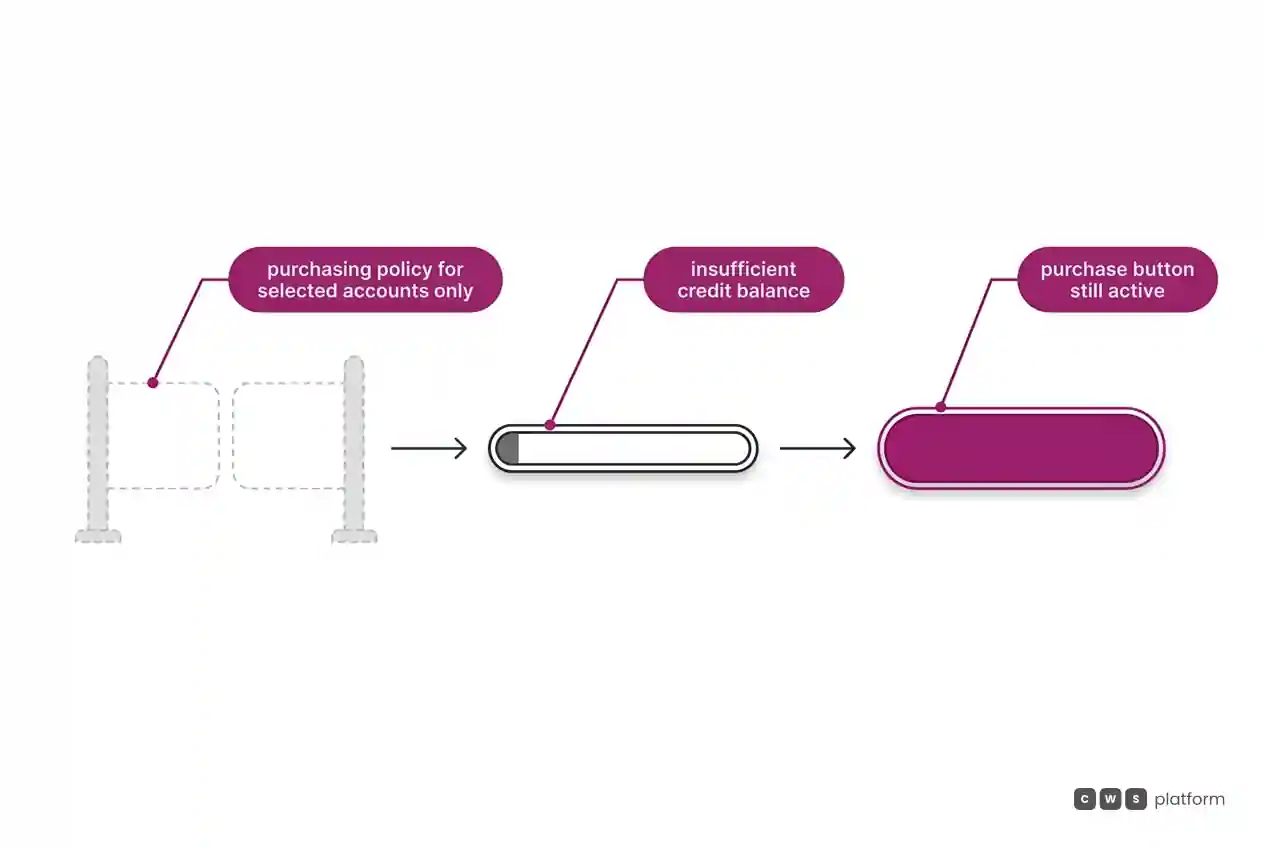
- limitation recorded in VTEX's documentation on February 9, 2026: buying policies, the buyer-side purchasing policies, only work for stores using B2B Buyer Portal, which is available to selected accounts ("This feature is only available for stores using B2B Buyer Portal, which is currently available to selected accounts.", https://help.vtex.com/en/docs/tutorials/buying-policies-overview)
- recorded by VTEX as a known issue, published in March 2022, which VTEX marked No Fix (accessed November 5, 2026): the purchase button stays active even with insufficient credit in Customer Credit ("The purchase button stays active even with insufficient credit on the Customer Credit.", https://help.vtex.com/en/known-issues/the-purchase-button-stays-active-even-with-insufficient-credit-of-payment-method-customer-credit)
The first record is about where the purchasing rule lives. Buyer and approver roles exist in the B2B Suite, but the purchasing policy as a store feature depends on Buyer Portal, and Buyer Portal depends on the account being among the selected ones. For anyone outside that group, the rule that says how much each buyer can spend without approval has to live somewhere else: in a parallel workflow, in a check inside the ERP, or in the approver's head.
The second record is about where credit holds the order. Customer Credit is the customer's credit used as a payment method, and the record says the purchase button stays active even when the balance does not cover the order. VTEX marked the item No Fix. Credit containment, then, is no longer at the button and has to sit at another point in the flow, with someone watching.
On CWS Platform, the customer's credit limit is maintained on the platform itself, as a running account, granted in CDL Workspace or through an API. What checkout does when the balance does not cover the order is a question for the demo, with any vendor.
| decision | VTEX, per the documented mechanism and records | CWS Platform |
|---|---|---|
| Where negotiated prices live | Price table per organization in the B2B Suite | Price tables, rules, and contracts configurable on the platform or received from the ERP and CRM through an API |
| Where the buyer's purchasing rule lives | Buying policies only for stores using Buyer Portal, available to selected accounts | A question for the demo: who approves, up to what amount, and where that rule is executed |
| What checkout does with credit | Customer Credit as a payment method; a known issue marked No Fix keeps the button active with insufficient balance | Credit limit maintained on the platform, as a running account; behavior with insufficient balance is a question for the demo |
| Who built the order and who chose the payment | The approver creates the order from a saved cart or quote | The order records who built the cart and who chose the payment |
The financial decision starts with a contract question: is your account among those selected for Buyer Portal? If it is not, decide before signing where the purchasing rule will live and at what point in the flow credit will be contained, since the button does not hold it.
What changes in B2B procurement operations
Why the cost of each recurring order falls when price, approval, and credit meet in the same transaction is already covered in how to cut the cost of every recurring contract order. The question here is narrower: what changes for finance when the purchasing policy depends on a selection of accounts and the button does not hold credit.
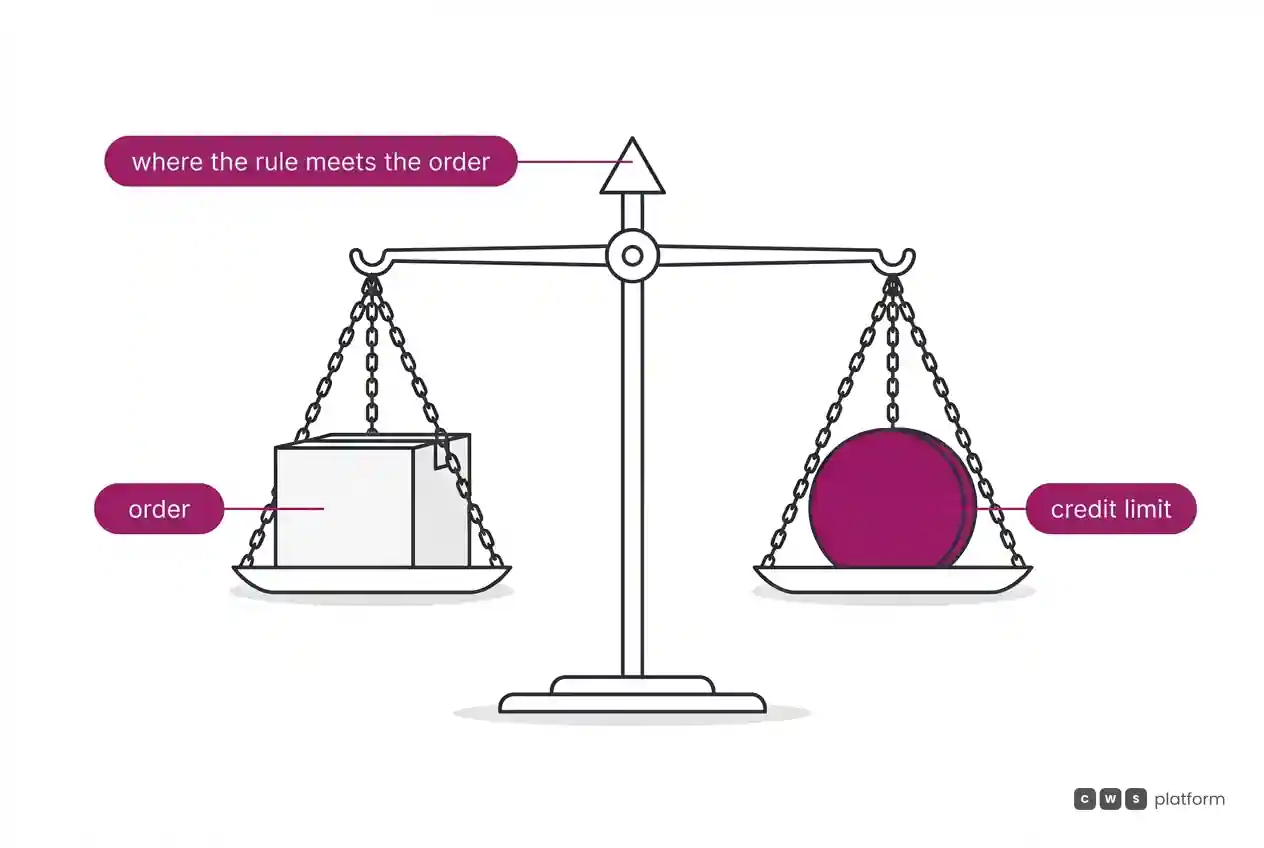
The first change is contractual. Before architecture comes a commercial question: is your account among those selected for Buyer Portal? The answer decides whether your customers' purchasing policy lives in the store or outside it, and who maintains what sits outside. Any ERP can represent who buys up to what amount; the hard part is distributing that rule to hundreds of buyers, which is why the place where it lives matters.
The second is routine. If the button stays active without balance, someone has to decide what to do with the order that reached the last click without credit: hold picking, request approval, cancel. Each one is transaction cost born after the click.
Two questions bring this point into any evaluation. First: is the rule for how much each buyer can spend, and with whose approval, executed on the platform, in an external workflow, or in the approver's head? Second: what does checkout do when the balance does not cover the order, demonstrated with a real customer?
On CWS Platform, the same order accepts more than one payment method, with the rules combined in CDL Workspace and maintained through an API, and net terms work with split shipments, scheduled deliveries, multiple ship-to addresses, and multiple ship-from locations.
When to choose VTEX
VTEX fits scenarios where the corporate buyer is part of an operation designed for retail:
B2C retail with a simple B2B front. Choose this architecture when B2B is handled by organizations that have their own payment methods, price table, and collection, as the B2B Organizations app describes.
A wide range of connected payment methods. Choose this architecture when the value lies in connecting cards, digital wallets, and gift cards through standardized connectors, with automatic retries on temporary failures, as the gateway retry guide describes.
An account among those selected for Buyer Portal. Choose this architecture when your account is among the enabled ones and the Buyer Portal purchasing policy covers your customers' rules.
When CWS Platform is the right choice in this scenario
CWS Platform is the right choice when the procurement channel sells on net terms, with the contract coming from the ERP and the credit limit maintained on the platform.
Credit that follows the account. Choose this architecture when net terms are the main payment method. The customer's credit limit is maintained on the platform, as a running account, granted in CDL Workspace or through an API.
Contracts that come from the ERP. Choose this architecture when the negotiated price already exists in the ERP or CRM. Price tables, rules, and contracts are configurable on the platform and can come from those systems through an API.
A record of who built the order and who chose the payment. Choose this architecture when finance needs to know who built the order and who chose the payment. The order records both, and the sales rep's discount goes through multi-level approvals.
Where to go from here
If your question is still which architecture fits your operation, before any vendor, the path is the seven questions that separate B2B commerce architectures.
If the decision depends on how much of your credit is checked after the order, it is worth talking to a CWS Platform specialist and designing, with your contracts and credit rules, where each control will live. The pages When Selling More Doesn't Mean Earning More and When Integration Breaks Everything cover the pain behind this scenario in depth, without talking about any vendor.
Read more
- US Sales Tax and Multi-State Compliance: Where Tax Engines Live in B2B E-Commerce
- Enterprise Systems Integration in B2B: What to Connect First and How
- B2B Customer Portals and Self-Service Reordering
Comparisons with other vendors
To compare VTEX with other platforms, without CWS Platform in the middle:
- VTEX vs Adobe Commerce: which one handles the typical B2B order?
- VTEX vs Salesforce Commerce Cloud: can B2B and retail coexist?
- VTEX vs SAP Commerce Cloud: what can a CFO predict before signing?
- VTEX vs. commercetools: Packaged B2B Suite or Composable APIs?
- VTEX vs Spryker: which fits a B2B marketplace with sellers?
- VTEX vs Optimizely: what goes on the B2B bill?
- VTEX vs OroCommerce: what can change after an order is invoiced?
- B2B ecommerce platforms: the 9 leading options compared
Brands mentioned in this article
 VTEX



- Adobe Commerce
- Salesforce
- SAP Commerce Cloud
- Optimizely
- OroCommerce
Trademarks and logos belong to their respective owners. Mention does not imply partnership or endorsement.
"responsive, technically engaged, and willing to work through complex commercial rules (negotiated pricing, credit, customer-specific conditions) rather than pushing generic answers"
Is selling more not turning into margin?
Request an assessment of your operation or talk straight to a specialist, whichever you prefer.
I'd rather get the next articles on margin and discounts
A weekly roundup of new articles on margin and discounts, only in weeks when there is one. No spam, and you can leave in one click.