VTEX vs. CWS Platform: how do order changes work?
Increases limited to card payments, a swapped item that reappears at invoicing, and the questions a changed net-terms order puts to operations, through the lens of whoever runs operations.

Editorial note: an architecture comparison between VTEX and CWS Platform, written for those who answer as COO. Every fact about VTEX comes from its public documentation and from the known issues page it maintains, with the address next to it.
In B2B, the order that gets placed is rarely the order that leaves the warehouse. The buyer calls to add two cases, an item is out of stock and gets swapped for an equivalent, the rep fixes a quantity that was keyed in wrong. For whoever runs operations, each of those changes has to reach three places at once: the payment, the pick list, and the invoice.
When one of them does not get there, the cost shows up later, and far from whoever made the change. It is finance reconciling the amount captured against the amount invoiced, accounting reissuing an invoice, the warehouse picking an item that had already left the order. None of those costs shows up in the license; all of them show up in the cost to serve.
The question that separates platforms here is not whether an order can be changed. It is which paths the change goes through and what it leaves behind. This comparison looks at VTEX and CWS Platform from that angle only. What comes ready-made in VTEX B2B is covered in the comparison of VTEX B2B commerce and CWS Platform, the overall map is in the three B2B commerce platform models, and the other matchups are in the comparisons hub.
What VTEX does well
VTEX treats the order as the object of a unified operation. Per the Unified Commerce overview, processing and the order management system (OMS) are unified, and an order started in one channel is visible to and processed by others, with endless aisle, mixed carts, and in-store pickup.
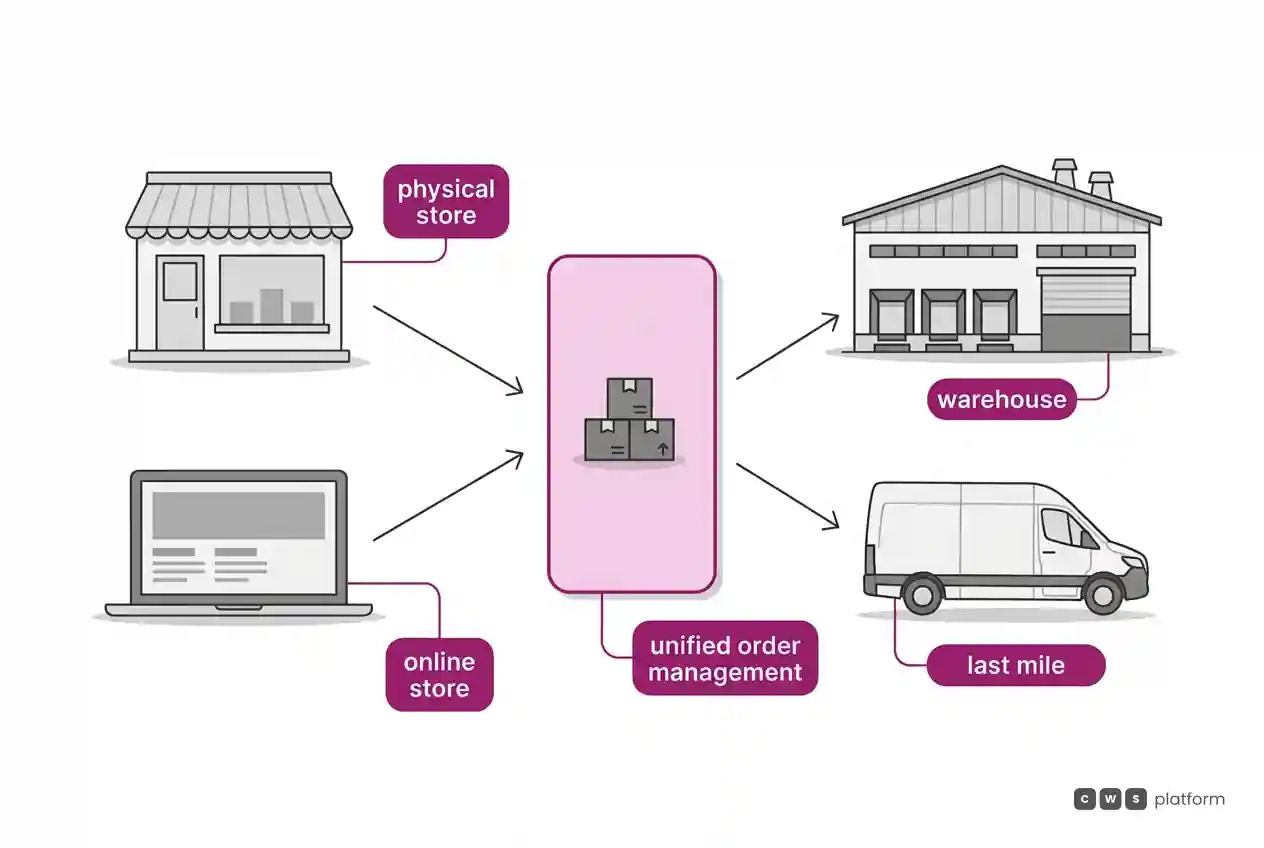
The OMS separates flows by responsibility. Per the orders overview, the marketplace flow is visible only to the store responsible for the sale, and the seller flow only to the store responsible for handling the order.
At the physical end, VTEX Pick and Pack organizes picking, packing, and delivery from stores and warehouses. The picker scans items on a mobile device and, with the store operator's permission, can change the order by replacing, removing, or adding items; on the last mile, delivery is proven by a signature, a photo, or a confirmation note. And the payment gateway has a documented retry routine, as the page on how payment gateway retry works describes, for an operator that is offline, a slow response, or an order under manual fraud review.
Where the architecture diverges
The divergence that matters to operations sits in two records from the vendor itself, one about the value of a changed order and one about the invoice:
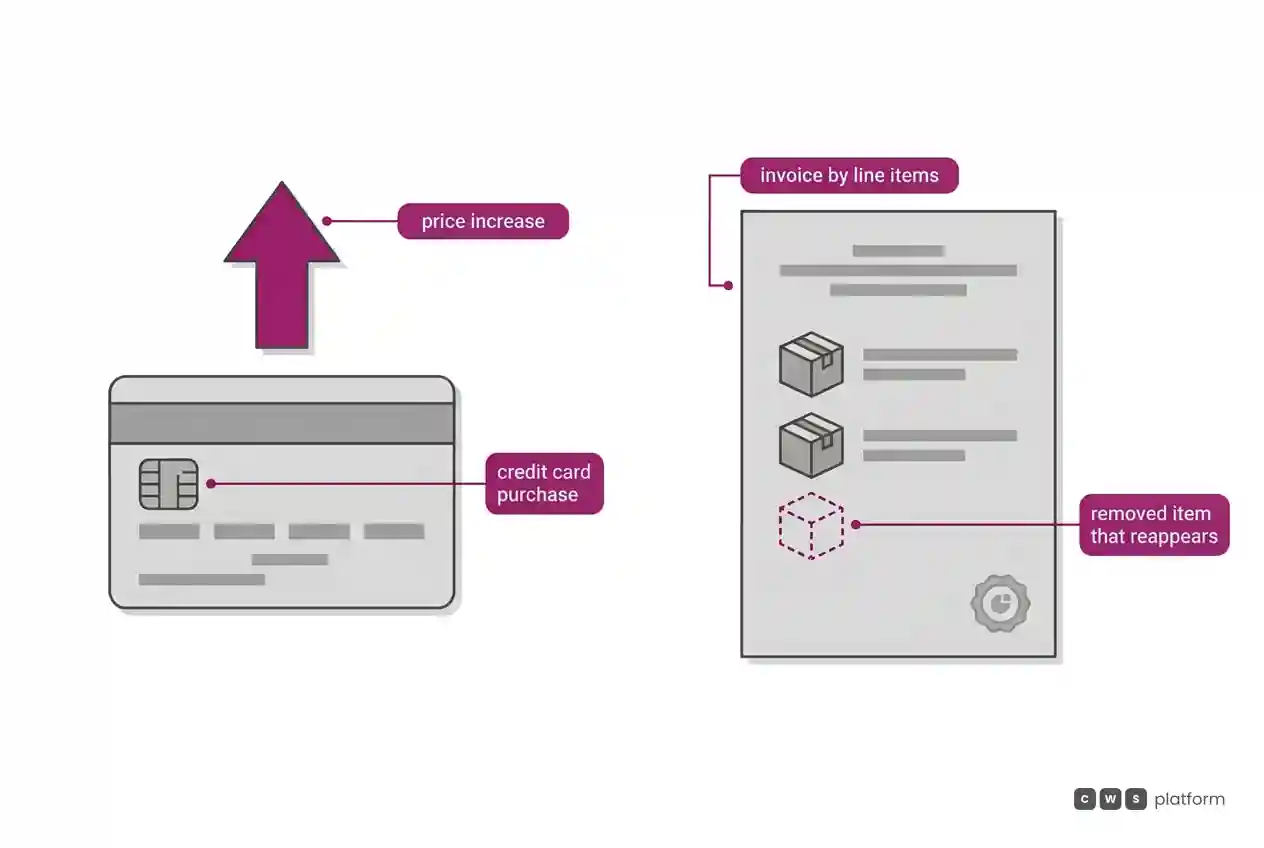
- limitation recorded in VTEX's documentation, accessed on November 5, 2026: increasing the price of an order is only available for credit card purchases ("Increasing the price of an order is only available for credit card purchases.", https://developers.vtex.com/docs/guides/change-order)
- recorded by VTEX as a known issue, still open as of November 5, 2026 (accessed on that date): since April 2023, even after being removed through the change flow, the item still appears when submitting an invoice referencing items ("even though the item has been removed from the order it is still displayed when the user performs the Submit invoice referencing items process", https://help.vtex.com/en/known-issues/order-with-change-itens-cannot-be-invoiced-referencing-the-items)
The first record is about money. In distribution, much of the volume is billed on net terms, and the most common change is precisely the one that raises the amount: the buyer who adds items. Per the documentation, that increase is limited to orders paid by credit card. For an order paid any other way, the practical consequence is handling the addition outside the original order, as a second order, and reconciling the two afterwards.
The second record is about the invoice. When an item leaves the order through the change flow, it still appears in the step that submits the invoice referencing items, and the issue has been open since 2023. For a COO, that means an item swap, one of the most frequent routines in the warehouse, calls for a manual check between what was picked and what is about to be invoiced.
On CWS Platform, the order talks to other systems through APIs. CWS is API-first, with REST APIs and webhooks for ERP, CRM, tax, and payments, and tax comes from the ERP or the tax engine the customer already uses. The same order accepts more than one payment method, with the rules combined in CDL Workspace and maintained through an API.
| decision | VTEX, per the documented mechanism | CWS Platform |
|---|---|---|
| How the order is visible across channels | Unified OMS, with marketplace and seller flows separated by responsibility | REST APIs and webhooks for ERP, CRM, tax, and payments |
| Who changes the order during picking | The Pick and Pack picker, with the operator's permission | A question for any vendor, with a real item swap in the demo |
| How the order grows in value | Per the documentation, only on credit card purchases | A question for any vendor, with a real addition to a net-terms order in the demo |
| How the invoice follows an item swap | Open known issue: the removed item appears when submitting an invoice referencing items | A question for any vendor, following the invoice after an item swap in the demo |
The operational decision is knowing, before you sign, whether an order change is a routine the platform carries through to the invoice or an exception operations reconciles by hand.
What changes in operations, through the COO lens
For operations, the difference shows up in three routines.
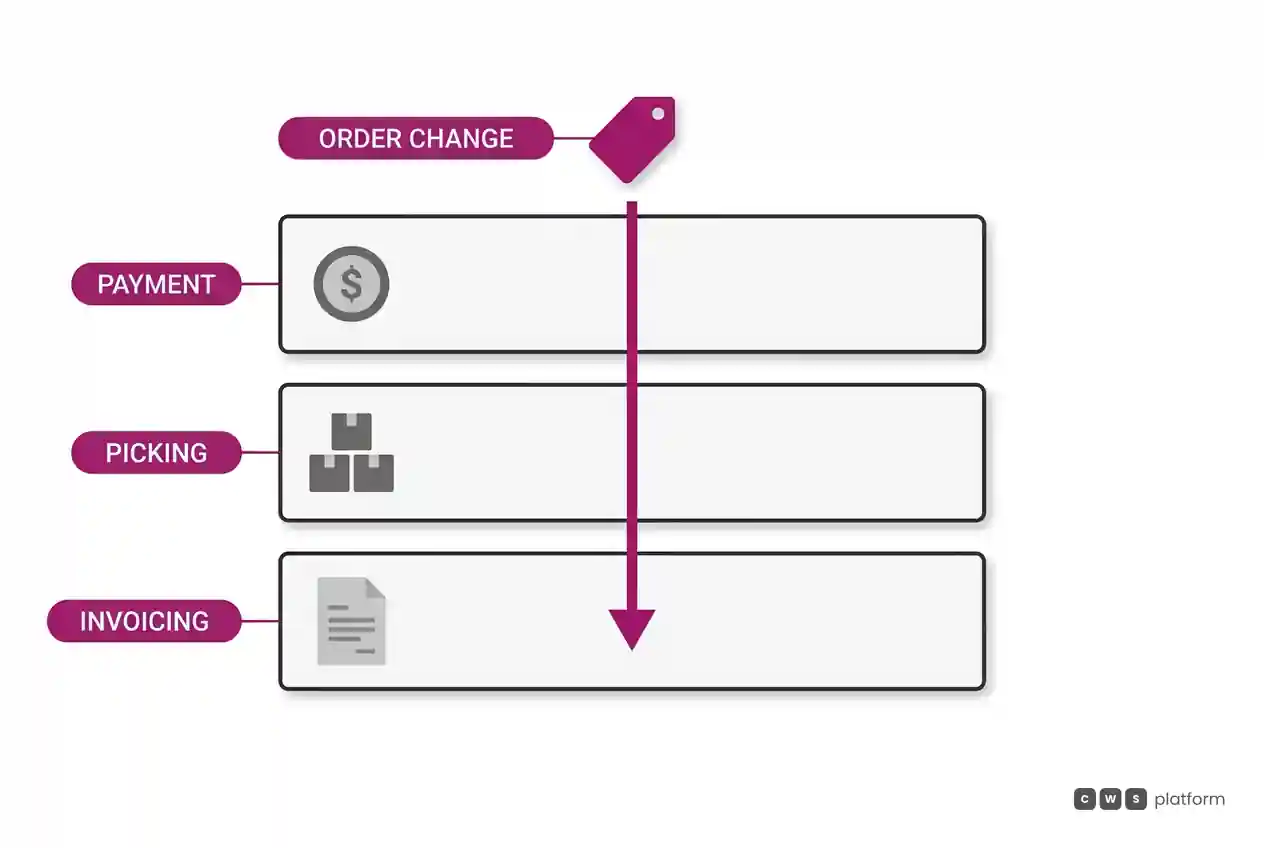
The first is the addition. On a net-terms order, the buyer who asks for two more cases is asking for more credit. The platform needs to know whether the limit covers the new amount and carry that amount on the same order, instead of opening another one, and it is worth asking for that in any demo, with a real net-terms order.
On the credit side, on CWS Platform the customer's credit limit is maintained on the platform, as an account balance granted in CDL Workspace or through the credit limit API, and net terms work with split shipments, scheduled deliveries, multiple ship-to addresses, and multiple ship-from locations.
The second is the swap. An item that is out of stock and gets substituted needs to leave the pick list, the amount, and the invoice in the same move. For any vendor, ask in the demo for an item swap on an order that has already been picked, and follow the order through to invoicing, with the invoice referencing the items.
The third is who made the change. When an order changes, operations needs to know who changed it and why, to tell a keying error apart from a customer request, and that is also a question for any vendor's demo. On CWS, the order records who built the cart and who chose the payment, which helps separate the rep's order from the customer's order, and customer and sales rep work on the same order. And every customer runs the same version of the platform, which takes per-customer upgrade windows out of the operations plan.
When to choose VTEX
VTEX fits scenarios with these characteristics:
Omnichannel retail with physical stores. Choose this architecture when the order starts on the site and is picked up or picked in the store, with mixed carts and endless aisle, as the Unified Commerce overview describes.
Last-mile delivery with an in-house fleet. Choose this architecture when the store picks, packs, and delivers with its own drivers and needs proof of delivery, as VTEX Pick and Pack describes.
Sales paid mostly by card. Choose this architecture when the dominant payment method is cards and digital wallets, with the gateway routing to connectors for acquirers and providers, as the payments overview describes.
When CWS Platform is the right choice in this scenario
CWS Platform is the right choice when net-terms orders, split shipments, and multiple origins are the operation's daily routine.
Net-terms orders backed by the customer's credit. Choose this architecture when the customer's credit backs the order. The credit limit is maintained on the platform, and the same order accepts more than one payment method.
One order, many deliveries. Choose this architecture when the same order ships from several warehouses to several addresses. Net terms work with split shipments, scheduled deliveries, multiple ship-to addresses, and multiple ship-from locations.
An order that talks to the ERP and the tax engine. Choose this architecture when the invoice and the tax are produced outside the platform. CWS is API-first, with REST APIs and webhooks, and tax comes from the ERP or the tax engine the company already uses.
One version for every customer. Choose this architecture when operations does not want to plan an upgrade window per customer. Every customer runs the same version.
Where to go from here
If the question is still which platform model fits your operation, before any vendor, the path is the seven questions that separate B2B commerce architectures.
If the decision depends on how your orders change after they are placed, it is worth talking to a CWS Platform specialist and walking, with a real changed order from your operation, the path of the addition and the swap through to the invoice. The page When Integration Breaks Everything covers the pain behind this scenario in depth, without talking about any vendor.
Read More
- Operational costs in wholesale distribution: where they hide and how to reduce them
- What is cost to serve in B2B and how to calculate it per customer
- Cost to serve and commercial sales operations
Comparisons with other vendors
To compare VTEX with other platforms, without CWS Platform in the middle:
- VTEX vs Adobe Commerce: which one handles the typical B2B order?
- VTEX vs Salesforce Commerce Cloud: can B2B and retail coexist?
- VTEX vs SAP Commerce Cloud: what can a CFO predict before signing?
- VTEX vs. commercetools: Packaged B2B Suite or Composable APIs?
- VTEX vs Spryker: which fits a B2B marketplace with sellers?
- VTEX vs Optimizely: what goes on the B2B bill?
- VTEX vs OroCommerce: what can change after an order is invoiced?
- B2B ecommerce platforms: the 9 leading options compared
Brands mentioned in this article
 VTEX



- Adobe Commerce
- Salesforce
- SAP Commerce Cloud
- Optimizely
- OroCommerce
Trademarks and logos belong to their respective owners. Mention does not imply partnership or endorsement.
"responsive, technically engaged, and willing to work through complex commercial rules (negotiated pricing, credit, customer-specific conditions) rather than pushing generic answers"
Is integration holding your operation back?
Request an assessment of your operation or talk straight to a specialist, whichever you prefer.
I'd rather get the next articles on ERP integration
A weekly roundup of new articles on ERP integration, only in weeks when there is one. No spam, and you can leave in one click.