Adobe Commerce vs CWS Platform, scenario by scenario
9 posts
-

Adobe Commerce vs CWS Platform: Who Upgrades When Versions Hit EOL?
A comparison of Adobe Commerce and CWS Platform through the CTO lens: on one side, a published lifecycle, with versions and dependencies that go out of support; on the other, a single version for all customers, with no upgrade project on the customer side. -

Adobe Commerce vs CWS Platform: Do Returned Orders Count Toward Licensing?
A comparison of Adobe Commerce and CWS Platform through the CFO lens: on one side, every accepted order counts as a transaction, even if it is later refunded or returned; on the other, a platform and integration license with no percentage on sales. -
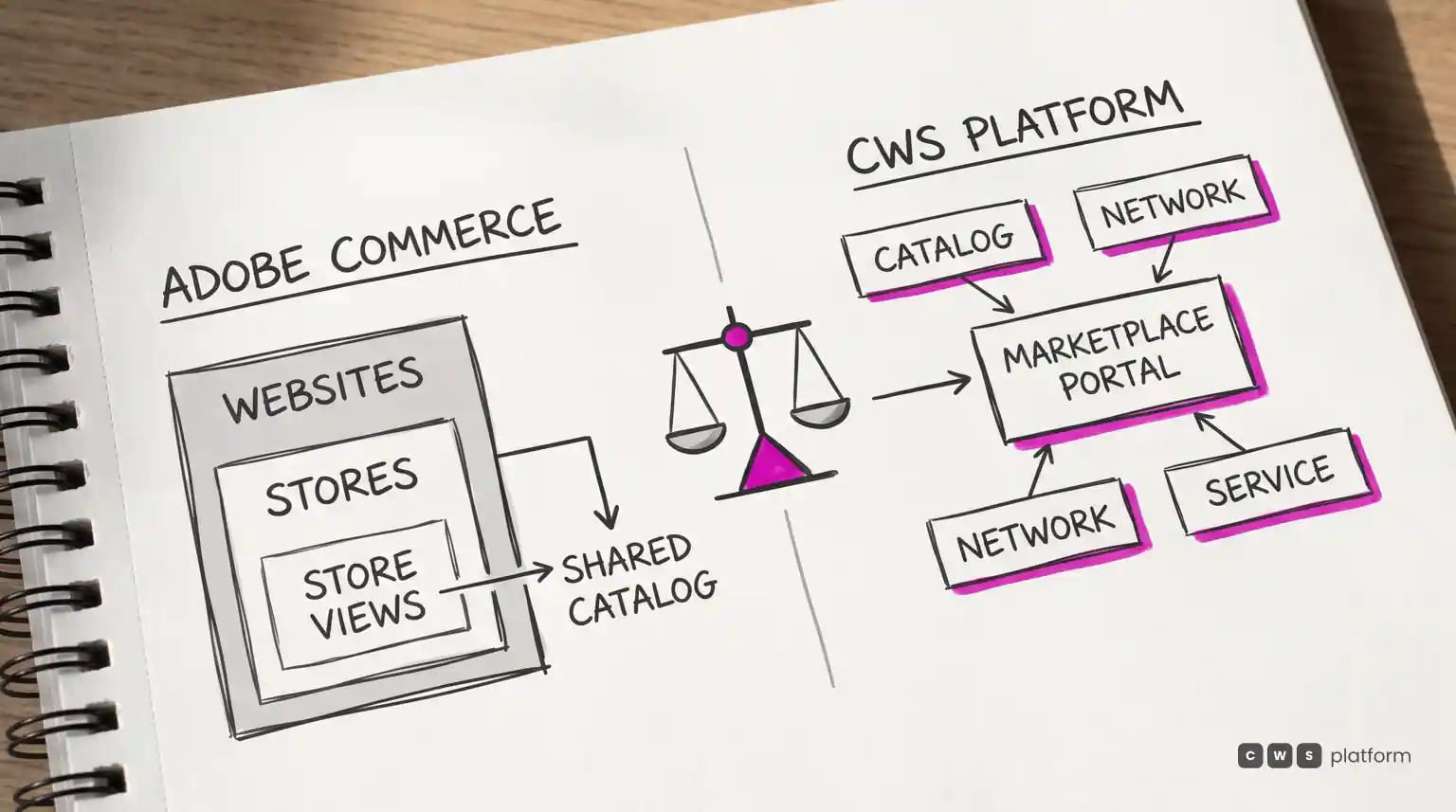
Dealer Marketplace: Adobe Commerce or CWS Platform for Catalog, Network, and Service Operations?
Adobe Commerce structures commerce through websites, stores, store views, and B2B capabilities. CWS Platform keeps fitment catalog data, regional rules, distributed inventory, assisted selling, and source-level fulfillment within the same transaction flow. -
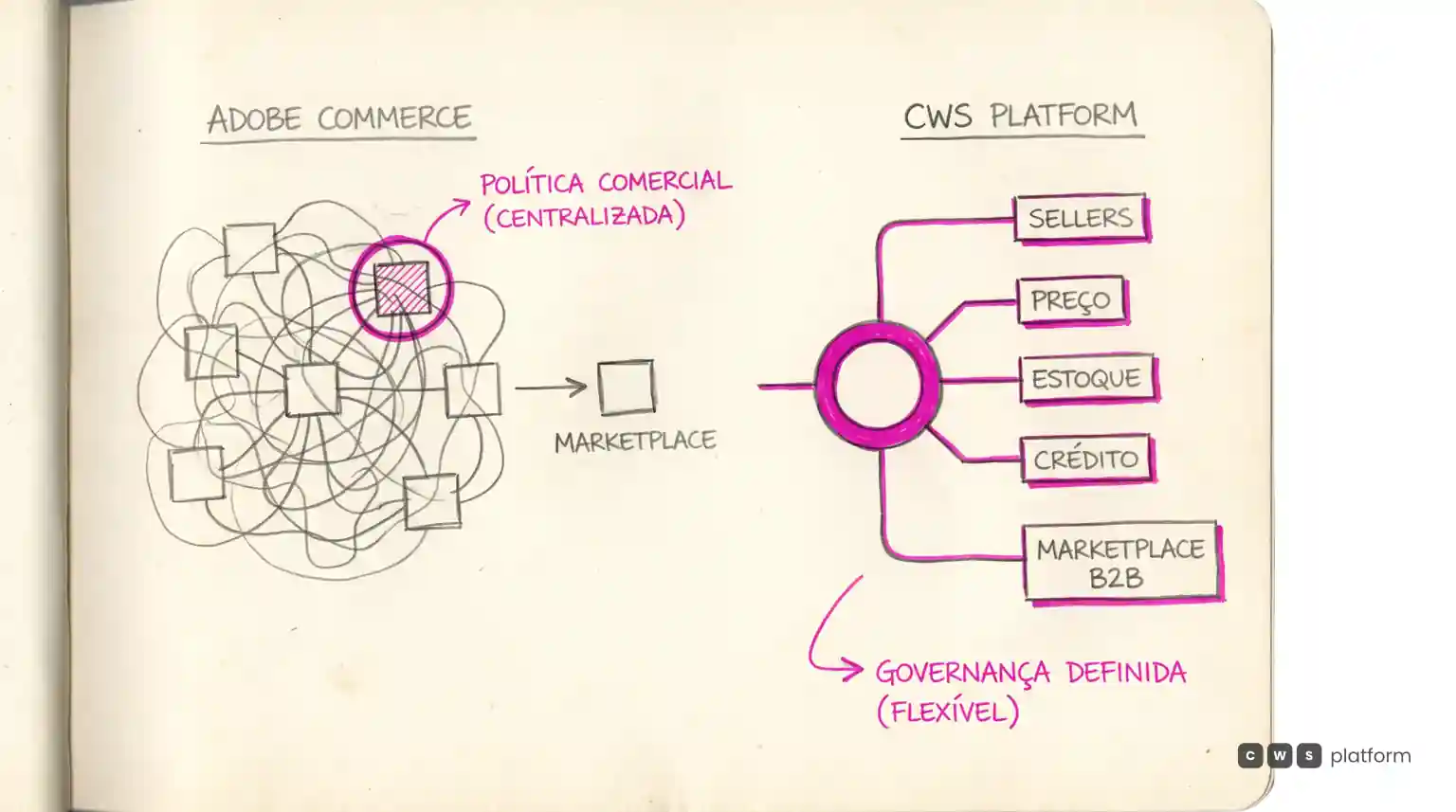
Adobe Commerce vs. CWS Platform: What Architecture Does a B2B Marketplace With Sellers Require?
Adobe Commerce centers B2B governance on company accounts, shared catalogs, permissions, quotes, and purchase orders. CWS Platform centers the operating model on sellers, offers, credit, fulfillment sources, and linked seller orders within the same transaction. -
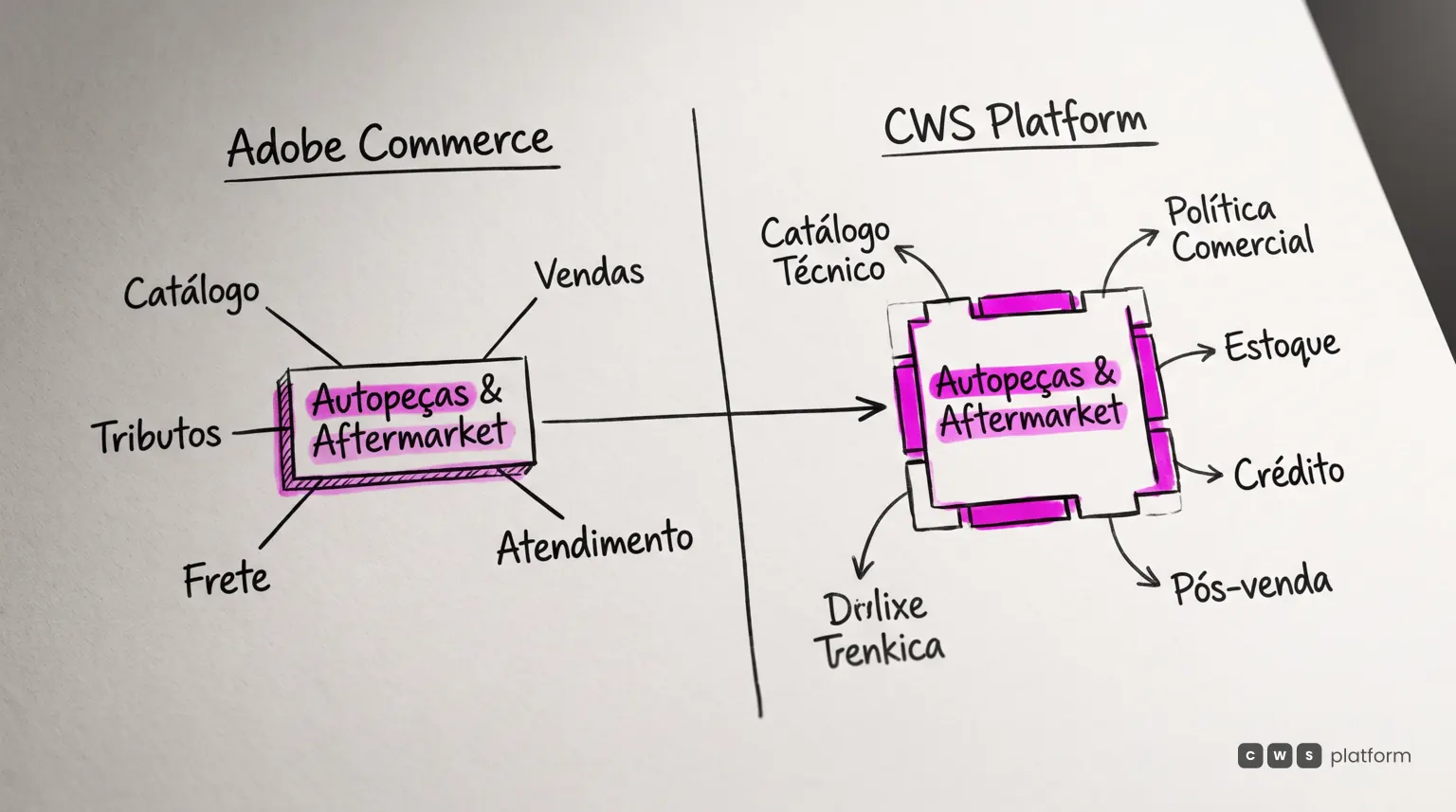
Adobe Commerce vs. CWS Platform: Which Architecture Does Auto Parts Distribution Require?
Adobe Commerce centers governance on company accounts, roles, shared catalogs, quotes, purchase orders, and multi-site structures. CWS Platform centers the contextual transaction, connecting vehicle fitment, customer pricing, warehouse inventory, credit, tax, shipping, returns, and warranties. -

Adobe Commerce vs. CWS Platform: Who Does the CEO Depend On?
Adobe Commerce emphasizes storefronts, a technical ecosystem, and code-based extensibility. CWS centers pricing, credit, inventory, approvals, and assisted selling on configurable operating rules. For a CEO, the choice depends on who should control day-to-day business changes. -

Adobe Commerce vs. CWS Platform: Where Should Replenishment Policies Run in a B2B Procurement Marketplace?
Adobe Commerce organizes company accounts, shared catalogs, negotiated quotes, and purchase orders within the commerce environment. CWS Platform connects pricing, rules, credit, warehouse inventory, and order management to validate policy within the same transaction. -
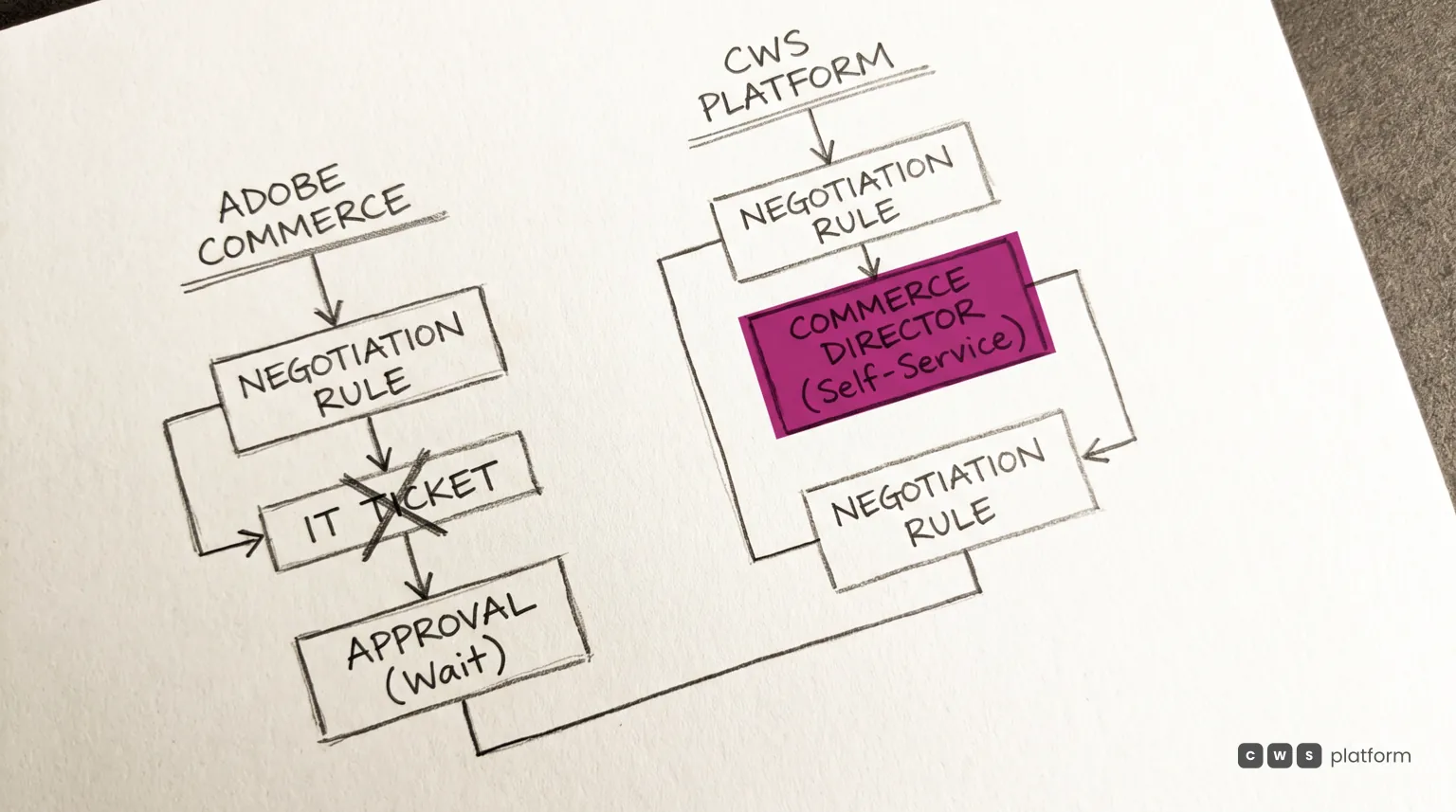
Adobe Commerce vs. CWS Platform: Can You Change a Negotiation Rule Without Opening a Ticket?
Adobe Commerce organizes B2B self-service around company accounts, shared catalogs, and bilateral quotes, per its public documentation. CWS Platform concentrates commercial policies in a deterministic rules engine with mandatory reason codes, contextual pricing, assisted selling, and a credit-first checkout. For a Director of Commerce, the practical question is where the exception is born, who can change it, and which controls follow it through order execution. -

B2B Portal Meets Counter and Field Sales: Adobe Commerce vs. CWS Platform, Side by Side
In distribution, CAC often climbs because of measurement error, not weaker campaigns: when the portal, the branch counter, and field reps don't share one transaction, the sale loses its digital origin and the campaign that actually converted gets no credit. The core divergence between Adobe Commerce and CWS Platform is who computes the commercial terms at the moment of sale — assigned pricing from a shared catalog versus a pricing function with contract > rule > price list precedence. The post also names four scenarios where Adobe Commerce is the right choice.
No posts match this combination. Remove a filter.