You Want AI Agents in Your Operation, but You Haven't Decided Who Decides What
Agentic AI without a decision governance layer doesn't scale productivity — it scales error
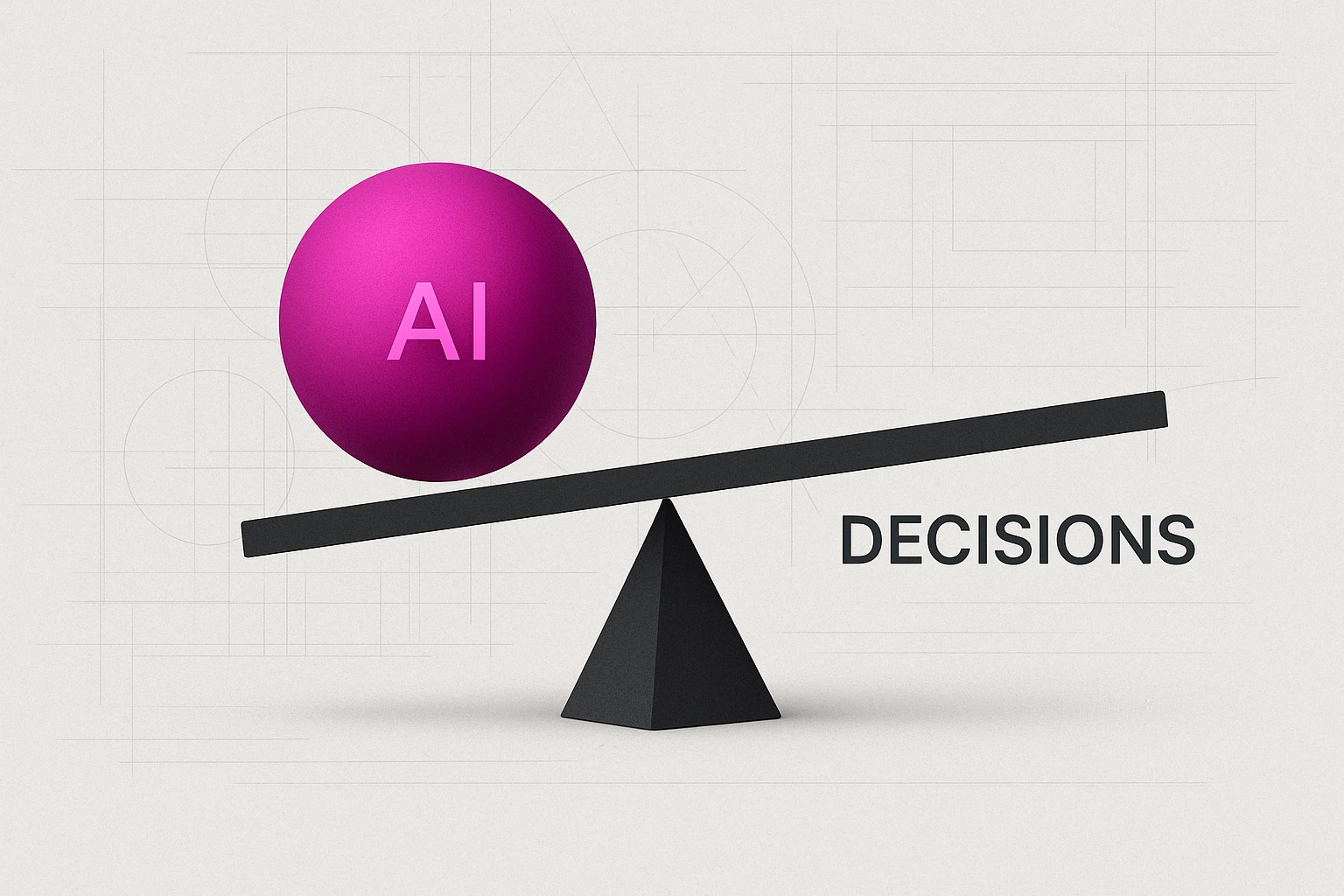
You Want AI Agents in Your Operation, but You Still Haven't Defined Who Decides What
TL;DR
- JOKR took five years to reach operational break-even in quick commerce with AI. The differentiator wasn't the technology: it was building the decision governance layer before turning the agents on.
- An autonomous agent is a multiplier. If the rule is good, it amplifies quality. If the rule is vague or nonexistent, it amplifies the mistake at scale.
- The sequence that works is always the same: first you govern the decision (who decides what, with what authority, within what limits), then you automate.
- Companies that reverse this order aren't accelerating. They're accelerating the problem.
Why do most agentic AI initiatives stall before generating results?
There's a seductive narrative around AI agents: deploy them, connect them to your data, let them run. The speed gain is real and immediate. The problem surfaces later, when the volume of automated decisions reveals that the underlying rule was never properly defined.
The JOKR case, reported by the Retail Tech Innovation Hub in June 2025, offers a rare look at this problem, because it documents the opposite path from what most companies attempt. The quick commerce operator took five years to reach EBITDA break-even. What makes this relevant isn't the survival—it's the method: before letting agents operate, JOKR rewrote its decision rules. Who decides what, with what information, within what limits, with what authority. The deterministic layer came before the inference layer. And it was that sequence that converted automation into genuine productive scale.
That architectural detail is precisely what most AI initiatives in B2B environments ignore.
The pain that AI enthusiasm tends to paper over
A sales leader tracking the market today faces a specific tension. On one side, the pressure to adopt agentic AI is mounting. Competitors announce pilots. Technology vendors demo agents that negotiate, approve credit, adjust pricing, and scale orders. The speed looks obvious.
On the other side, the real operation is built on commercial rules that are rarely formalized with precision: pricing negotiated customer by customer, payment terms tied to account history, approval thresholds that live inside managers' heads, exceptions that became standard practice without ever being documented.
In that environment, an autonomous agent doesn't find governance. It finds ambiguity. And it acts on that ambiguity at scale.
The warning raised by Hackernoon is direct: autonomous AI agents act with their own intent, without traceable identity and without clear governance rules. Not out of bad faith, but because delegating without structure has never worked—and AI is no exception. The mistake doesn't happen once. It replicates.
Optro, a risk management firm that opened a Singapore hub focused on agentic AI for financial decisions, recognizes the same principle: an agent with well-defined governance doesn't just accelerate the decision—it consistently improves the quality of it. Without that foundation, automation delivers speed, but not reliability.
What "decision governance" actually means in practice
This isn't about bureaucracy. It's about answering, before deploying any agent, questions that many commercial operations have never formally addressed:
- Who has the authority to approve a non-standard commercial condition?
- Under what circumstances is a payment-term exception valid?
- Which accounts can receive negotiated pricing, and based on what documented criteria?
- What can the agent decide on its own, and what needs to be escalated to a human?
- How does the process remain auditable after the fact?
Until those answers exist in structured form, the agent operates on undefined ground. And "undefined ground" in B2B commercial operations means margin risk, channel conflict, credit inconsistency, and commitments the company can't fulfill.
The analogy is straightforward: giving a new hire unrestricted system access on day one increases processing speed and risk at the same time. AI doesn't change that equation. It amplifies it.
The cost of inaction
There is also the opposite risk: standing still while the market reorganizes around you.
JOKR demonstrates that building governance first and automation second is not a slow path. It is the path that generates durable results. Five years of reconstruction produced real operational break-even—not a demo pilot.
For the leader who keeps deferring the formalization of decision rules while waiting for technological clarity, the cost is twofold: they forfeit the productivity gains AI can deliver, and they accumulate operational liability in the form of undocumented processes that become harder to govern as the business grows.
The decision that wasn't formalized today will be the agent's bottleneck tomorrow.
Principles that guide the right sequence
- Governance precedes automation: the decision rule must exist before the agent that will execute it.
- Auditability is non-negotiable: every process delegated to an agent must be traceable, especially in B2B commercial environments with negotiated terms.
- Authority levels are structural information: the agent needs to know what it can decide on its own and what it must escalate.
- A good agent is an agent with a clear contract with the organization: autonomy without defined limits isn't efficiency—it's risk.
- The sequence doesn't change with the technology: tools evolve; the principle of governing before automating remains.
Frequently asked questions
Isn't it faster to deploy the agent and adjust the rules afterward? It feels faster. In practice, correcting rules inside a system already operating at scale is significantly more costly than defining them upfront. An error replicated across thousands of transactions creates operational, commercial, and customer-relationship liability.
Does decision governance only apply to large operations? No. Any operation with variable commercial conditions—negotiated pricing, differentiated payment terms, per-customer credit limits—needs formalized rules before automating. The size of the operation determines the scale of the risk, not the need for governance.
Is agentic AI only relevant in quick commerce or logistics? The principle applies to any repeatable decision chain: credit approval, negotiation of commercial terms, inventory replenishment, dynamic pricing. Wherever there is a structurable decision, there is potential for an agent. And wherever there is an agent, there is a need for prior governance.
Who's already living this
The complexity of commercial rules that must be governed before any automation becomes clear in real-world contexts. A verified reviewer on Software Advice, from the automotive sector (company of 5,001 to 10,000 employees), described their work with the CWS Platform this way:
"The support and project team, responsive, technically engaged, and willing to work through complex commercial rules (negotiated pricing, credit, customer-specific conditions)."
(Software Advice, verified review, available at: https://www.softwareadvice.com/product/546664-CWS-Platform/)
The relevant detail is the nature of the work described: negotiated pricing, credit, customer-specific conditions. These are precisely the rules that must be structured before any intelligent automation layer is added. Without that prior work, an agent finds no parameters on which to operate with quality.
About this publication
The Cost of the Sale is CWS Platform's publication on commercial governance, transaction cost, and the decision architecture that separates efficient B2B operations from those that grow while carrying friction. CWS Platform supports B2B negotiation and sales operations with the structure to ensure complex commercial rules are governed, auditable, and scalable.
Sources
Retail Tech Innovation Hub, June 2025 ("JOKR reaches EBITDA break even after five years"): account of the JOKR case, including the sequence of building governance before AI automation in quick commerce. (original link referenced in the source publication)
Hackernoon ("From Identity to Intent: Autonomous AI Agents Are the New Insider Threat"): analysis of the risk posed by autonomous agents lacking prior governance of identity and authority. Available at: https://hackernoon.com/from-identity-to-intent-autonomous-ai-agents-are-the-new-insider-threat
Computer Weekly, June 2025 ("Risk management firm Optro opens Singapore hub"): coverage of Optro's Singapore hub launch and its focus on governed agentic AI for financial decisions. Available at: https://www.computerweekly.com/news/366644968/Risk-management-firm-Optro-opens-Singapore-hub
Software Advice (verified review, CWS Platform): testimony from an automotive-sector user on working with complex commercial rules. Available at: https://www.softwareadvice.com/product/546664-CWS-Platform/
"The support model is differentiated — the project team actually understands B2B complexity and stays close throughout implementation."
Want to see this in your operation?
Real B2B operations already run on it.