AI Agents Will Run Your B2B Sales Negotiations — and Your Governance Isn't Ready
The rush to deploy agentic AI is outpacing the formalization of commercial decision rules — and agents don't fix inconsistencies, they scale them
AI Agents Will Execute Your Commercial Negotiations, and Governance Is Not Ready
TL;DR
- AI agents do not create commercial logic. They execute the logic that already exists—right or wrong—at scale.
- The race for AI chips—such as Qualcomm’s move to develop a chip specifically for the Chinese market within U.S. export restrictions—shows that even AI infrastructure is shaped by rules before it operates.
- Companies that automated processes without first structuring decisions amplified inconsistencies rather than eliminating them.
- The relevant question is not “which agent should we use?” but “which commercial rule will this agent execute?”
Does the infrastructure arrive before the problem is solved?
Qualcomm announced the development of a data center chip designed specifically for the Chinese market, within the limits imposed by U.S. export restrictions. The decision is a direct response to a regulatory environment that sets concrete boundaries on what hardware can do and where it can operate.
The detail that matters to a B2B commercial leader is not geopolitical. It is this: even the most basic layer of AI infrastructure—the chip—must be designed within a rules framework before it is deployed. Qualcomm did not launch a generic chip and adjust it afterward. The product was conceived within a governance model.
The same principle applies to commercial AI agents, with one important difference: while a chip operates under controlled physical conditions, an AI agent operating in a B2B negotiation works within an environment of commercial variables that is rarely formalized with the same rigor.
The pain the agent will amplify
Ask your sales team how many pricing rules actually exist in the operation. You will get an answer about the official policy. Then ask how many exceptions were negotiated over the past twelve months, which credit terms were granted outside the standard workflow, and which customers have specific arrangements that live in spreadsheets or in the memory of senior salespeople.
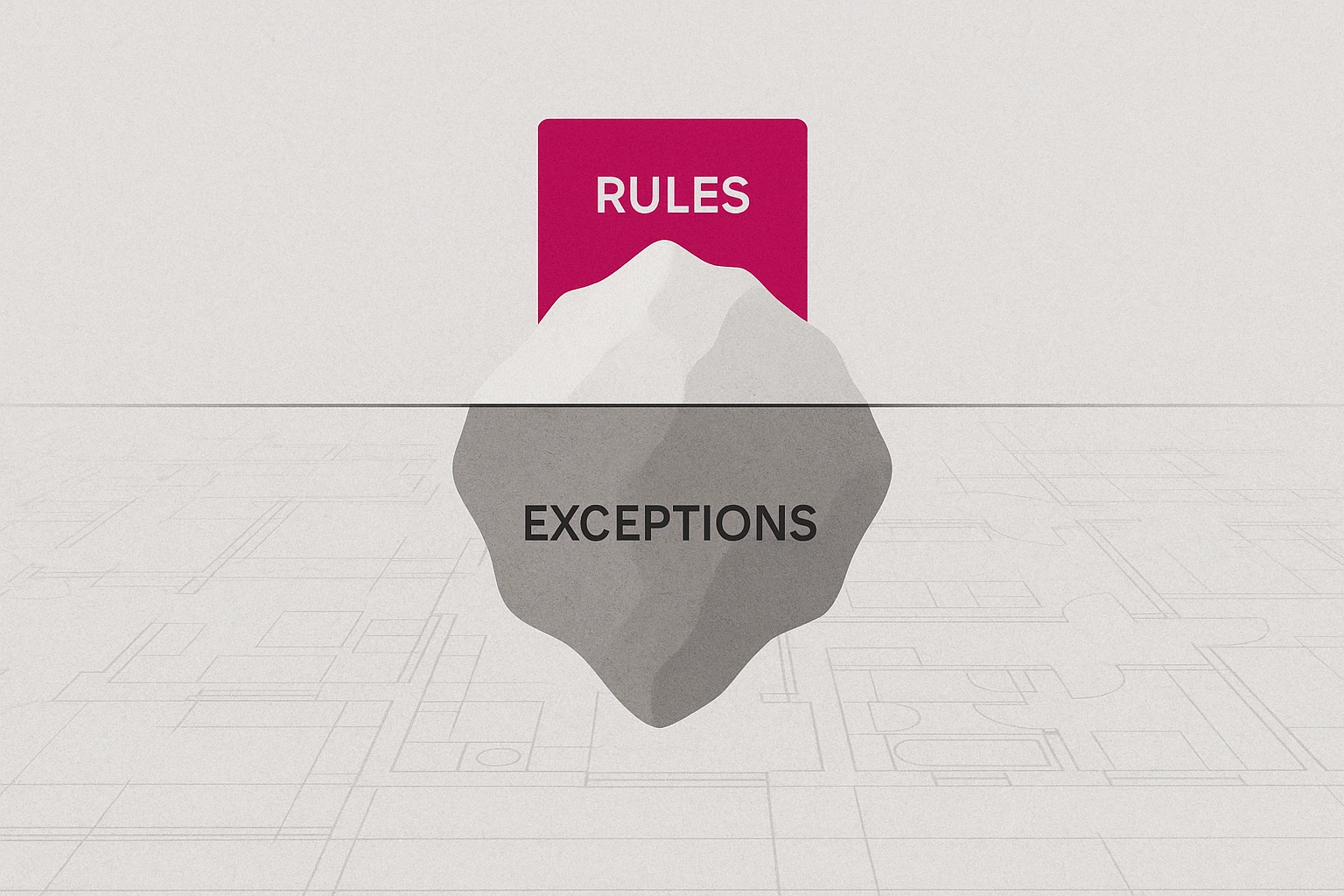
That combination—formal rules, informal exceptions, and undocumented negotiated terms—is the company’s real negotiation DNA. It is exactly that DNA that an AI agent will execute once it is deployed.
If that DNA is poorly mapped, the agent will not fix it. It will scale the error—quickly, consistently, and potentially at a volume that makes reversal expensive.
The tension is not new. Companies that implemented sales automation during earlier technology waves faced a previous version of the same problem: the system automated the wrong process. What changes with agentic AI is execution speed and the degree of autonomy. An agent can finalize terms, trigger approval workflows, revise proposals, and communicate with the customer—all before a manager has an opportunity to intervene.
What the JOKR case shows about sequencing
The case of JOKR, a quick-commerce company that reached EBITDA break-even after five years of rebuilding around AI and automation, illustrates a sequence that is often ignored in the rush to deploy technology. As documented by Retail Tech Innovation Hub, the result did not come from AI itself. It came from rebuilding the operating model before AI was allowed to operate on it.
AI automation amplifies the existing structure. When the structure is well designed, the gain is real and measurable. When it is not, automation accelerates deterioration.
In the context of B2B commercial operations, the structure that must exist before deploying an agent includes, at minimum: approval criteria by customer profile and volume, credit terms with clear parameters, auditable differentiated pricing rules, and the agent’s own autonomy limits—in other words, the point at which it escalates to a human.
The cost of inaction
There are two symmetrical mistakes here. The first is deploying agents without governance and amplifying commercial inconsistencies at scale. The second, discussed less often, is failing to deploy and losing the competitive window to competitors that structured decisions before acting.
The transaction cost of an ungoverned B2B commercial operation grows with volume. Every undocumented exception, every term negotiated outside the system, and every approval that exists only in a VP of Sales’ head represents a latent cost that AI agents will expose—not solve—if deployed on top of that foundation.
Companies already experiencing this problem at scale, with operations serving hundreds of active customers, differentiated SKUs, and segment-specific negotiated terms, feel this cost through long approval cycles, margin inconsistencies across channels, and an inability to give an agent an instruction it can safely execute.
Principles for structuring before deploying agents
- Map the real rules, not the official ones: document the exceptions that already exist, because the agent will find them.
- Define autonomy boundaries before turning the agent on: what it can decide on its own, what requires human approval, and within what timeframe.
- Treat negotiation DNA as a strategic asset: negotiated terms, credit criteria, and differentiated pricing are competitive advantages, not messes to hide.
- Auditability is a deployment requirement, not an option: you need to know what the agent decided, when, and based on which criteria.
- Sequencing matters more than speed: structure the decision first, then automate execution.
FAQ
Won’t the AI agent learn the rules on its own?
Language models learn patterns from historical data. If historical data reflects commercial inconsistencies, the agent learns to replicate those inconsistencies. Learning does not replace governance; it depends on it.
Is our operation too small for this to matter?
The problem becomes more visible in larger operations, but its root cause—the absence of formalized decision rules—exists from the first customer with special terms. Structuring while the operation is small is less expensive than rebuilding later.
Do I need to pause AI deployment to solve this?
Not necessarily pause, but sequence it. Agents can begin in low-autonomy, high-supervision contexts while governance is being built, as long as that is the plan—not the permanent state.
Who is already living with this
In the automotive sector, where negotiated commercial terms, differentiated credit, and customer-specific pricing are part of daily operations, rule complexity is the norm rather than the exception. A verified Software Advice reviewer with experience at a company in the sector with more than 5,000 employees described what she encountered while working with structured commercial rules:
"The support and project team, responsive, technically engaged, and willing to work through complex commercial rules (negotiated pricing, credit, customer-specific conditions)."
, Maite S., verified reviewer, automotive sector, Software Advice (https://www.softwareadvice.com/product/546664-CWS-Platform/)
What stands out is not the praise for support. It is the list of complexities the sentence assumes: negotiated pricing, credit, and customer-specific terms. These are exactly the three variables an AI agent will need to find formalized in order to operate safely.
A case that illustrates the point
JOKR’s path to EBITDA break-even, documented by Retail Tech Innovation Hub in June 2026, is an example of correct sequencing: five years spent rebuilding the operating model, with AI and automation introduced after the decision logic had been redesigned. The positive result did not come from adopting AI faster. It came from adopting it in the right order.
For B2B commercial operations, the takeaway is direct: agents operating on a solid structure deliver measurable gains; agents operating on ambiguity deliver ambiguity at scale.
How CWS Platform fits into this discussion
CWS operates as a B2B Commerce Platform for Governed Negotiation: its core work is structuring commercial decision rules, customer-specific terms, approval criteria, credit logic, and negotiated pricing so they can be executed in an auditable way. When AI agents enter that equation, they find a structure to operate on—not an open field for improvisation. The analogy to Qualcomm designing a chip within regulatory limits before launching it is accurate: governance is not a constraint on the agent; it is the condition that allows it to operate safely.
About this publication
"The Cost of Selling" is CWS Platform’s publication on B2B commercial operations: transaction cost, negotiation governance, and decision-making before automation. Written for CEOs, commercial leaders, and operations owners who need analysis, not a pitch.
Sources
- Qualcomm / ZeroHedge (https://www.zerohedge.com/markets/qualcomm-design-china-specific-data-center-chip-compliance-us-export-curbs): reporting on the development of a China-specific chip within U.S. export restrictions, used as the hook for the argument that governance precedes the operation of any AI technology.
- JOKR / Retail Tech Innovation Hub (https://retailtechinnovationhub.com/home/2026/6/25/quick-commerce-firm-jokr-reaches-ebitda-break-even-after-five-year-rebuild-around-ai-and-automation): a case of a company that reached positive EBITDA after five years of rebuilding its operating model before deploying AI and automation.
- Software Advice, Maite S. (https://www.softwareadvice.com/product/546664-CWS-Platform/): verified testimony from an automotive-sector user on the complexity of structured commercial rules, including negotiated pricing, credit, and customer-specific terms.
"The support model is differentiated — the project team actually understands B2B complexity and stays close throughout implementation."
Want to see this in your operation?
Real B2B operations already run on it.