Your ERP Is Full of Data and Empty of Decision
ERP without governance is data without judgment. Operations scale in volume while losing control over pricing, credit, and approvals.
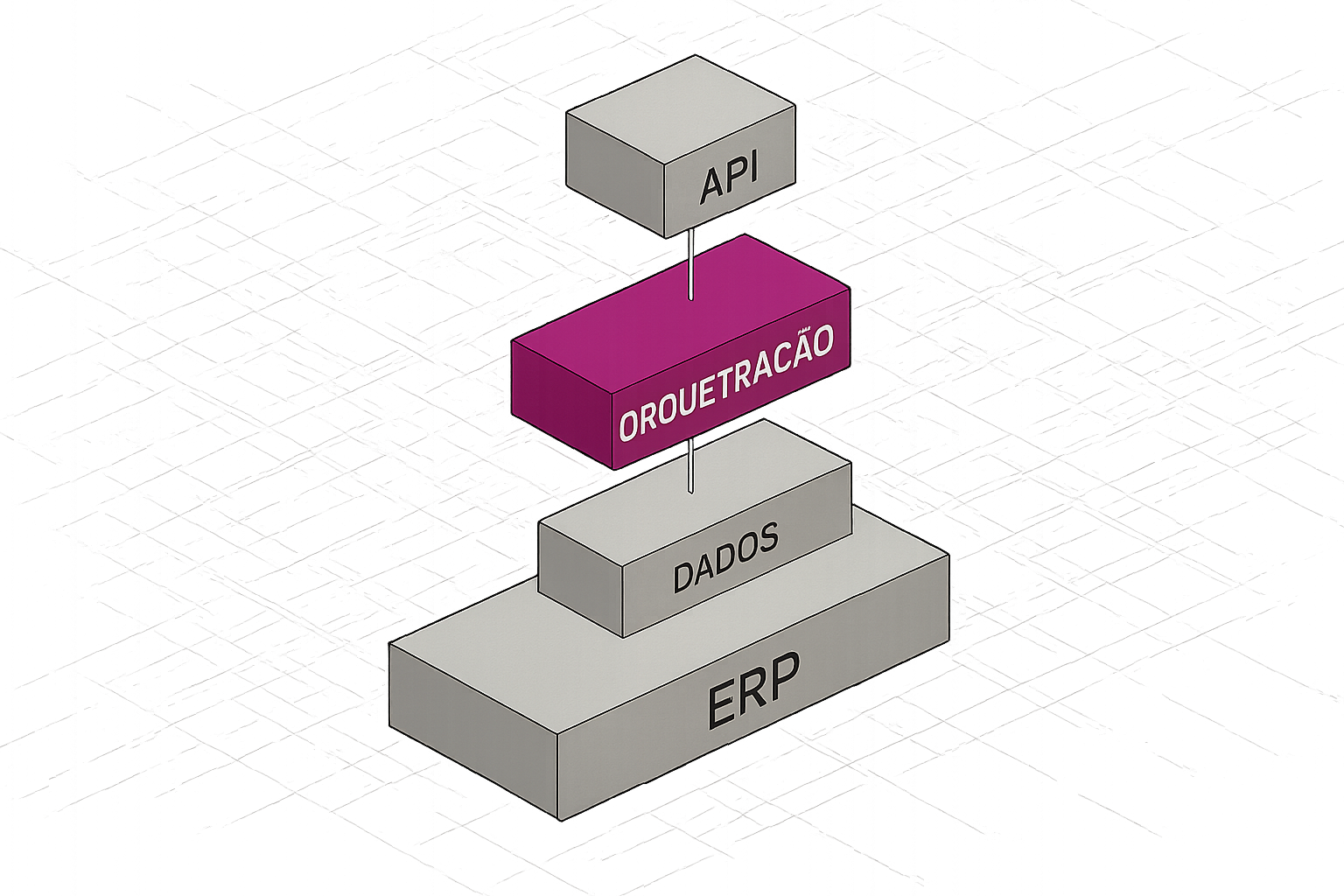
Your ERP Is Full of Data and Empty of Decision
TL;DR
- LKQ is consolidating all of Europe onto a single ERP, but the move that matters is not the system swap: it is the governance layer built on top of it, before scaling B2B portals.
- ERP records what already happened; governance determines what can happen: price by channel, credit by customer, approval by authority level.
- Without that layer, the decision does not disappear: it migrates into the sales rep's head, the untraceable text message, the unaudited email.
- The right sequence is to build the governance rail first, then scale the digital channel on top of it.
Does what LKQ is doing in Europe reveal a pattern that most B2B operations still ignore?
LKQ, the automotive parts distributor with global operations, is consolidating all of Europe onto a single ERP in a phased rollout while simultaneously launching its own B2B portals, OrderKeystone.com and Keyless. The fact is public, recorded in the Q1 2026 earnings filing with the SEC.
At first read, the move looks like another technology consolidation project. It is not.
What is being built is a deliberate sequence: first the unified system of record, then, on top of it, a layer of rules that governs what the portals can do. Negotiated price by channel, credit terms by customer, auditable approval by authority level. Only then do the portals scale.
That sequence matters because it is rare. Most operations do the opposite: they launch the digital channel first and discover along the way that the commercial logic was never formalized anywhere the system could read.
The ERP Was Never Designed to Govern Negotiation
SAP, Oracle, and Microsoft Dynamics were built to record what already happened: invoice issued, inventory decremented, revenue recognized. They are systems of accounting and fiscal truth, and they do that well.
The problem lives in the interval between purchase intent and billing. It is in that space, which can last minutes or days, that the most expensive decisions in a B2B operation take place: which price applies to this customer on this channel, what credit limit is available today, who needs to approve an exception and with what traceability.
When no layer governs those decisions in real time, they migrate to the most dangerous place possible: each sales rep's memory, the unversioned spreadsheet, the Slack message with no audit trail.
The result does not show up as an error on the income statement. It shows up as margin that silently leaks away, quote cycles that drag on for no apparent reason, and exceptions that become standard practice without ever having been formally approved.
A documented case from a B2B operation illustrates the mechanism precisely: five business days to respond to a price quote, not because the sales rep lacked the will, but because the structure for the decision did not exist. The request would come in, the rep would check the price sheet, verify inventory, request credit approval, and confirm lead time by email. Each step depended on the right person being available at the right moment. When pricing policy, credit limits, and exception rules moved from the rep's head into a governed digital workflow, the cycle that took five days was resolved in minutes.
The bottleneck was never human capacity. It was the absence of formal structure for the decision.
Governance and ERP Are Complementary Layers, Not Substitutes
The most expensive mistake a commercial leader or CIO can make is to treat a governance problem as a system-of-record problem. Swapping ERPs does not solve it. It never has.
The relevant distinction is between system of record and system of decision.
The ERP is the system of record: it stores the data, ensures fiscal compliance, closes the books. The orchestration layer does what it was never designed to do: it intercepts the commercial workflow before it reaches the ERP, validates price, applies margin policy, records the negotiation with full traceability, and only then confirms the order.
Together they form the rail. Apart, one is data without judgment and the other is a rule without context.
LKQ understood this before scaling the portals. They built the rail first.
Operational Complexity Reveals the Architecture Required
There is a specific logic in markets with high operational variability that makes this distinction clearer. In the United States, for example, price can vary by state or distribution tier, credit terms by customer segment, margin targets by channel, and compliance requirements by sales tax nexus or industry regulation. These are not edge cases: they are the daily reality of any distributor operating across multiple regions and verticals.
That level of variability forces the development of governance architectures that absorb complexity without breaking the center. What looks like operational friction is, in practice, the proving ground for an architecture that scales, because governance scales and one-off localization does not.
Operations that have learned to translate distinct commercial rules without rebuilding the underlying logic from scratch are better positioned for what LKQ is doing in Europe than operations that grew in more stable markets and never had to formalize those rules.
The Cost of Inaction
While the debate about which ERP to use drags on, the operation runs without governance. That cost is silent and real.
- Margin negotiated informally that never feeds back into policy.
- Credit approved verbally that never appears in the formal limit.
- Exceptions that become standard practice because no one recorded that they were exceptions.
- B2B portals that scale volume without scaling control, amplifying the problem instead of solving it.
The ceiling on B2B growth is not the market. It is the org chart. Every new customer, new region, and new layer of complexity converts into headcount to absorb variability that could live in the system instead. When the architecture absorbs that variability, the team does more without growing proportionally.
Principles for Anyone Building or Revisiting This Architecture
- Define what governs the decision first, then scale the digital channel on top of that rail.
- Treat ERP and governance layer as complementary: the ERP does not need to be replaced to evolve.
- Formalize commercial policy (pricing, credit, approval by authority level) as infrastructure, not as verbal instruction.
- Measure the cost of absent governance: quote cycle time, margin variance by sales rep, volume of exceptions approved informally.
- Do not confuse automation with governance: automating without a formalized rule only accelerates the error.
Frequently Asked Questions
Does the current ERP need to be replaced to implement governance? No. The governance layer operates in composition with the existing ERP, intercepting the commercial workflow before billing. Replacement is not a prerequisite and, in most cases, distracts from the real problem.
Is this discussion only relevant for large operations like LKQ? No. The mechanism is the same in any B2B operation with variability in pricing, credit, or channel. Size determines urgency, not relevance.
When does it make sense to scale B2B portals? After commercial policy is formalized and readable by the system. Scaling before that amplifies the absence of control rather than resolving it.
Who Is Already Living This
"The support and project team, responsive, technically engaged, and willing to work through complex commercial rules (negotiated pricing, credit, customer-specific conditions)."
Maite S., automotive sector, company with 5,001 to 10,000 employees, via Software Advice (https://www.softwareadvice.com/product/546664-CWS-Platform/)
The detail that matters in this account: the point of value highlighted was not the interface or the speed of implementation. It was the ability to absorb complex commercial rules, negotiated pricing, credit, customer-specific conditions, and translate them into a governed workflow.
A Case That Illustrates the Point
Formalizing the commercial decision logic in the system, covering pricing policy, credit limits, and exception rules, reduced the quote cycle from five days to minutes in a documented B2B operation. The sales rep remained part of the process; what changed was that the rule no longer lived only in that person's head. The decision became faster, more consistent, and auditable from the first order to the last. The bottleneck was never human capacity: it was the absence of formal structure for the decision.
About This Publication
The Cost of the Sale is CWS Platform's publication on B2B commercial operations: decision governance, transaction cost, and what separates revenue from real margin. CWS Platform is a B2B Commerce Platform for Governed Negotiation, built to structure commercial negotiation with traceability, formalized policy, and integration with the existing system of record.
Sources
- LKQ Corporation, Form 10-Q, Q1 2026 (SEC): https://www.sec.gov/Archives/edgar/data/1065696/000106569626000033/lkq-20260331.htm, Quarterly filing documenting the consolidation onto a single European ERP and the launch of the B2B portals OrderKeystone.com and Keyless.
- CWS Platform Blog
"The support model is differentiated — the project team actually understands B2B complexity and stays close throughout implementation."
Want to see this in your operation?
Real B2B operations already run on it.