Do You Know What Each Manually Processed Order Is Actually Costing You?
B2B transaction costs don't show up as a line item on your P&L — but they're quietly eroding your margins with every order your team touches.
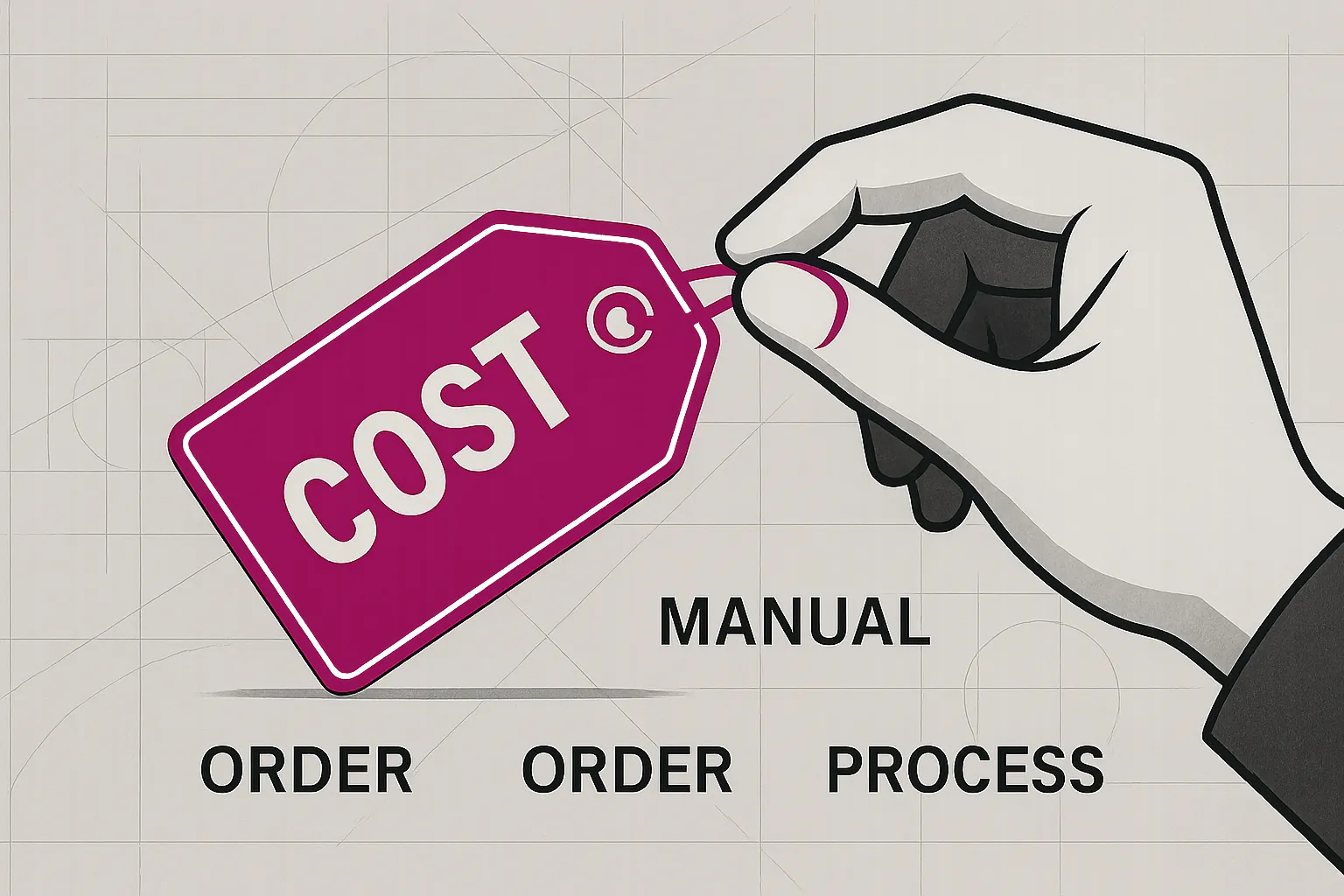
Do You Know How Much Each Order Your Team Processes Manually Actually Costs?
TL;DR
- Volume growth without less operational friction quietly and progressively erodes margin.
- Transaction costs in B2B operations do not appear as a separate line item on the income statement, but they are embedded in team hours, order errors, rework, and approval cycles.
- Companies that remove ordering friction change customer buying behavior: purchase frequency rises, average order value rises, and cost to serve declines.
- Automating before governing commercial logic—negotiated pricing, customer-specific terms, and credit—only accelerates the problem instead of solving it.
When Volume Goes Up but Operations Cannot Keep Pace, Where Does the Margin Go?
Marico, one of India’s largest consumer goods groups, reported fiscal first-quarter volume results at a multi-quarter high in July 2026. The company’s strategic response was to accelerate investments in brand building and sales promotion, betting that generated demand would convert into orders and orders into revenue, as reported by BestMediaInfo.
The logic seems straightforward. But there is a step between demand and revenue that rarely appears in an earnings release: order processing itself. In B2B operations, this part of the journey carries a cost that grows in proportion to volume—and that most companies have never measured precisely.
Economic theory has a name for this: transaction cost. In B2B commercial operations, it appears as the combined human effort, repeated negotiations, manual validations, and policy exceptions that consume time and money between the moment a customer decides to buy and the moment the order is invoiced under the correct terms.
The Invisible Tax on B2B Orders
In manufacturing, distribution, and businesses with differentiated customer portfolios, every order carries a layer of complexity that does not exist in direct-to-consumer retail. The customer has negotiated pricing. They have specific payment terms. They have a credit limit that must be checked. They have active promotional terms promised by the sales rep that must be verified.
When this logic is not systematized, it lives in the salesperson’s head, in back-office spreadsheets, and in text or email threads between the rep and the sales manager. An order comes in. Someone has to validate it. Someone has to correct it. Someone has to send it back to the customer to confirm the right price. The cycle repeats with every new order, every new customer, and every new campaign.
The unit cost may seem low. Multiplied across the full customer base, multiplied by order frequency, and multiplied by the volume growth the company wants to deliver, it becomes structural.
And the problem is not only financial. It is behavioral. When the buying process is difficult, customers buy less often. They place larger orders to reduce the number of times they have to deal with friction. Or they simply move part of their spend to a competitor whose operation requires less effort from the buyer.
Removing this friction changes buying behavior. Purchase frequency rises. Average order value may decline, but total volume increases. Cost to serve per unit sold declines. The commercial relationship deepens because conversations shift from correcting errors to expanding the business.
The Premature Automation Trap
There is a recurring response to this diagnosis: “let’s automate.” And automation is, in fact, part of the answer. But there is a sequence that cannot be reversed.
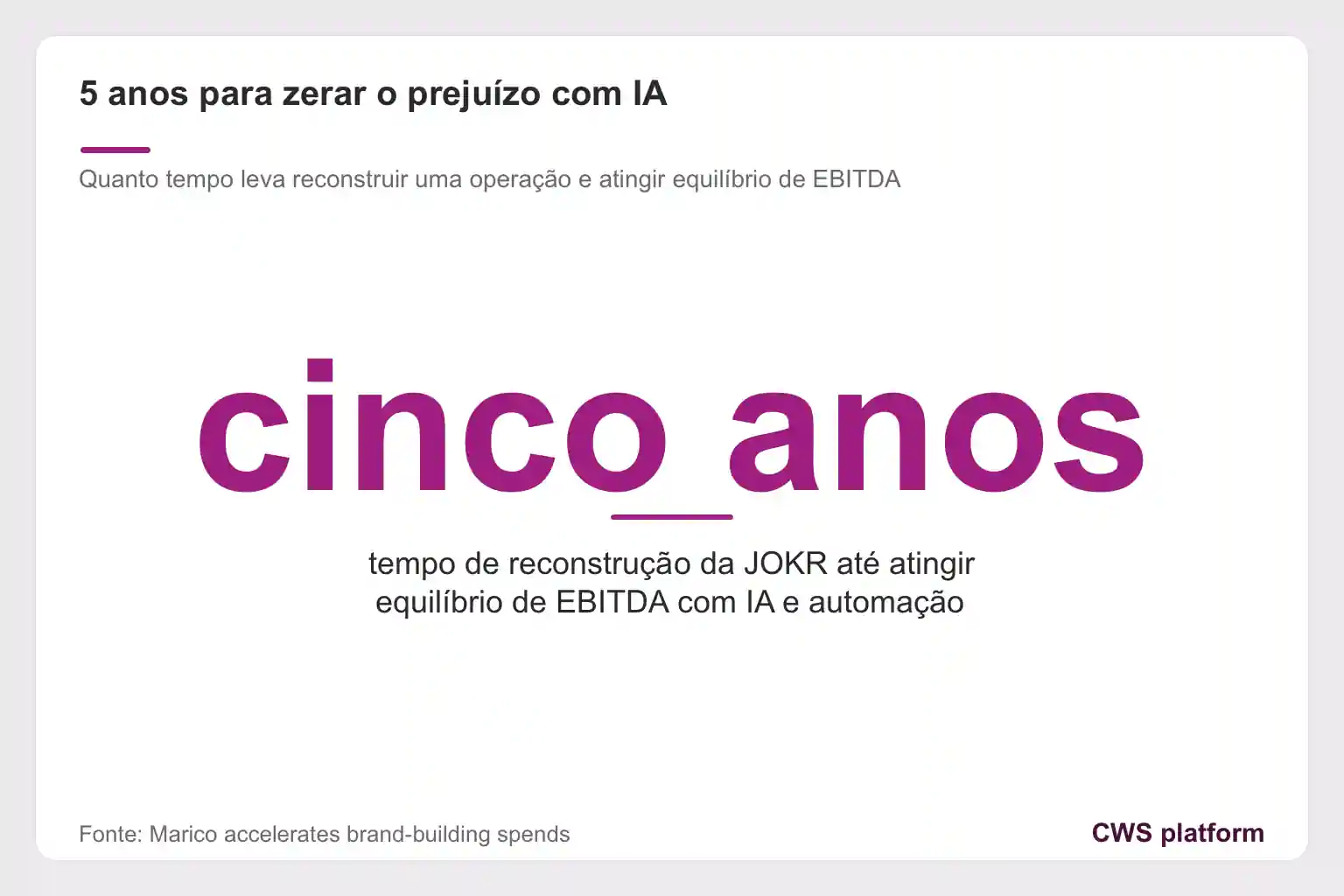
The case of JOKR, a quick-commerce company that reached EBITDA breakeven after a five-year rebuild centered on AI and automation, as reported by Retail Tech Innovation Hub in June 2026, illustrates an important principle: AI agents and automation amplify the existing structure. If decision logic, commercial rules, credit criteria, and customer-specific terms are not well designed before implementation, automation simply executes the problem faster.
Automating an order process where commercial rules live in scattered spreadsheets and team memory does not reduce transaction costs. It makes them harder to correct, because the error is now coded into the automated workflow.
Governance of commercial logic comes before automation. That means mapping and systematizing, before selecting any tool, what governs each commercial relationship: which price applies to which customer, at what volume, under which payment terms, and with which active credit policy. When that structure exists and is accessible to the system at the moment of order entry, automation works. When it does not, automation only distributes the problem at scale.
The Cost of Inaction
Companies that do not solve B2B ordering friction do not stand still. They grow, but with operating costs growing at the same rate as volume—or faster. Every time they hire another back-office employee to absorb growth, they are masking the problem rather than solving it.
The most concrete risk is not operational. It is strategic. A competitor that has systematized its commercial logic and reduced transaction cost per order can offer equivalent pricing with higher margins, or equivalent margins with lower pricing. The advantage did not come from the product. It came from operations.
Principles for organizations that want to address this systematically:
- Measure cost per order: processing time, error rate, correction cycles, and the cost of allocated staff. Without this baseline, there is no way to demonstrate the return on any change.
- Separate the problem into two parts: internal friction (the effort required from your team) and external friction (the effort required from customers to buy from you). Both carry costs, but their solutions are partly different.
- Govern before automating: document and systematize the commercial rules that are currently scattered across the organization. This work is a prerequisite, not an optional step.
- Treat negotiated commercial terms as an asset: the terms negotiated with each customer represent captured margin. They must be available at the time of order entry, not reconstructed during every cycle.
- Use customer buying behavior as a friction indicator: declining purchase frequency while order volume remains steady is a classic sign that the customer is avoiding the buying process.
Frequently Asked Questions
Is order friction only a problem for large operations?
No. It appears in any B2B operation with customer diversity and differentiated commercial terms. The absolute impact is greater at high volumes, but the cost ratio can be even more damaging for mid-sized operations that do not have a dedicated team to absorb rework.
Does it make sense to address this before growing, or only once volume justifies it?
Before. Growth built on a high-friction order structure means hiring people to absorb volume, not to create value. The cost of transitioning after the operation has scaled is significantly higher.
What differentiates a B2B ordering platform from an adapted e-commerce portal?
The complexity of commercial rules. B2B operations have customer-negotiated pricing, individual credit terms, promotional policies with specific criteria, and approval workflows that do not exist in the B2C model. A platform designed for this context must execute those rules at the moment of order entry, without manual intervention.
Who Is Already Experiencing This
The commercial complexity described here—negotiated pricing, customer-level credit, and specific terms—is exactly what requires technical support equipped to handle real-world operations. A verified reviewer on Software Advice, Maite S., from an automotive company with more than 5,000 employees, described her experience with CWS Platform this way:
"The support and project team, responsive, technically engaged, and willing to work through complex commercial rules (negotiated pricing, credit, customer-specific conditions)."
Source: Software Advice (https://www.softwareadvice.com/product/546664-CWS-Platform/)
A Case That Illustrates the Point
JOKR’s path to EBITDA breakeven, after five years of operational rebuilding centered on AI and automation, provides a concrete reference for this article’s central argument: automation without prior decision structure does not produce results. The company first had to rebuild its business logic and then amplify it with technology. The same principle applies to any B2B operation seeking to use automation to reduce transaction costs without simply redistributing the problem.
Reference: Retail Tech Innovation Hub (https://retailtechinnovationhub.com/home/2026/6/25/quick-commerce-firm-jokr-reaches-ebitda-break-even-after-five-year-rebuild-around-ai-and-automation)
About This Publication
"The Cost of Selling" is a CWS Platform publication for commercial leaders and B2B operations executives. It covers negotiation governance, transaction costs, and the structure that must precede any commercial automation decision. CWS Platform is a B2B commerce platform designed for operations with complex commercial rules, where customer-level pricing, credit, and terms must be executed accurately at the moment of order entry without relying on manual intervention.
Sources
BestMediaInfo, July 2026 (https://bestmediainfo.com/mediainfo/mediainfo-marketing/marico-accelerates-brand-building-spends-in-q1-as-india-volumes-hit-multi-quarter-high-12128966): coverage of Marico’s fiscal first-quarter volume results and accelerated investment in brand building, used as the starting point for discussing the gap between demand generation and order-processing cost.
Retail Tech Innovation Hub, June 2026 (https://retailtechinnovationhub.com/home/2026/6/25/quick-commerce-firm-jokr-reaches-ebitda-break-even-after-five-year-rebuild-around-ai-and-automation): account of JOKR’s path to EBITDA breakeven after an operational rebuild with AI and automation, used to illustrate the principle that automation amplifies existing structure and does not replace prior governance of decision logic.
Software Advice (https://www.softwareadvice.com/product/546664-CWS-Platform/): enterprise software review platform; verified testimonial from Maite S. in the automotive sector regarding her experience with CWS Platform in contexts involving complex commercial rules.
"The support model is differentiated — the project team actually understands B2B complexity and stays close throughout implementation."
Want to see this in your operation?
Real B2B operations already run on it.